Southampton Shore Excursions: What Fits Your Port Day
Southampton shore excursions range from Stonehenge and Salisbury to Winchester and the New Forest. Compare ship tours, local operators and independent travel.
On this page
A Southampton call puts some of England's most recognizable monuments within reach, but the distances decide the day more than the sights do. Stonehenge, Salisbury, Winchester and the New Forest sit in different time bands, and London or Windsor only work when the ship is alongside for a long call.
This guide treats each excursion as a block of your fixed ashore time rather than a ranking of attractions. You will see which options a six-hour call can carry, which demand eight hours or more, and where a ship tour, a local operator or a train ticket changes your exposure to the all-aboard time.
What a Southampton call gives you
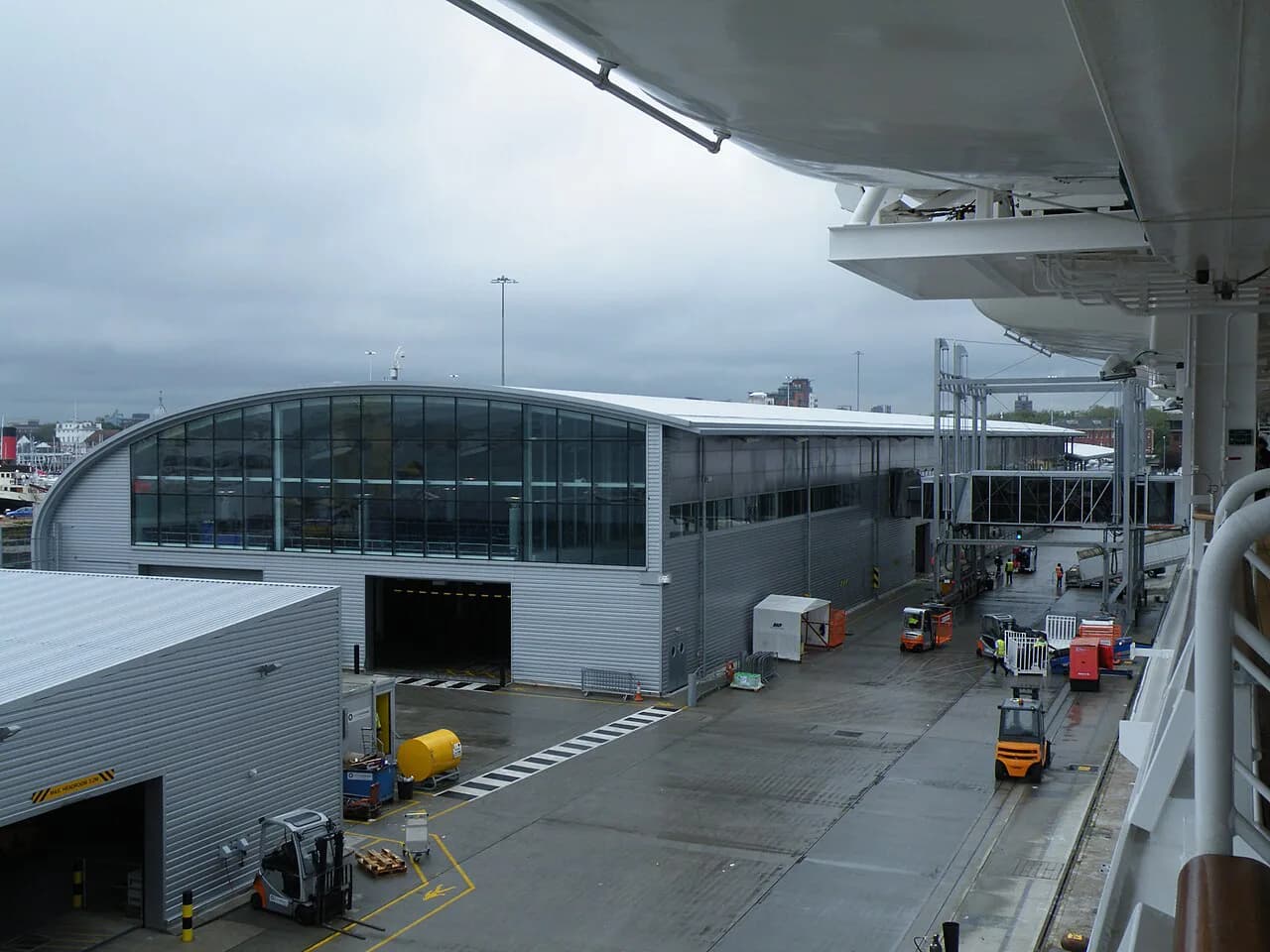
Cruise ships berth in the Eastern Docks and Western Docks areas south of the city center, and the walk into town is short for most berths. The usable time is your published ashore window minus the walk or shuttle out of the port and the buffer you keep for the return, which is why the excursion you pick should be chosen for its transfer, not its ticket price.
Southampton is a turnaround port as well as a call port, so some passengers arrive with luggage and a hotel night rather than a shore day. If you are sailing in the same day, check which of the Southampton Cruise Terminals the ship uses, because the walk into town and the pick-up points for tours differ between the older docks and the western side.
Treat the all-aboard time as the real departure time of every excursion, not the ship's sailing time. Operators build their own margin, but you should know your walking route back from the berth gate before you leave in the morning, especially if the ship is at a dock without a simple pedestrian exit.
The excursion map: what fits a 4-, 6- or 8-hour window
Short calls reward Winchester and the New Forest, the two options that keep you inside a compact radius from the port. A four-hour window realistically covers a single focused stop plus the return, while six hours opens up Salisbury and its cathedral as a comfortable half-day.
Stonehenge consumes more of the call because the site sits inland beyond Salisbury and the transfer eats into your time at the stones. Eight hours is the window where Stonehenge becomes a relaxed excursion rather than a sprint, and it is also the point where Salisbury and Stonehenge can be combined by road. If you are comparing the same stones against another British port, the shore excursions from Invergordon cover Loch Ness, castles and distilleries instead.
London and Windsor sit outside any sensible half-day. They are full-day commitments and only suit calls of roughly ten hours or more, and even then the return leg is the part that decides whether the day is worth it.
Stonehenge: the headline option
Stonehenge is the excursion most passengers recognize immediately, and it is also the one where the transfer matters as much as the monument. The stones stand on open ground with the visitor facilities set apart from the circle, so the visit itself takes a defined block of time you cannot compress much further.
Independent travel to Stonehenge by train and shuttle is possible, but it chains together a rail leg toward Salisbury, a connecting service and a timed site entry, and each link is a place where a delay compounds. A ship tour removes the transfer risk by keeping you with the group and the coach, which is the reason many passengers choose it despite the tighter schedule.
Local operators sell Stonehenge departures from Southampton through marketplaces that list tours, prices and durations together, so you can compare a coach tour against a small-group van before you commit.
Salisbury and its cathedral
Salisbury is the classic half-day pairing for a Southampton call, and the cathedral close gives you a compact core to walk once you arrive. The city is far enough inland that the road leg shapes the day, but close enough that a six-hour call leaves real time in the close rather than just a photo stop.
The cathedral is a working church with service times that interrupt visitor access, so check the published visitor arrangements for your date before you build the day around the interior. The close and the surrounding streets remain walkable regardless, which makes Salisbury a lower-risk choice when your window is uncertain.
Combining Salisbury with Stonehenge works best by road on a longer call, because the two sit on the same line of travel. Adding Winchester to the same day is possible in theory and unwise in practice unless the call is long and the tour itinerary explicitly plans the three stops in sequence.
Winchester: medieval streets and cathedral
Winchester suits passengers who want a walkable historic city rather than a monument behind a barrier. The cathedral, the medieval streets and the compact center let you see a meaningful amount of the city inside a short call, and the rail link from Southampton keeps the independent option simple.
Cruise excursion listings from Southampton regularly package Winchester and Southampton together as a paired medieval-cities tour, which is a sensible structure for passengers who want two short stops instead of one long transfer.
If you go independently, the train into Winchester leaves you within walking distance of the center, and the return leg is a short ride with frequent departures. Keep the same buffer you would keep for a coach tour, because the ship will not wait for a late train.
The New Forest: landscape over monuments
The New Forest is the option for passengers who would rather spend the day in open country than queue for an interior. It sits close to Southampton, which makes it the most forgiving choice on a short call, and it works well for anyone who has already seen the cathedral cities.
Driving through the forest means villages, heathland and free-roaming animals rather than a single ticketed attraction, so the excursion depends on the route and the stops the guide chooses. Check the tour description for which villages and viewpoints are included, because a forest tour with one village stop and a forest tour with four are very different days.
London and Windsor: full-day commitments
Excursion operators market Southampton as a London gateway and sell Windsor Castle and London days alongside the closer options. Those descriptions are accurate about the destination and optimistic about the port day, because the road or rail transfer into London or Windsor takes a substantial share of any call.
On a long call of ten hours or more, a London day by road gives you a sightseeing circuit with limited stops, and a Windsor day gives you the castle and the town. On a standard call, both are better treated as reasons to book a longer voyage or a pre- or post-cruise stay than as port-day excursions.
Passengers arriving or departing by air should note that Heathrow sits between Southampton and London, so a Heathrow airport transfer and a London excursion pull in the same direction on the map but not on the clock. Build a London day only around a confirmed long call.
Ship excursions versus local operators
A ship tour buys you a place on a coach that the ship's schedule is built around, and the cruise line's excursion team tracks its own departures. It does not buy you a guarantee that the ship will wait, but it does mean the coach operator and the ship are working from the same all-aboard time.
A local operator or a small-group departure bought ahead usually gives you a smaller vehicle, a tighter route and a different price point, and the responsibility for the return sits with you. Book operators who ask for your ship and sailing time, because that question signals they plan around port schedules.
Independent travel by train, bus or taxi is the cheapest structure and the most exposed. A taxi gives you the most control over the return, a train gives you frequency on the Salisbury and Winchester lines, and a bus gives you the lowest cost with the least flexibility when something runs late.
Private tours and small-group departures
Private tours from Southampton are sold by the vehicle or by the group, so the price per person depends on how many of you travel together. Marketplace listings show private options such as Winchester and Southampton combinations with group-size variations, which is where you compare the cost against a shared coach.
Small-group departures are the middle option: a van rather than a coach, a fixed route and a fixed price per seat. They sell out on busy turnaround days, so book ahead if your call coincides with a ship changeover, when demand for seats out of the port is highest.
Doing it independently by train, bus or taxi
Southampton's rail connections make Winchester and Salisbury the natural independent days, and the city's bus network covers the local routes. Buy your ticket before you board and keep the return leg fixed, because the value of the independent option depends on catching a specific service back toward the port.
Taxis from the port rank give you a direct run to the station or straight out to the forest, and they are the right choice when you are a group splitting the fare. Agree the return pickup with the driver at the start of the day so you are not hunting for a cab at the end of it.
If you are driving to Southampton for a cruise rather than calling on one, the cruise port parking arrangements differ between the dock areas, and you need to know which one your ship uses before reserving a space.
Matching an excursion to a 6-, 8- or 10-hour call
On a six-hour call, choose one destination and one direction. Winchester or the New Forest fit comfortably, Salisbury fits as a focused half-day, and anything that crosses toward Stonehenge is best left for a longer call unless the tour itinerary runs a direct route with a short site visit.
On an eight-hour call, Stonehenge becomes realistic, and Salisbury with Stonehenge by road becomes a genuine option. This is also the window where a small-group tour beats a large coach, because you spend less time collecting passengers and more time at the site.
On a ten-hour call, London and Windsor enter the picture and the trade-off changes from distance to pace. A London day leaves you with a driving tour and a few stops, a Windsor day gives you the castle and the town, and both leave little room for a slow lunch.
Return-time buffer and all-aboard planning
The buffer you keep should scale with the distance and the number of links in your route. A single train ride back to Southampton needs less margin than a train plus a walk to the berth, and a road return from Stonehenge or London needs more than either because traffic between the city and the port is the variable you cannot control.
Work backward from all-aboard rather than forward from the morning. Decide the time you want to be at the berth gate, subtract the walk or shuttle from the gate to the ship, and treat that as your latest arrival in town.
If you are staying overnight before or after the cruise, hotels near the port remove the transfer from the equation entirely and let you take a longer excursion on the day you are not boarding.
What to bring and how to pace the day
Weather in this part of England changes within the day, so bring a waterproof layer and comfortable walking shoes even for a coach tour. Stonehenge and the New Forest are exposed, while Winchester and Salisbury reward you for walking the streets.
Carry your ship card, your passport or a copy as your cruise line requires, and enough cash or a card for a site entry or a station ticket. Site and rail tickets are the items to buy early, and check current prices and dates before you travel.
Pace the day around one meal rather than three, because a sit-down lunch is the most common way passengers lose an hour they did not plan to spend. Eat before you leave the ship or grab something in town between stops.
Plan Your Southampton Port Day
Pick your excursion by the hours it consumes, not by how famous the destination is. Winchester and the New Forest suit short calls, Salisbury and Stonehenge suit six to eight hours, and London and Windsor are long-call days.
Decide between a ship tour and a local operator by how much of the return you want to control. Ship tours keep you in the ship's schedule, local operators and small groups give you a tighter route and a different price point, and independent rail travel gives you the most freedom with the least protection.
Before you leave the ship, confirm your berth, the route back to the gate and your all-aboard time, and keep a margin that matches the distance you are covering. That single calculation determines whether a Southampton excursion is a highlight or a scramble.
Frequently Asked Questions
What are the best shore excursions from Southampton cruise port?
The strongest options are Winchester and Salisbury for cathedral cities, the New Forest for landscape, and Stonehenge for the headline monument. London and Windsor are also sold from Southampton, but they consume most of a long call and are not half-day choices.
Can you do Stonehenge independently from Southampton?
It is possible by combining a train toward Salisbury with a connecting service and a timed site entry, but each link adds delay risk to your return. Many passengers choose a coach or small-group tour because the transfer is handled for them.
How far is Salisbury from Southampton cruise terminal?
Salisbury is an inland city reached by road or rail from Southampton, and it is normally treated as a half-day excursion. Check the published journey options for your date.
Is Winchester worth visiting on a Southampton port day?
Winchester is one of the best fits for a short call because the cathedral and medieval streets sit close together and the rail link from Southampton is simple. It suits passengers who want a walkable city rather than a long transfer.
How long does a ship excursion to London take from Southampton?
A London day consumes most of a call because of the transfer in each direction, so it only makes sense on a long call of roughly ten hours or more. Windsor Castle works the same way and gives you the castle and town instead of a London circuit.
Should I book a ship tour or a local operator in Southampton?
A ship tour keeps you inside the ship's schedule and is planned around your all-aboard time. A local operator or small-group departure usually gives a smaller vehicle and a different price, but the return is your responsibility.
How much time should I leave before all-aboard?
Scale the buffer with the distance and the number of links in your route. A short train ride needs less margin than a road return from Stonehenge or London, where traffic is the unpredictable part of the day.
Sources
Port-day notes for your next cruise
Optional updates to our port guides.
You might also like
Continue reading
More guides you'll find useful