Piraeus Cruise Port Guide: Terminals and Getting to Athens
Plan your Piraeus cruise port day with the E11 and E12 cruise gates, Terminal C, free port shuttles, metro and bus routes to Athens, and realistic timings.
On this page
Piraeus is Europe's largest passenger port and the gateway to the Aegean, which makes a call here a choice between two very different days. You can push for the Acropolis and the Plaka, or stay close and walk the waterfront neighborhoods of Kastella and Mikrolimano at an unhurried pace. Families and first-time visitors usually want Athens; repeat visitors and short calls get more from the port city itself.
The practical trap is distance and scale. Cruise ships berth at the south end of the port behind gates E11 and E12, the metro and suburban railway sit opposite gate E5, and the walk between the two is roughly a mile. Every Athens plan depends on how quickly you clear that gap, so decide your transport before you leave the ship.
Why Piraeus suits sightseeing and slow port days alike
Few European cruise ports combine a world-class ancient city with a genuinely pleasant local waterfront. Athens gives you the Acropolis, the Acropolis Museum and the dense streets of Plaka, all reachable by metro from the Piraeus terminus. Piraeus itself gives you a working Mediterranean harbor, seafood tavernas around Mikrolimano and Pasalimani, and a seafront walk that needs no ticket.
That range means the port day should be matched to stamina, not just to hours ashore. A traveler with mobility limits faces long quayside walks and steep archaeological slopes in Athens, while a lively half-day around Kastella costs nothing and carries almost no return risk. Decide which experience you actually want before you study timetables.
Where ships dock at Piraeus
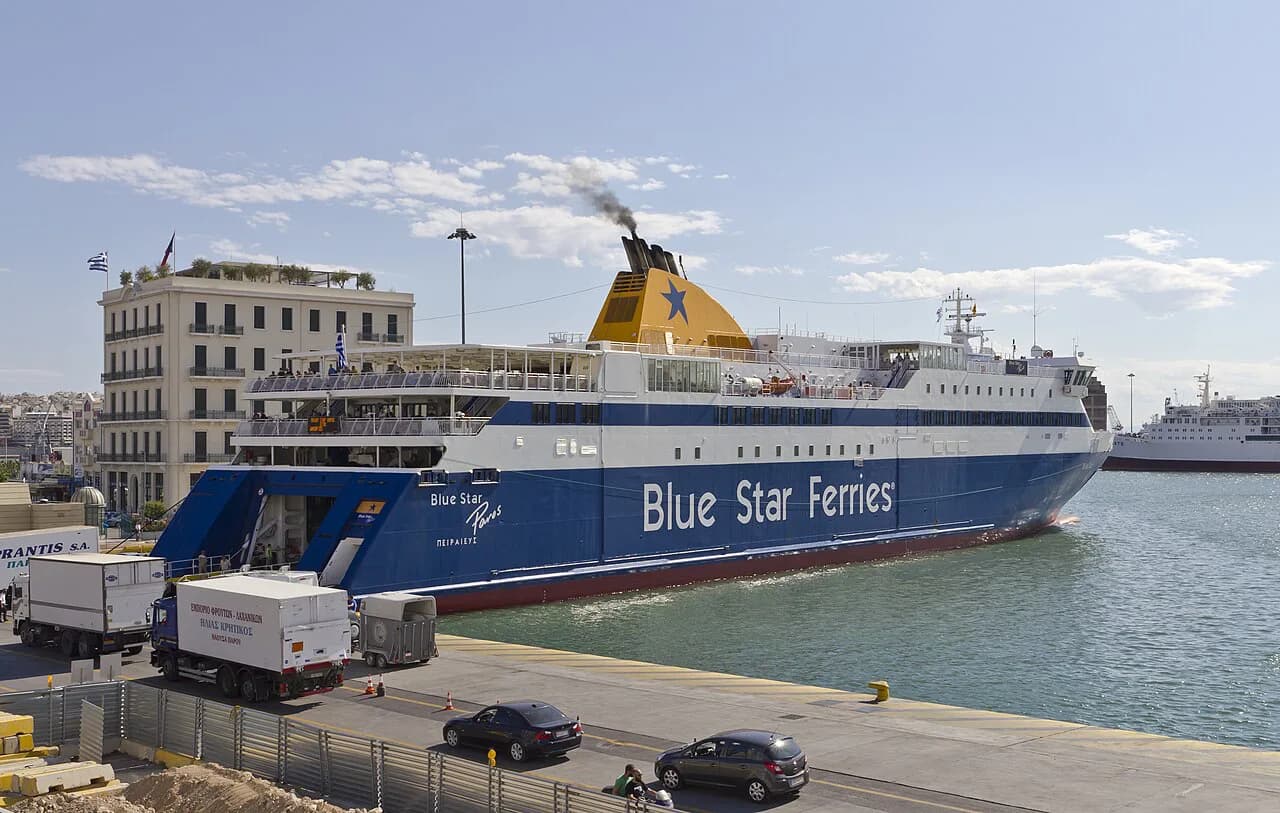
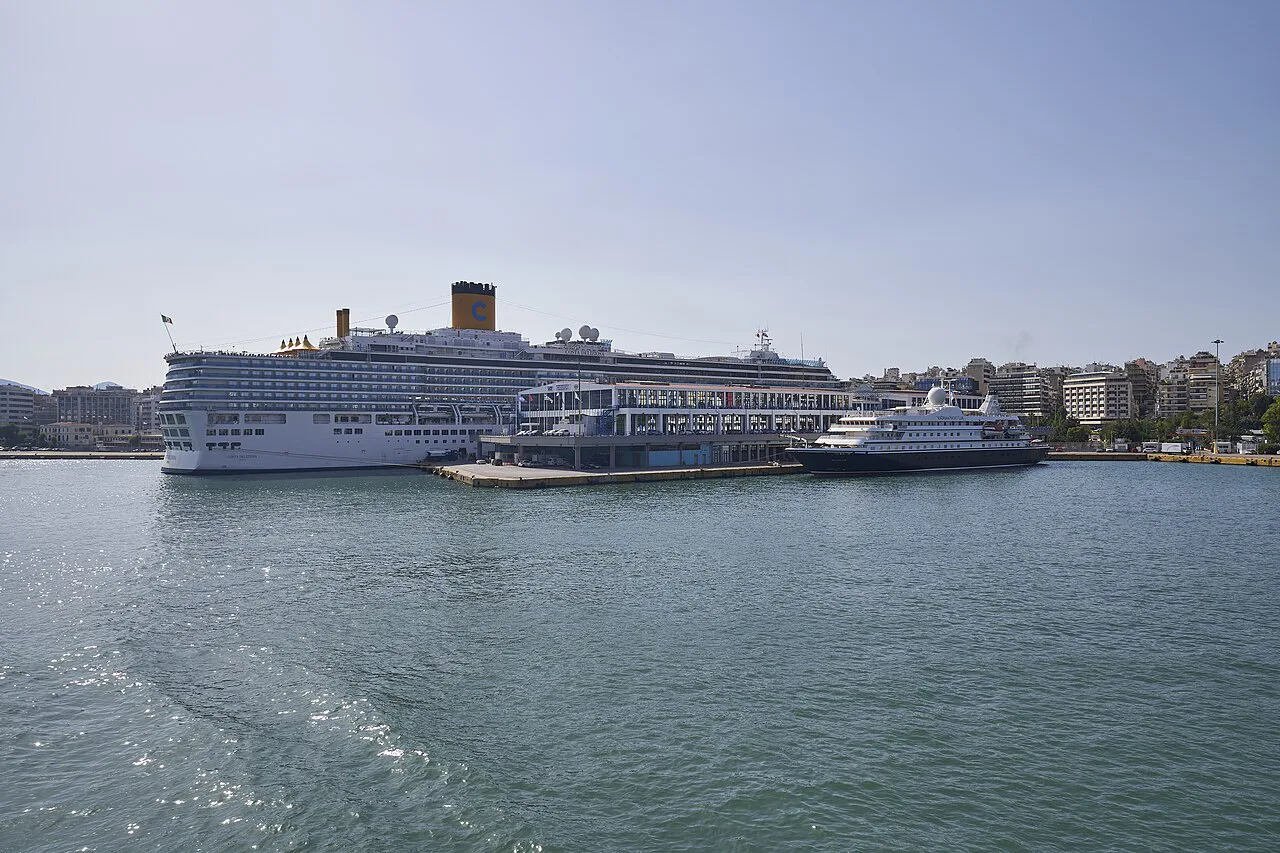
Cruise ships use the two gates at the far south end of the port, E11 and E12, a layout that puts you well away from the ferry quays and the city-facing waterfront. This is a large, busy commercial harbor rather than a compact cruise village, so allow time for the internal transfer before you plan anything in Athens.
Ships tie up alongside here rather than tendering, which means you walk off onto the quay and straight into the port's internal transport system. Where exactly your gangway sits within the E11 and E12 zone depends on the berth assigned for that call, so read the shuttle and walking instructions in the ship's daily programme; check current berth allocations and shuttle timings before you set out rather than counting on a particular terminal building.
Piraeus is both a homeport for round-trip Eastern Mediterranean itineraries and a call port on routes reaching Italy, Turkey, Israel and Egypt. On turnaround days the terminal is busy with embarking passengers and luggage, so allow extra time if you are joining or leaving the ship the same morning thousands of others are doing the same.
Terminal C Alkimos in detail
Terminal C, known as Alkimos, was built in 2003 and renovated and expanded in 2016, covering 2,100 square meters with capacity for up to 3,000 passengers and a flow of about 700 passengers per hour. It holds an arrivals hall and a check-in and departure hall, both air-conditioned, plus police, immigration and customs offices, free Wi-Fi, a taxi and limo rank and parking for 40 buses.
Inside, the check-in area has 20 counters and three X-ray machines, and the building sits less than 20 meters from the quay it serves. That proximity matters on embarkation day: once you have dropped bags and cleared the hall, you are effectively at the gangway rather than facing a bus transfer.
Shuttle buses link the terminal with the further quays, and luggage is moved quayside by trained port personnel under security procedures. Terminal C is one facility among the port's berths, so treat it as the building your ship may use rather than a guarantee that every Piraeus call docks there.
How far the berths are from town and the metro
The port sits 12 kilometers southwest of central Athens and 35 kilometers west of Athens International Airport, so Athens is a separate trip rather than a stroll from the gangway. Piraeus town itself begins at the port's northern edge, close to the metro and suburban railway stations near gate E5.
From the cruise terminal to the railway station is roughly a mile, and there is no station inside the cruise port, so that leg is a walk, a taxi or a bus. If you are heading to Athens independently, budget this transfer as part of the journey rather than as a warm-up.
Getting into Athens: metro, bus and suburban railway
Metro blue line 3 runs directly to the heart of Piraeus, with the station opposite the port entrance near gate E5. From there you connect onward into central Athens, including Syntagma, and the metro is the simplest option for anyone comfortable walking a mile or catching a taxi for the first leg.
Bus line 040 runs from Syntagma Square to Piraeus around the clock, with a journey of about half an hour. It is a useful return leg if you finish in central Athens and want to avoid changing metro lines, though road traffic can stretch that time in the evening peak.
The suburban railway connects Piraeus with Athens Central Railway Station, departing roughly hourly with a journey of about an hour, and the suburban station sits next to the metro station near E5. Treat it as a slower, less frequent alternative rather than your default, since the metro covers the city center more directly.
From Athens airport to the cruise terminal
The Airport Express bus X96 runs between the airport and the port around the clock, departing every 20 to 30 minutes with a journey of about an hour depending on traffic. The stop at the airport is immediately outside the Arrivals level exit doors, and tickets are sold at the kiosk to the right of the buses.
Metro blue line 3 from the airport reaches Piraeus in about 55 minutes, which makes it the easiest rail option despite the need to change or walk at the port end. The suburban railway takes about an hour and runs hourly, giving you a third choice if the timing suits.
A taxi from the airport takes roughly 45 minutes to an hour and runs around 50 euros in the day and about 65 euros between midnight and 05:00, which buys you door-to-gangway simplicity with luggage. Weigh that against the metro and bus, where you pay less but handle bags through stations and streets.
Free shuttle buses inside the port
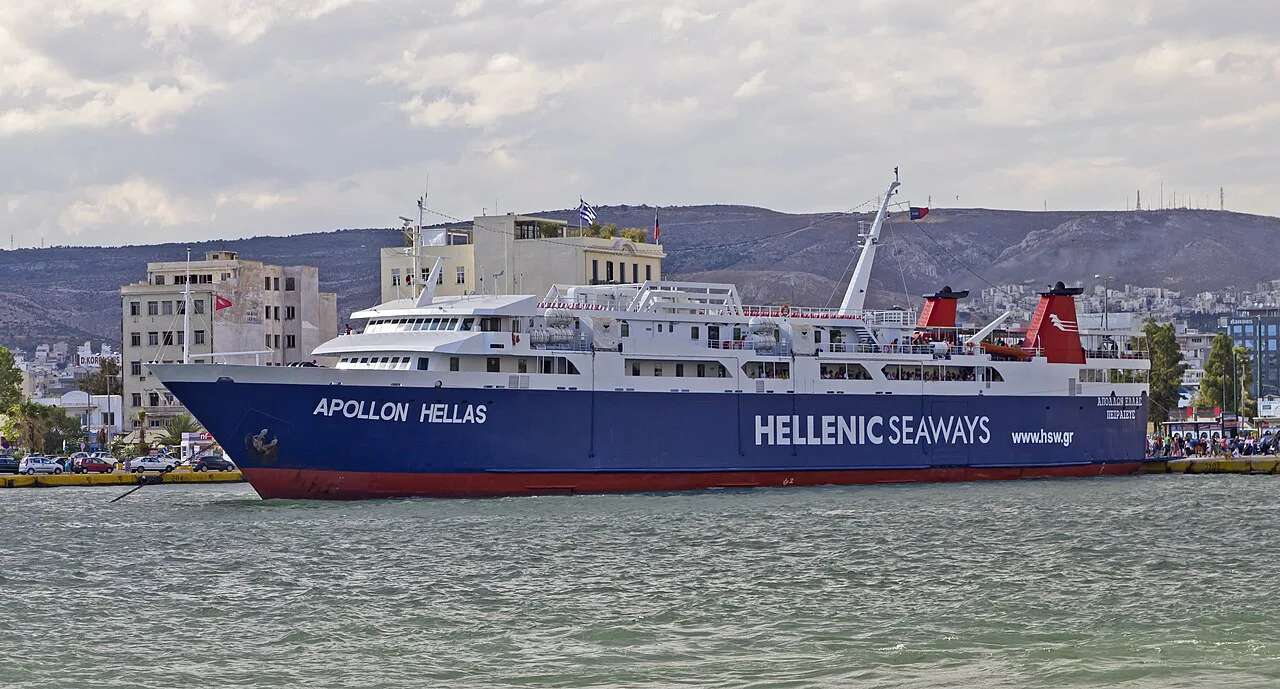
Free shuttle buses circulate the port to carry passengers to the various terminals and gates, leaving from the main entrance at E5 opposite the metro station. Schedules are displayed on the electronic board at the bus stop, so photograph the board before you head off and work backwards from it when planning your return.
Terminal C also runs shuttle buses between the building and the further quays, which helps if your ship occupies a distant berth. Use whichever bus the port staff direct you to on the day; the geometry of the quays, not a fixed timetable, determines where you are dropped and collected.
Taxis in Piraeus
Taxis remove the mile-long transfer problem and make sense with luggage, limited mobility or a tight schedule. A taxi from central Athens to Piraeus costs around 25 to 30 euros, which is worth splitting between two or three passengers when the alternative is a slow cross-city journey.
Ranks at the port are served by the taxi and limo stand at Terminal C and by vehicles waiting near the E5 entrance. Have your ship's berth or gate written down for the driver, since the port is large and drivers cannot guess which quay your gangway uses.
What fits a 6-hour call
Six hours ashore in Piraeus is enough for the port city but tight for Athens. The mile from the cruise berth to the station, the onward metro ride and the same journey back consume a substantial share of the call before you climb anything, and the Acropolis site itself demands time on steep ground.
Stay local instead and you get a rewarding day. Walk or shuttle to E5, cross into the town, and follow the waterfront through Pasalimani and Marina Zeas toward Mikrolimano, pausing for seafood and coffee. Keep the return leg to the E11 and E12 gates simple by using the town-side end of the route and the E5 shuttle stop, and set your turnaround so you are back at the ship with time in hand.
If you want one Athens sight and nothing else, a taxi both ways is the only realistic way to shorten the transfers. Even then, treat a six-hour call as a museum or a single landmark rather than a full city circuit.
What fits an 8- to 10-hour call
With eight hours you can reach central Athens by metro and cover the Acropolis area plus Plaka on foot, provided you leave the ship promptly. The metro is frequent and lands you in the city center, and the hour or more of total transfer time is the main variable to protect against.
Ten hours opens up a second site, a museum visit or a leisurely lunch in the Plaka. Consider taking the metro in and a taxi back if you are running late, or the 040 bus from Syntagma if you finish near the square and want a direct ride to the port side, which takes about half an hour in normal traffic.
Ship tours vs local operators vs going independently
Ship tours cost more but remove the transfer problem entirely, with coaches loading at the quay and a guide managing the Acropolis crowds. For first-time visitors with a tight call, that convenience is the real product, not the commentary.
Local operators meeting at the port offer similar itineraries at lower cost, but you take on the responsibility of finding the pickup point inside a large harbor. Book only with operators who state a clear meeting location and a return margin that leaves buffer before all-aboard.
Going independently by metro, bus or taxi is the cheapest and most flexible route, and it is entirely manageable in Piraeus. No transport option guarantees the ship will wait, so the discipline that matters is choosing a return departure that puts you at the gangway well before all-aboard rather than at the advertised time.
Walking Piraeus itself
Piraeus rewards a slow morning on foot. Kastella is the hill neighborhood above the port with views back over the water, Mikrolimano and Pasalimani are the harbor fronts lined with fish tavernas and moored yachts, and Marina Zeas adds a modern promenade for an easy loop. Aim to finish within walking distance of the E5 entrance so the shuttle back to E11 and E12 is straightforward.
The town center adjacent to the port has shops and everyday facilities, and the neighborhoods line up naturally along the coast rather than requiring a plan. Budget two to three hours for a comfortable circuit with a coffee stop, and keep your walking shoes on for uneven pavements.
Embarkation day at Piraeus
If you are starting a cruise here, Terminal C handles check-in with 20 counters, security screening and a departure hall within 20 meters of the quay, plus a taxi rank and coach parking outside. Arrive with your cruise line's documents and let port staff direct luggage, which is handled to the ship by port personnel.
Parking inside the port is prohibited, so drivers should use a private car park, with the closest being the OLP facility at Karaiskaki Square and a second lot about 400 meters further on near the church of Agios Nikolaos. If you need a room before sailing, staying near the port keeps the morning simple and works well for early ferries and early check-in.
From central Athens, the metro blue line reaches Piraeus directly and the 040 bus runs from Syntagma in about half an hour around the clock, so a pre-cruise night in the city center is practical. From the airport, choose the metro at roughly 55 minutes, the X96 bus at about an hour or a taxi at 45 minutes to an hour with the fare depending on the time of day.
Return-time buffer and all-aboard planning
Work backwards from all-aboard, not from the published departure time. From central Athens, allow the metro ride back plus the mile between the station and the cruise gates, and add a margin for a missed train or a slow shuttle. If your ship berths far from Terminal C, the internal shuttle can add another wait that is not visible from the city.
Published cruise schedules in Piraeus show arrival and departure times that are estimates, and port calls shift with weather, berth availability and itinerary changes. Use your ship's own daily programme and the port shuttle board at E5 as the authoritative times for your specific call.
A sensible aim is to be back at the E5 area or on the quay-side shuttle with enough slack that a delayed metro does not become a sprint down the quay. If a taxi is your fallback, note the Terminal C rank and keep the fare in cash in case card machines fail.
Drivers on a multi-day itinerary who want a vehicle for the mainland should arrange it before arrival, since port parking is prohibited and pick-up logistics take time on a busy turnaround morning.
Plan Your Piraeus Port Day
The decision in Piraeus is simple: Athens or the port city. Athens needs a deliberate transport plan built around the metro, the 040 bus or a taxi, plus the mile between the cruise gates and the station. Staying local needs almost none of that and still fills a short call with harbor views and seafood. Facing the same call at another Greek stop, you can plan it the same way with our Rhodes Cruise Port Guide, and our guide to the Cruise Ports in Greece sets out where ships dock elsewhere in the country.
Whichever you choose, fix your return against all-aboard, use the E5 shuttle board to time the loop, and keep the terminal's taxi rank as your backup. Then the only thing left to decide is how early you want to leave the ship.
Explore more Piraeus cruise port guides
Frequently Asked Questions
Where do cruise ships dock in Piraeus?
Cruise ships use the gates at the far south end of the port, E11 and E12, tying up alongside rather than tendering. Terminal C Alkimos is one of the port's terminal buildings, with check-in halls, security screening and a taxi rank, and shuttle buses run between the building and the further quays.
Can you walk from the Piraeus cruise berth into town?
You can, but it is a working port with long quays. The railway and metro station near gate E5 is roughly a mile from the cruise terminal, and free shuttle buses connect the port gates. Shuttle departure times are displayed on the electronic board at the E5 stop.
How do you get from Piraeus cruise port to Athens?
Take a taxi or shuttle to the station, then metro blue line 3 into the city center. The 040 bus runs from Syntagma Square to Piraeus around the clock in about 30 minutes, and the suburban railway links Piraeus with Athens Central Railway Station roughly hourly.
How do you get from Piraeus to Athens airport?
Metro line 3 takes about 55 minutes from the airport to Piraeus, while the X96 express bus runs around the clock every 20 to 30 minutes and takes about an hour depending on traffic. A taxi usually takes 45 minutes to an hour, with a higher fare between midnight and early morning.
Is there a free shuttle bus at Piraeus cruise port?
Yes. Free shuttle buses circulate the port between the terminals and gates, departing from the main entrance at E5 opposite the metro station. Terminal C also runs shuttles to the further quays, and the port publishes the current schedules on the board at the bus stop.
What can you do in Piraeus on a short port call?
Stay local: walk the waterfront neighborhoods of Pasalimani, Marina Zeas and Mikrolimano, where fish tavernas and moored yachts line the harbor, then climb toward Kastella for views over the port. This loop stays close to the shuttle stop and suits calls of four to six hours.
Is it better to take a ship tour or go independently from Piraeus?
Ship tours load at the quay and handle the transfer, which suits first-time visitors with a tight call. Independent travel by metro, bus or taxi is cheaper and more flexible, but you own the return risk, and nothing guarantees the ship will wait for you.
How much time should you allow to get back to the ship?
Start from all-aboard rather than departure time. From central Athens, allow the metro ride back, the mile between the station and the cruise gates, and slack for a missed train or a slow port shuttle. Check your ship's programme and the shuttle board for the times that apply to your call.
Sources
Port-day notes for your next cruise
Optional updates to our port guides.
You might also like
Continue reading
More guides you'll find useful