Split Cruise Port to Old Town: Walking, Tenders and Timing
Split's cruise berths sit close to Diocletian's Palace, and most passengers reach the old town on foot in about 10 minutes. Here is how the walk and tenders work.
On this page
Split hands cruise passengers one of the easiest port days in the Adriatic: a walled Roman palace, a café-lined waterfront and a wooded hill all sit within a short walk of the berths. The city suits anyone who wants a compact, self-paced day on foot, and it suits them even on a short call.
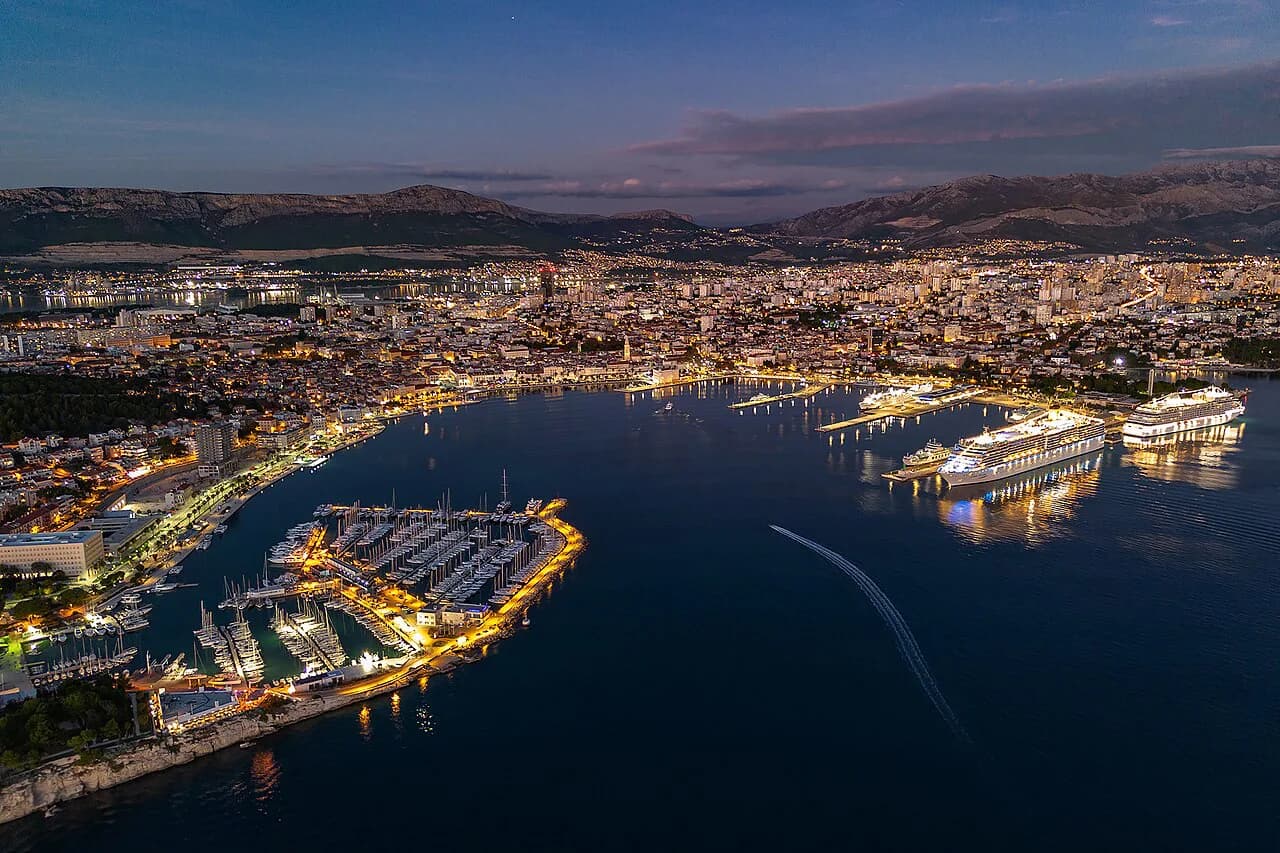
The day hinges on two numbers. Diocletian's Palace stands about 1 km (0.6 mi) from the cruise terminal, and the nearest beach, Bacvice, is about 1.2 km (0.7 mi) away. Knowing which pier or anchorage your ship uses decides how much of that distance you actually cover.
Split port day at a glance
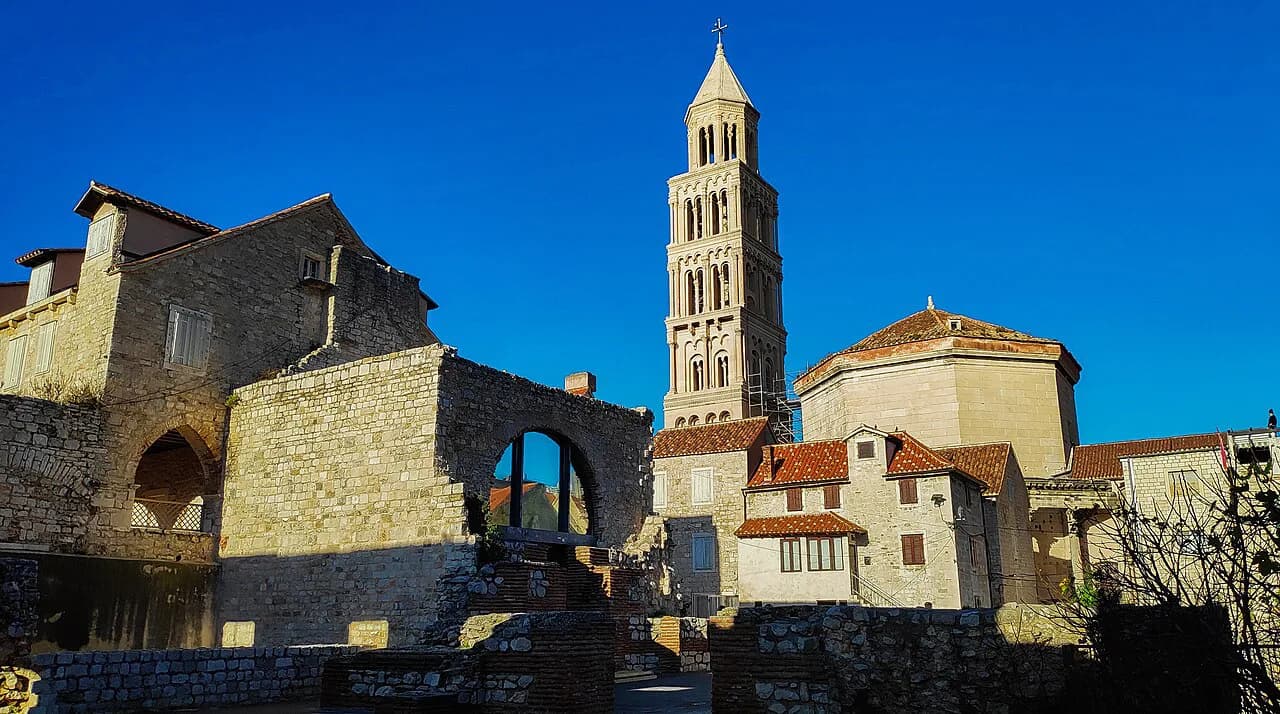
Split's harbour opens directly onto the old town, so the classic port-day friction of shuttles and transfers mostly disappears. The old town grew up inside and around Diocletian's Palace, a UNESCO World Heritage Site, and the Riva waterfront runs along the edge of the harbour between the berths and the palace walls.
That layout suits passengers who want to step off the ship and start sightseeing within minutes, including families and anyone with limited mobility who prefers a flat, short walk. It suits less well anyone hoping for a big-city day: Split's core is small, and its best moments are the palace alleys, the waterfront and the hill rather than long museum circuits.
Where ships dock
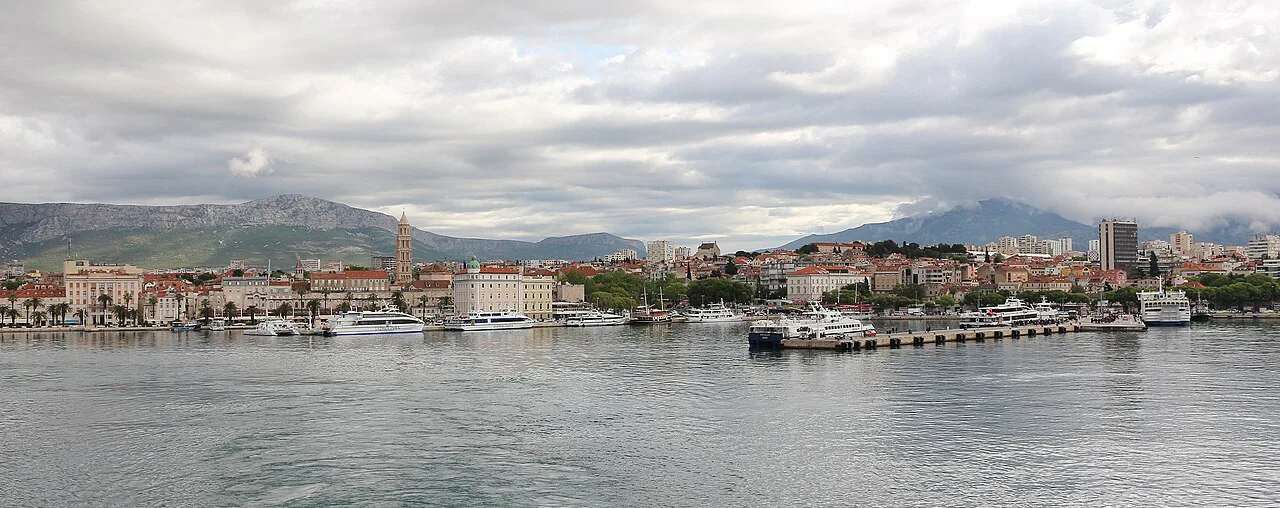
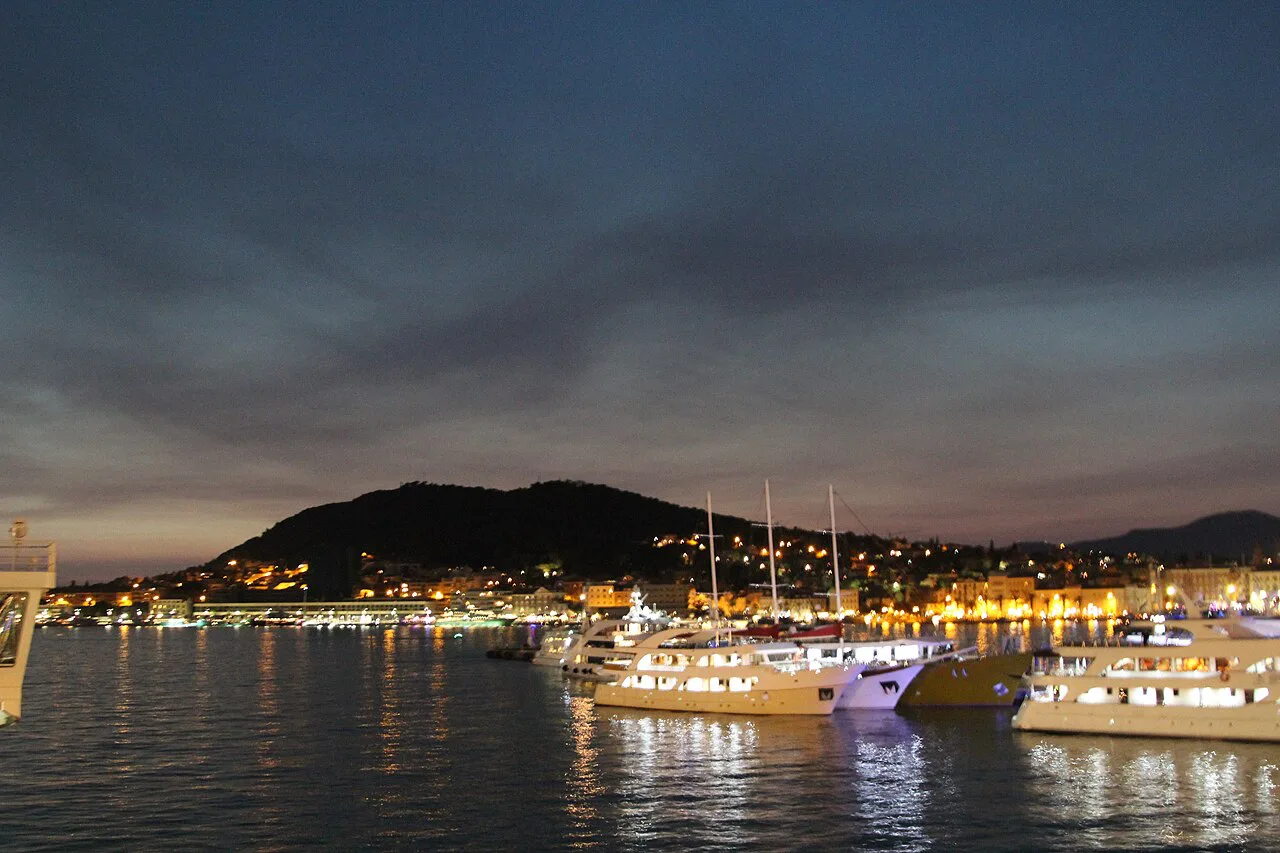
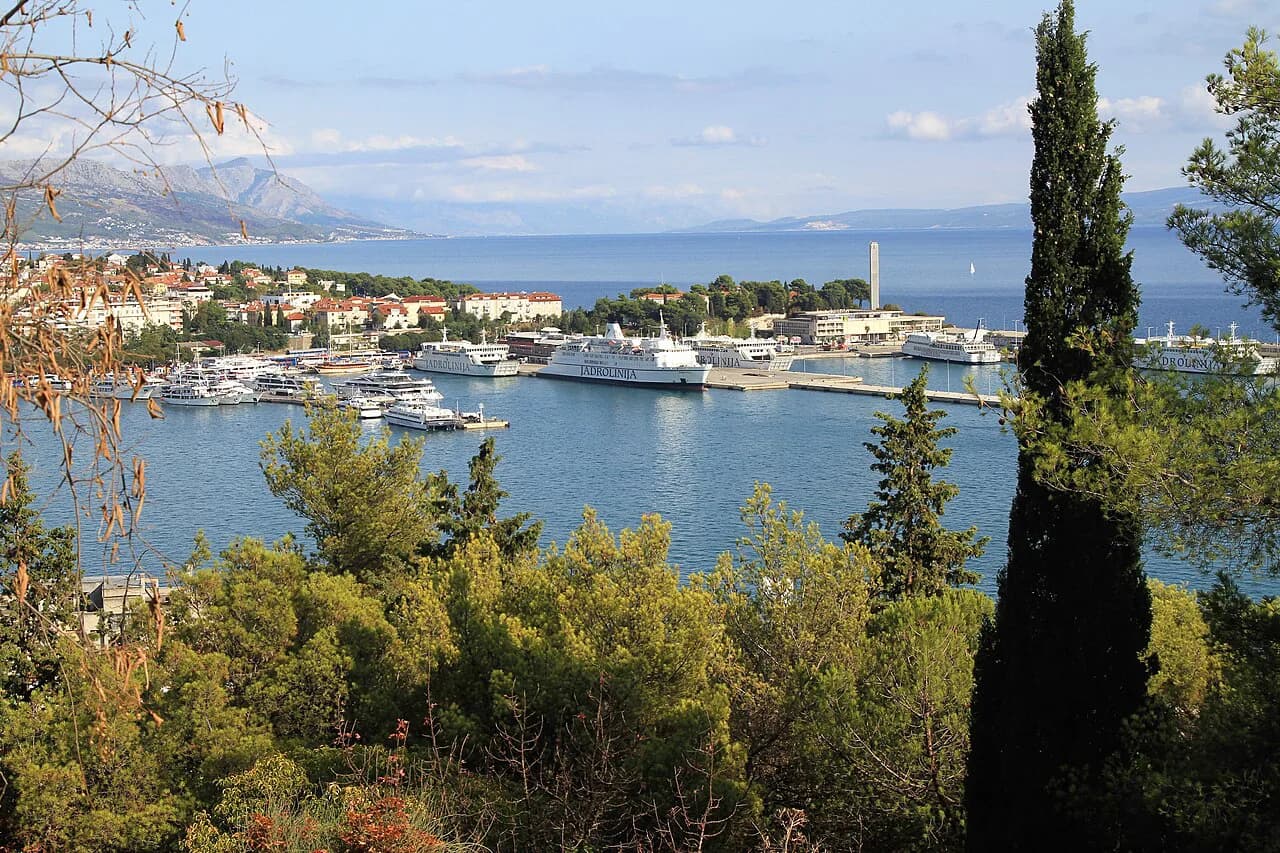
Smaller cruise ships tie up alongside near the ferry terminal at Split Ferry Port, while larger vessels anchor in the sheltered harbour and send passengers ashore by tender. The passenger terminal handles ferries to Hvar, Vis, Solta and Italy, and the main docking area sits close to cafés, banks and shops.
The terminal building itself is modest, so treat it as a passing point rather than a place to spend time. Your cruise line's daily programme names the berth or tender operation for your call, which is the detail that decides your walking distance; the port authority publishes berth information for the harbour as a whole.
The tender station and the old town
Counter-intuitively, the tender landing often works in your favour. The station for cruise tender boats sits even closer to the old town than the cruise terminal does, so a ship at anchor can put you nearer the palace walls than a ship alongside. Allow a few minutes of queueing for the tender ride each way.
Tender operations also set your return constraint. The last tender usually runs well before departure time, and that earlier cut-off, not the ship's sailing time, is the deadline you plan around on an anchorage call.
Walking from the terminal to Diocletian's Palace
The walk from the cruise terminal to the old city takes about 10 minutes and is straightforward on foot. From the ferry-terminal side, follow the harbour edge west and the palace walls rise ahead of you; you enter the old town through one of the gates rather than approaching a separate visitor entrance.
The route is flat and mostly paved, which makes it realistic for most passengers, though the polished stone inside the palace becomes slick after rain. Wear shoes with grip if you plan to explore the alleys and the substructures.
Getting your bearings on arrival
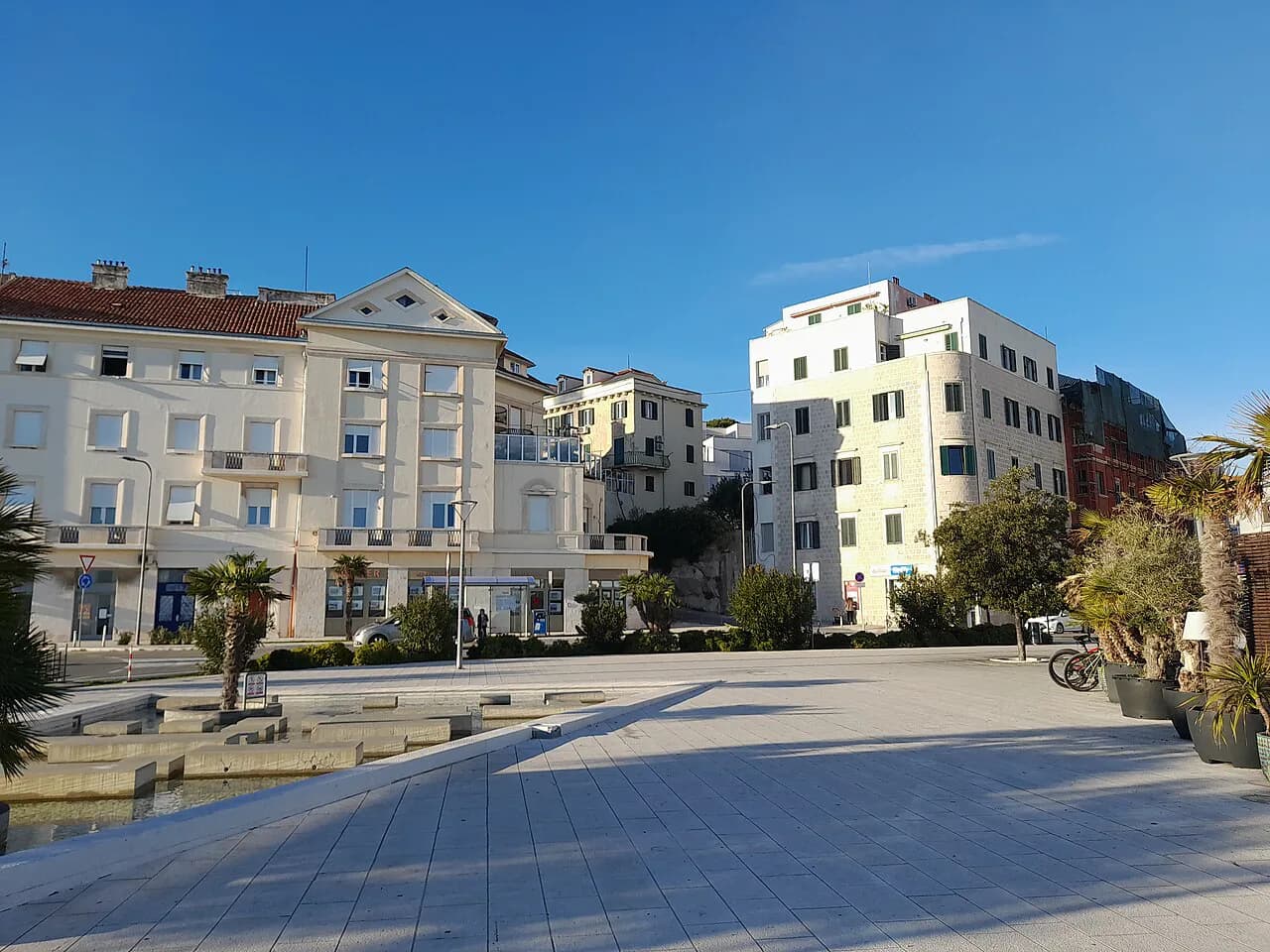
Two landmarks orient you immediately: the ferry terminal and main docking area behind you, and the Riva waterfront running along the harbour in front. The Riva is the city's open-air living room, lined with cafés, and it marks the boundary between the working port and the old town.
A taxi rank sits at the pier for anyone arriving with heavy bags or heading further afield. For the old town itself you will not need it: the distance is short enough that walking beats waiting for a car.
Taxis at the pier
Taxis earn their place for three jobs on a Split port day: reaching a museum or gallery beyond the old town, getting to a beach other than Bacvice, and making a tight return to the ship with shopping or luggage. For the palace and the Riva they add nothing but a fare and a wait.
Fares are metered or agreed before you get in, so settle the basis of the price with the driver before departure rather than after. The taxi rank at the pier is the reliable pickup point on the way back, since the old town's lanes are pedestrian territory.
Bacvice beach on a short call
Bacvice Municipal Beach lies a short walk along the Riva, roughly 1.2 km (0.7 mi) from the terminal. Its shallow, sandy bay is the closest swimming option to the ship and the reason a beach stop fits a shorter call at all.
Budget the walk both ways plus time to change and dry off, and remember that the return leg competes with everyone else heading back for all-aboard. On a call of six hours or less, the beach works best as a quick dip combined with the old town rather than a full afternoon.
Diocletian's Palace and the old town on foot
The palace is the reason most passengers never leave the core. Built by a Roman emperor two thousand years ago, it now holds a busy warren of shops, restaurants and squares inside its walls, and the whole compound is walkable in an afternoon at an unhurried pace.
Guided walking tours from the cruise port cover the palace and the old town on foot, which suits passengers who want the history explained rather than read from a phone. A guide also moves you through the gates and alleys faster than first-time navigation.
Outside the walls, the old town extends toward the markets and the archaeological collections north of the centre. Most of it stays inside a comfortable walking radius of the Riva, so you rarely need transport to link one sight to the next.
Marjan Hill and the upper terraces
Marjan Hill Park forms the green western edge of the city, spanning about 3.5 km of wooded slopes. Trails climb to three terraces with views over the harbour, the islands and the palace rooftops, and the walk up is the price of those views.
Treat Marjan as a half-day commitment from the port rather than a quick detour. The climb and descent, even to the nearest terrace, take a meaningful slice out of a short call, and the reward is a viewpoint rather than a sight you can see in passing.
A 6-hour call on foot
With six hours ashore, stay inside the harbour. Walk to the palace, wander the alleys, circle the substructures if there is a queue-free moment, then take coffee on the Riva before heading back. That itinerary uses the port's main advantage: no transfers and no timetable to miss.
If you want one addition, choose Bacvice for a quick swim over Marjan for the climb, because the beach is closer and the return is simpler. Skip Trogir entirely on a call this short.
An 8- to 10-hour call
A longer call lets you combine the palace with either the beach or the hill, but not comfortably both. A common shape is a morning in the old town, lunch on the Riva, then an afternoon swim at Bacvice, which keeps you within walking distance of the ship throughout.
Museums offer a good alternative for hot or wet days. The Split Archaeological Museum, north of the centre, holds collections from prehistoric through Roman and Christian periods, while the Mestrovic Gallery displays the sculptor's works in a neoclassical villa he built himself.
Marjan fits a long call if you start early and treat the terraces as the day's main outing, with the old town saved for the return leg. Either way, the buffer below is what protects the day.
Trogir as an alternative half-day
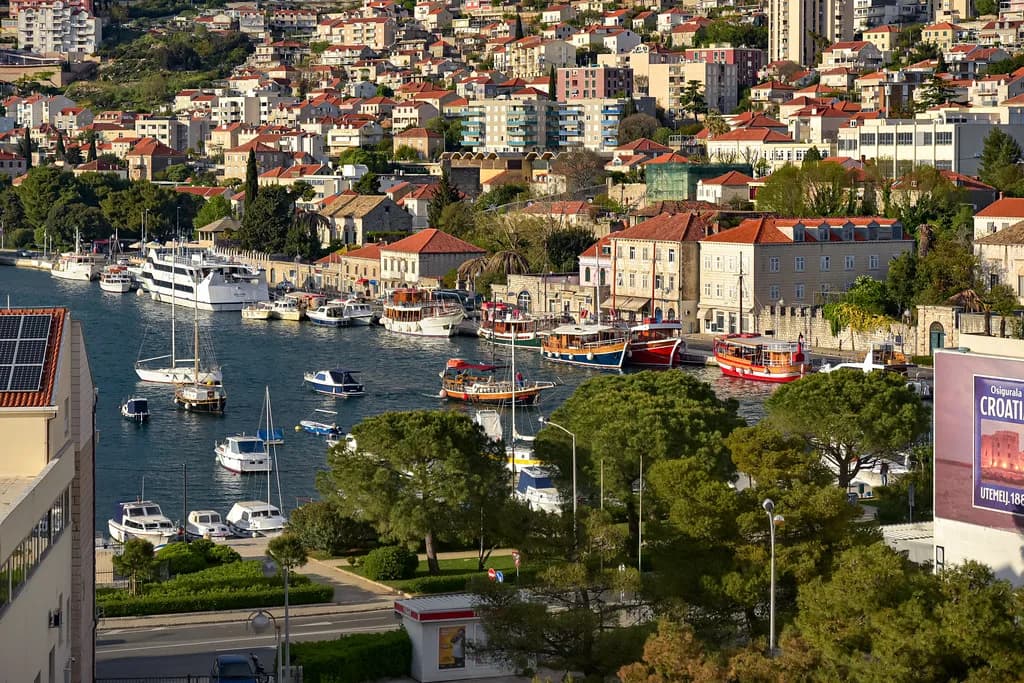
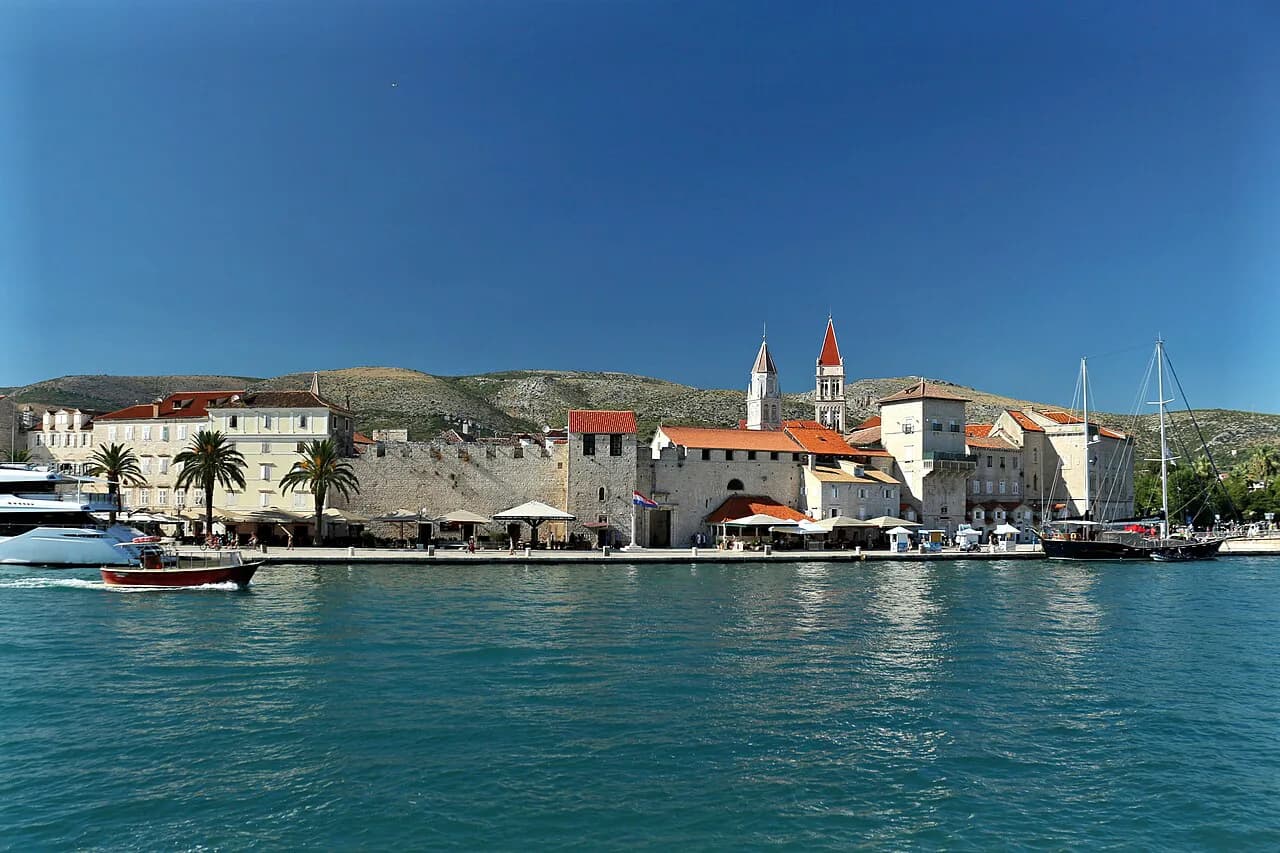
Trogir, a UNESCO-listed town nearby, preserves Romanesque and Gothic streetscapes that make it a genuine alternative to another hour in Split. The cost is transit: it consumes a serious share of a port day in each direction, leaving less margin than a day spent on foot. If you are weighing a nearby old town against your own port's logistics, the same decision is laid out in this guide to getting from Dubrovnik Cruise Port to Old Town.
On a nine- or ten-hour call, Trogir in the morning with the palace in the late afternoon is workable. On anything shorter, the arithmetic of travel time plus the return buffer leaves too little time on the ground to justify it.
Ship tours versus going independently
Going independently is genuinely low-risk here, because the old town sits roughly 1 km from the terminal and a taxi rank waits at the pier. That short distance is your insurance: even a slow walk back is measured in minutes, not a journey across a city.
Ship tours buy convenience and a guaranteed return to the vessel, which matters on tender days when the last tender runs before sailing. Local operators and walking tours give more flexibility and often smaller groups. No tour, ship-sponsored or otherwise, obliges the captain to hold the ship for independent travelers.
For the walk back from the old town, leave at least an hour before all-aboard if you are alongside, and add tender queueing time if you are at anchor. Aim to be at the gangway or tender point early rather than exactly on time.
Practical notes for the walk back
Plan the return as the anchor of the day rather than an afterthought. Fix your turnaround point by working backwards: all-aboard time, minus tender queue if relevant, minus 20 minutes of walking and orientation, gives the moment you should leave the palace.
Split's compact layout means you can improvise the itinerary and still keep that deadline. Keep the harbour and the Riva in view as your compass, and you will find the ferry terminal and your berth without a map.
The city rewards a slow pace: café stops on the Riva and unplanned turns into palace alleys are the point of the day, not a detour from it. Build those in and the fixed all-aboard time becomes a boundary rather than a worry.
Plan Your Visit
Split is one of the rare cruise ports where the old town is the berth's neighbour. Decide only two things in advance: whether you are alongside or at anchor, because that sets your tender deadline, and whether you spend the day entirely on foot or sacrifice time to Trogir.
Everything else you can settle on the Riva with a coffee in hand. As a final step, confirm your call's berth or tender arrangement with your cruise line or the port authority, then walk ashore with the return buffer already fixed.
Frequently Asked Questions
How far is Split cruise port from the old town?
Diocletian's Palace, the heart of the old town, sits about 1 km (0.6 mi) from the cruise terminal, and the walk takes roughly 10 minutes. Passengers landing at the tender station come ashore even closer to the old town than the terminal itself.
Can you walk from the Split cruise port to Diocletian's Palace?
Yes. The route follows the harbour edge from the ferry-terminal side toward the palace walls, and the old town is easily visited on foot from the port. The ground is flat and paved, though the polished stone inside the palace gets slippery after rain.
Do cruise ships tender in Split?
Smaller ships dock alongside near the ferry terminal, while larger vessels anchor in the sheltered harbour and tender passengers ashore. The tender landing is closer to the old town than the cruise terminal, and the last tender usually runs before the ship's departure time, so that earlier cut-off sets your return deadline.
How long does it take to walk from the ship to Split old town?
Allow about 10 minutes from the cruise terminal to the old city, plus a few minutes of queueing if you are on a tender. Add time for the narrow palace alleys, where progress is slower than the distance suggests.
Is Bacvice beach within walking distance of the cruise port?
Yes. Bacvice Municipal Beach lies about 1.2 km (0.7 mi) from the terminal, a short walk along the Riva. It is the closest beach to the ship and works well as a quick swim on a six-hour call, provided you leave time to dry off and walk back.
How much time do you need in Split from a cruise ship?
Six hours covers the palace, the old town alleys and a coffee on the Riva at an easy pace. Eight to ten hours lets you add Bacvice beach, a museum or the climb to Marjan Hill, but not all three comfortably. Trogir needs a long call to be worth the travel time.
Should you take a ship tour or explore Split independently?
Independent exploring is straightforward because the old town is about 1 km from the terminal and a taxi rank sits at the pier. Ship tours add a guaranteed return to the vessel, which matters most on tender days. No tour operator can make the ship wait for independent travelers.
Sources
Port-day notes for your next cruise
Optional updates to our port guides.
You might also like
Continue reading
More guides you'll find useful