Belfast Cruise Port to City Centre: Shuttle, Taxi or Walk
Belfast's cruise berths sit a few kilometres from Donegall Square. Compare shuttle, taxi and walking options, timings, and the buffer you need before all-aboard.
On this page
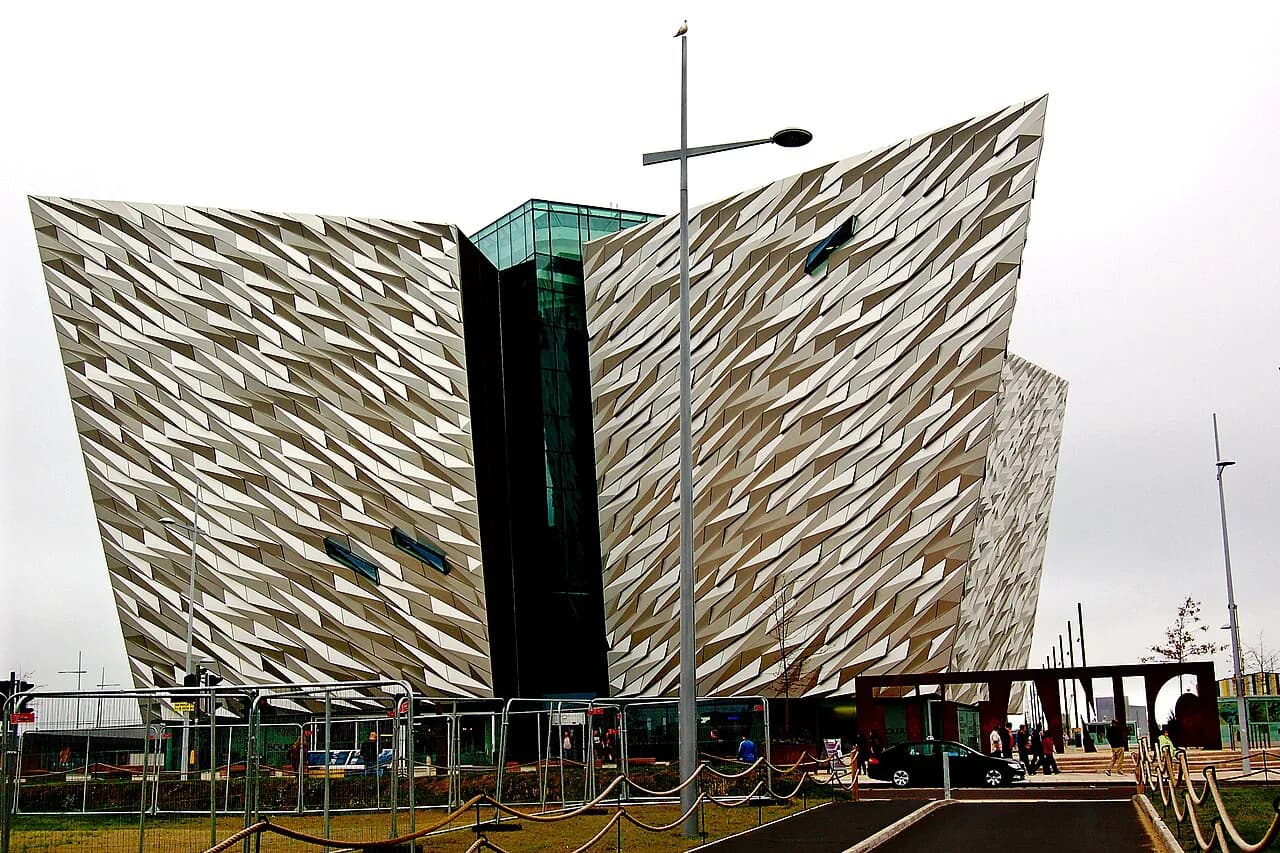
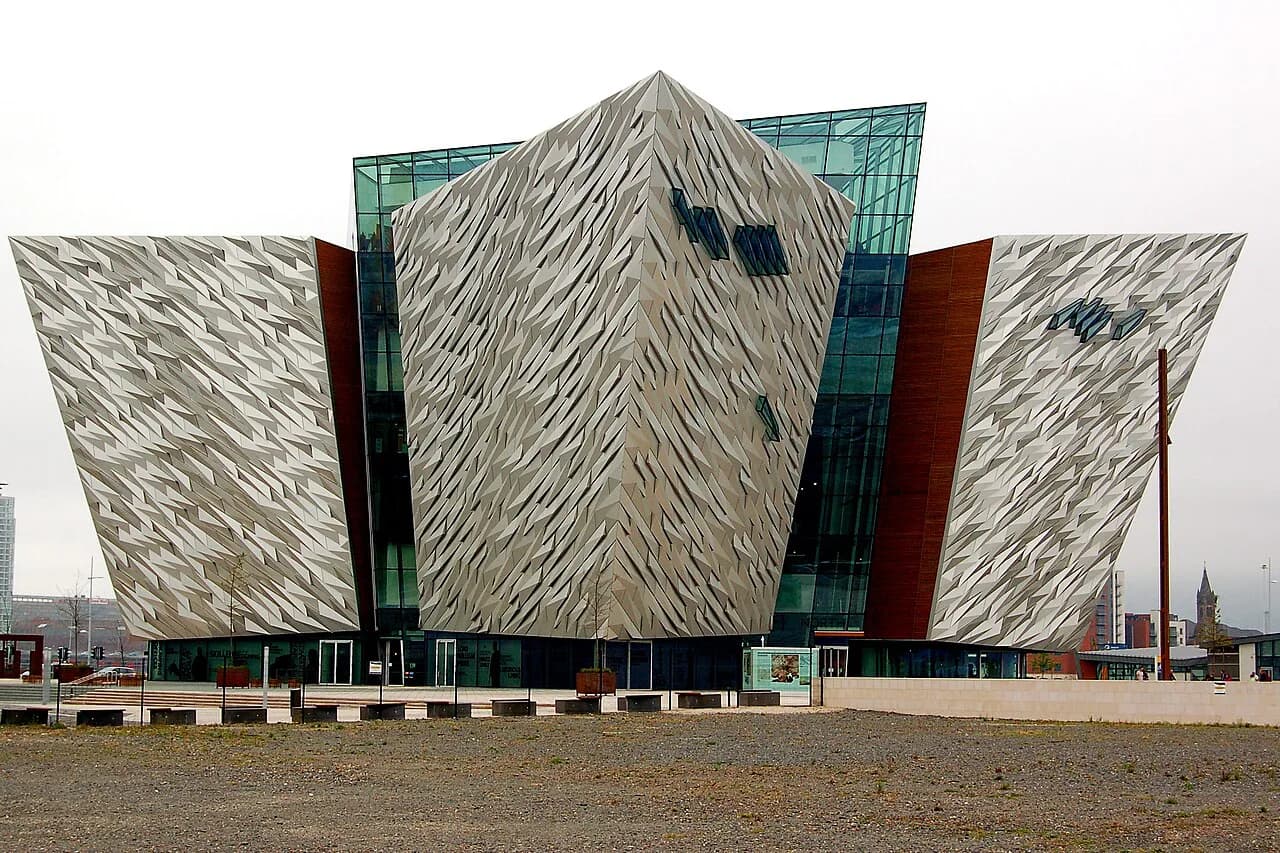
A Belfast port day puts you a few kilometres from the city centre, with the Titanic Quarter and its museum almost next door to the berths. That layout suits passengers who want a compact morning in town and an afternoon at the shipyard heritage sites, or a full day out on the Antrim coast. The one decision that shapes everything else is how you cover the gap between the quay and Donegall Square.
Belfast Harbour handles around 150 calls a season, with most ships staying a full day and some overnighting, and it also runs turnaround cruises where passengers start or finish their trip in the city. That mix matters: a call day is about getting in and back before all-aboard, while a turnaround day is about luggage, check-in and parking. This guide treats them separately.
Where ships dock in Belfast
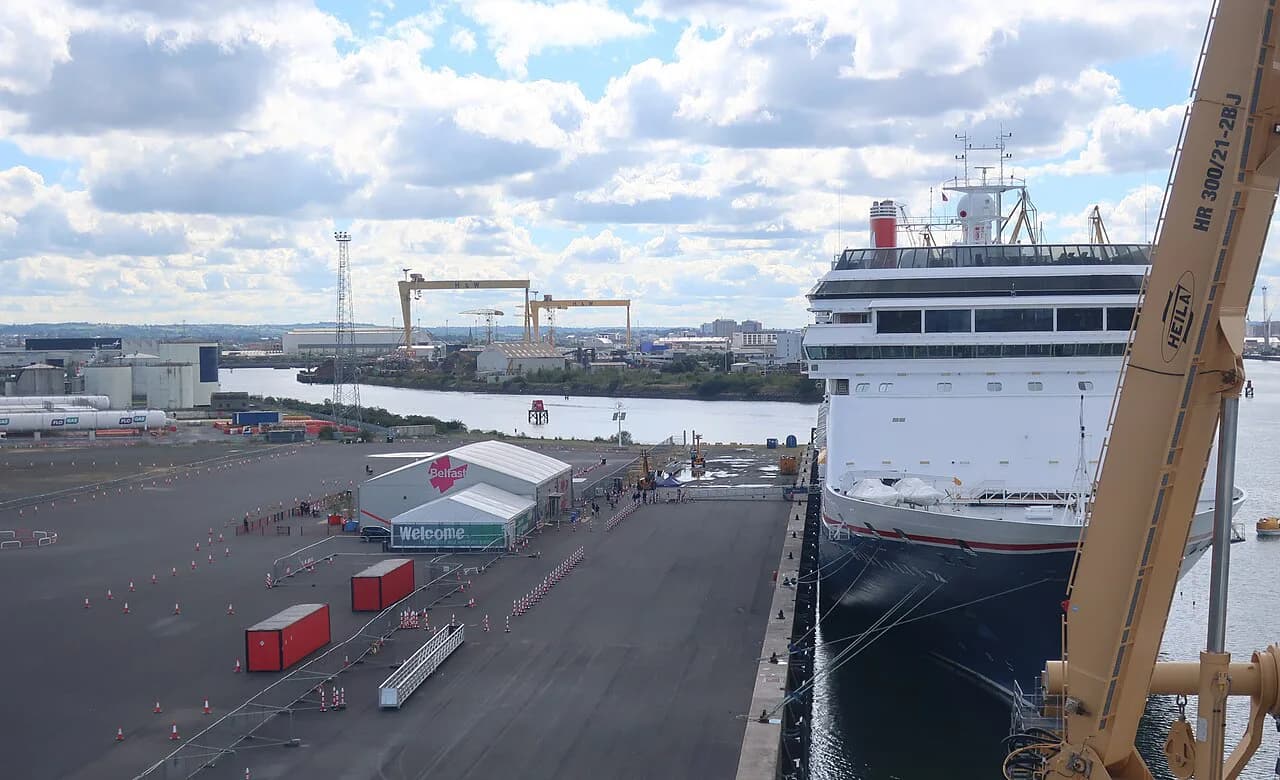
Belfast has two cruise docks in the harbour estate. Stormont Dock has a wharf length of about 457 metres and takes the larger liners, while Pollock Dock, at roughly 177 metres, is used by smaller vessels. Both sit north-east of the city centre, so nothing about the day starts with a stroll off the gangway into town.
The cruise terminal itself is about 2 miles, or 3 kilometres, from downtown, and the immediate surroundings are working port rather than sightseeing. Plan on a transfer from the moment you disembark; treating the walk into town as part of the sightseeing rarely pays off. For berth-level detail on the harbour layout, the dedicated belfast cruise terminal page covers the docks and terminal building.
How far the berth is from Donegall Square
Donegall Square is the natural target for a transfer: it puts you in the middle of the city, with the Visit Belfast Welcome Centre on the square for maps, information and bookings. From the terminal that is roughly two to three miles depending on which dock your ship uses, a drive of a few minutes in light traffic and longer in the morning peak. Ask at the gangway which dock you are on, because it changes your walking route and your taxi fare. If you want to see how another port handles this same gap between quay and centre, the guide to the Liverpool Cruise Port to the City Centre works through the walking and transport options.
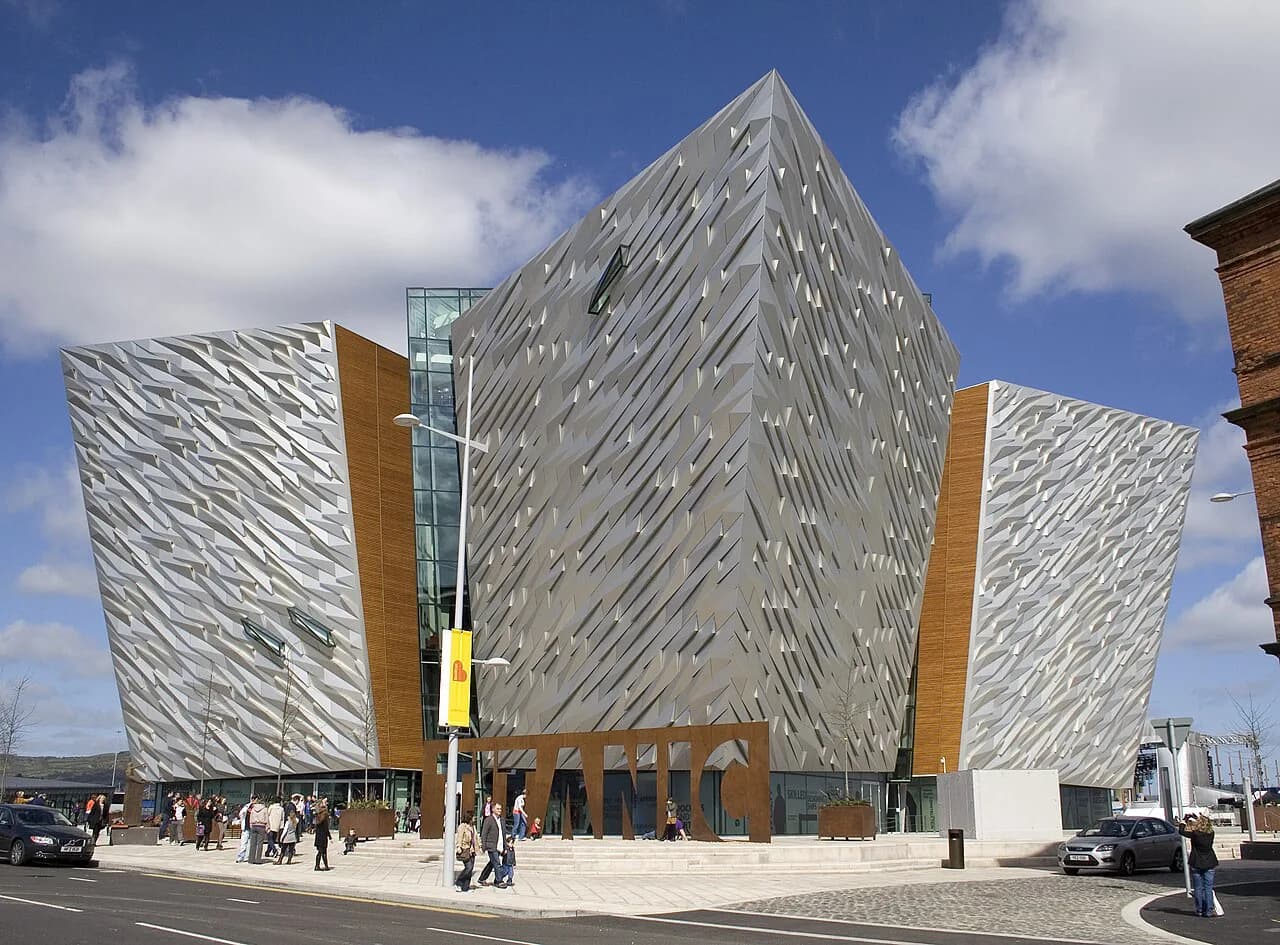
Between the port and town lie the Lagan and the Titanic Quarter, which is why the transfer is not wasted time if you plan it well. You can ride in, do the city centre first, then work your way back through the Titanic attractions toward the ship. That order saves a second transfer and keeps you progressively closer to the berth as all-aboard approaches.
Getting into town by shuttle bus
A shuttle transfer to Donegall Square North is the standard way into the centre on a call day, and it drops you at the edge of the main shopping and hotel district. Whether one runs, how often it departs and what it costs depend on your cruise line and on Visit Belfast, so treat the shuttle as something to confirm on board rather than a fixed port service. Ask at the excursions desk the evening before arrival.
Passengers on Belfast forums describe a free shuttle in some seasons and no city-run shuttle in others, with some cruise lines providing their own. That inconsistency is the practical point: build your plan so it works with or without a shuttle. If the shuttle is running and the queue is short, take it; if the line snakes around the terminal, walk to the taxi rank instead of losing twenty minutes.
The return leg is where the shuttle earns its keep. Note the last departure time and the exact stop on Donegall Square North when you are dropped off, and give yourself one shuttle cycle of slack in case a bus fills before you reach the door. Do not rely on hailing a shuttle from the street; it loads at the designated stop.
Taxis from the terminal
Taxis wait at the terminal, and for a group of three or four the fare split often makes a cab the sensible choice over waiting for a shuttle. As a line-to-centre benchmark, Fred. Olsen quotes a taxi from Lanyon Station to the city centre at roughly 8 to 12 pounds, which gives you a feel for city fares rather than a firm port-to-town price. Expect the run from the berth to Donegall Square to be quoted separately.
At the rank, use the licensed London-style black cabs rather than unofficial cars, which can overcharge. If you are a family or a small group heading straight to Titanic Belfast, a taxi is also the fastest way to reach the museum before the coach parties arrive. Agree the destination and ask for an estimate before you get in.
Walking from the berth
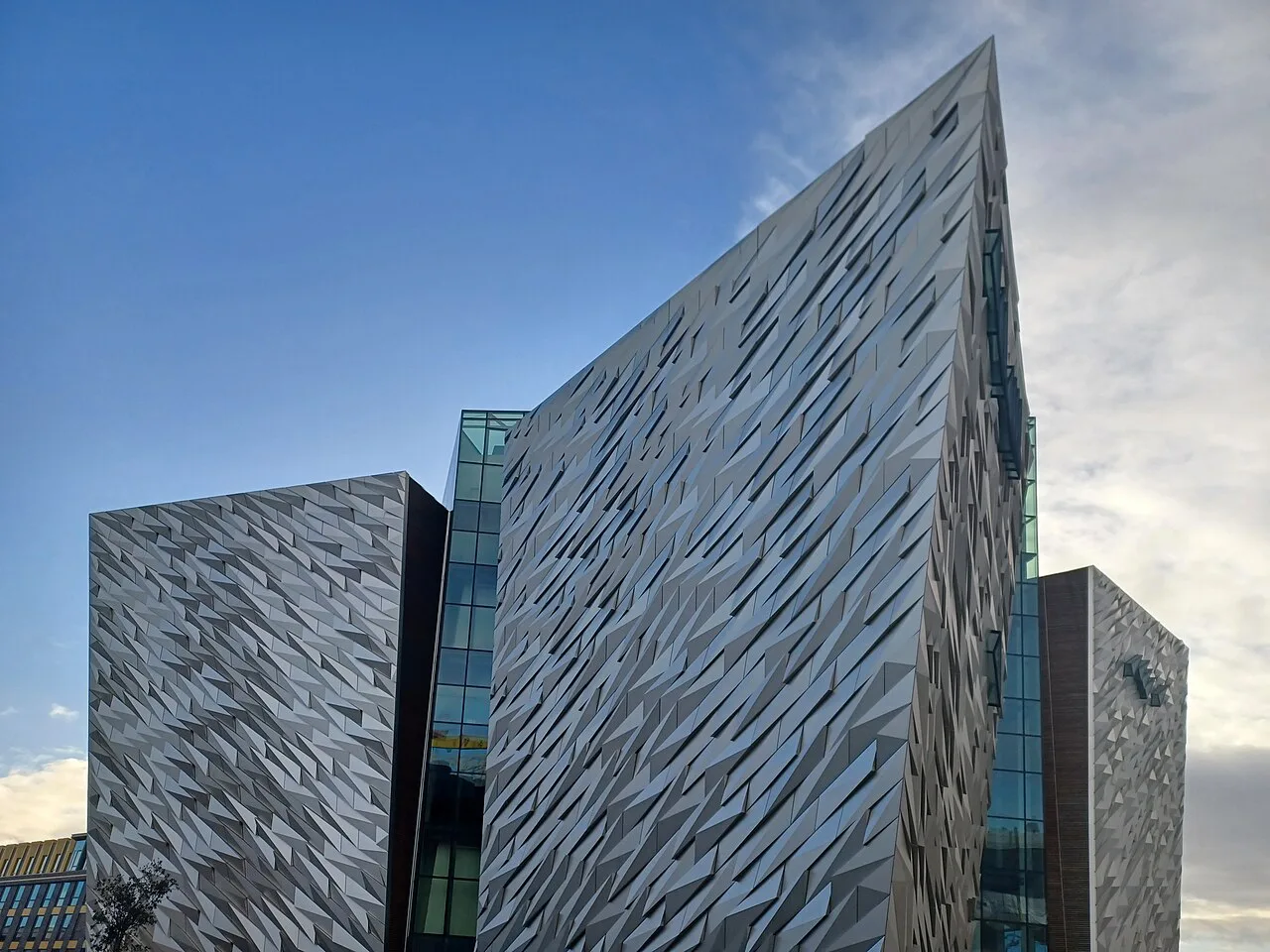
Walking into the centre from the terminal is possible but it is a long haul through port roads with little of interest along the way, and the return leg uphill against the clock is worse. If you are mobile and travelling light, the walk works better as a one-way option: walk out through the Titanic Quarter to the museum, then take a taxi or shuttle back to the ship. Do not plan a round trip on foot unless you have a long call and good weather.
For most passengers the walking question answers itself once you see the berth: there is nothing immediately around the terminal to stroll to, so the transfer is a means to an end. Save your steps for the city centre and the Titanic Quarter, where the distances between sights are short and the ground is flat. The cruise port page has more on the harbour geography if you want to picture the route before you arrive.
Public transport and the metro option
Once you are in the centre, Belfast's local metro bus network is the practical way to reach sights beyond walking distance, and the Visit Belfast Welcome Centre on Donegall Square is the place to pick up route information. The metro does not solve the port-to-centre leg for you; it is the tool you use after the transfer. That distinction keeps your planning simple: shuttle or taxi first, metro second.
If the shuttle queue is long and no taxi is waiting, the fallback is to walk to a main road and pick up a cab rather than to hunt for a bus stop in the port estate. Port roads are not laid out for pedestrians and the industrial traffic is heavy, so a short walk plus a hailed cab beats a long walk to an uncertain bus stop. Build that fallback into your timing rather than discovering it at the gangway.
Arriving by train or ferry
Turnaround passengers arriving by rail come into Lanyon Station, and the Enterprise Train links Dublin's Connolly Station with Belfast on a joint Translink and Irish Rail service. From Lanyon Station a taxi to the cruise terminal is the straightforward connection; Fred. Olsen quotes roughly 8 to 12 pounds for a taxi from Lanyon Station to the city centre. Allow extra time on a weekday morning when the roads into the harbour are busy.
Belfast is also a ferry port, with Stena Line crossings from Cairnryan, Liverpool and Heysham connecting the city to Britain. If you are driving to a turnaround cruise, the M1 motorway is well signposted for Belfast and port signs take over once you reach the Greater Belfast area. Use the postcode BT3 9EA for the cruise terminal in your satnav, and head to the terminal and luggage drop-off rather than the car park.
What fits a 6-, 8- and 10-hour call
On a six-hour call, stay in the city. Transfer in, spend an hour or two around Donegall Square and the Cathedral Quarter, and use the remaining time at Titanic Belfast on the way back to the berth. The Titanic Quarter sits close to the terminal, so it stitches neatly onto the return leg and saves a separate journey. Do not attempt the Giant's Causeway on a call this short.
An eight-hour call opens up either a deeper city day with a taxi tour of the political murals or a half-day coast run, but not both. Ten hours is where a full-day shore excursion to the Giant's Causeway becomes realistic, though it consumes most of your time ashore and carries the longest return risk. If the coast is the priority, compare the ship's tour with local operators before you commit; the dedicated guide to the Belfast cruise port to Giant's Causeway lays out the drive time and the trade-offs.
For the city itself, a hop-on hop-off bus is an efficient way to see the murals, the university quarter and the Titanic area in one loop, and local operators run excursions with round-trip transport from the cruise pier. Ship tours carry the advantage that the vessel waits for its own coaches; independent operators are cheaper on paper but the risk of a late return sits with you. Belfast shore excursions through the ship are worth the premium on a short call where the coach has to travel far.
Return-time buffer and all-aboard planning
Work backwards from all-aboard, not from the ship's departure time. Aim to be back at the terminal at least 45 to 60 minutes before all-aboard on a shuttle or taxi day, and add a full shuttle cycle to that if the service is running infrequently. Traffic into the harbour estate can bunch up in the late afternoon, and the last mile is the slowest.
Keep the ship's contact card and the terminal name with you, and note that Belfast Harbour publishes its schedule subject to change at short notice, with updates on its social channels. Reconfirm the departure time on board rather than trusting a printed itinerary. No local tour company can guarantee the ship will wait; only the ship's own tours carry that protection.
Turnaround days: check-in, luggage and parking
On a turnaround day the terminal becomes a check-in building rather than a transit point. Head directly to the terminal and luggage drop-off area, where the car park sits a short walk away. Fred. Olsen's own secure car park at D1, Airport Road is priced at 12 pounds per night and must be booked through Guest Services at least three days before departure with your vehicle registration and make.
Parking arrangements and prices differ by cruise line, so do not assume one operator's rate applies to yours. Book through your line before you travel, and ask whether the car park is on-site or a shuttle ride from the terminal. CruiseMapper notes terminal parking at an additional 9 pounds per day, which illustrates how much these figures vary between operators and seasons.
Belfast is being developed as a homeport as well as a call port, with a replacement cruise terminal planned to serve turnaround traffic better. Until that opens, the current terminal building handles baggage, security scanning and homeport processing. If you are flying in, Belfast City Airport is the closer of the two airports and Belfast International lies about 15 miles west of the city.
Plan Your Visit
Treat the transfer as the spine of your Belfast port day: decide shuttle or taxi before you leave the ship, plan the return around all-aboard minus an hour, and keep the Titanic Quarter for the homeward leg. That structure lets a six-hour call feel unhurried and leaves a ten-hour call free for the coast if you want it.
If you are sailing from Belfast rather than calling there, the same terminal handles check-in, luggage and parking, so arrive with your booking details and vehicle registration to hand. For a wider look at the harbour, the berths and the terminal, start with the belfast cruise port guide and build your day from there.
Frequently Asked Questions
How far is Belfast cruise port from the city centre?
The cruise terminal is about two miles, or three kilometres, from downtown Belfast, and the berths sit on the north-east side of the city in the harbour estate. The distance varies slightly depending on whether your ship uses Stormont Dock or Pollock Dock. Plan on a short vehicle transfer rather than a walk.
Is there a free shuttle from Belfast cruise port to the city centre?
Shuttle provision changes between seasons and operators, with some cruise lines running their own service and city-run shuttles appearing in some years and not others. Ask at the excursions desk the day before arrival whether a shuttle is running, where it drops off and what the last return departure is. Build a taxi fallback into your plan.
How much is a taxi from Belfast cruise port to the city centre?
Ask the driver for an estimate before you get in, because the fare depends on which dock you are leaving from and on traffic. As a benchmark, Fred. Olsen quotes about 8 to 12 pounds for a taxi from Lanyon Station into the city centre, which is a shorter run than from the berths. Splitting the fare between three or four passengers often makes a cab better value than waiting for a shuttle.
Can you walk from Belfast cruise terminal into town?
It is possible but not pleasant: the route crosses working port roads with little of interest along the way, and the return leg is longer against the clock. A better use of your feet is to walk one way through the Titanic Quarter and take a taxi or shuttle back to the ship.
How early should I head back to the ship from Belfast city centre?
Aim to be at the terminal 45 to 60 minutes before all-aboard, and add a full shuttle cycle if the service runs infrequently. Late-afternoon traffic into the harbour estate is the main risk, so do not cut it fine on the last departure.
Sources
Port-day notes for your next cruise
Optional updates to our port guides.
You might also like

Continue reading
More guides you'll find useful