Palma Airport to Cruise Port: Bus, Taxi and Transfer Guide
Compare the bus, taxi and private transfer from Palma Airport to the cruise port, with fares, journey times and the walk from berth to the old town.
On this page
Palma pairs one of the Mediterranean's largest marinas with a compact old town, so a cruise call here works as easily for a short wander as for a full day out to the Serra de Tramuntana. The ship ties up on the west side of the port, and the airport sits inland to the east, which means the transfer between the two is a planned move rather than an afterthought. This guide is written for passengers joining or leaving a ship at Palma and for those who land at PMI on the morning of a call.
Where Palma's cruise ships dock
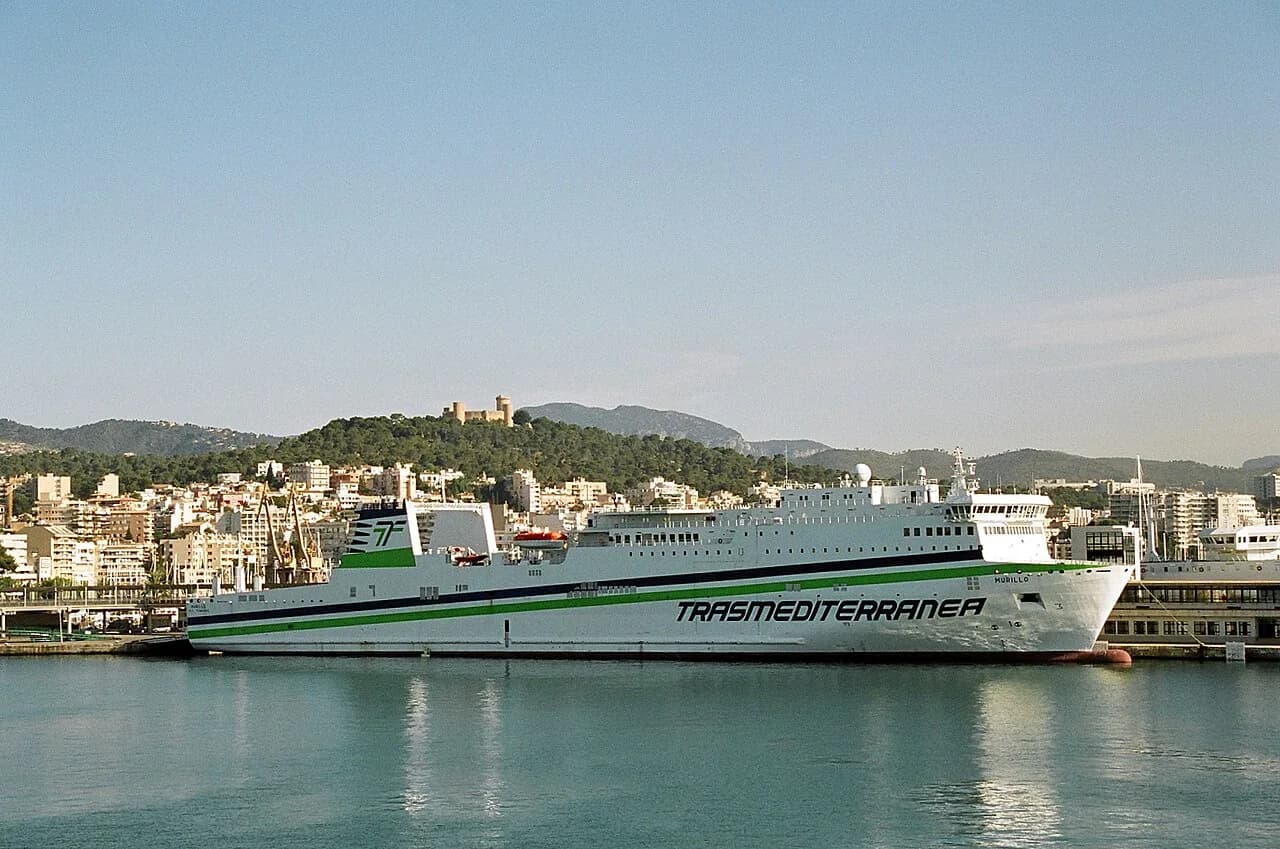
The port is split into four sectors: the West Dock (Dique del Oeste), the recreational dock, the commercial dock and the shoreline dock (Ribera). Cruise ships normally use the terminal on the west side of the harbour, set away from the old town, but at busy periods some vessels are moved to the cargo pier at Porto Pi because space at the cruise terminal is limited. Check the berth on your cruise line's daily programme before deciding how to reach town, since Porto Pi adds real distance.
From the cruise terminal to the old town is roughly a half-hour walk, about 5 km, and Porto Pi sits another 2 km further out. Those distances matter on a short call: the walk along the promenade is pleasant, but it eats time in both directions. The full picture of berths, the Ribera shoreline and the walk into the centre is set out in the guide to Palma Cruise Port to the City Centre.
How far is Palma Airport from the cruise port
Palma de Mallorca Airport (PMI) lies inland from the city, and the drive to the port runs through the outskirts and down to the waterfront. One route-planning site puts the distance at about 14.8 km, which is the figure to use when budgeting time for an embarkation-day transfer. Because the road crosses the city rather than skirting it, traffic on the approach to the port can stretch a short distance into a longer journey.
Cruise passengers flying out after the cruise can sometimes have baggage taken from the ship and checked through to their flight, which frees them to spend the last morning in the city without hauling cases. This has to be arranged with the cruise line in advance rather than at the terminal. If it is not offered on your sailing, plan to travel to PMI with your luggage and allow the normal check-in window.
Taxi from Palma Airport to the cruise port
Taxis wait at the airport arrivals curb and at the port, and the ride between the two is the simplest option for two people with luggage. Passenger reports put the journey at around 20 minutes and the fare at roughly 25 to 30 euros for a standard car, but treat that as an indicative figure rather than a published tariff. Ask the driver for the meter or a fixed quote before you get in, and confirm the terminal name rather than just 'the port'.
The same logic works in reverse on disembarkation day: taxis line up at the terminal, but the queue grows when a large ship empties at once. If your flight is early, book a transfer or leave a generous margin rather than relying on the first cab in the rank.
Private transfers and when they pay off
A pre-booked private transfer meets you with a name card at arrivals or at the port, which removes the negotiation and the queue. Published rates are around 73 euros for a vehicle carrying one to four passengers and 87 euros for one carrying up to six, so the math only works in your favor once your group outgrows a single taxi. For a family of five or six, one larger vehicle beats two taxis on both cost and coordination.
For solo travelers and couples, a taxi from the rank is usually cheaper and just as quick. The private transfer earns its price when you have children, several suitcases, or a tight embarkation window and want the vehicle waiting regardless of flight delays.
The public bus: route A1 then route 1
There is no longer a direct bus from the airport to the port, so the journey takes two vehicles. Take the A1 from outside arrivals into the city and get off at Passeig Mallorca, then change to route 1 at either the Instituts stop (number 19) or the Jaume III stop (number 20), which carries you down to the port. Coming back, catch route 1 from the Port de Palma stop (number 15), directly opposite the Estació Marítima, and change to the A1 at Passeig Mallorca – Jaume III (203), Passeig Mallorca – Instituts (205), Àrea d'intercanvi Alemanya – Comte de Sallent (1330) or Plaça d'Espanya – Estació Intermodal (598).
Fares depend on how you pay. In cash the A1 costs 5 euros and route 1 costs 3 euros, for 8 euros in total, while tapping a bank card brings the A1 down to 3 euros and route 1 to 1.20 euros, a combined 4.20 euros. The card saving is substantial, so keep a contactless card handy rather than breaking a note on the bus.
The bus is the right choice for a solo passenger arriving with a single case and time to spare. It is the wrong choice when you are hauling two suitcases and a carry-on through a change of buses in central Palma on the morning of embarkation; in that case a taxi or transfer pays for itself in stress alone.
Journey planning for a 6-, 8- or 10-hour call
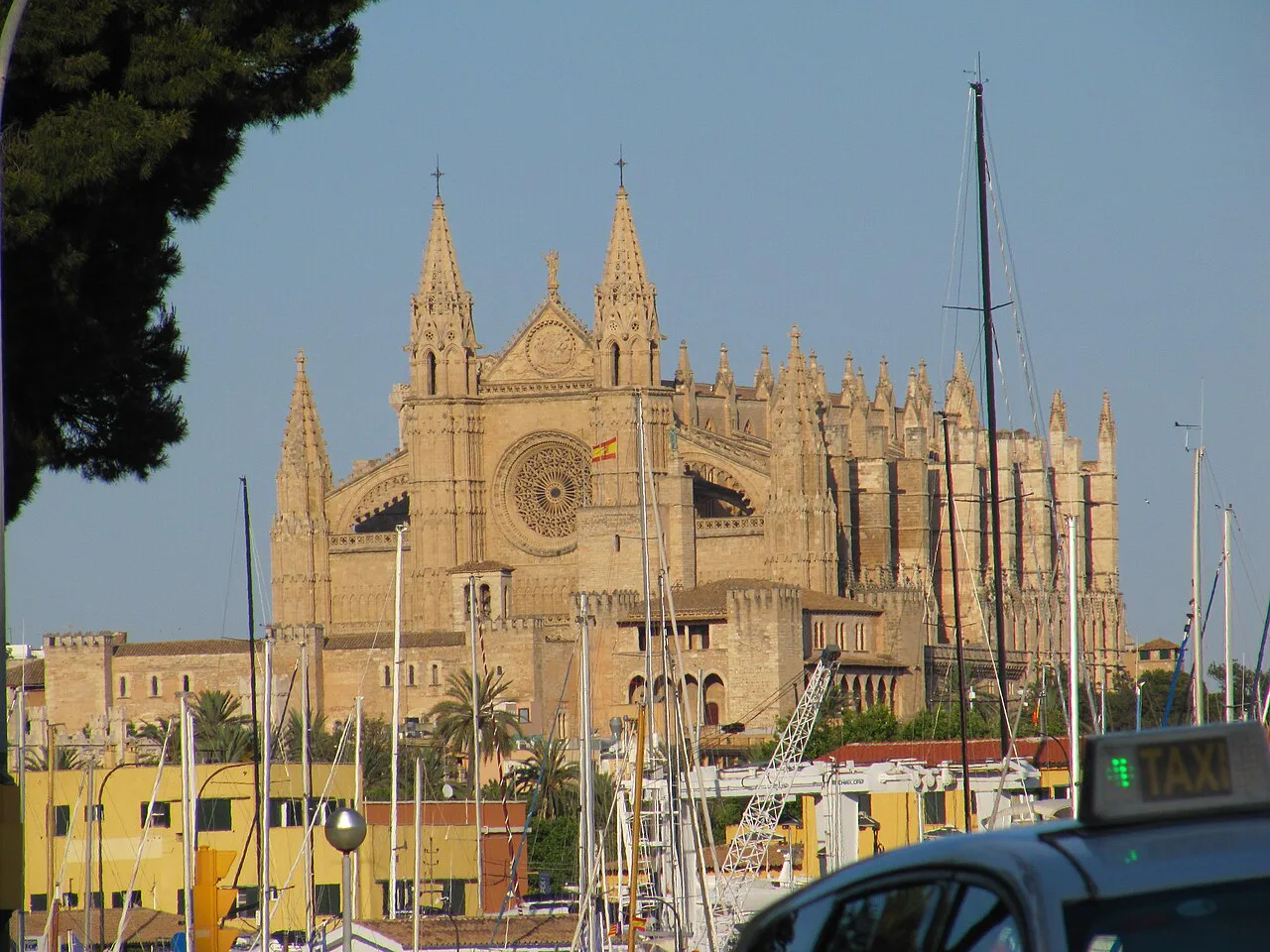
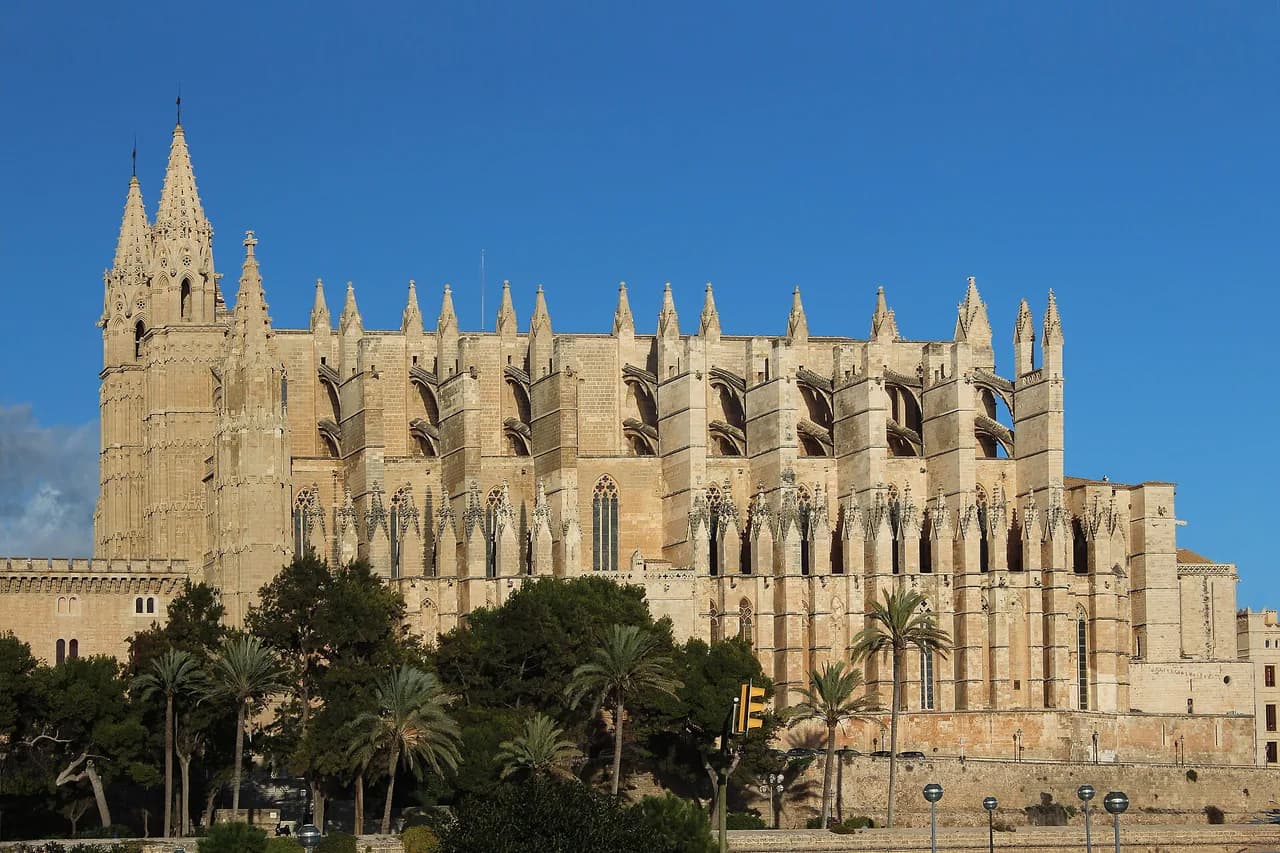
On a same-day call, the airport is irrelevant unless you are joining or leaving the ship there; the real question is how to spend the hours between the gangway and all-aboard. A 6-hour call leaves time for the old town and the cathedral on foot or by taxi, but not for the airport run and a city visit in the same window. The cathedral, La Seu, sits at the heart of the old town and is the obvious anchor for a short call.
With 8 hours you can add a proper lunch and a wander through the lanes behind the cathedral, and with 10 hours a shore excursion out to the Serra de Tramuntana or a coastal village becomes realistic. Whatever you choose, build in a buffer of at least 45 minutes on the return leg for a taxi or shuttle, and more if you are using the bus. The comparison of ship tours, local operators and independent travel is covered in the Palma de Mallorca shore excursions guide.
From the terminal into town
Once alongside, you have three ways to close the 5 km gap to the old town: walk the promenade, take a taxi from the terminal, or use the shuttle that the cruise line often runs to a central drop-off point. Taxis are plentiful at the port and the ride is short, but on a busy turnaround day the rank can be slow. Walking the promenade is the most pleasant option if the weather is kind and you have the hours to spare.
If your ship berths at Porto Pi rather than the main terminal, add 2 km to every estimate and lean toward the shuttle or a taxi. The berth assignment is made by the port, not the cruise line, so it can change between calls; look for the berth code on your daily programme. For a sense of what to see once you are in the city, the guide to what to do in Palma de Mallorca on a cruise port day covers the main sights by walking distance.
Getting back to Palma Airport after the cruise
On disembarkation day, the two-bus route is the cheapest way to PMI but the slowest: route 1 from the port to the city, then the A1 from Passeig Mallorca out to the airport. The change points are the same four stops listed above, and the fares are the same 8 euros cash or 4.20 euros by card. If you are catching a flight, allow at least an hour and a half from gangway to check-in desk to absorb waiting time at both stops.
A taxi or pre-booked transfer removes the change of buses and the wait, which is worth paying for when your flight leaves before midday. The port authority and your cruise line publish the day's disembarkation schedule, and the Palma de Mallorca cruise port guide sets out the wider terminal layout. If you are comparing Palma with other Spanish turnaround ports, the guide to Gran Canaria Airport to the Cruise Port shows how the same decisions play out on a different island. The same trade-offs between taxi, bus and private transfer are weighed for Barcelona in the guide to the Barcelona Cruise Port to the Airport.
Hire cars near the port
If you are staying on the island after the cruise, the rental offices cluster on Avinguda Gabriel Roca, around numbers 17 to 19, near the middle of the port. The cruise port entrance is at Avinguda Gabriel Roca 44, about 2 km from those offices, and some companies will meet you at the port entrance instead. Confirm the pickup point when you book, because the walk with luggage between the two is not trivial.
Driving out of Palma gives you the Balearic Islands at your own pace, but the ring roads around the city are busy in the morning. Pick up the car after the disembarkation rush rather than during it, and plan your first stop outside the city to avoid sitting in traffic.
Plan Your Palma Transfer
For two people with luggage, a taxi from the airport rank or the port is the least complicated choice. For five or six, a pre-booked private transfer at the published vehicle rates beats two cabs on cost and keeps the group together. For a solo traveler with light bags and time to spare, the A1 plus route 1 combination at the card fare is the cheapest way in.
Whichever you pick, match the transfer to the day: embarkation and disembarkation reward speed and luggage handling, while a port call rewards a quick hop into town so you can spend the hours at La Seu and the lanes around it. The Palma de Mallorca cruise port guide links the berth layout, the walk into town and the shore options in one place.
Frequently Asked Questions
Is there a direct bus from Palma Airport to the cruise port?
No. You take the A1 from the airport into the city at Passeig Mallorca, then change to route 1 at either the Instituts stop or the Jaume III stop, which continues to the port. Coming back, catch route 1 at the Port de Palma stop opposite the Estació Marítima and change to the A1 at one of the city stops listed on the bus operator's route map.
How far is Palma Airport from the cruise port?
The drive is roughly 15 km, crossing the city outskirts before reaching the waterfront. Allow extra time on busy mornings when traffic builds on the approach to the port.
Is Palma walkable from the cruise port?
The main cruise terminal is about 5 km from the old town, which is a half-hour walk along the promenade rather than a short stroll. Taxis and cruise-line shuttles do the same trip in minutes. Ships berthed at Porto Pi are another 2 km further out.
How much is a taxi from Palma Airport to the cruise port?
Taxi fares follow a metered tariff, and the value you pay depends on the route, the traffic and any airport supplement. Ask the driver to run the meter or agree a fixed quote before you set off, and compare the figure with a pre-booked private transfer if you are traveling as a group.
Is a private transfer cheaper than a taxi for a family?
For one to four passengers, a taxi is usually cheaper. For five or six, a single pre-booked vehicle at the published group rate undercuts the cost of two separate taxis and keeps everyone together with the luggage.
Can I check my bags through to my flight from the cruise port?
Some cruise lines offer a service that takes bags from the ship and checks them through to your flight at Palma Airport, letting you spend the last morning in the city hands-free. This has to be arranged with the cruise line in advance rather than at the terminal.
How long does the bus take from the port to the airport?
The two-bus route involves a change in central Palma, so it takes longer than a taxi. Allow at least an hour and a half from gangway to check-in desk if you are catching a flight, and longer at peak times.
Where do I pick up a hire car near the cruise port?
Rental offices are on Avinguda Gabriel Roca around numbers 17 to 19, near the middle of the port. The cruise port entrance is at number 44, about 2 km away, and some companies will meet you at the entrance instead, so confirm the pickup point when you book.
Sources
Port-day notes for your next cruise
Optional updates to our port guides.
You might also like

Continue reading
More guides you'll find useful