Is Stavanger Walkable From the Cruise Port? Dock Guide
Stavanger ships dock at Strandkaien beside Vågen harbour, putting the cathedral, Gamle Stavanger and the fish market within a short flat walk of the gangway.
On this page
Stavanger rewards passengers who simply step off the gangway and walk. Ships berth at Strandkaien on the Vågen inner harbour, and the old town, cathedral and waterfront sit within minutes of the quay, so a full day ashore needs no shuttle, taxi or tour booking. This guide suits anyone with a short call who wants a confident plan, and anyone weighing whether a longer call should go to Pulpit Rock instead.
Is Stavanger walkable from the cruise port?
Yes, and more easily than at most Norwegian ports. Ships dock at Strandkaien right in the city centre, on the edge of the Vågen harbour, so you are already in town the moment you clear the gangway. Stavanger Cathedral is about a five-minute walk, Gamle Stavanger about ten minutes, and the Petroleum Museum five to ten minutes in the other direction along the waterfront. No shuttle or taxi is needed for the central sights.
The quay handles up to four berths, so you may tie up a little further along the waterfront depending on how many ships are in. Either way the walking route into town stays flat, paved and short. Look for the Tourist Information Office just outside the secure port area, a couple of minutes from the gangway, where you can pick up a map before setting off.
Where ships dock at Strandkaien on Vågen harbour
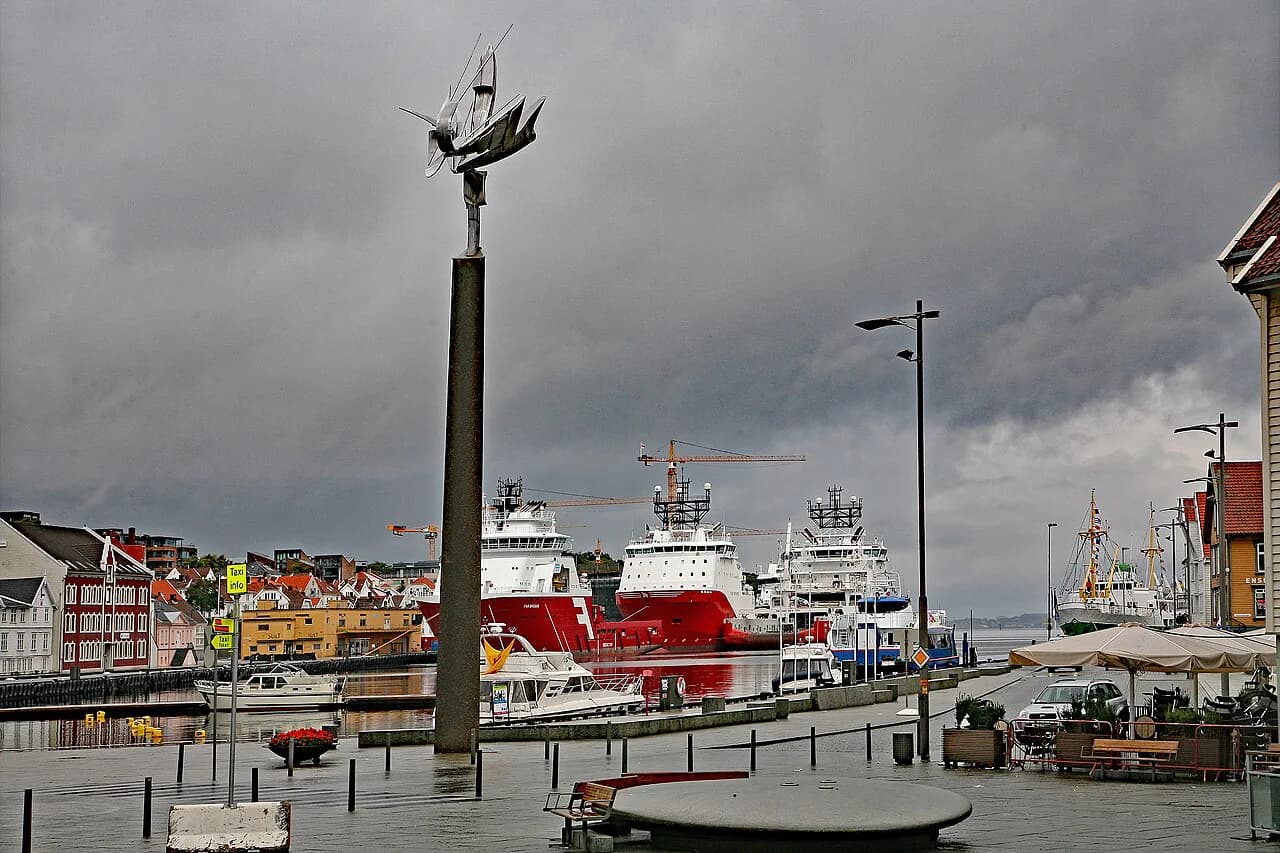
There is no vast cruise terminal to navigate. Strandkaien is an open quay on the inner harbour, with souvenir shops, a taxi stand and restrooms close by, and the city spreading out immediately in front of the ship. From the deck you can often see the white cottages of Gamle Stavanger to starboard.
Because the berths sit on the harbour edge rather than in an industrial dock, there is no port shuttle to wait for and no need to budget transfer time. Treat the gangway as your starting point and plan the day from there. Even on a busy four-ship day any extra berth is along the same waterfront, adding a few minutes of flat walking rather than any real logistics.
Walking route from the gangway into town
Turn off the quay and follow the Vågen waterfront promenade, with fishing boats and wooden warehouses on one side and café terraces on the other. A relaxed circuit of the harbour from the cruise quay around to the fish market takes fifteen to twenty minutes and gives you the shape of the city before you commit to any sight.
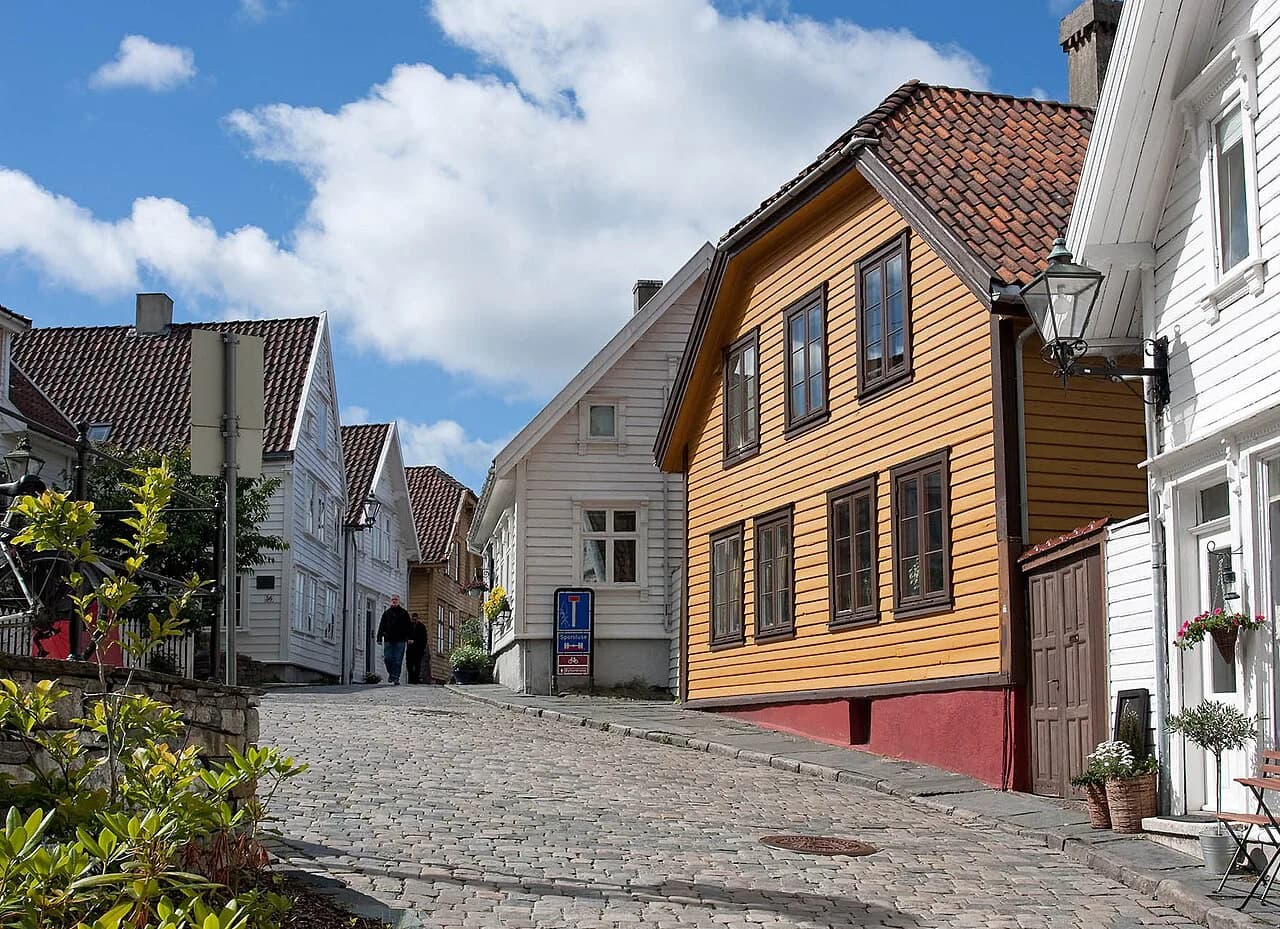
For Gamle Stavanger, head west along the waterfront past the old wooden buildings of Skagen and Nedre Strandgate, then climb gently into the cobbled lanes of the old town. The surface turns from paving to uneven cobblestones as you enter the neighbourhood, so watch your footing in wet weather. Øvre Holmegate, the painted colour street, sits a short walk inland from there.
Walking times to the main sights
Use these as planning figures rather than stopwatch times. The cathedral is about five minutes from the quay, Gamle Stavanger about ten, the Canning and Printing museums about ten, the Maritime Museum about eight and the Petroleum Museum about twenty on the longer estimate. Øvre Holmegate is ten to twelve minutes.
Gamle Stavanger itself deserves thirty to forty-five minutes of wandering, more if you want the quiet morning version before tour groups arrive. Entry to the neighbourhood is free and the houses are still lived in, so walk quietly and keep to the lanes. Allow twenty minutes for the cathedral and ninety minutes if you take in the Petroleum Museum properly.
Stavanger Cathedral charges NOK 75 for visitors and generally opens Monday to Saturday from 10:00 to 15:00, with Sundays reserved for services and occasional closures for rehearsals, events and weddings. The Petroleum Museum costs around NOK 150 and the Canning Museum around NOK 80. Confirm seasonal opening with the cathedral parish or the museums themselves before you rely on a specific slot.
When walking is not the plan: mobility limits, cobbles and rain
Central Stavanger is level and largely pedestrianised, which makes it good for most passengers, but the old town's cobblestones are uneven underfoot and awkward with a walking frame or pushchair. Wear shoes with grip rather than smooth soles. If mobility is limited, concentrate on the flat harbourfront promenade and the cathedral, and treat Gamle Stavanger's slopes as optional.
Stavanger sits on the southwest coast where rain arrives without much warning in any season, so a packable waterproof layer matters more than an umbrella in harbour wind. Layer up even on a bright morning. A wet day is the one time the short walk back to the ship is a genuine advantage, since you can return to change and head out again.

Shuttles, taxis and hop-on hop-off buses from Strandkaien
You do not need a shuttle for the city centre. Taxis wait at the quay and make sense for trailheads, Sverd i fjell or other outlying sights, but paying for a cab to reach the cathedral or Gamle Stavanger is money wasted. Hop-on hop-off buses start near the port area and run roughly 10:00 to 16:00, mainly covering the outskirts rather than the pedestrianised core.
The hop-on hop-off option earns its fare for passengers with limited mobility who want an overview or need to reach Ledaal, Mosvatnet or the museums south of the centre. For everyone else, the walking circuit beats waiting for a bus in a city this compact. Check the day's route and fare at the stop rather than assuming a fixed schedule.
Public buses and where they take you beyond the centre
Kolumbus runs the local bus network and connects the centre with Sola, Mosvatnet, Ullandhaug and the Sverd i fjell monument at Hafrsfjord. None of these are needed for the classic port day, but the buses are the practical way to extend beyond the walkable core without a tour. Buy and validate your ticket through the Kolumbus app or ticket machines before boarding.
For a short mountain walk without the Pulpit Rock commitment, Dalsnuten is reached by bus from the centre in about thirty minutes, followed by a round-trip hike of roughly an hour and a half with panoramic views over the city and islands. That fits a four-hour call comfortably, unlike Preikestolen. Allow extra time for the return bus, which is the part people underestimate.
Fitting the walkable core into a 6-, 8- or 10-hour call
On a short call of around four hours, go straight to Gamle Stavanger while it is quiet, then walk the colour street for coffee and finish at the cathedral and fish market before heading back. That sequence keeps you within fifteen minutes of the ship the whole time. The same order works on a six-hour call with a museum added.
With six to eight hours, choose depth over breadth. Spend a slow morning in the old town, take in the Petroleum Museum for ninety minutes, eat at the fish market and still have time for the Canning Museum or a harbour walk. With ten hours, the city day becomes leisurely and you can add Sverd i fjell by bus or a Lysefjord boat trip of three to four hours, which sails from Strandkaien close to the ship.
Sverd i fjell, Dalsnuten and Lysefjord: sights that need transport
Be honest about what walkability covers. Sverd i fjell, the three bronze swords at Hafrsfjord, needs a local bus or taxi, and Dalsnuten needs a bus plus a hill walk. Lysefjord cruises depart from the waterfront near the ship and need no transfer, but they consume a half day of your call. Everything else on the classic Stavanger list sits inside the walkable core.
If you want the fjord scenery without the hike, book a Lysefjord sailing that passes beneath Pulpit Rock. Expect to pay in the region of NOK 600 to 800 per adult and to be away three to four hours including boarding. Reserve ahead in peak season, since these boats fill on busy ship days.
Preikestolen from a Strandkaien berth: ferry, bus and hike
Pulpit Rock is not walkable from the ship, and the round trip from the quay is a seven-to-eight-hour commitment at minimum. The route runs by ferry from Stavanger to Tau in about thirty minutes, a bus to the trailhead in twenty-five to thirty minutes, a hike of one and a half to two hours each way, then the same connections back. That leaves no margin on a call of eight hours or less. If you are weighing a similar dock-to-town decision at another Norwegian port, the guide to the Ålesund cruise port to city centre sets out the same walking and transport choices.
The honest trade-off is risk. A ship-organised excursion means the ship will wait if the excursion is delayed, while independent travel leaves you responsible for missed ferries and full buses, which are real in June to August. Note that independent fjord trips won't refund if the ship skips port, so book ferry and connecting bus in advance if you go alone. Only attempt Preikestolen on a call of ten hours or more, with good fitness and proper hiking shoes.

Return-to-ship buffer for a walking port day
Because everything central is within fifteen minutes of the gangway, a walking day needs less buffer than a touring day, but not none. Set a phone alarm for forty-five minutes before departure rather than at departure time. The old town is exactly the kind of place where one cobbled street leads to another and an hour disappears.
For bus trips to Dalsnuten, Sverd i fjell or the Lysefjord boats, add the return journey plus a missed-connection margin, so aim to be back at the quay at least an hour before all aboard. Only a ship-organised excursion carries any assurance of the ship waiting; independent travellers carry the risk themselves.
What to see first if you only have a few hours ashore
Head to Gamle Stavanger first thing, before the tour groups form up around late morning. The white wooden houses, cobbles and flower boxes are the reason to come ashore, and early light makes the neighbourhood at its best. Then walk back through the colour street for coffee and finish at the cathedral and fish market on the way to the ship.
Skip the museums on a very short call and treat the Petroleum Museum or Canning Museum as a six-hour-call addition. If the weather closes in, swap the old town wander for the Viking House virtual-reality experience or the Maritime Museum, both a few minutes from the quay.
Practical points: currency, cards and weather layers
Norway uses the krone, and cards and contactless payment are accepted almost everywhere, including museums, cafés and market stalls. ATMs are available in town if you do need notes.
Pack for changeable weather: layers, a waterproof shell and shoes that cope with wet cobbles. Dining out is expensive by most standards, with a coffee around NOK 50 to 70 and a sit-down lunch around NOK 200 to 350, so a fish-market lunch or a bakery stop keeps the day affordable.
Plan Your Port Day
Stavanger is a walking port in the truest sense: you step off at Strandkaien and the city is already around you. Build the day around Gamle Stavanger, the colour street, the cathedral and the fish market, add a museum if your call runs to six hours, and save Pulpit Rock for a long call with a ship excursion or a very early independent start.
Check the day's berth and all-aboard time with your cruise line, set your return alarm forty-five minutes ahead, and keep the plan flexible enough to drop a sight if the weather turns. For the wider port picture, the Stavanger cruise port guide covers terminals, excursions and onward options in more detail.
Frequently Asked Questions
Can you walk into Stavanger from a cruise ship?
Yes. Ships dock at Strandkaien on the Vågen harbour in the city centre, so you are in town as soon as you leave the gangway. The cathedral is roughly five minutes on foot, Gamle Stavanger about ten minutes and the Petroleum Museum five to ten minutes along the waterfront. No shuttle or taxi is needed for the central sights.
How far is the cruise port from Stavanger city centre?
The berths sit on the inner harbour edge of the centre, so the distance is measured in a few minutes of flat waterfront walking rather than a transfer. Restaurants, shops and the Tourist Information Office are immediately around the quay. On a busy four-ship day you may walk a little further along the same waterfront.
How long does it take to walk from the ship to Gamle Stavanger?
Allow about ten minutes at an easy pace, following the waterfront west past Skagen and Nedre Strandgate before climbing into the cobbled lanes. The surface turns uneven underfoot inside the old town. Once there, thirty to forty-five minutes of wandering is a sensible minimum, longer if you want the quiet early-morning version.
Is Stavanger Cathedral walkable from the cruise terminal?
Yes, it is about a five-minute walk from the quay in the middle of the centre. Visitor admission is NOK 75 and it generally opens Monday to Saturday from 10:00 to 15:00, with Sundays reserved for services. The parish page carries any changes for rehearsals, events and weddings.
Can you walk to Pulpit Rock from Stavanger cruise port?
No. Preikestolen needs a ferry to Tau, a bus to the trailhead and a hike of one and a half to two hours each way, so the round trip from the quay is seven to eight hours at minimum. Do not attempt it on a call of eight hours or less. On a longer call, a ship-organised excursion removes the responsibility for missed connections.
Do you need a shuttle bus in Stavanger?
No. The central sights are all within about twenty minutes on foot of Strandkaien, which makes a shuttle pointless for most passengers. Hop-on hop-off buses run from near the port and suit passengers with limited mobility or those heading to sights outside the pedestrianised core.
What can you see on foot in a six-hour Stavanger port call?
A comfortable six-hour day covers Gamle Stavanger in the quiet morning, the Petroleum Museum or the Canning Museum, lunch at the fish market and a walk along the colour street, all within fifteen minutes of the ship. Keep a forty-five-minute buffer before all aboard so the old town lanes do not make you late.
Sources
Port-day notes for your next cruise
Optional updates to our port guides.
You might also like



Continue reading
More guides you'll find useful