Stockholm Cruise Port to City Centre: Berths and Transport
Stockholm's cruise berths range from a walk to Gamla Stan at Stadsgården to a bus or taxi ride from Frihamnen. See how each berth works for your port day.
On this page
Stockholm rewards a port day that starts with one question: which side of the water is your ship tied up on. Stadsgården and Skeppsbron sit against the historic core, while Frihamnen and Värtahamnen sit north-east of it, so the same eight hours ashore buy very different amounts of sightseeing. This guide ties each berth to a plan for reaching the centre.
Cruise passengers with a short call should stay central on foot; longer calls justify a taxi or a tram out to Djurgården and the Vasa Museum. Use the berth name on your ship's daily programme as the starting point, because it decides whether your day begins with a twenty-minute walk or a ride into town.
Where ships dock in Stockholm
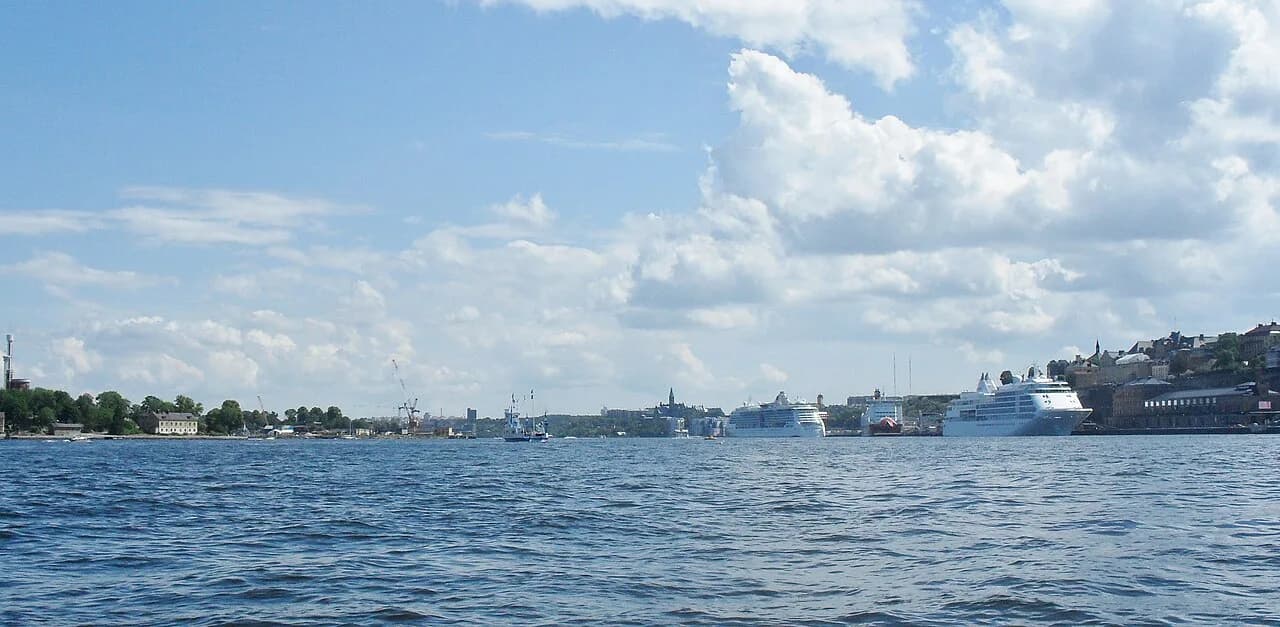
The Port of Stockholm is not a single terminal but a set of port areas around the city. Stadsgården, Skeppsbron and Frihamnen are the areas the port authority names as the ones favoured by international cruise liners, with Värtahamnen also prominent and handling substantial ferry traffic.
That list matters because the berth decides almost everything about your day: whether you can walk to Gamla Stan, how much of your call transport eats, and whether an independent shore plan is realistic. The port publishes a map of cruise berths that shows where each one sits relative to the old town. The Stockholm Cruise Terminals page breaks down how each terminal is laid out and used.
Stadsgården: the waterfront walk to Gamla Stan
Stadsgården is the most forgiving of Stockholm's cruise berths for passengers heading into the city on foot. It sits on the Södermalm shore directly across from Gamla Stan, and the walk to the Old Town and the city centre takes roughly 20 minutes along the waterfront, with the quay road rising gently where the Fotografiska museum building sits above the berth.
For anyone with mobility limits or a tight call, the walk is easily swapped for a bus along the quay road or a taxi from the berth, and either cuts the transfer to a few minutes. Slussen, at the southern end of Gamla Stan, is the natural first target: from there the Old Town is on foot and the metro and buses connect onward through the city.
On the return leg, leave the centre with time to walk back uphill rather than treating the 20 minutes as a flat stroll. If you plan to finish the day at the Vasa Museum or on Djurgården, a taxi back to Stadsgården is the simplest option and removes the risk attached to a cross-city transfer.
Skeppsbron and Strömkajen: the closest berths to the Old Town
Skeppsbron runs along the eastern edge of Gamla Stan itself, so a ship berthed there has effectively delivered you to the Old Town: the Royal Palace and the lanes of the old core are at the top of the quay. The port identifies Skeppsbron together with Stadsgården and Frihamnen as the areas favoured by international cruise liners.
Strömkajen and Nybrokajen sit just north of the Old Town, opposite the palace, and the port describes them as mainly used for local passenger traffic rather than cruise calls. If your ship is listed on one of the inner-city quays, treat the whole day as car-free and central: Gamla Stan, the palace and the waterfront are all within a short walk.
Frihamnen and Värtahamnen: the northern berths
Frihamnen and Värtahamnen lie on the northern side of the city, in the harbour area east of the centre, and both carry heavy ferry traffic to Finland and the Baltic States alongside cruise calls. The commercial port area is spacious and functional, so you should expect to cross a working quayside and main road before reaching anything resembling a city street. Värtahamnen and Stadsgården both handle large volumes of goods and passenger traffic, which means road access is designed for vehicles rather than pedestrians.
From these northern berths the centre is not a sensible walk, especially with a fixed all-aboard time. Plan on a bus, the metro with a short connection, a taxi or the ship's shuttle; a taxi is the fastest door-to-door option and drops you near the palace or NK department store, while public transport costs less but adds waiting and a walk at each end. The same berth-to-centre calculation shapes a Copenhagen port day, where the walk-in berths and the outlying ones split the day just as cleanly.
If a shuttle is offered, ask onboard where it drops and how often it runs before relying on it, since those arrangements are set by the cruise line, not by the port. Passengers who prefer to be independent should treat the taxi rank at the berth as the fallback for the return trip.

Getting into town: the options compared
Walking works from Stadsgården and is the default from Skeppsbron and the inner quays. A taxi is the most flexible option from Frihamnen and Värtahamnen and is also worth using from any berth when you are carrying bags or travelling with children. Public buses and the metro are cheaper and dependable once you know the nearest stop, but each requires a short walk on both sides of the journey.
The ship's shuttle remains the simplest door-to-door choice from the northern berths if your line runs one, though it ties you to a timetable. Many passengers combine modes: a taxi in so you reach the Vasa Museum before the crowds, and public transport or a walk back depending on the berth and the time.
How long you need and what fits each call
A six-hour call suits a tight, central day: Gamla Stan, the Royal Palace exterior and the lanes around Stortorget, then back to the ship. From Stadsgården or Skeppsbron this stays comfortably on foot. From Frihamnen or Värtahamnen, count the transfer as part of the budget and cut one sight.
An eight-hour call leaves room for the Vasa Museum or a Djurgården wander alongside the Old Town, with a proper lunch stop in between. A ten-hour call is the point at which a wider loop makes sense, such as Södermalm's viewpoints or a short archipelago boat trip, provided you return to the berth well before all-aboard.
Return-time buffer and the risk of missing all-aboard
Work backwards from the all-aboard time rather than the published departure. The ship will not wait for independent travelers, so the buffer should cover the slowest realistic return from wherever you are: a taxi means traffic, and public transport means waiting for the next service. From Frihamnen or Värtahamnen, aim to be back on the quay with time to spare and use a taxi for the final leg if your day runs long.
Organized tours that the ship sells carry a degree of protection because the cruise line and the ship's schedule are coordinated; independent plans do not, which is the real argument for keeping a wide margin if you go it alone. Whatever the mode, know the name of your berth before you set off, since that is what you will tell a driver on the way back.
Where to go first once you reach the centre
From any berth, start in Gamla Stan while the streets are quiet: the palace square, the narrow lanes and the view across to the water set the day's geography. From there, walk north to the harbour front at Strömkajen or cross to Djurgården for the Vasa Museum and the open-air museum at Skansen.
If your call is short and your berth is northern, choose one of those targets rather than both and save the rest for a later trip. The one day in Stockholm from cruise ship itinerary shows how to sequence the palace and Old Town with a museum visit without overfilling the day.
If your ship tenders or berths away from the centre
Tendering adds a step to both ends of the day: boat transfers from the anchorage run in batches, and the last tender time matters more than the ship's departure time. If your ship anchors rather than berths, budget the tender ride and waiting time as part of the transfer and plan a shorter, more central day than you would from a quay.
Whatever the arrangement, use the berth or anchorage name given in your ship's programme as the reference point for your day. The Stockholm Cruise Port Guide covers the wider port layout and how it fits into a cruise itinerary for anyone weighing an overnight or extended call.
Plan Your Port Day
The deciding factor for a Stockholm port day is the berth, not the itinerary. Confirm which of Stadsgården, Skeppsbron, Frihamnen or Värtahamnen your ship uses, then pick walking from the southern and inner quays or a taxi and shuttle from the northern ones accordingly.
Build the day backwards from all-aboard, keep the return leg simple, and aim for one or two real sights rather than a checklist. Passengers on longer calls can reach Djurgården comfortably; shorter calls are best spent in the Old Town.
Frequently Asked Questions
Is Stockholm walkable from the cruise port?
It depends on the berth. Skeppsbron sits against Gamla Stan and Stadsgården is roughly a 20-minute waterfront walk to the Old Town; Frihamnen and Värtahamnen are north-east of the centre and need a taxi, bus or shuttle.
How far is Stadsgården from Gamla Stan?
Allow around 20 minutes on foot along the waterfront, with a rise near the museum building above the quay. A taxi makes the trip in a few minutes if time matters.
Do cruise ships run shuttles from Stockholm's port into the city centre?
Shuttle arrangements are set by each cruise line rather than by the port, so the availability and drop-off point vary by ship. Ask at the shore excursions desk on board or read the daily programme for the arrangement on your sailing.
How do I know which Stockholm berth my ship uses?
Your ship's daily programme and shore excursion information name your berth. Ports of Stockholm publishes the port areas and cruise berth map, but the assignment for your sailing is made by the cruise line.
How much time do I need ashore in Stockholm?
Six hours covers the Old Town from Stadsgården or Skeppsbron, while eight hours adds the Vasa Museum or Djurgården. A ten-hour call allows a wider loop across Södermalm or a short archipelago trip. The buffer for the return leg comes out of all of it.
What should I plan for if my ship anchors?
Tendering means a boat ride and waiting at both ends, so shorten the day and keep the itinerary close to the landing point. Treat the last tender time as the all-aboard deadline you must build backwards from.
Sources
Port-day notes for your next cruise
Optional updates to our port guides.
You might also like

Continue reading
More guides you'll find useful