One Day in Stockholm from a Cruise Ship: Port-Day Plan
Plan one day in Stockholm from a cruise ship with a timed route through Gamla Stan, a fika stop and one museum, built around your all-aboard time.
On this page
Stockholm rewards a port day spent on foot in one compact area rather than a sprint between islands. Gamla Stan's medieval lanes, the Royal Palace and the waterfront sit within a few minutes of each other, which makes a tight, ordered route possible even on a short call. It suits passengers who want a strong sense of the old city plus one deliberate extra, not a checklist of every museum in the city.
The other half of the plan is the return leg. Ships in Stockholm can berth well away from the old town, so the distance from your berth and the reliability of the transport back matter as much as anything you see. Where your ship ties up, and the realistic ways into town, are covered in this stockholm cruise port guide; the terminal-by-terminal detail is in this Stockholm Cruise Terminals breakdown.
What a Stockholm port day gives you and who it suits
Stockholm is a city of islands linked by short bridges, and the historic core is dense enough to cover on foot. A well-planned day delivers Gamla Stan's cobbled lanes and terracotta facades, the Royal Palace area, a proper Swedish fika break and at least one museum or a look at the creative Södermalm district. The trade-off is depth: a short call rewards breadth over a single deep visit, so treat the day as scratching the surface rather than completing the city.
This suits independent travelers comfortable with a metro ride or a taxi and happy to keep moving. It is less suited to anyone who wants a full palace interior tour, a long museum afternoon and Skansen in the same day; those belong to longer calls or a return trip. Travelers comparing short Baltic calls often weigh the same trade-off at the Skagen cruise port, where a compact port day likewise rewards a tight, ordered route.
Where ships dock and what it means for your day
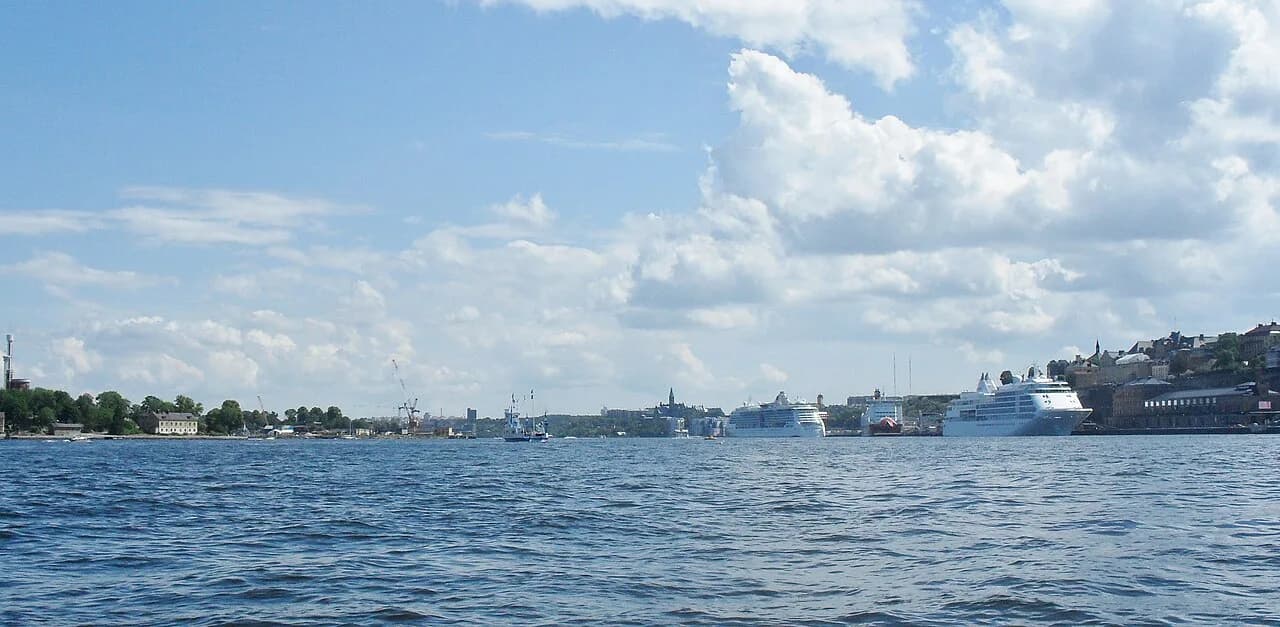
Stockholm's cruise berths are spread across the harbor rather than clustered at one downtown pier, so the first thing to establish is which terminal your ship uses that day. The northern Frihamnen area is the berth most often named in cruise accounts of the city, and starting a day there means planning a transfer into the center before any sightseeing. Berth assignments vary by ship and sailing, so match yours against the Stockholm Cruise Terminals listing and the notice in your ship's daily program.
The practical consequence is that downtown Stockholm is not always a stroll from the gangway. If you berth at a more distant quay, budget a transfer in each direction and plan your sightseeing around it rather than adding it on top. Check the Stockholm Cruise Port Guide for how the harbor areas relate to Gamla Stan and Djurgården.
Getting into town: shuttle, taxi, public transport and walking
Where the berth is close, walking is the simplest option and costs nothing; where it is not, a taxi or the metro does the job. Cruise-focused itineraries for Stockholm commonly build the day around a transfer from Frihamnen into the center, which reflects how far that berth sits from Gamla Stan. Fares and shuttle arrangements change, so check current prices on your ship's port notes or the berth-side information before setting out.
The metro is useful twice over: it moves you between districts and it doubles as a gallery, with a large collection of artworks across the network and several decorated stations worth seeing in their own right. For the full range of options and where each one departs from, see this guide to getting from the stockholm cruise port to city centre before you choose.
Setting your return buffer before you leave the ship
Decide your return time before you step ashore, then work backwards through the day. Take the all-aboard time, subtract the transfer back to your berth in the worst realistic case, and leave a further margin for queues at security or a missed metro. The buffer is the fixed item; sightseeing flexes around it.
A single rule keeps the day honest: your last stop should be within easy reach of your return transport, not across the water on Djurgården. Never treat the ship's departure time as negotiable, and never assume the vessel will wait for a late independent traveler.
A 6-hour call: Gamla Stan and the Royal Palace on foot
On a call of around six hours, concentrate everything on Gamla Stan and its immediate surroundings. Start in the old town's lanes while they are quiet, allow an hour or so for wandering and photos, then move to the Royal Palace area. The Slottskyrkan, the palace chapel, is a quick, free stop that gives you a royal interior without committing to the full palace tour, which is the right call when hours are short.
Leave Gamla Stan by early afternoon and head straight for your return transport, so the transfer back never eats into your sightseeing. This version of the day is the safest for first-time visitors and for anyone nervous about the distance back to the ship.
The Changing of the Guards and Slottskyrkan
The Changing of the Guards takes place outside the Royal Palace and is one of the most photographed rituals in the city, complete with guards in royal blue uniforms and, on some occasions, cavalry on horseback. It is a fixed-time event, so find the day's time once you are ashore, either at the palace forecourt or in the ship's program, and build your Gamla Stan wander around it rather than standing and waiting.
The trade-off is real: watching the ceremony and touring the palace interiors both consume the same mid-morning window. On a short call, pair the ceremony with the free Slottskyrkan visit and skip the full interior tour; on a longer call, you can do the interiors in the afternoon instead.

A fika stop in Gamla Stan or Kungsträdgården
Fika is the Swedish habit of sitting down with coffee, cake and conversation, and it deserves to be a scheduled block in your day rather than an afterthought. Plan a mid-morning pause in a Gamla Stan café, or cross toward Kungsträdgården for a wider choice of cafés. In April and May, the cherry blossom around Kungsträdgården makes that crossing worth the few extra minutes.
Thirty to forty-five minutes is enough, and treating fika as a fixed time slot keeps it from quietly swallowing an hour you had earmarked for a museum.
An 8-hour call: add the subway art or a museum
With around eight hours ashore, the Gamla Stan core plus one additional component fits comfortably. The metro art is the lighter option: station-hopping between Kungsträdgården, Rådhuset and Stadion gives you three decorated stations in a short, contained loop, with more than 90 works spread across the city's 100 stations if you want to go further.
The alternative is one museum in the afternoon, chosen deliberately rather than by default. Pick the one you will actually enjoy and give it a proper block of time, then head back with your buffer intact; this is the version of the day that suits most able walkers.
A 10-hour call: the Vasa Museum, Skansen or Södermalm
A call of ten hours opens up Djurgården, home to the Vasa Museum, the most visited museum in Scandinavia, and Skansen, the open-air museum and park that works well for families and anyone wanting green space. Both are on the same island, so pair them only if you accept a fast pace; otherwise choose one and add Skansen's grounds as the gentler option.
Södermalm is the other strong ten-hour choice, with a creative, local feel and excellent food away from the old-town crowds. Whichever you pick, anchor the afternoon's end near your return transport so the ten hours don't dissolve into a rushed final hour.
Choosing your one museum: Vasa, Fotografiska, ABBA or Moderna
Four museums cover most short-call plans, and the right pick depends on the group. The Vasa Museum's preserved warship is the standout for first-timers and history-minded travelers; Fotografiska suits photography fans; the ABBA Museum is interactive and lively, popular with music lovers and groups; Moderna Museet covers modern art. Choose one, not several, and check the day's opening arrangements directly with the museum you pick.
Fitting two museums around a port call means rushing both and cutting into the return buffer. If your call is short, treat the museum as the afternoon's sole objective and keep the morning for Gamla Stan.
Lunch in Södermalm instead of Gamla Stan
Lunch in a tourist-dense old town is convenient but often twice the price for half the character, and Swedish meatballs eaten locally in Södermalm are a better use of an hour. Neighborhood restaurants such as Kalf & Hansen and Restaurant Pelikan are where a Stockholm day itinerary sends you for traditional meatballs, and the metro ride across is short.
The trade-off is time: crossing to Södermalm and back can consume most of a short call's mid-afternoon. Reserve this for eight- and ten-hour calls, and keep a Gamla Stan quick lunch as the fallback when the clock is tight.
Ship tour vs local operator vs independent
The ship's tour removes the transport problem and typically guarantees the vessel waits for the group if the coach is delayed, which is the real value of the premium you pay. A local operator is usually cheaper and more flexible but carries the same return risk as going alone. Going independently gives you complete control of pace and cost, and suits confident travelers who have planned their return route.
Whichever you choose, never assume the ship will wait for an independent latecomer. If you want a structured version of the day, start from these stockholm shore excursions options and compare how each one uses the available hours against your own plan.
Getting back to the ship with time to spare
Work backward from all-aboard: identify your exact berth, the fastest route back and a fallback if the first option fails. If a shuttle from the terminal runs, know where it departs and how frequently, and note where the taxi rank sits. None of these timing details should be guessed; read them from the port or operator information on the day.
Aim to be at the terminal rather than simply on the way when your buffer window opens. That extra margin absorbs the unpredictable parts: a delayed metro, a slow security queue or a berth you didn't quite remember correctly.
Common port-day mistakes in Stockholm
The recurring errors are predictable: trying to see Gamla Stan, the Vasa Museum, Skansen and Djurgården in one short call; treating fika as optional and then rushing the museum; and leaving the return leg to the last half hour. Another is assuming the berth is downtown without checking which terminal your ship uses that day, which can eat an hour in each direction.
The fix is the same for all of them: one core area, one deliberate extra, one fixed fika block and a return buffer you refuse to shrink. That structure makes a six-hour call pleasant and a ten-hour call memorable.
Plan Your Visit
Decide the shape of your day before you leave the ship: the old town plus one extra, anchored by a fixed return buffer. That single decision protects you against everything else going slightly wrong, which is what port days tend to do.
If you are staying overnight before or after the cruise, this guide to hotels near the stockholm cruise port helps you choose a base close to your terminal and the city. For the harbor layout, the berths and the onward transport, the cruise port guide is the place to start.
Frequently Asked Questions
Can you walk into Stockholm from a cruise ship?
Sometimes. Some berths sit close enough to the historic core for a walk, while others, including the northern Frihamnen area, are far enough that a taxi or metro makes better use of your hours. Check which terminal your ship uses before deciding.
How do I get from the Stockholm cruise port to the city center?
Your realistic options are walking, a taxi, the metro or a terminal shuttle where one operates. The right choice depends on the berth rather than the city: a distant quay makes the transfer a fixed part of the day, while a central berth makes Gamla Stan a short walk.
What should I do in Stockholm for one day?
Start with Gamla Stan and the Royal Palace area, take a fika break, then add one museum or Södermalm in the afternoon. Save Skansen and the Vasa Museum for a longer call unless you are willing to move briskly.
Is the Changing of the Guards worth fitting into a short call?
Yes, if the ceremony time fits your route without a long wait. It is free to watch and sits right outside the Royal Palace, but on a short call pair it with the chapel visit and skip the palace interiors rather than trying to do both.
How much time do I need for Gamla Stan and the Vasa Museum?
Gamla Stan deserves at least an hour to wander, and the Vasa Museum needs a proper block of its own, plus a transfer across to Djurgården. Together they suit an eight- or ten-hour call, not a short one.
Do cruise ships run free shuttles from the port into Stockholm?
Shuttle arrangements vary by cruise line and by the berth used, so there is no single answer valid for every call. Check your cruise line's port information and the terminal notice on the day to see whether a shuttle is running and where it departs.
Sources
Port-day notes for your next cruise
Optional updates to our port guides.
You might also like

Continue reading
More guides you'll find useful