Catania Cruise Port Guide: Terminal, City Walk & Etna Trips
Ships berth at Sporgente Centrale, a short walk from Piazza Duomo. Plan a Catania city walk, an Etna trip or Taormina with realistic return buffers.
On this page
Catania hands you a rare combination on a cruise day: a working Sicilian city you can reach on foot within minutes of the gangway, with Europe's highest active volcano on the skyline behind it. The black lava stone of the Baroque centre, rebuilt after the 1693 earthquake, makes even a short stroll feel distinctive, and the fish market and Via Etnea give the day a lived-in, commercial edge that polished resort ports lack.
This port suits passengers who want a real city rather than a staged one. If you have six hours, you can cover Piazza Duomo, Via Etnea and the Benedictine Monastery without transport and still sit down for lunch; if you have eight to ten, the Cyclops Coast, Etna's lower slopes or Taormina come into range, each with a different balance of time and risk.
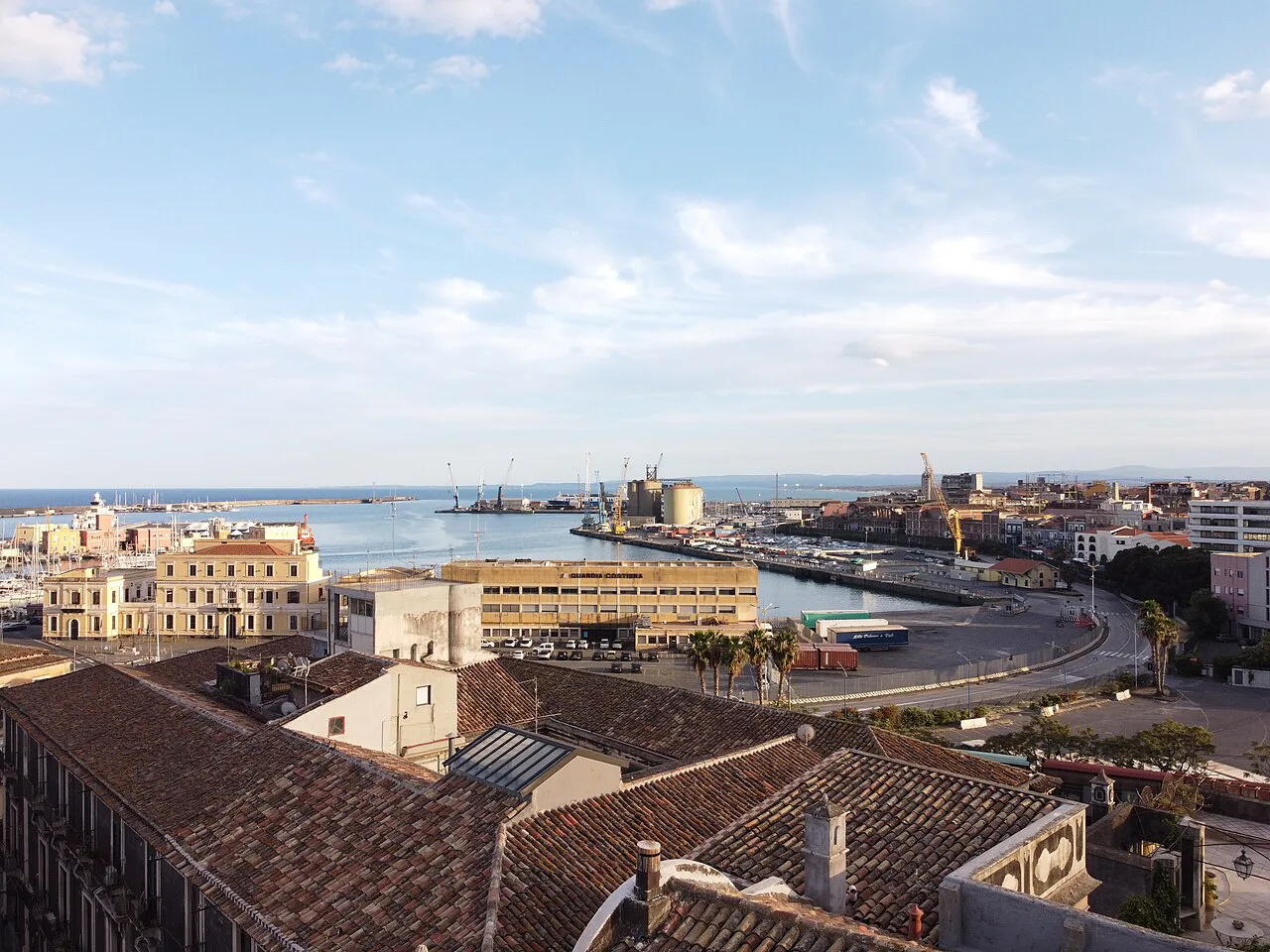
Where ships dock in Catania
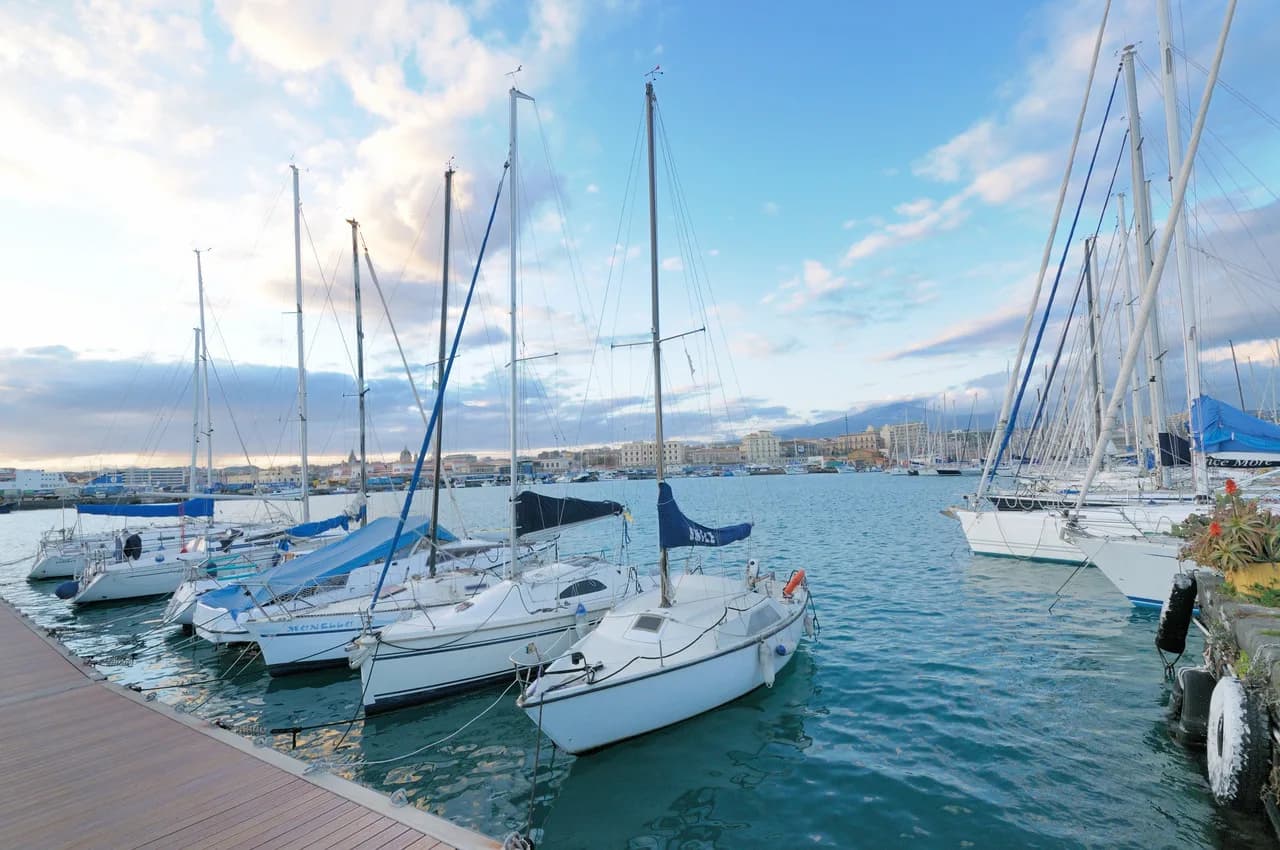
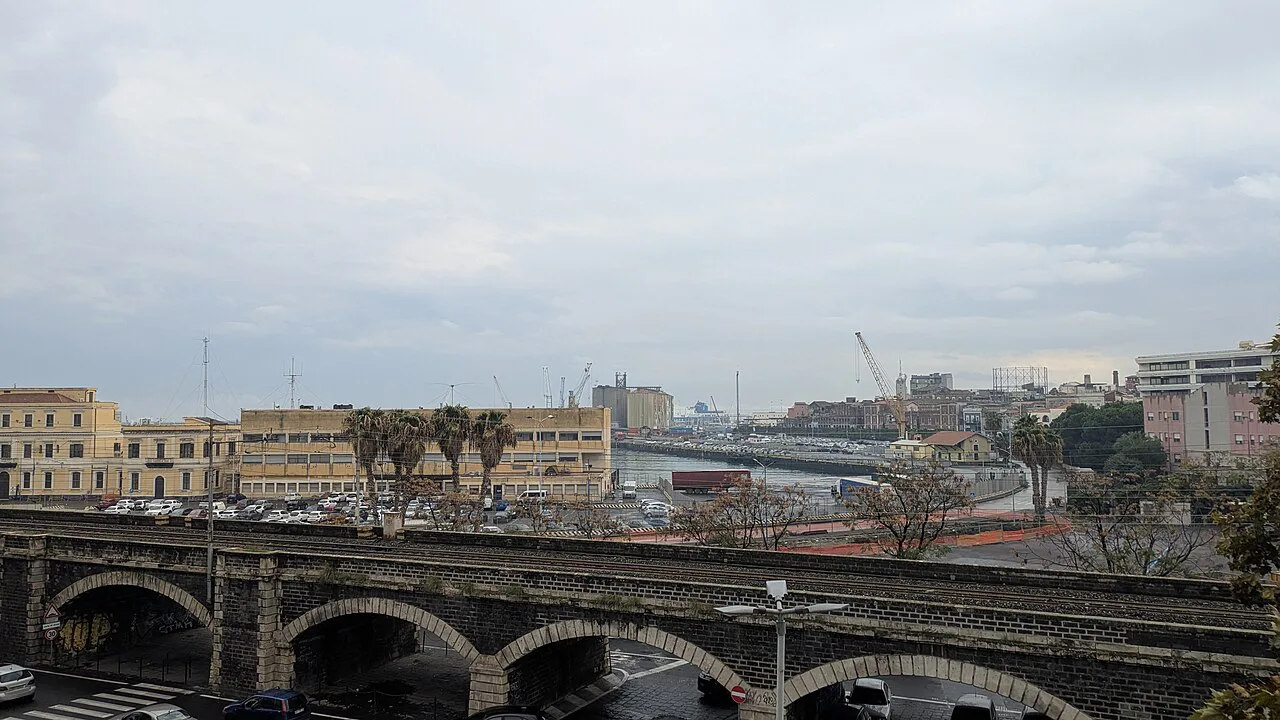
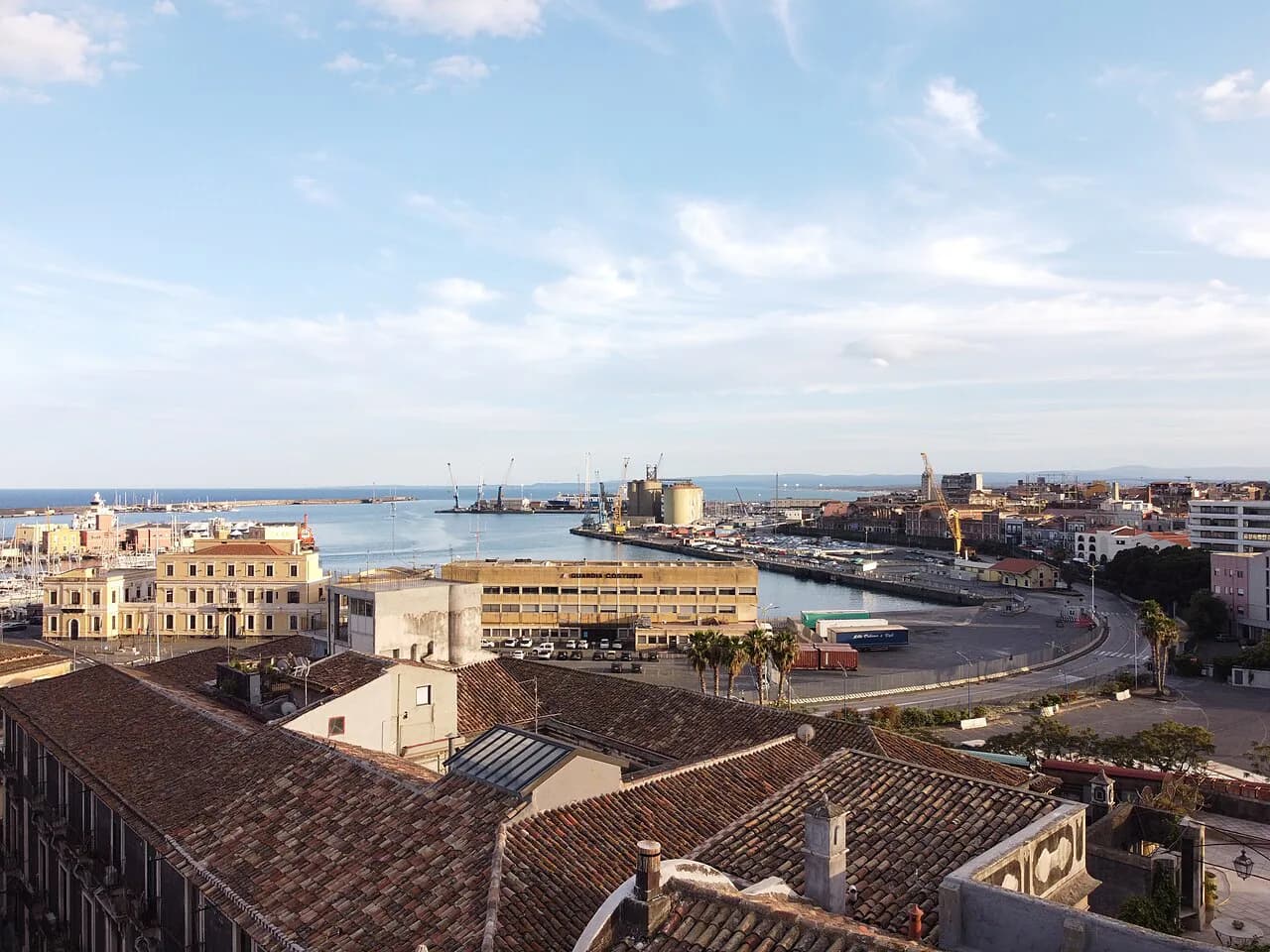
Cruise ships berth on Sporgente Centrale pier, where the cruise terminal handles embarking and disembarking passengers, including security checks. The terminal has been run since 2011 by Catania Cruise Terminal Srl, which joined Global Ports Holding in 2016, so the pier you use is the same one Catania Cruise Terminal describes on its own site.
The address to give a taxi driver is Cruise Terminal Sporgente Centrale, porto, 95121 Catania. The terminal building sits at the pier itself rather than at a remote gate, so you step off the ship and into the passenger area with baggage handling, a guest information desk, currency exchange, first aid and shops on hand.
Catania is a working Mediterranean port with ferry traffic, so expect to share the harbour area with commercial movement rather than arriving into a dedicated cruise village. That matters mainly for cars and taxis, which follow port signs to the Sporgente Centrale area rather than driving straight to the quay.
How far the terminal is from Piazza Duomo
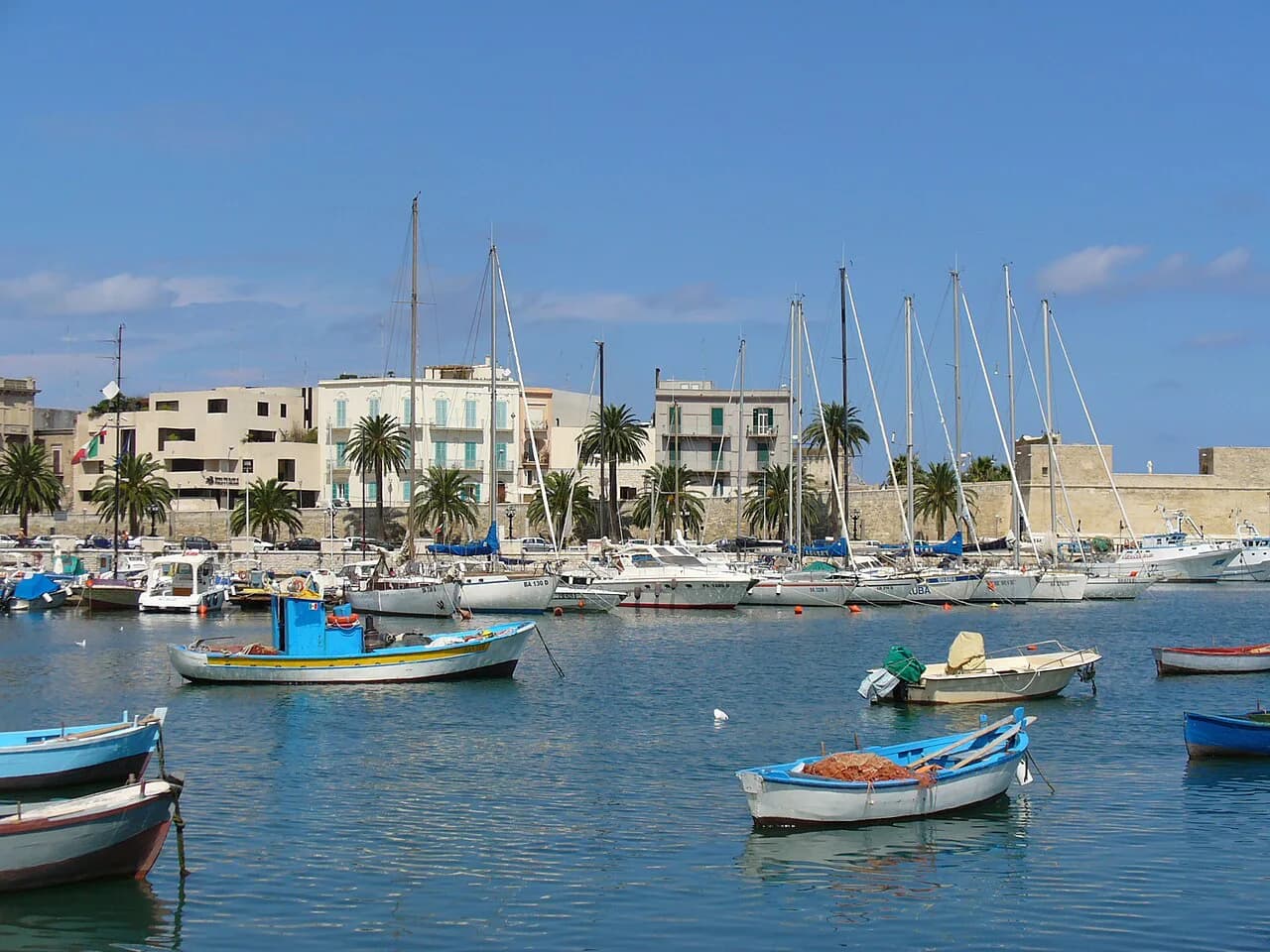
The historic centre begins immediately outside the port area, and Piazza del Duomo is roughly a ten to fifteen minute walk from the ship. One cruise account puts the centre at under a kilometre and about fifteen minutes on foot, which is the right order of magnitude for planning purposes. If you are weighing up other Sicilian calls, our Bari Cruise Port Guide shows how a similarly walkable centre compares.
Treat that walk as the default for anyone reasonably mobile. It removes the need to queue for a paid shuttle, keeps you on your own schedule and, because the return leg is equally short, gives you a generous all-aboard buffer without leaving the city early.
Walking into town past Palazzo Biscari
Heading away from the pier into the city, the first substantial sight is Palazzo Biscari, an eighteenth-century Baroque palace with a courtyard you can wander into before you reach the main square. Its grand staircase is the closest thing to a photo stop within the first few minutes of the walk.
Continue and you arrive at Piazza del Duomo, which functions as the city's living room: the Elephant Fountain in black lava, the cathedral of Sant'Agata, the town hall and the Amenano Fountain all sit within the same open space. Because the square is compact, you can see all four in half an hour and then decide how to spend the rest of the call.
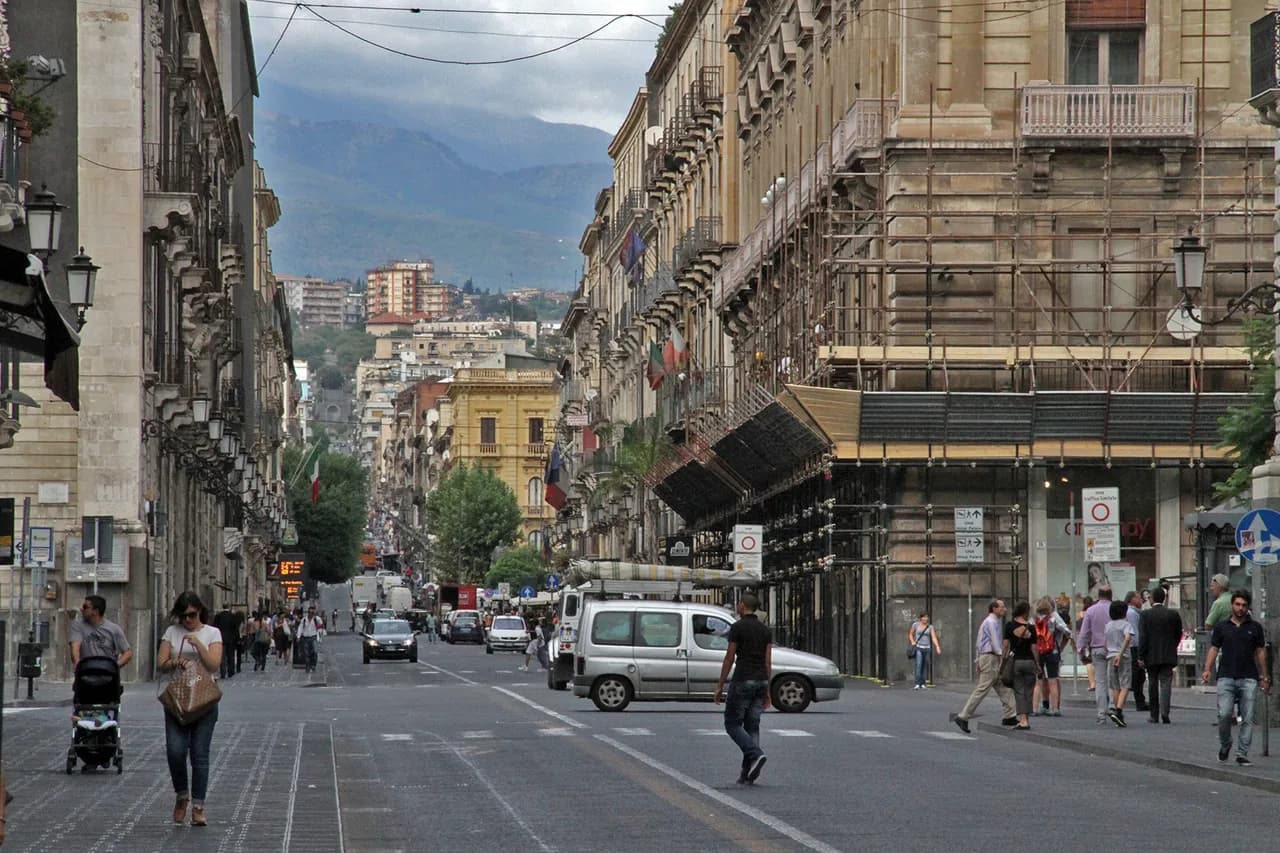
From the square, Via Etnea runs straight inland for about three kilometres, aligned so that Etna stays visible ahead of you as you walk. This is your shopping and coffee axis, and it is also the simplest orientation device in the city: keep Etna in front of you heading in, and the sea behind you on the way back.
Shuttle buses, taxis and local buses
A paid shuttle into the centre is available, and one cruise account gives the fare as ten euros, though for most passengers the walk is quicker than waiting for it. The shuttle earns its place if you have limited mobility, heavy bags or weather that makes the short walk unpleasant.
Taxis wait outside the terminal and are the straightforward choice for Etna's cable car base or for the Cyclops Coast villages. Urban buses also connect the port area with the centre, and Catania Cruise Terminal advises buying tickets in advance online or at a tabaccheria instead of paying on board.
For train travel toward Etna, a metro link runs between the port area and the Circumetnea station. Give public transport a wide margin on the return leg, because a missed connection in the city centre is a fifteen-minute walk, but a missed connection out at a railhead is not.
Hop-on hop-off buses and the Cyclops Coast
Hop-on hop-off buses leave from the port area with a multilingual audio guide, and their route follows the Catania coastline north to Aci Castello and Aci Trezza. That makes them the least demanding way to see the Riviera dei Ciclopi, the twelve-kilometre stretch of coast named in the legend of Polyphemus, without arranging a car.
The trade-off is control over your own timing. A loop bus runs to a published schedule, so note the last departure that still returns you with an hour to spare rather than the last one of the day. If the sea stacks at Aci Trezza are the main draw, a taxi gives you more time there and less time waiting.
How long you need for the city
On a six-hour call, the historic centre is comfortably enough. Walk in, work through Piazza del Duomo, Via Etnea, Piazza Università and Teatro Massimo Bellini, add the fish market if you are there in the morning, and you can be back at the gangway with time to spare. The whole loop is short and flat enough that the return walk is not a planning problem.
With eight hours, add the Benedictine Monastery of San Nicolò l'Arena, one of the largest monastic complexes in Europe, and Via Crociferi, the Baroque street of churches that links it back toward the centre. Ten hours opens up the lower slopes of Etna or a half day at Taormina, but not both, and not comfortably.
A compact Baroque walking route
Start at Piazza del Duomo, then climb Via Etnea as far as Piazza Università for coffee under the university buildings. Turn off toward Via Crociferi, where churches stand almost continuously along both sides, and finish at the Benedictine Monastery and the Church of San Nicolò with its vast unfinished facade. The route is a loop rather than a list, so you are never far from the sea and the way back.
This is the itinerary that best repays a first visit, because Catania's rebuilt centre is uniform enough that scattered sights blur together. Keeping to one connected walk means fewer decisions, more time inside buildings and a predictable return time to the terminal.
Castello Ursino, the Roman Theatre and the fish market
La Pescheria, the fish market just behind Piazza del Duomo, is loud, wet and genuinely local, and it is at its best in the morning. Even if you are not buying, the surrounding streets are where you will find seafood lunches and street food such as arancini and cartocciata.
Castello Ursino, the thirteenth-century fortress built under Frederick II, now holds the city's museum and sits a little south of the main square, close enough to fold into a city walk rather than a separate trip. The Roman Theatre is different in character: partly swallowed by later buildings in the ancient acropolis area, it rewards people who like seeing archaeology embedded in a living street grid.
Mount Etna: ship excursion or independent trip
Etna is the headline excursion, and the logistics explain why the organised version dominates. The cable car base is well outside the city, taxis there are expensive, and public transport is slow enough that a self-planned day carries real risk of missing the ship. The cable car climbs to around 2,500 metres, and going higher to the main crater area requires a certified mountain guide.
If you go independently, a rental car gives you the most control over the day, and booking cable car tickets online in advance avoids the longest queue at the base station. None of that changes the fundamental arithmetic: the further you go up the mountain, the more of your buffer you are spending, and the ship will not wait for a delayed return.
The ship's tour removes the transport problem and puts the timing risk on the operator, which is the trade most passengers should take on a first visit with eight hours or less. For the practical breakdown of guided options and how they fit a call, see our catania shore excursions planning page.
Taormina and Siracusa day trips
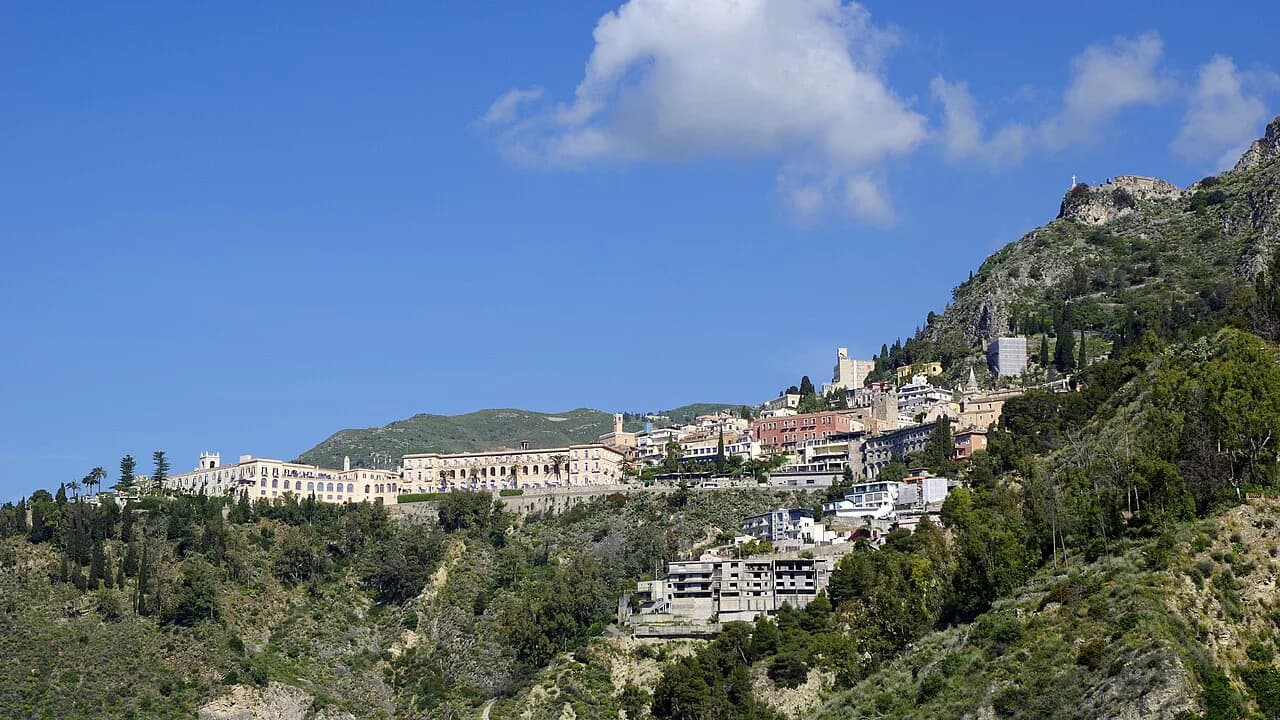
Taormina is a hilltop town with a Greek theatre and sea views, roughly within reach on a longer call, but the journey each way and the climb from car parks to the centre eat into the day. Siracusa, about an hour south, suits history-focused passengers who want the Neapolis archaeological park and the island of Ortigia rather than a view.
Neither is a sensible add-on to a short call. Choose one, check the driving time against your all-aboard, and remember that both involve a road journey back through Catania traffic. Our guide to Catania Cruise Port to Taormina sets out the timing you need to make that call work.
Embarking in Catania: parking, airport and luggage
If your cruise starts here, the terminal offers a secure open-air car park on Molo Sporgente Centrale, steps from the terminal and the berth, monitored around the clock. The weekly rate is ninety euros for cars and one hundred euros for campers, vans and minivans, payable on the day of departure by card or cash.
From Catania Fontanarossa airport, the terminal operator puts the distance at 5.3 kilometres and the drive at roughly twelve minutes. The airport links it names are urban bus 534 and the Alibus airport shuttle, with taxis as the direct option; all three drop you at the port rather than at the city centre.
Luggage handling and security checks happen in the terminal building on the pier, so arriving by bus or taxi means one drop-off rather than a transfer between buildings. Allow more time than the twelve-minute drive suggests on a busy morning, because port traffic and check-in queues are separate delays.
Return-to-ship timing and buffers
From the historic centre, the walk back to Sporgente Centrale is the same ten to fifteen minutes, which makes Catania unusually forgiving for an independent day. Aim to be at the terminal an hour before all-aboard if you are on foot, which still leaves you time to buy something on Via Etnea on the way.
The calculation changes completely for Etna, Taormina and Siracusa, where the return depends on road traffic and the reliability of whatever you are travelling in. Add at least an hour of slack to the driving time for those trips, and if the only way you can fit an excursion is by trimming that margin, drop the excursion instead.
What to buy and eat near the port
Catania's shopping is concentrated on Via Etnea, where designer names share the street with Baroque facades and Etna stays in view. For something more local, look for Sicilian pupi marionettes, Caltagirone ceramics, Bronte pistachios, Modica chocolate and Nero d'Avola or Etna DOC wines; these are the products the city's port guide singles out.
Food is the faster win. A cannolo filled at the counter, an arancino or a cartocciata eaten standing up costs you minutes rather than a sit-down lunch, which matters when the fish market, the monastery and the cathedral are all competing for the same afternoon.
Plan Your Catania Port Day
Decide before you dock whether this is a city day or a volcano day, because the two ask different things of you. The city rewards walking and needs no planning beyond a route; Etna, Taormina and Siracusa need transport, a fixed return and a margin you are willing to protect.
Whatever you choose, use Piazza del Duomo as your anchor and the Sporgente Centrale walk as your clock. If your plans depend on a specific departure, fare or guided ascent, confirm it with your cruise line or the terminal operator before you leave the ship.
Explore more Catania cruise port guides
Frequently Asked Questions
Is Catania walkable from the cruise port?
Yes. Ships berth at Sporgente Centrale, and Piazza del Duomo is roughly a ten to fifteen minute walk away, under a kilometre. The historic centre is compact and flat, so most passengers can cover the main sights on foot and return to the terminal without any transport.
How far is the Catania cruise terminal from the city centre?
The terminal sits on Sporgente Centrale pier at the edge of the centre, with the first sights within a few minutes of the gangway and Piazza del Duomo a short walk further. Plan on around fifteen minutes at an easy pace each way.
Is there a shuttle from Catania cruise port to the city centre?
A paid shuttle runs from the port area to the centre, and it makes sense if you have limited mobility or heavy bags. For most passengers the walk is quicker than waiting, and taxis wait outside the terminal if you want a direct ride.
Can you visit Mount Etna from Catania cruise port?
It is possible, but the cable car base is well outside the city and public transport is slow, so an organised excursion is the lower-risk choice on a normal call. If you go independently, a rental car gives the most control, and the higher crater routes require a certified guide.
How do you get from Catania airport to the cruise terminal?
Catania Fontanarossa airport is about 5.3 kilometres from the port, roughly a twelve-minute drive. The Alibus airport shuttle and urban bus 534 both serve the port area, and taxis are the direct option.
Is there parking at Catania cruise port for embarking passengers?
Yes. The terminal operates a monitored open-air car park on Molo Sporgente Centrale, steps from the terminal and the berth. It is charged by the week, with a higher rate for campers, vans and minivans, and can be paid on the day of departure by card or cash. Confirm the current rate with the terminal operator when you book.
Is Taormina worth it from Catania on a cruise day?
On a longer call, yes, if you want the Greek theatre and the sea views and accept that the road journey eats into your time ashore. On a short call, the city itself is the better use of the hours, and Siracusa is the alternative for passengers more interested in archaeology.
Sources
Port-day notes for your next cruise
Optional updates to our port guides.
You might also like
Continue reading
More guides you'll find useful