Cádiz Cruise Port Guide: Dock Location & Day Plans
Cádiz cruise ships dock at Alfonso XIII pier beside the old town, so you can walk to the cathedral, market and La Caleta without a shuttle.
On this page
Cádiz rewards passengers who want to step off the gangway and start walking: the historic center sits almost against the berths, and the old town's plazas, cathedral and market are reached on foot within minutes. It is the easiest kind of Andalusian port day, and it suits anyone who prefers a self-paced loop of churches, sea walls and tapas stops over a coach schedule.
The same layout makes Cádiz a poor fit for travelers set on Seville, which sits roughly 120 km away and usually takes about 1.5–2 hours each way by road or rail. Jerez de la Frontera, about 35 km inland with trains from a station near the harbor, is the more realistic out-of-town add-on.
Plan the day around your all-aboard time rather than the published departure, and build extra margin when several ships share the berths. Trains to Jerez commonly run around 35–55 minutes each way, so a short call leaves little room for a timed bodega visit.
Where ships dock
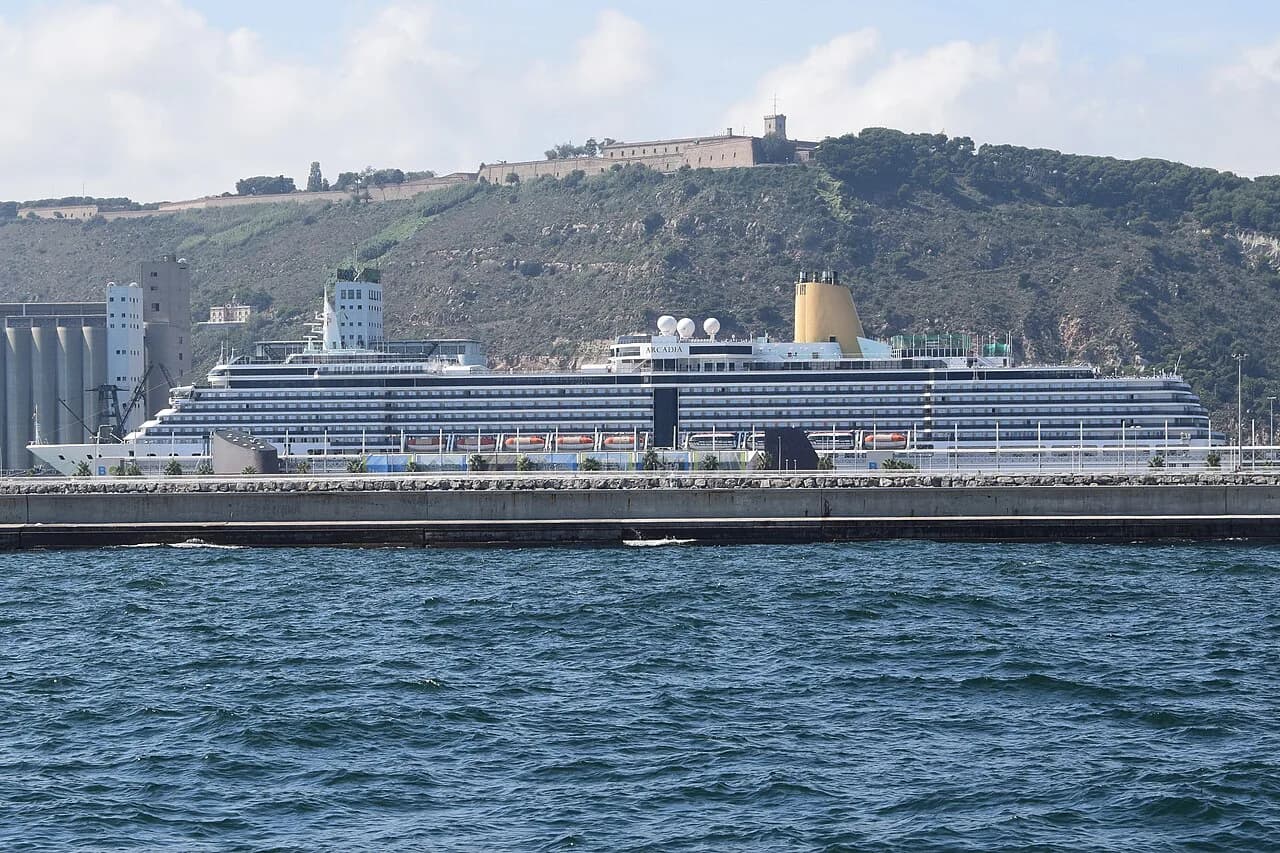
Cruise ships and ferries dock almost in the middle of the city, and the cruise terminal stands alongside pier Alfonso XIII, a short walk from the passenger terminal to the old town. Ships normally berth here rather than tendering, so you walk off and keep your own schedule.
The terminal was expanded in 2014 and covers roughly 1,300 square meters, with an open waiting hall, check-in desks, tourist information desks handing out free city maps, dedicated disembarkation and luggage storage areas, free Wi-Fi, food and drink counters and souvenir shops. That makes it a useful base for dropping bags or picking up a map before you set out.
Which passenger exit you use depends on the berth assigned on the day, so follow the signed route out of the controlled port area rather than retracing a route from another visit. Taxis are normally available near the terminal if you decide to skip the walk.
Getting into town
Cross Avenida del Puerto from the terminal and you reach Plaza de San Juan de Dios, the city's main square, lined with dining and shopping. The walk from the cruise area into the historic center takes about 5–10 minutes, and a shuttle is generally unnecessary for central sightseeing.
For a step-by-step route from the gangway to the first plaza, use this guide to Cádiz Cruise Port to the City Centre, which is worth reading before you leave the ship if you want the exit and crossing clear in your head.
The railway and bus stations sit near the harbor, which is what makes an independent run to Jerez practical: you can walk from the ship to the station, take a train, and return without needing a taxi tour. Note the return point and departure time of any transport you use before you commit to it.
Walking distances to the main sights
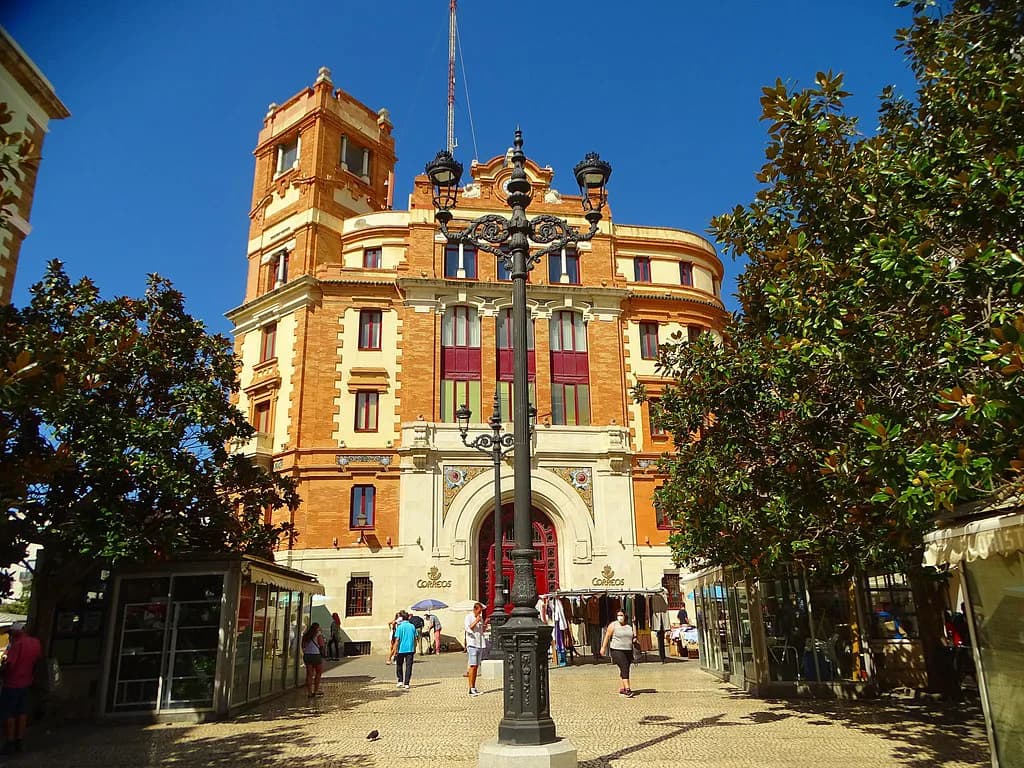
The old town is compact and almost surrounded by sea, so the main sights line up in a short chain from the port. Plaza de España, with the Monument to the 1812 Constitution, is about 5 minutes away; the Casa de las Cuatro Torres about 10; the Alameda Apodaca gardens about 15; and Parque Genovés about 20.
Cádiz Cathedral, the Roman Theatre and the El Pópulo quarter sit deeper in the old town, and the source gives roughly 35 minutes to the cathedral and theatre on foot. Realistically you will cover the cathedral, Mercado Central, the plazas and Torre Tavira in one continuous walk once you are inside the old town, since each stop is minutes from the next.
Torre Tavira's rooftop panorama and cathedral towers involve stairs, so treat them as optional add-ons rather than fixed points. Passengers with limited mobility can still enjoy the plazas and waterfront without climbing either.
Buses, taxis and the hop-on hop-off bus
For the old town you need none of them. Local buses and sightseeing buses are most useful for passengers who want to limit walking, while taxis near the terminal are the quickest way to reach Playa de la Victoria, the wider modern beach a short ride away.
The hop-on hop-off bus runs from the port gate and is accessible, with a limited route that works as a quick overview of the city rather than a substitute for walking the old town. Official blue-and-white taxis also offer fixed-rate touring, with rates quoted around 45 euros per hour for Cádiz, about 140 euros for a three-hour Jerez run and about 250 euros for four hours to Seville. Treat those as hourly hire figures for the vehicle, not per-person tour prices.

Cádiz in 6 hours
With six hours ashore, stay in the city. Walk from the terminal to Plaza de San Juan de Dios, enter the old town through the Arco del Pópulo, and work through the Roman Theatre, the cathedral and its waterfront square, then Plaza de las Flores and Mercado Central, returning via Plaza de San Antonio and Plaza de España. Allow 2.5–4 hours for that loop including stops, which leaves a comfortable buffer.
This is also the call to combine the market with a food stop: tapas bars cluster around Plaza de la Catedral and Mercado Central, and the market itself has food stalls worth browsing. Keep the walking concentrated in the morning so the afternoon stays flexible for shopping or a slow return.
Cádiz in 8 hours
Eight hours buys you the coastal circuit as well as the old town. From the cathedral, follow the Campo del Sur promenade along the sea wall to La Caleta beach, framed by Castillo de Santa Catalina and the causeway toward Castillo de San Sebastián, then cut back through Parque Genovés and the Alameda Apodaca gardens. The full circuit is about 6 km with roughly 1.5 hours of pure walking, and 3.5–5 hours recommended in total.
La Caleta sits about 2 km from the cruise area on a direct route, or 25–35 minutes each way, and longer if you follow the waterfront. Swimming is possible, but conditions on the causeway depend on weather and maintenance, so treat a dip as a bonus rather than the plan.
The seafront is exposed: Cádiz can be windy and the waterfront feels cooler than the sheltered streets. Bring a windproof layer, sun protection and shoes suited to stone paving, and expect limited shade along parts of the route.
Cádiz in 10 hours: Jerez or Seville
A long call opens up Jerez de la Frontera, about 35 km away, known for its historic center, sherry bodegas and equestrian traditions. Trains commonly take around 35–55 minutes each way from the station near the harbor, so reserve any timed bodega or horse show in advance and pick a return train with a generous margin before all-aboard.
Seville is the bigger prize and the bigger risk: about 120 km away, with road and rail journeys usually taking 1.5–2 hours each way, so transport eats three to four hours of the call. That leaves Seville realistic mainly on a long port stay, and an organized excursion is the safer structure when the schedule is tight, because train frequency, traffic and the distance from Seville's stations to the main sights complicate doing it independently.
If Seville is the reason you booked the itinerary, read the dedicated guide to Cádiz Cruise Port to Seville before deciding between the train and a tour, and note that nobody can guarantee the ship will wait for a late independent return.
Going independent vs shore excursions
In Cádiz itself, independent travel carries almost no transport risk: the sights are a walk from the berth, and you control the pace. The calculus changes for Jerez and Seville, where a delay on the return leg is the thing that costs you the ship. If you are weighing a different Spanish port with more moving parts, the bilbao cruise port guide covers the same walk-off-versus-transport decision there, and the Lisbon cruise port guide does the same for a capital city with a longer run into town.
For out-of-town days, weigh three options on time and risk: the ship's tour, which is organized around the sailing; a local operator, which can be cheaper but runs on its own schedule; and the train, which is the most flexible and the least forgiving. Only the ship's tour carries any implied protection, and even then you should know the meeting point and time.
If you would rather compare organized options for Jerez, Seville and the city itself, this selection of Cádiz Shore Excursions sets out what is on offer before you commit a long call to a single destination.

Two self-guided walking routes
The old town highlights walk covers about 3 km, roughly 45 minutes of pure walking and 2.5–4 hours recommended in total, on easy, mostly flat ground. Start at Plaza de San Juan de Dios, pass through the Arco del Pópulo, continue to the cathedral, Plaza de las Flores, Mercado Central and Torre Tavira, and return via Plaza de San Antonio and Plaza de España. It can be shortened at almost any point.
The coastal circuit runs about 6 km with around 1.5 hours of walking and 3.5–5 hours recommended, rated moderate because of length, sun and exposed waterfront sections. It links the cathedral, Campo del Sur, La Caleta, Castillo de Santa Catalina, Parque Genovés, the Alameda Apodaca and Plaza de España before returning to the terminal; adding the Castillo de San Sebastián causeway only makes sense when access is open and time remains.
Both routes are largely flat but run over stone or paved streets, and the towers, cathedral viewpoints and some fortifications involve stairs. Check opening arrangements for churches, towers, museums and markets after you arrive rather than building the whole day around one interior.
Practical details for the day
Cádiz keeps Spanish hours: many businesses close from about 2:30 to 5:30 in the afternoon, so shop and eat before or after that window rather than in the middle of it. Opening hours for churches, towers, museums and markets can also change on Sundays, holidays and during local events.
Cards are widely accepted, though small coins help for cafes and taxis. The old town is largely flat but cobblestones in places can challenge wheelchairs, and Atlantic breezes can be strong enough to warrant a windproof jacket even on a sunny day.
If you want help choosing between the cathedral, the market, the beach and the museums, this rundown of things to do in cadiz cruise port matches the sights to the time you actually have.
Back on board
Work backwards from all-aboard, not from the published departure time, and add margin when several ships are in port because the terminal and the surrounding streets get busier. For a city day, 30 minutes of buffer is normally enough; for Jerez or Seville, aim for an hour or more.
Keep your return simple: the walk back from the old town is short and flat, and the terminal's luggage storage, tourist desk and Wi-Fi make it a sensible place to regroup before boarding. If you took a taxi out, agree the return pickup point and time before you leave.
Explore more Cádiz cruise port guides
Frequently Asked Questions
Where do cruise ships dock in Cádiz?
Ships berth alongside pier Alfonso XIII, directly beside the historic center. The terminal building has tourist information, luggage storage, free Wi-Fi, food and shops, and the exact passenger exit depends on the berth assigned that day.
Can you walk from the Cádiz cruise port into town?
Yes. Cross Avenida del Puerto and you reach Plaza de San Juan de Dios, with the historic center about 5–10 minutes from the cruise area. A shuttle is generally unnecessary for central sightseeing, and ships normally berth rather than tender.
What can you do in Cádiz in a 6-hour port call?
Stay in the city. The old town loop through El Pópulo, the Roman Theatre, the cathedral, Plaza de las Flores and Mercado Central takes 2.5–4 hours including stops, leaving time for tapas and a relaxed walk back to the ship.
How far is La Caleta beach from the cruise terminal?
La Caleta is about 2 km from the cruise area on a direct walking route, or 25–35 minutes each way, and longer if you follow the waterfront. It sits between Castillo de Santa Catalina and the causeway to Castillo de San Sebastián.
Is Seville doable from Cádiz on a port day?
Only on a long call. Seville is about 120 km away and journeys usually take 1.5–2 hours each way, so transport can consume three to four hours. On a shorter call, Jerez at about 35 km with trains of roughly 45–55 minutes each way is the realistic out-of-town option.
How do you get to Jerez from the Cádiz cruise port?
Walk to the railway station near the harbor and take a train, which commonly takes around 45–55 minutes each way. Reserve any timed bodega or horse show in advance and choose a return train with a generous margin before all-aboard; the station is roughly 10 minutes from the terminal.
Do you need a shuttle bus in Cádiz?
No, not for the old town. Shuttles are occasionally provided when several ships are in port, but the berths are close enough to walk. Local buses and the hop-on hop-off bus are more useful if you want to limit walking or reach Playa de la Victoria.
What should you watch for on a Cádiz port day?
The wind on the exposed seafront, cobblestones underfoot, and afternoon closures when many businesses shut from about 2:30 to 5:30. Check opening arrangements for towers, churches and markets after arrival, and build your day around all-aboard rather than the published departure.
Sources
Port-day notes for your next cruise
Optional updates to our port guides.
You might also like

Continue reading
More guides you'll find useful