Split Shore Excursions: Best Port Day Tours and DIY Plans
Decide your Split shore excursions by call length: Diocletian's Palace on foot, island and Blue Lagoon boat trips, or Trogir, with return-time buffers built in.
On this page
Split hands you a rare advantage for a cruise call: the old town wraps around the harbour, so you can step off the ship and be among the sights almost immediately. That makes the port unusually forgiving for a short call, and unusually easy to over-extend for a long one.
The decision that shapes your day is not which attraction wins; it is how much transit you are willing to put between yourself and the ship. A walking day inside the palace walls suits a tight call, while boat and island trips suit longer calls with a buffer you control.
Split shore excursions at a glance
Think in three tiers. The first tier is the old town itself, on foot, anchored by the palace and the seafront, which is the only tier that needs no vehicle and no timetable. The second is a short road transfer to Trogir, Klis or Salona, where journey time is predictable but road traffic is not. The third is a boat trip to the Blue Lagoon, Hvar or the nearby islands, where the sea state governs the schedule as much as the clock does.
Match the tier to your hours ashore. A call of around six hours supports the old town plus one nearby sight if you keep moving. Eight hours makes Trogir comfortable. Ten hours is the realistic floor for a full island-boat day, and even then you need the tour company to be running a schedule that returns well before all aboard.
Boat excursions are the option most often misjudged. Open-water crossings in the Adriatic are exposed to wind, and a small-group speedboat has far less tolerance for poor conditions than a larger local ferry. If your call is short, treat any island trip as the first thing to drop rather than the last.
Where ships dock and how you reach the old town
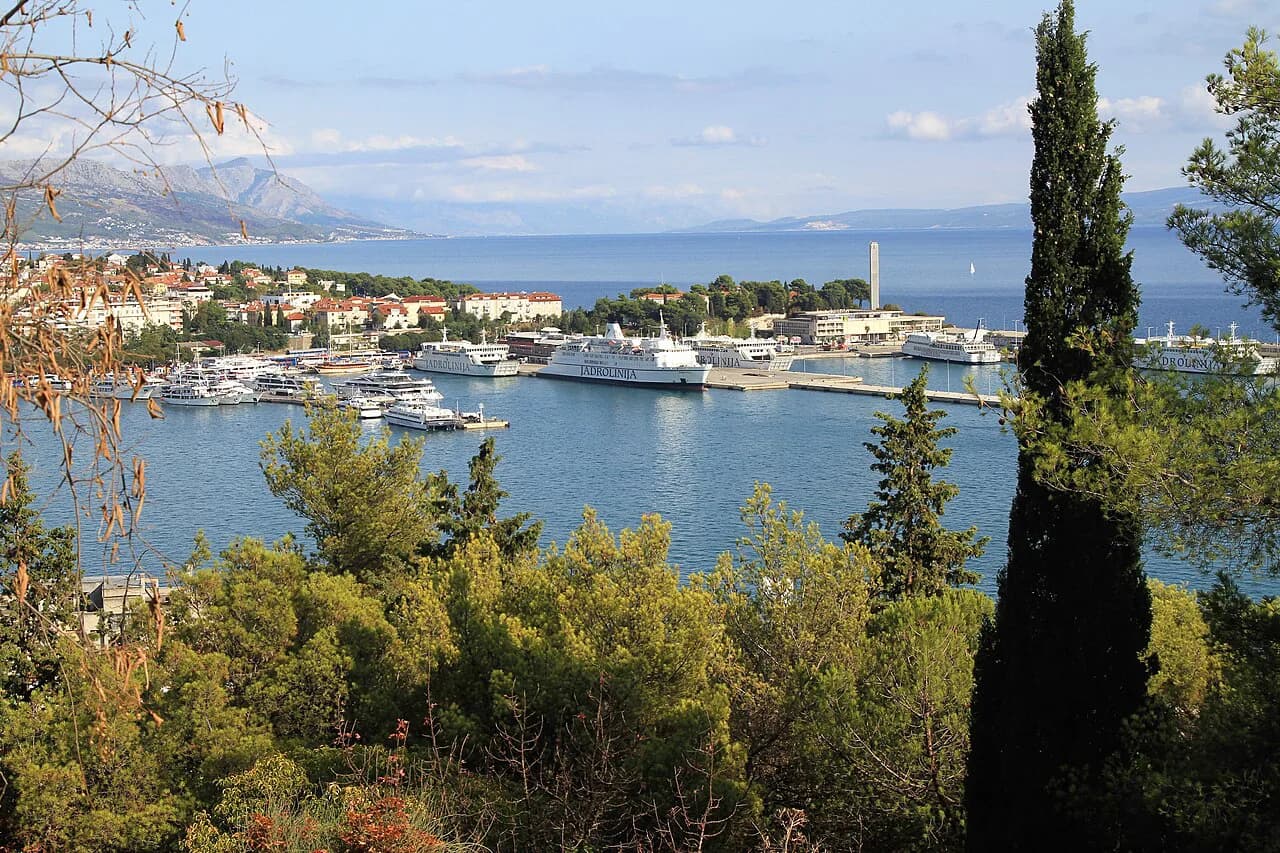
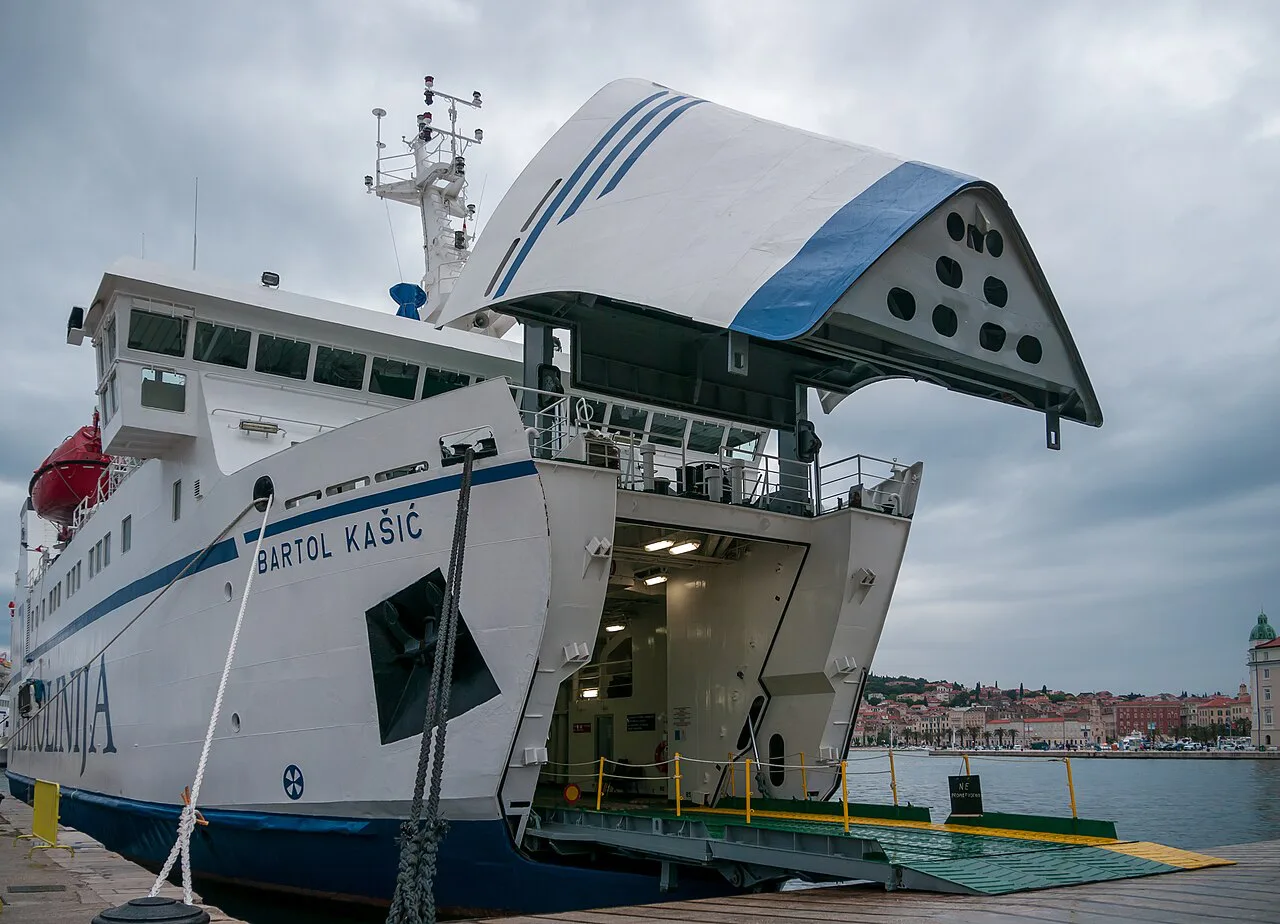
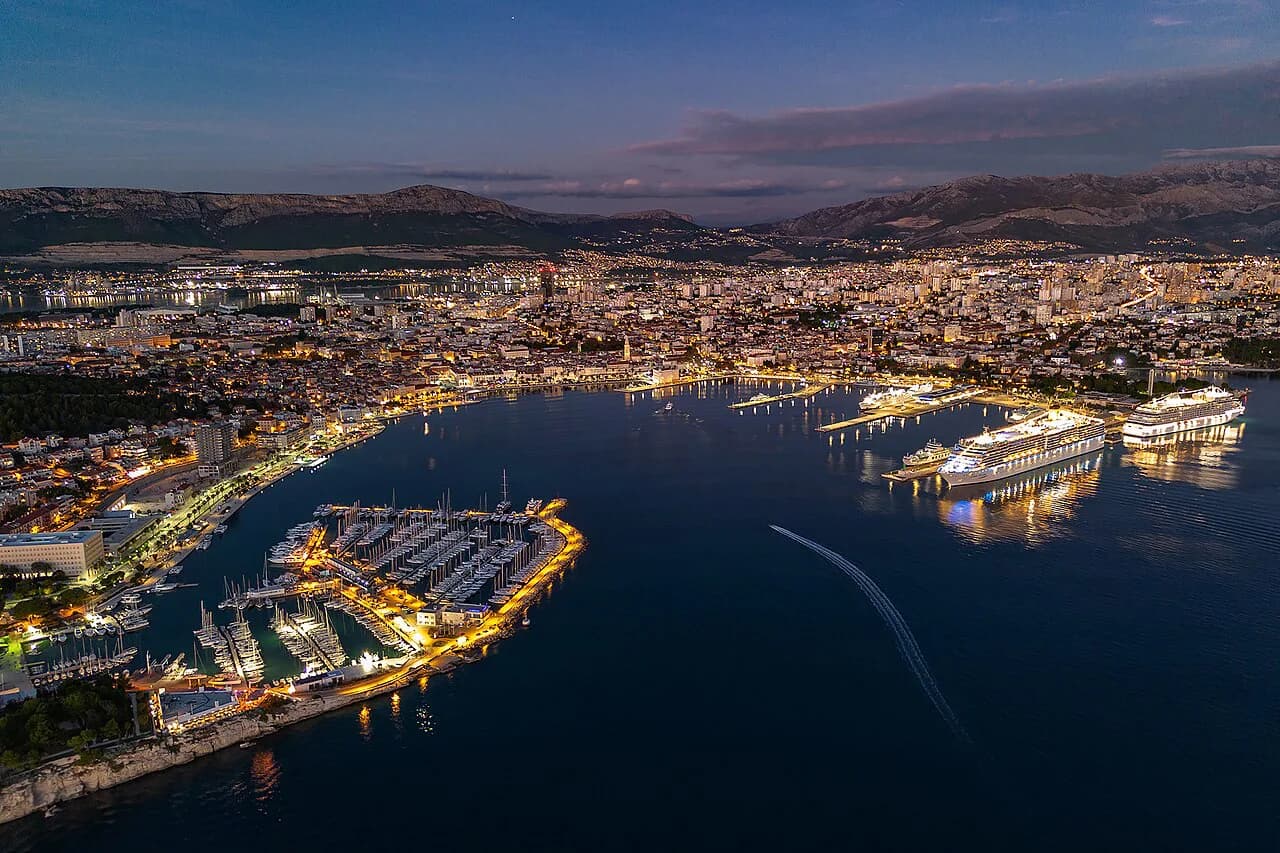
Large cruise ships calling at Split berth in the commercial harbour, separated from the old town waterfront by a walled port area with controlled exits. The practical route into town is through the passenger exit and along the waterfront rather than around the port perimeter, which is longer and has no useful facilities.
From the harbour edge the whole old town is on foot. The seafront promenade runs directly in front of the palace's sea-facing wall, and the main gate into the palace opens off it. If your ship provides a shuttle, use it for the return leg when legs are tired rather than for the outward leg, which is short enough to walk.
For a step-by-step route from the berth to the palace and the old town gates, work through the guide to getting from the split cruise port to old town before you pick an excursion meeting point, so you know how long the walk alone costs you.
Diocletian's Palace and the old town on foot
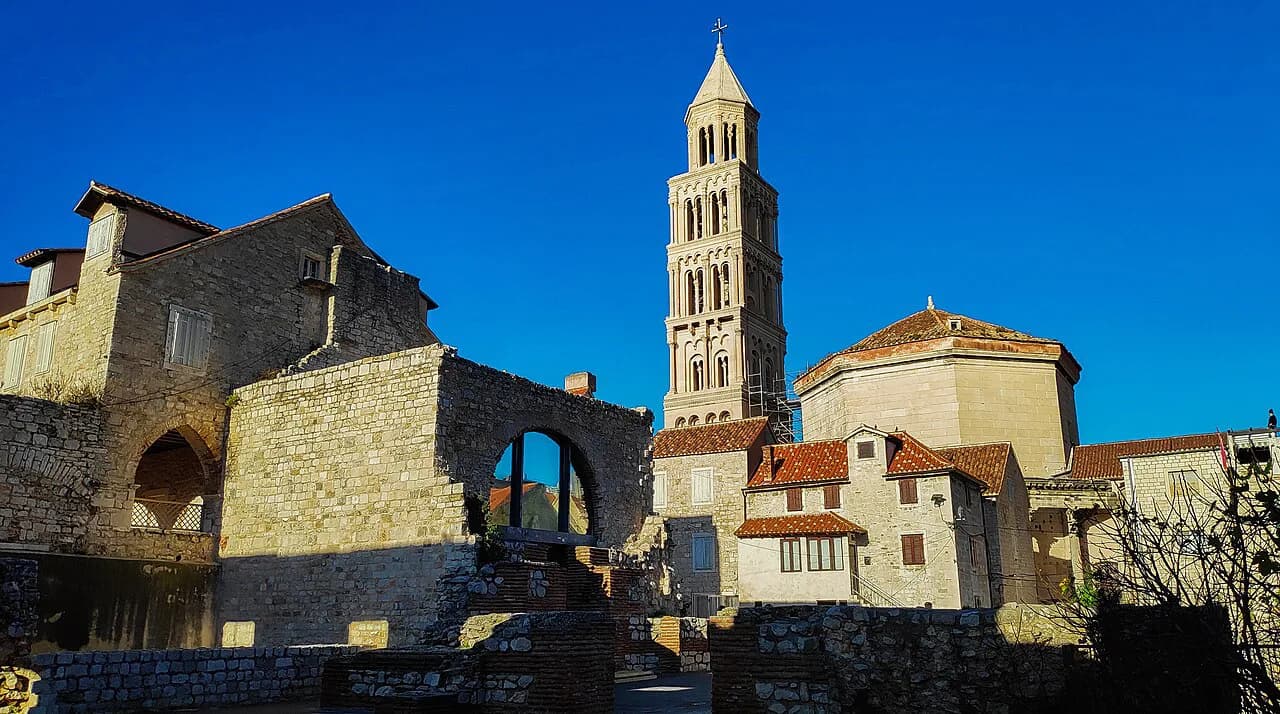
The old town is built inside and around Diocletian's Palace, a Roman complex that became a medieval city and is inscribed on the UNESCO World Heritage list. You do not need a ticket to walk through its streets, cellars and squares; the palace functions as the city's living centre, not a gated monument.
Two to three hours on foot covers the essentials: the peristyle, the cathedral square, the seafront, and the tangle of lanes behind it. Add time for the fish market in the morning or the fruit square, both of which reward a slow pass rather than a photo stop. Bring small notes and coins for coffee and snacks, since sitting down is a bigger expense than standing at the bar.
Because the palace streets are narrow and busy in summer, the walking day degrades quickly if you add a guided group at the same time. Do the self-guided loop early, then join a tour, or do the reverse; do not try both at once.
Small-group walking tours versus self-guided time
A small-group walking tour pays off most for passengers who want the palace decoded: the Roman substructures, the shift from imperial villa to medieval city, and the surviving Egyptian sphinxes are easy to walk past without context. A local guide compresses that into an hour or two, which is exactly the right format for a short call.
Group walking tours of the palace and old town are widely sold, including by cruise lines and through marketplaces such as Viator, where small-group palace and old town walks are among the listed Split options. Book through whichever operator lets you pick a departure time that leaves a clear margin before all aboard.
Self-guided time wins if your priority is food, shopping or simply sitting on the seafront. Independent travelers can also review options and traveller feedback on platforms such as Tripadvisor before committing, which is useful for judging how much walking a tour actually involves.
Boat trips to the Blue Lagoon, Hvar and the islands
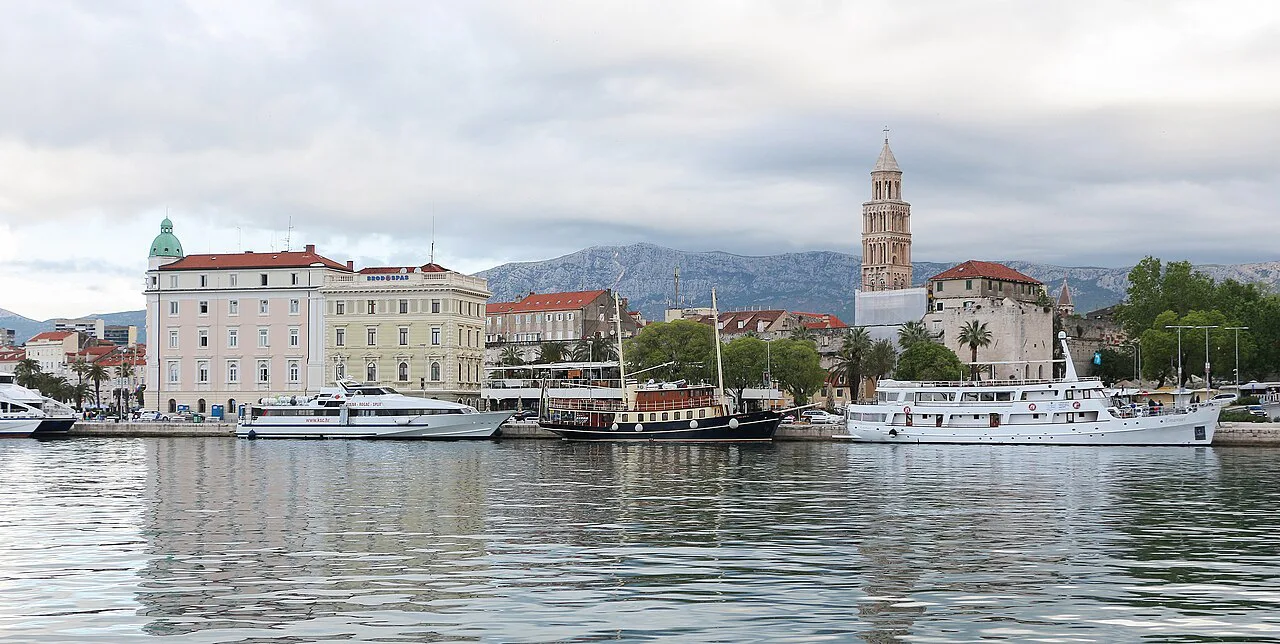
Boat trips from Split split into two types. The first is a short hop to the Blue Lagoon and nearby Trogir, marketed as small-group tours that combine swimming with a UNESCO-listed town stop. The second is a full-day island run toward Hvar and the Dalmatian islands, often built around the Blue Cave and several swimming stops.
The first type can fit a longer call; the second rarely fits a standard one. The reason is arithmetic rather than opinion: a multi-island itinerary stacks several crossings, a cave visit and a lunch stop into a single day, and any one of them running late eats directly into your return window.
Sea state is the variable you cannot plan around. Fast open boats are the least comfortable in a swell, and boat companies cancel or shorten routes when conditions turn. If your call is tight, book the boat trip through the ship, where the excursion provider and the line share the same schedule, rather than independently.
Trogir and Klis or Salona: the nearby alternatives
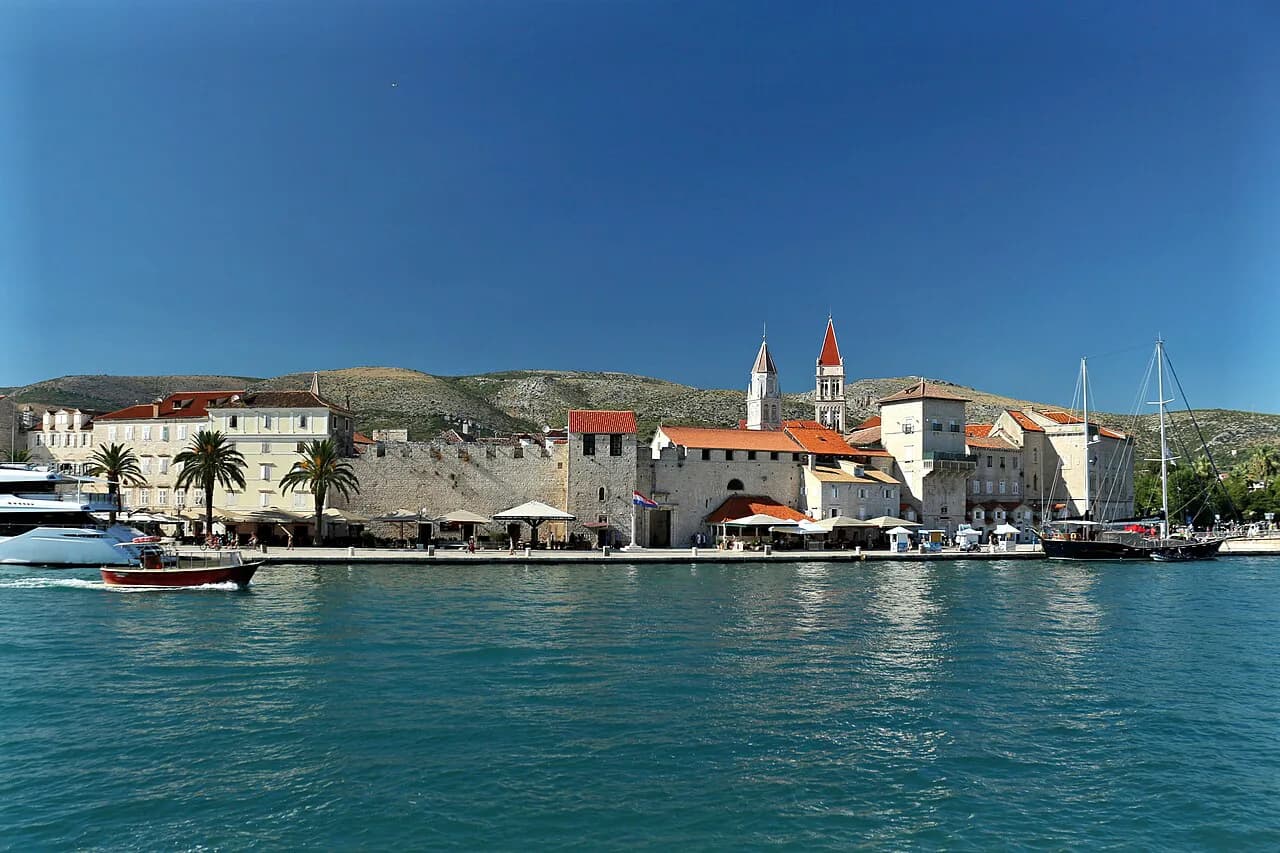
Trogir is the best-value non-boat excursion from Split: a small UNESCO-listed town on its own island, reached by a short road transfer from the Split area. It suits passengers who want a second historic town rather than a second swim, and it is a natural pairing with a return past the airport side of the bay.
Klis and Salona work as shorter add-ons. Klis is a fortress on the ridge behind the city with views across the bay, while Salona is the Roman capital site in the suburbs, with basilica and amphitheatre remains. Both are half-day material and both are easiest with a driver or on a ship excursion that handles the transfers.
Ship tours versus local operators versus going independently
The ship's tours cost more than the equivalent bought locally, and that premium buys scheduling discipline: the tour company works to the ship's arrival and departure, and the line has a procedure for a delayed return on its own excursion. No tour company can promise the ship will wait, but a ship-contracted tour is the only version where the line's own staff manage the gap.
Local operators and independent travel give you better value and more flexibility on group size and route. The trade-off is that every risk sits with you: a blocked road back from Trogir, a cancelled boat, or a taxi that does not come is your problem against a fixed all-aboard time.
A workable middle path is to book independent options that stay on foot or on fixed public transport, where the return is predictable. Use the old town on foot for your ship's short call and save the boat for a longer one, and you get most of the value of a paid excursion without most of the exposure.
How long you need: sample plans
For a six-hour call, walk into the old town, cover the palace and the seafront, have a sit-down lunch, and be back at the gangway with plenty of margin. Do not book a boat. This is the plan where Split's harbour-side layout works in your favour.
For an eight-hour call, take a morning walking tour of the palace and old town, then an afternoon transfer to Trogir or Klis, keeping the road return before the worst of the afternoon traffic. For a ten-hour call, an island boat trip becomes realistic if you choose a single-destination or short multi-stop route rather than a full five-island itinerary.
If your call is the opening day of a longer cruise and you want ideas that stretch beyond the palace, read the wider guide to one day in from cruise ship before locking in a plan that repeats what you will see elsewhere in Dalmatia.
Return-to-ship buffers and the all-aboard time
The all-aboard time, not the published departure time, is what governs your day; ships typically call it some minutes before departure, and the gap is not negotiable. Check the ship's own notice and work backwards from all aboard, not from departure.
For walking days inside the old town, fifteen to twenty minutes of walking buffer covers the return to the berth. For any road transfer, add at least an hour to the operator's stated return time, because the risk is traffic rather than distance. For boat trips, add the possibility of a cancelled or shortened route and plan a land alternative.
Because the return leg brings you back through the port area, know which gate you came out of, and keep your ship's card and a set of local currency notes on you for a taxi if the day runs long. If your itinerary continues down the coast, compare the choices with what shore excursions in Dubrovnik demand so you do not overspend your energy on the first call.
Plan Your Port Day
Split is the rare Adriatic call where the default day is already good: the old town begins at the harbour edge, and the palace is free to walk through at your own pace. Book only what your hours ashore can actually pay for, and treat any boat trip as a bonus on a long call rather than the centrepiece of a short one.
Before you sail, confirm your ship's all-aboard time and read the booking conditions on any independent operator's cancellation policy, since a weather cancellation on the water can cost you the day rather than just the tour.
Frequently Asked Questions
What should I not miss in Split?
The old town inside Diocletian's Palace is the answer for almost everyone: the peristyle, the cathedral square, the substructures and the seafront. If you have time beyond that, Trogir is the closest rewarding second stop on land.
Is Split walkable from the cruise port?
Yes. Ships berth in the commercial harbour, and the old town begins at the waterfront once you leave the port area, so the classic day in Split needs no vehicle at all. Budget fifteen to twenty minutes for the walk each way.
Can you do Split old town without a tour?
Absolutely. The palace streets are open to walk through without a ticket, so a self-guided loop of two to three hours covers the main sights. A local guide adds context rather than access, which matters most on a short call.
Are boat trips to the Blue Lagoon and Hvar worth it on a cruise call?
They are worth it on a long call, roughly ten hours ashore, where you can pick a short route and still keep a margin. On a standard call, the multiple crossings and swim stops make the return timing too fragile against all aboard.
Is it cheaper to buy shore excursions on the ship?
Local operators and marketplaces generally cost less than the ship's equivalent, but the ship's tour buys scheduling discipline and a managed procedure if the excursion runs late. Book through the ship when the excursion involves water or a long road transfer, and independently when you stay on foot.
What are the best shore excursions for a short call in Split?
For a six-hour call, a small-group walking tour of the palace and old town, followed by lunch and the seafront, makes the best use of time and involves no transport risk beyond the harbour walk.
Sources
Port-day notes for your next cruise
Optional updates to our port guides.
You might also like
Continue reading
More guides you'll find useful