Split Cruise Port: Where Ships Dock and How to Plan the Day
Split's cruise port sits beside the old town, so Diocletian's Palace is a short walk from the gangway. Plan your hours ashore, tenders, and a Klis side trip here.
On this page
Split hands you a Roman palace as a working city centre, and most ships tie up within a short walk of its walls. That makes it one of the few Mediterranean calls where you can see the headline sight without burning an hour on transport each way. This guide is for passengers who want to match their berth, their hours and their energy to a realistic plan.
The key decisions are simple: which berth you have, how many hours you actually get on the ground once disembarkation and the all-aboard margin are subtracted, and whether a side trip is worth the return risk. Work those out before you leave the ship, because everything in Split sits within a compact radius once you are ashore.
Split cruise port at a glance
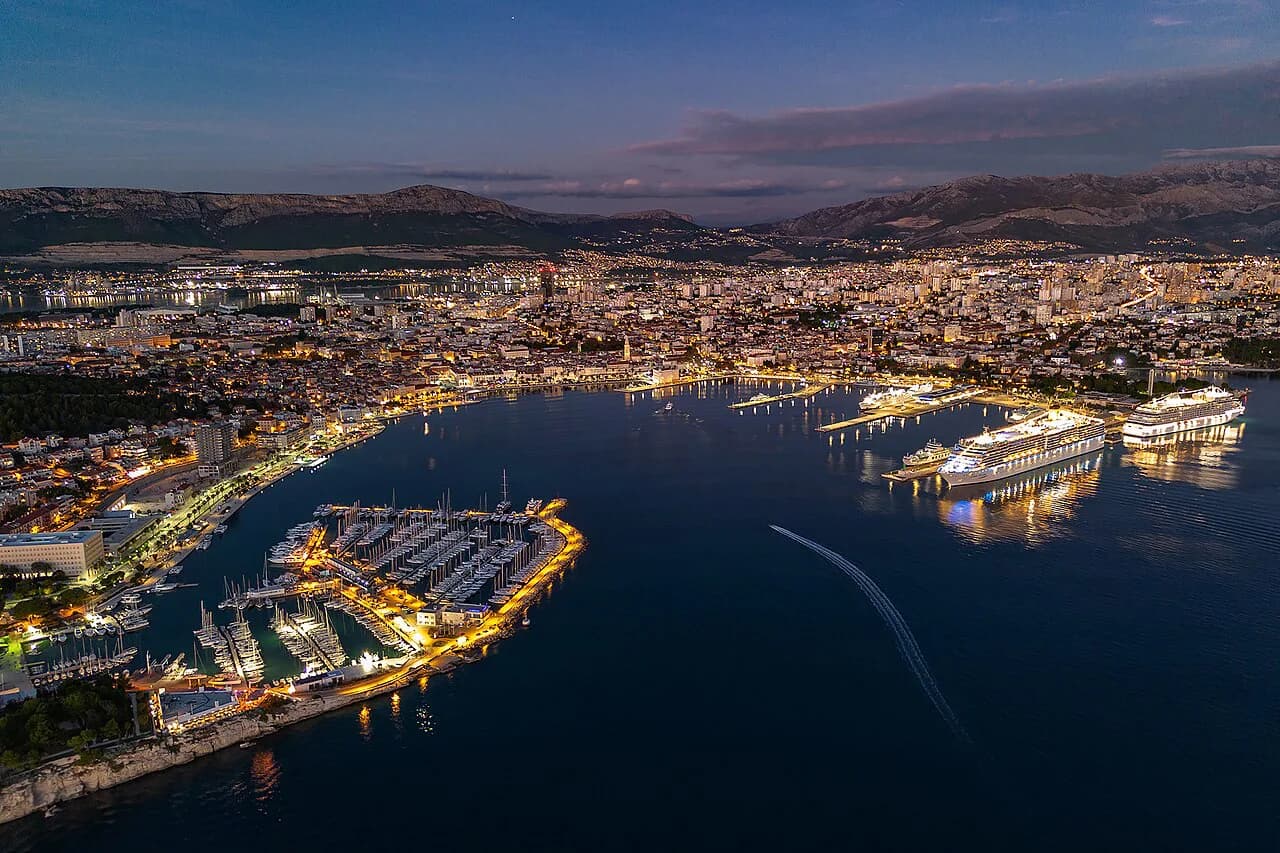
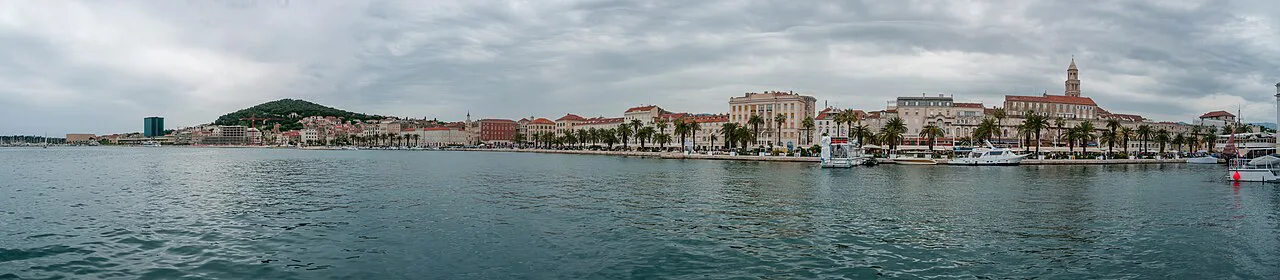
The port sits in the Gradska Luka, the city harbour that wraps around the eastern side of the historic centre, and Split's old town rises directly behind it. Passenger shipping is Croatia's largest operation here, with over 260 cruise calls and roughly 130,000 cruise visitors in a typical year alongside heavy ferry traffic to the islands. Expect a busy working harbour rather than a purpose-built cruise village.
Practically, this means the ship and the sights are in the same place. The palace, the Riva promenade, the market and the ferry quays all sit within a couple of kilometres of each other, so you can plan the day on foot. The decisions that matter are about time and direction, not transport logistics.
Where ships dock in Split
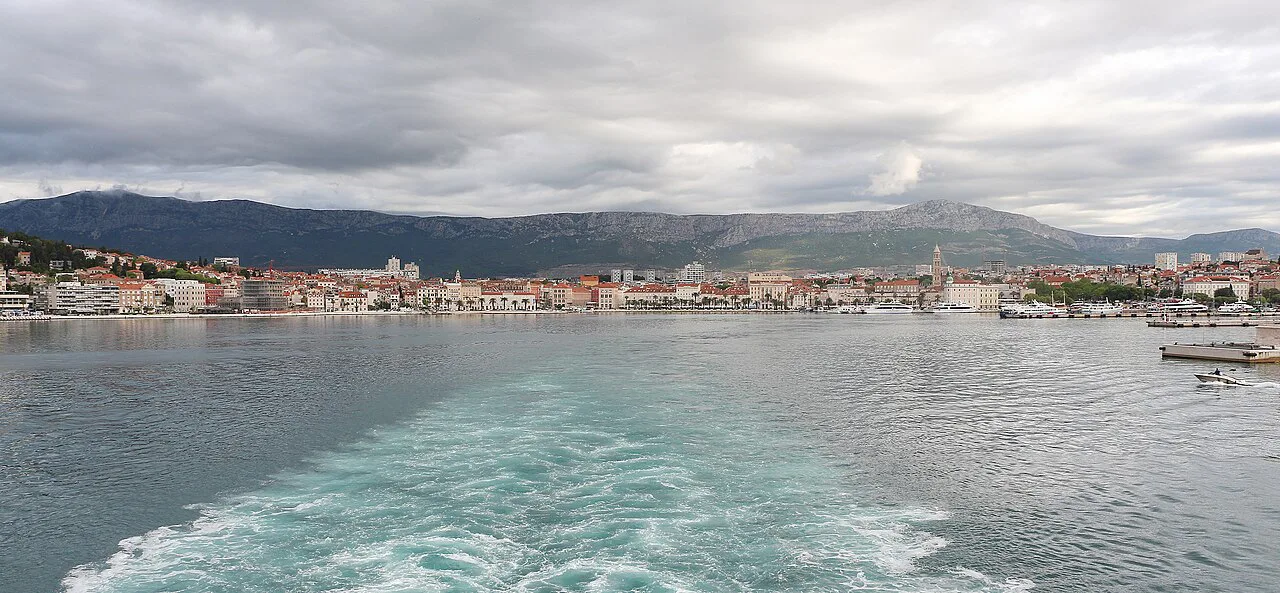
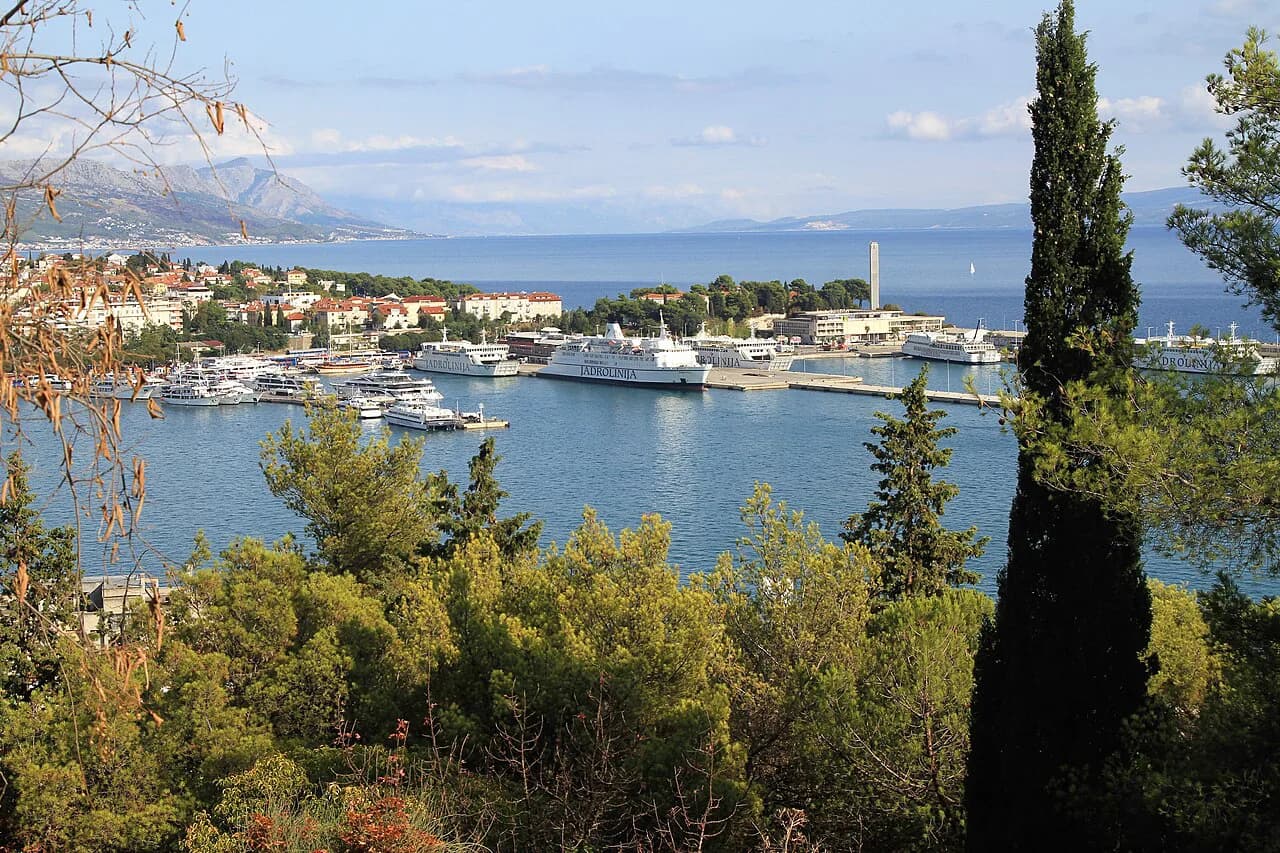
Most cruise ships dock at the central passenger port, with the old town and Diocletian's Palace about a five to ten minute walk along the flat Riva seafront. The quayside has a taxi rank, and cafés, banks and shops sit just across the main docking area. Smaller ships sometimes berth near the ferry terminal, which serves Jadrolinija and other island routes.
Larger vessels can anchor in the sheltered harbour and tender passengers ashore, and the tender landing point is actually closer to the old town than the cruise terminal itself. A third possibility is the Brodosplit shipyard on the Supaval side of the peninsula, a working yard rather than a passenger berth, used on busy days or when the central quays are full.
Your daily programme is the only reliable statement of which of these applies to your ship, because berth and tender assignments change with the day's schedule. If you are at the shipyard, a shuttle is normally laid on; if you are tendering, build the tender queues into your return time rather than your onward time.
Getting into town on foot
From the central berths, walk west along the Riva with the sea on your left and the palace walls on your right, and you will reach the Brass Gate, the southern entrance, in a few minutes. The route is paved, flat and easy to follow, so there is no reason to pay for a transfer. Once through the gate you are standing on original Roman flagstones that are beautiful but uneven.
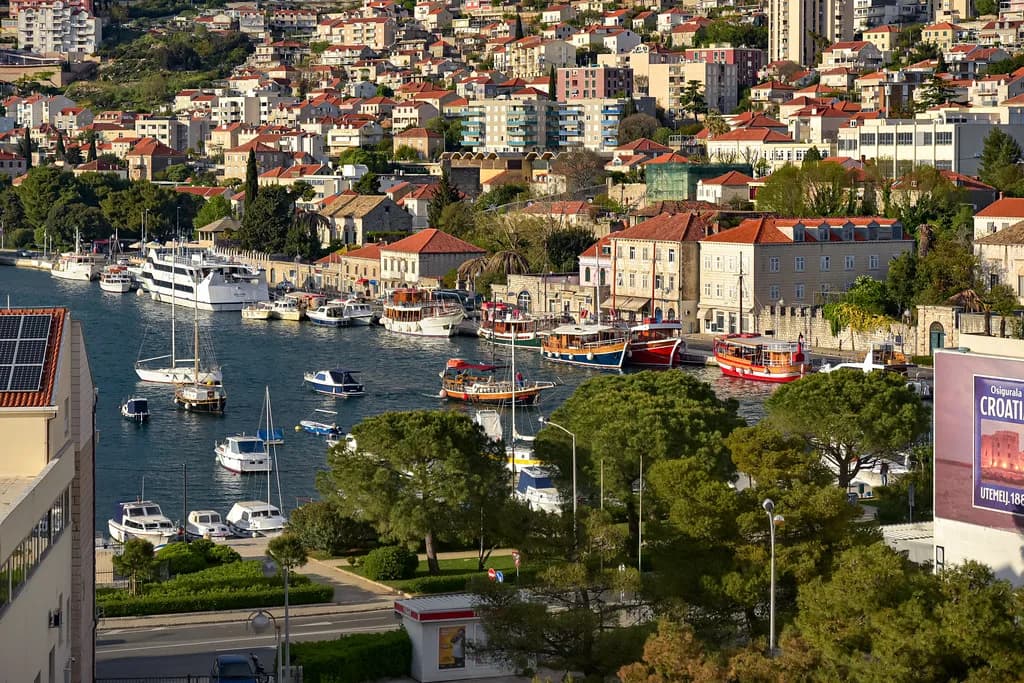
If your aim is simply to get from the gangway to the palace and the seafront, this walk is the whole journey and worth doing slowly. Our guide to the split cruise port to old town route breaks the walk down gate by gate if you want the detail before you go ashore. If you are comparing calls along the Dalmatian coast, the Dubrovnik cruise port guide covers the same docking-and-transfer decision at the other great walled city, and the Kotor cruise port guide does the same for the Bay of Kotor.
Taxis, buses and the harbour layout
Split's old town is largely closed to cars, so taxis drop at the edges rather than at the palace door, which makes them more useful for longer trips than for the port transfer. A taxi rank sits at the pier for anyone heading to Marjan, Bačvice or the bus and rail stations. Local buses serve Klis and the wider city, and the main bus station and ferry terminal are a short walk east of the centre.
For anything beyond the old town, decide between taxi speed and bus economy on the day. A taxi gets you to Klis faster; a local bus costs far less but runs less often, which matters when your return window is fixed by the ship.
Diocletian's Palace: what to see inside the walls
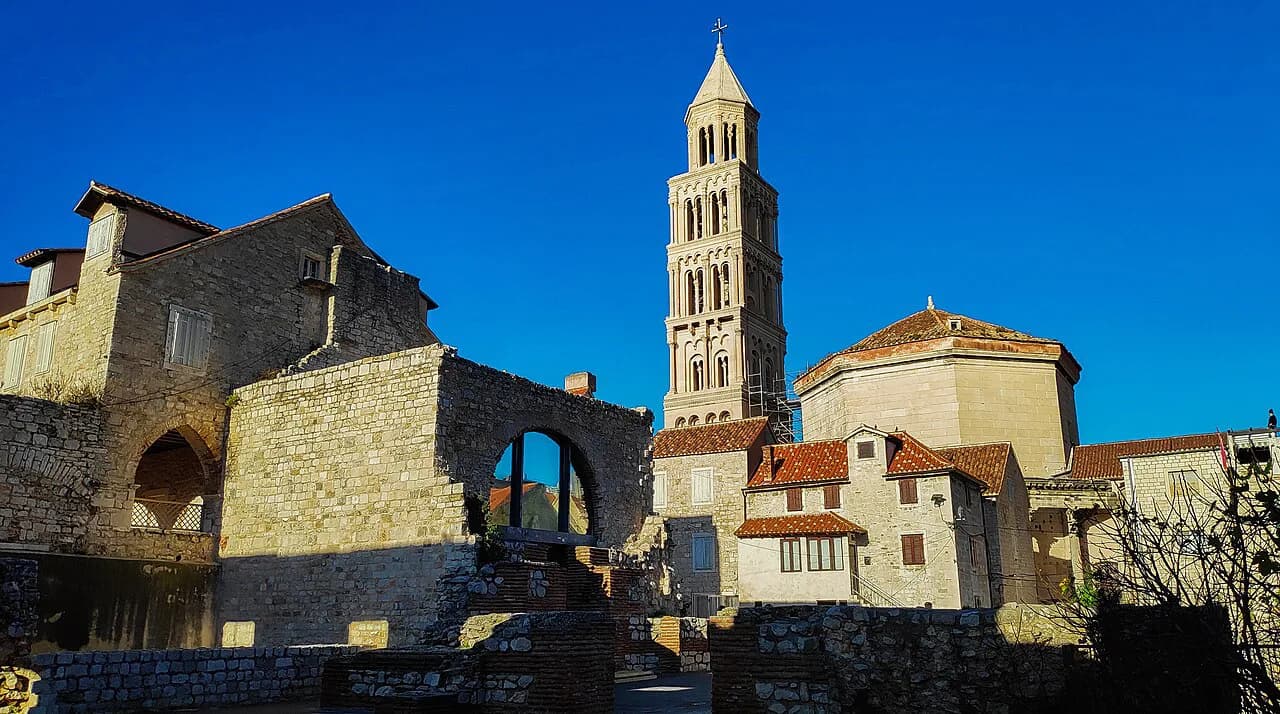
The palace is not a ticketed monument but the living centre of the city, and walking through the gates and courtyards costs nothing. The Peristyle, the ceremonial courtyard at its heart, the Vestibule with its open dome, and the underground cellars are the set pieces. Because the palace is free and open, the constraint is your own time and how much context you want.
A licensed guide earns their fee here more than almost anywhere, because 1,700 years of layered building is genuinely hard to read without help. A guided walk of roughly 80 to 120 minutes gives you the palace's main spaces in a coherent order, which is exactly what a short call needs. Diocletian's Palace is also the anchor of any one day in split from cruise ship plan, so sort the tour before you think about anything else.
If you plan to enter the cathedral itself, cover shoulders and knees. The flagstones underfoot are the other practical point: thin soles or heels will make an hour feel long.
Climbing the Cathedral of Saint Domnius bell tower
The bell tower beside the Peristyle offers the best view in the city, taking in the terracotta rooftops, the harbour and the islands on the horizon. The climb is 183 steps, and allowing about 45 minutes including any queue is a sensible budget for a cruise day. Buy tickets on arrival rather than pre-booking.
This climb is the natural addition when your call gives you roughly four and a half hours ashore, and the natural cut when it does not. If the tower is crowded, the same view is partly available from the upper walls around the palace, at no cost in time.
The Riva, the Pazar market and coffee
The Riva is Split's seafront living room, a promenade of cafés facing the harbour that you will cross on every walk between ship and palace. Sitting down for an espresso or a white coffee is a genuine local ritual rather than a tourist interval, and it costs you twenty minutes rather than an hour.
Just outside the Silver Gate on the eastern side, the Pazar market sells produce, cheese, olive oil and lavender and is open-air, with no ticket and no booking. It is the easiest way to buy something small and local before returning to the ship. Small vendors are the place to spend cash rather than card.
Bačvice beach and Marjan Forest Park
Bačvice is the closest beach, sandy and shallow, and it lies in the opposite direction from the old town, about ten minutes on foot from the port. That makes it a simple swim stop rather than a detour. Marjan, the wooded hill west of the centre, offers shaded walking paths and city and sea views for anyone who would rather move than sit.
Choose one or the other, not both, on a call of six hours or less. Bačvice suits families and swimmers who want a short, close dip; Marjan suits passengers who want a quiet hour of walking and are content to skip the beach entirely.
Klis Fortress and Salona: side trips for a longer call
Klis Fortress sits about 20 to 25 minutes inland by road and rewards at least 90 minutes on site for the walls, the views over the hinterland and the castle's Roman, medieval and Ottoman layers. Treat Klis as realistic only when your published port time is seven hours or more, and only with transport arranged in advance. A taxi is the faster option; the local bus is cheaper but less frequent, which is a poor trade when the ship's departure is fixed.
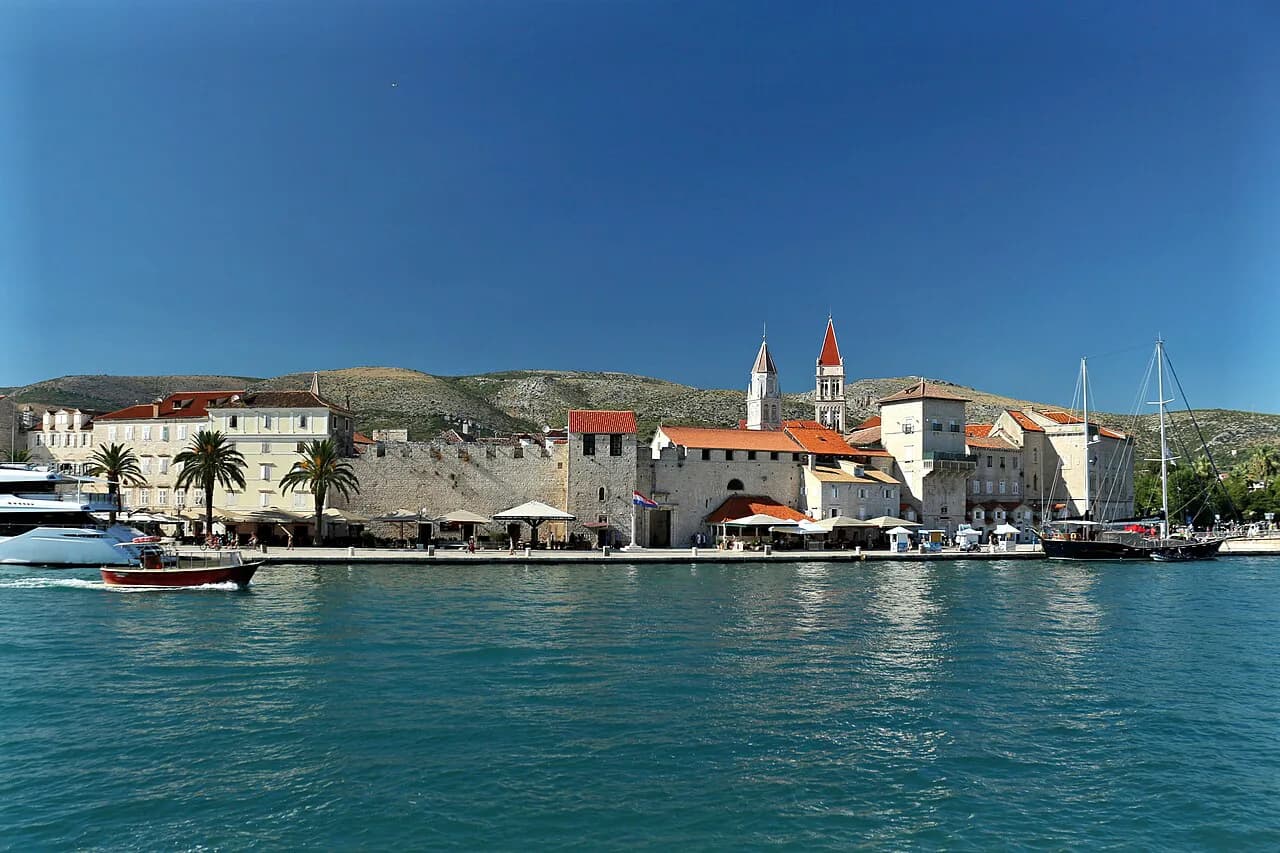
Salona, the Roman archaeological park northeast of the city, is the alternative for passengers who prefer ruins to a fortress and have a similarly long call. Both trips use the same window of shore time, so do not attempt them on a four- or six-hour stop. If you would rather head north up the coast than inland, our split port to trogir notes cover the other direction and the Split bus station where those services start.
Two other popular ideas do not work from a cruise call: a fast catamaran to Hvar spends an hour each way on the water, and Krka National Park sits around 90 minutes' drive each way. Both deserve a land-based trip of their own.
Ship tours versus local guides versus going it alone
The independent route is unusually strong in Split because the headline sight is a free public space a few minutes from the gangway. Local licensed guides run smaller groups and go deeper than the big ship coaches, and pre-booking directly with an operator at least 48 hours ahead is sensible in peak season, when demand for small-group walks is high.
Ship tours buy you certainty of timing only in the sense that the cruise line runs its excursions to the ship's schedule; no tour guarantees the vessel will wait for you. Going alone on foot inside the old town carries almost no return risk. Going alone to Klis or Salona carries real risk, because a missed taxi or a cancelled bus eats your buffer. Check current prices and departure times before you commit to any excursion.
If you want to compare the organised options before deciding, our split shore excursions overview sets out what is sold and how each format spends your hours.
How long you need: four, six and eight hours
Published port time is not shore time. Disembarkation typically begins 30 to 45 minutes after arrival, and all-aboard falls about 30 minutes before departure, so a six-hour call often yields around four and a half hours on land, and a four-hour call closer to two and a half to three. Plan against the real figure.
With four hours published, stay inside the old town: walk to the palace, take one guided walk of around 80 minutes, eat a quick lunch at a konoba and walk back via the Riva. With six hours, add the bell tower or the cellars in detail plus time at the Pazar market. With eight hours, add either Klis by pre-arranged taxi or a swim at Bačvice, and nothing more.
Eating inside or near the palace rather than on the Riva saves time and money, and it keeps you close to your exit gate. The Riva is for coffee, not for the main meal of a short call.
Return-time buffer and all-aboard planning
Build the walk back into the plan rather than treating it as free: allow 15 to 20 minutes for the palace-to-gangway leg, plus the all-aboard margin your cruise line sets. For a confident buffer, aim to be at the gangway 30 minutes before all-aboard rather than at the minute. Nothing in central Split justifies cutting that fine.
Klis is where buffers go wrong most often on this itinerary, because the return depends on a road and a vehicle you do not control. If you make that trip, leave the fortress at a set time regardless of how much you are enjoying the walls, and keep the taxi arrangement for the return agreed before you walk up.
Tendering days: what changes
When your ship anchors, tenders bring you to the same harbour area used by docked passengers, so the walk to the palace does not change. Add 15 to 20 minutes at each end for boarding and waiting, because tenders run continuously but not instantly. The practical effect is to compress a four-hour call into a palace-only visit.
Tender days also make the final return the tightest part of the plan, since the queue at the landing stage is outside your control. Come back a tender earlier than strictly necessary rather than gambling on the last one.
Money, cards and cash in Split
Croatia uses the euro, and cards are accepted widely in restaurants, shops and museums. Carry a modest amount of cash for the market, smaller cafés and taxis. Croatia's adoption of the euro is recent enough that some older travel pages still mention the kuna, so treat those references as out of date.
Use ATM machines run by established banks in the old town rather than standalone machines in the most tourist-heavy spots. If a shop or café quotes you a price in kuna, ask for it in euro before you pay.
What to wear and what to carry
Comfortable shoes matter on the palace flagstones, which punish thin soles within an hour. Carry light layers in spring and autumn, a refillable water bottle given the old town's drinking fountains, and a small umbrella outside high summer. Cover shoulders and knees if you plan to enter the cathedral.
A small bag is easier than a daypack in the cramped passages of the palace, and modest dress keeps the cathedral option open without a return to the ship. Waterproof footwear helps at Bačvice if you plan to swim, since the entry section is shallow and stony.
Accessibility and uneven ground
The walk from the central berths to the palace is flat and paved, which suits most passengers with limited mobility. Inside the gates, the original Roman flagstones are uneven and polished by centuries of feet, and the narrow side lanes are often stepped. The bell tower's 183 steps and the descent into the cellars are not step-free.
Travellers with mobility needs should plan a ground-level route through the Peristyle and along the Riva, and use a taxi for anything on the Marjan side. Tendering days add a step between boat and quay that is worth raising with the ship's shore team the evening before.
Plan Your Visit
Split works best when you treat it as a compact, walkable city rather than a spread-out excursion destination. Confirm your berth from the ship's daily programme, plan around the real hours you will have on the ground, and put the palace at the centre of the day whatever its length.
If you have less than six hours, stay within the walls and along the seafront: the palace, the Riva and the market will fill the time properly. With eight hours or more, one inland trip or one beach is the right ambition, and no more.
For a full sample schedule built around your call length, our one day in split from cruise ship plan slots the palace, the tower and lunch into a realistic timeline.
Explore more Split cruise port guides
Frequently Asked Questions
Can you walk into Split from the cruise port?
Yes. From the central passenger harbour, the old town and Diocletian's Palace are a five to ten minute walk along the flat Riva seafront, with no taxi or shuttle needed. If your ship anchors, tenders land in the same harbour area, so the walking distance stays the same.
Where do cruise ships dock in Split?
Most ships berth at the central Gradska Luka passenger port. Larger vessels sometimes anchor and tender passengers in, and on busy days a ship may use the Brodosplit shipyard further west, where a shuttle is normally provided. Your ship's daily programme states which applies.
How far is Diocletian's Palace from the cruise port?
The palace is roughly 500 metres from the central berths, a few minutes on foot along the seafront. Enter by the Brass Gate on the south side for the shortest route to the Peristyle. Passengers arriving by tender land in the same area.
What can you do in Split in four hours from a cruise ship?
Four hours of published port time usually means under three hours on shore. Keep to the old town: walk to the palace, take one guided walk of about 80 minutes, eat a quick lunch at a konoba inside the walls, and return via the Riva with time to spare.
Is Klis Fortress possible on a Split port call?
Only with a published port time of seven hours or more, pre-arranged transport, and at least 90 minutes at the fortress itself. The drive is 20 to 25 minutes each way. A taxi is faster than the local bus, which runs less frequently and is a poor fit for a fixed departure.
Do you need a shore excursion in Split?
No, because the palace is a free, open public space a short walk from the ship. A licensed guide does add real context, and local small-group walks are usually better value than coach tours. Book directly with an operator at least 48 hours ahead in peak season.
What happens if the ship tenders in Split?
Tenders land in the same harbour area as the docked berths, so the walk to the old town does not change. Add 15 to 20 minutes at each end for boarding and waiting, and return on an earlier tender than you think you need.
How much time should you leave to get back to the ship in Split?
Allow 15 to 20 minutes to walk from the palace to the gangway, plus the all-aboard margin your cruise line sets, which is commonly 30 minutes before departure. Aim to be aboard 30 minutes before all-aboard rather than at the deadline.
Sources
Port-day notes for your next cruise
Optional updates to our port guides.
You might also like
Continue reading
More guides you'll find useful