Lisbon Cruise Port to Airport: Transfers, Taxis and Timing
Compare taxis, private transfers and public transport from Lisbon's cruise terminal to the airport, with distances and the buffer to plan before your flight.
On this page
A Lisbon cruise port to airport transfer is one of the shorter disembarkation runs in Europe: the New Cruise Terminal sits just over eight kilometres from Lisbon Airport, close enough that the journey is decided by traffic and queues rather than distance. That short hop makes the day feel manageable, but it also tempts passengers into leaving too little room for the airport side of the trip.
This guide suits anyone ending a cruise in Lisbon with a flight the same day, and anyone starting a cruise who needs to get from arrivals to the ship with luggage. If you are simply in port for a few hours, your transfer question is a different one and is covered in our look at getting from the lisbon cruise port into the city.
Where the ships dock
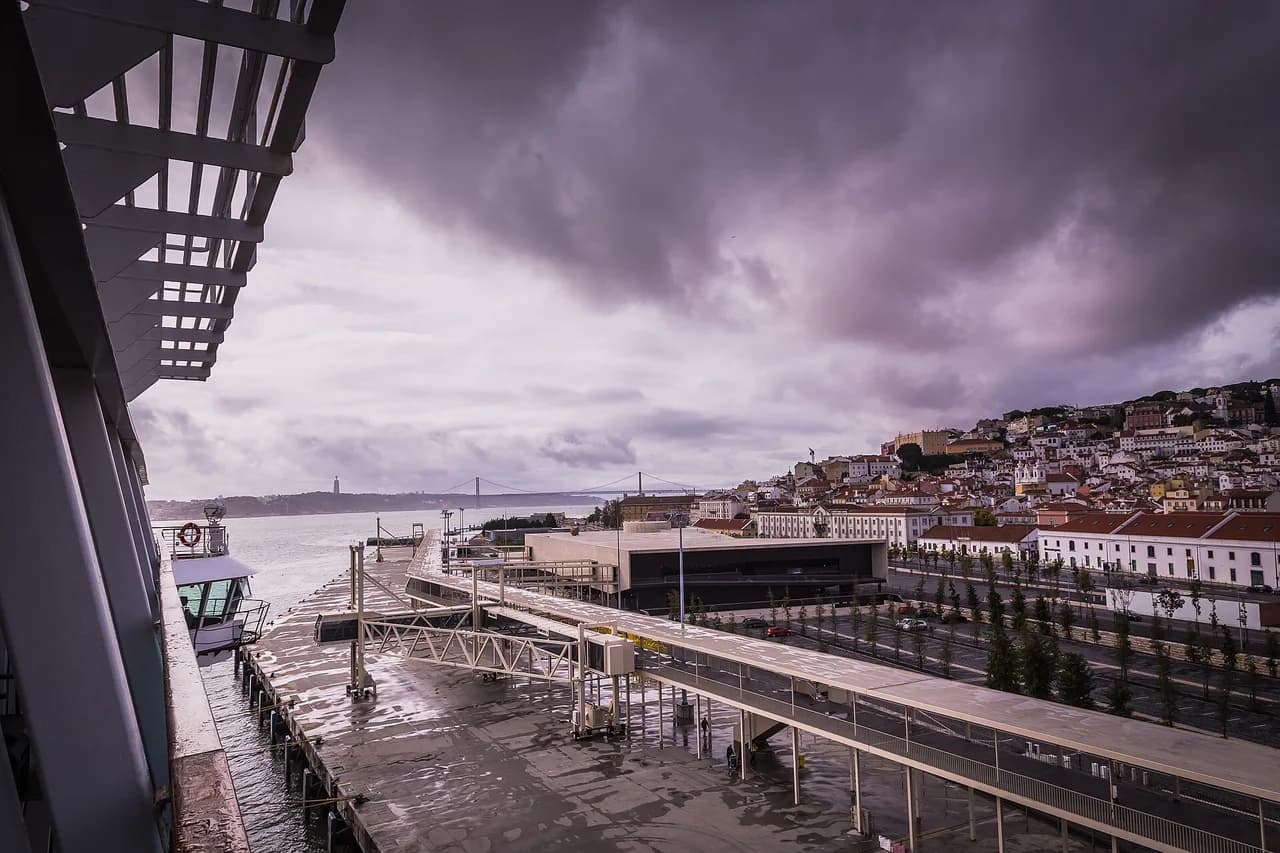
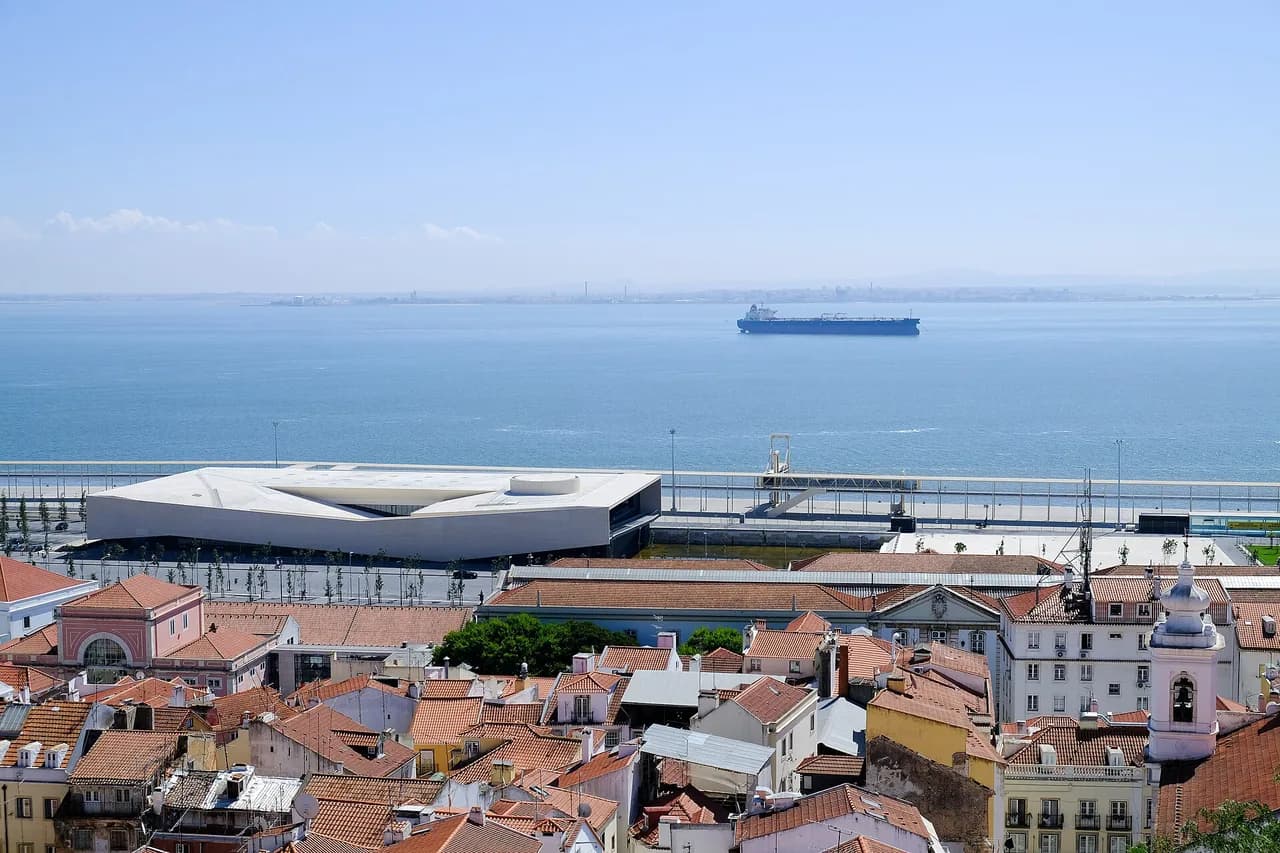
Lisbon's cruise berths line the Tagus between Santa Apolónia, east of the old town, and Alcântara to the west, with the New Cruise Terminal the main facility for ships starting and ending their itineraries. For a transfer, what matters is which berth your ship uses: Santa Apolónia puts you close to the historic centre, while the western berths sit under the 25 de Abril bridge near Alcântara.
Your cruise line's disembarkation paperwork names the terminal, and that name is what you give a driver. The terminal forecourt is where taxis and pre-booked cars collect passengers, and it is also where the public bus stop serving the terminal sits.
Distance and journey time
The airport side of the trip is a fixed run of just over eight kilometres from the New Cruise Terminal, according to the airport operator, which also points out that the terminal has grown as a place cruisers begin and end holidays. Treat the distance as constant and the travel time as variable: morning disembarkation overlaps with commuter traffic on the riverside roads and the approach to the airport.
Because the route is short, the meter matters less than the delay. A car stuck on the Avenida Infante Dom Henrique approach costs you the same as one moving freely but eats into your airport buffer, so plan your departure from the ship around the earliest you can realistically be off with your bags rather than around a hoped-for journey time.
Taxis and ride-hailing from the terminal forecourt
The simplest transfer is a taxi from the rank at the terminal, loaded once with all your luggage and driven directly to departures. Ride-hailing apps work in Lisbon too, but pick-up points at a busy terminal can be awkward when several ships turn around at once, so agree the meeting spot with your driver before you leave the ship.
Neither the meter reading nor an app quote is something to plan a budget around in advance, since fares vary with traffic and luggage. Check the fare estimate in your app before requesting a car, or ask the driver to confirm the approximate charge before you load bags at the rank.
Private transfers and ship-arranged coaches
A pre-booked private transfer is the option that removes the most uncertainty: a driver meets you at the terminal, helps with bags, and takes you straight to the departures curb. It costs more than a metered taxi at quiet times and less in hassle when you are travelling with children or several suitcases, and the price is settled before you travel.
Cruise lines also sell post-cruise transfers and sometimes a meet-and-greet at arrivals for passengers starting their cruise in Lisbon, with the airport operator describing a greeter waiting in the arrivals hall to put guests on a transfer to the terminal. If you book that package, your luggage is typically handled from the arrivals hall onward, which is worth paying for when you land tired with a long cruise ahead.

Public transport with luggage
Lisbon's cheapest route to the airport is a bus or metro ride with a change in the city, and a public bus stop sits directly outside the terminal building. That makes a bus-plus-metro itinerary feasible on paper, but you are hauling every case you brought on the cruise through stops, stairs and interchanges, and on a disembarkation morning that is rarely worth the saving.
Public transport also runs to a timetable, and early flights can fall outside it: travellers note that buses outside the terminal are not running in the small hours, so a very early departure needs a car. Check the current Carris and Metro Lisboa timetables for your date before committing to a bus-and-metro plan, and carry small change or a rechargeable card for fares.
Lisbon Airport to the cruise terminal on embarkation day
In the other direction, the airport operator's guidance is to collect bags and head into the arrivals hall, where a meet-and-greet transfer if you booked one will be waiting; otherwise you take a taxi from the airport rank or a pre-booked car to the terminal. Porterage can be requested at the airport so bags are moved from the plane to your car, taxi or coach, which matters when you are wrangling cruise luggage after a long flight.
If you are arriving a day early, stay near the terminal rather than near the airport so the morning of embarkation is a short ride; our guide to hotels near lisbon cruise port compares the districts on that basis. Either way, give yourself enough time to reach the ship before the check-in deadline your cruise line sets.
How much buffer to build
For a same-day flight, the buffer belongs on the airport side, not the port side. Work backward from your airline's recommended arrival time, add the drive to the airport, and then add the time it will take to disembark with your bags and clear the terminal. If the result leaves you no slack, book the earliest disembarkation slot your cruise line offers.
On an ordinary port call, the transfer question is really a sightseeing one: with six hours ashore, a taxi into the centre and a short walk around Alfama or the Baixa fits comfortably, while a ten-hour call leaves room for Belém Tower or a wider loop. Keep a return margin that reflects afternoon traffic across the city and the walk back to your berth, because all-aboard time is set by the ship and does not move for independent travellers. If you are weighing how much a shorter call can hold, the Málaga port day thinking applies in the same way.
Ship-run shore excursions carry the advantage that the cruise line is tracking the vessel's schedule, though even those cannot guarantee the ship will wait. Local operators and independent sightseeing are cheaper and more flexible, but the risk of a late return is yours to manage.
Airport-side shortcuts
Some airlines let you check in at kiosks in the cruise terminal itself, printing your boarding pass and bag tags before you leave, so at the airport you only need a bag-drop desk and security. The airport operator lists Air Canada, Air France, American Airlines, Brussels Airlines, Delta, Iberia, KLM, Lufthansa, Royal Air Maroc, TAAG, TAP Portugal, Turkish Airlines and United among the carriers offering this, so check your airline's name on the terminal signage.
Fast Track security is sold through the airport's own website and is available at Lisbon, which shortens the queue if you are cutting it fine. If your flight is not until later in the day, a baggage transfer service can move your bags from the cruise terminal to the airport while you spend the remaining hours in the city.

Luggage strategies
Portable luggage decides your transfer more than any timetable: one wheeled case per person makes a taxi from the terminal quick and cheap, while four large suitcases turn a bus-and-metro route into an ordeal. Ask the airport about porterage if you land with heavy bags, and use the terminal kiosks to shed check-in admin before you reach the airport.
If you are staying in Lisbon before or after the cruise, choose a hotel close to your berth or on a direct route to the airport, so you can move bags once rather than repeatedly. The same logic applies at the end of the trip: send bags ahead to the airport and keep only a day bag for the city.
Who each option suits
Solo travellers and couples with light luggage do well with a taxi or ride-hailing car from the terminal, paying for the convenience without a large outlay. Families and groups with several bags should price a private transfer or the ship's coach transfer against a taxi, since the per-person cost of a larger vehicle often compares well and the luggage handling is easier.
For very early flights, book a car the night before rather than hoping for a bus: public transport outside the terminal does not run through the small hours. If you have a full day before your flight, the calculus flips and a slow bus-and-metro route into the city can be the better use of the time.
Plan the Transfer Before You Sail
The Lisbon cruise port to airport transfer is short, so the decision is mostly about luggage, time of day, and how much slack your flight needs. Book a car for early departures and heavy bags, use the terminal kiosks to speed up the airport side, and keep a buffer that assumes traffic rather than an empty road.
If you are still shaping the day around the ship, our guide to one day in lisbon from cruise ship sets out what fits around a transfer and what does not. Sort the transport first, then spend the remaining hours on the city.
Frequently Asked Questions
How far is Lisbon cruise port from the airport?
The New Cruise Terminal is just over eight kilometres from Lisbon Airport, according to the airport operator. That makes it one of the shorter cruise-to-airport runs in Europe, but road traffic on the riverside approach can still stretch the journey.
How do I get from Lisbon Airport to the cruise terminal?
Collect your bags and head into the arrivals hall, where a pre-booked meet-and-greet transfer will be waiting, or take a taxi from the airport rank to the terminal. Porterage can be arranged so your bags are moved from the plane to your car, taxi or coach.
Can you walk from Lisbon cruise terminal to the city?
Santa Apolónia is close enough to the old town for a walk if you are travelling light, while the western berths near Alcântara are farther out. For the airport, walking is not realistic with cruise luggage, so take a taxi or pre-booked car.
How early do I need to arrive at Lisbon Airport?
Your airline sets its own recommended arrival time, so use that as the anchor and work backward. Add the drive from the terminal and the time to disembark with your bags, then check the result leaves you some slack.
Should I take a taxi or ride-hailing car to the airport?
Both work from the terminal area; the taxi rank is simpler with heavy bags, while an app gives you a fare estimate before you request a car. At busy turnarounds agree the pick-up point with your driver in advance.
Sources
Port-day notes for your next cruise
Optional updates to our port guides.
You might also like

Continue reading
More guides you'll find useful