Livorno Cruise Port: Plan Your Day Ashore
Livorno's cruise berths sit inside a working port. Here is how the shuttle, buses, taxis and trains fit together, and what suits a 6-, 8- or 10-hour call.
On this page
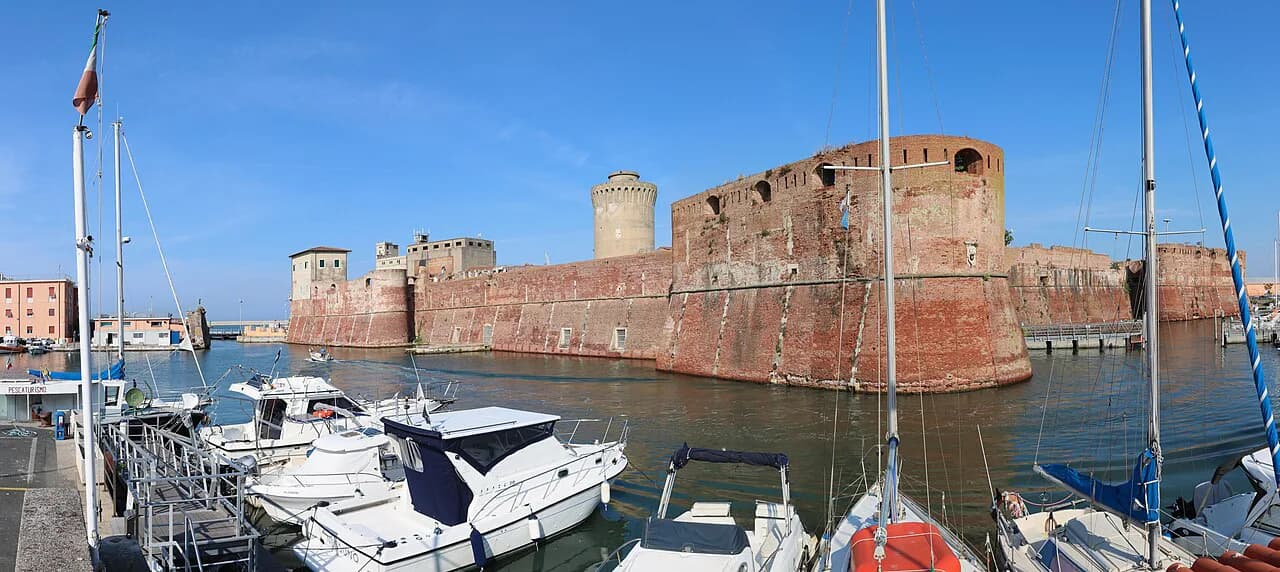
A Livorno port day gives you a real choice: Tuscany's headline sights by train, or a canal-side Tuscan city that most passengers rush past on their way to Florence. The berths sit inside a large working commercial port, so the day starts with a short transfer rather than a stroll off the gangway. It suits travelers who are comfortable stringing together a shuttle, a bus or taxi and a regional train, and who want a plan built around actual journey times.
The single address to remember is Via Cogorano, beside Piazza del Municipio, where the city shuttle terminates and where most organized tours also meet. Everything else in this guide hangs off that point: the walk into the old town, the bus to Livorno Centrale and the taxis that carry you to the station or around town.
Where ships dock
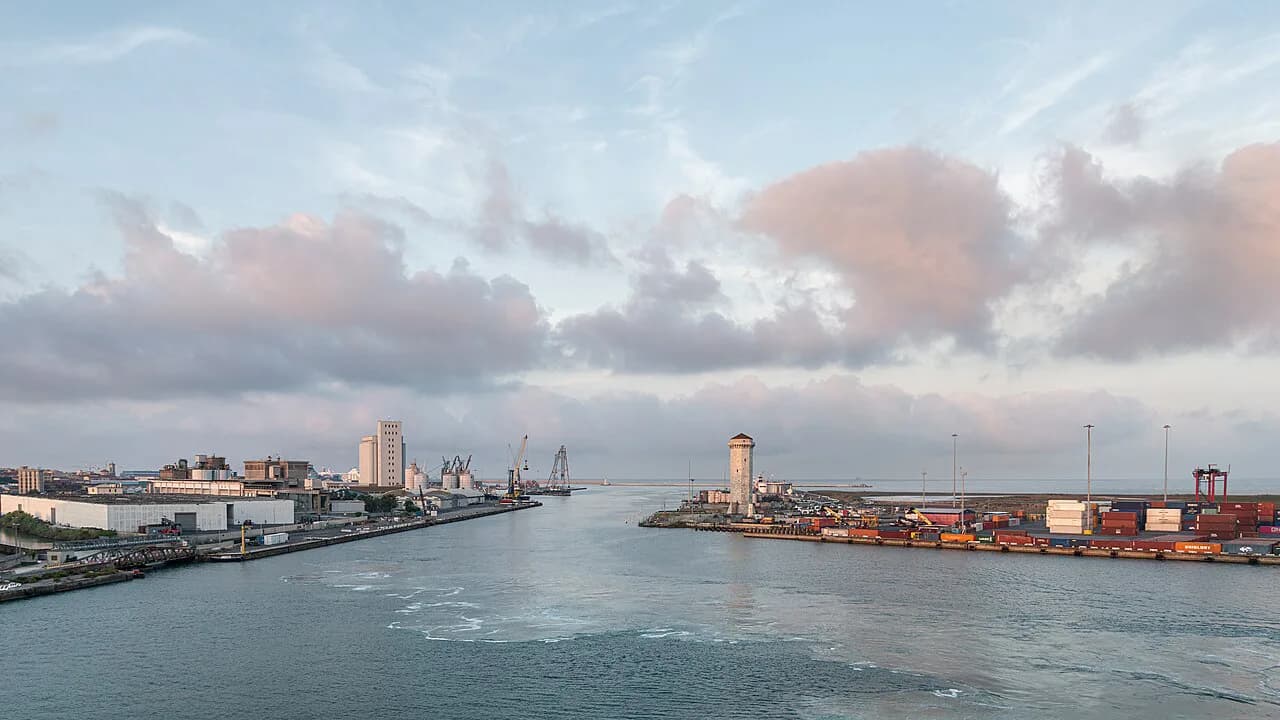
Large ships use the Alto Fondale Cruise Terminal at quays 46/47, which Porto di Livorno 2000 describes as built for vessels over 300 meters, with an 11,000-square-meter coach and taxi area behind it. The Port Authority also lists a second cruise terminal at Porto Mediceo, closer to the old town. Your ship's berth assignment decides how much of the day goes on the first leg, so read the disembarkation instructions and check the berth with your cruise line before you travel.
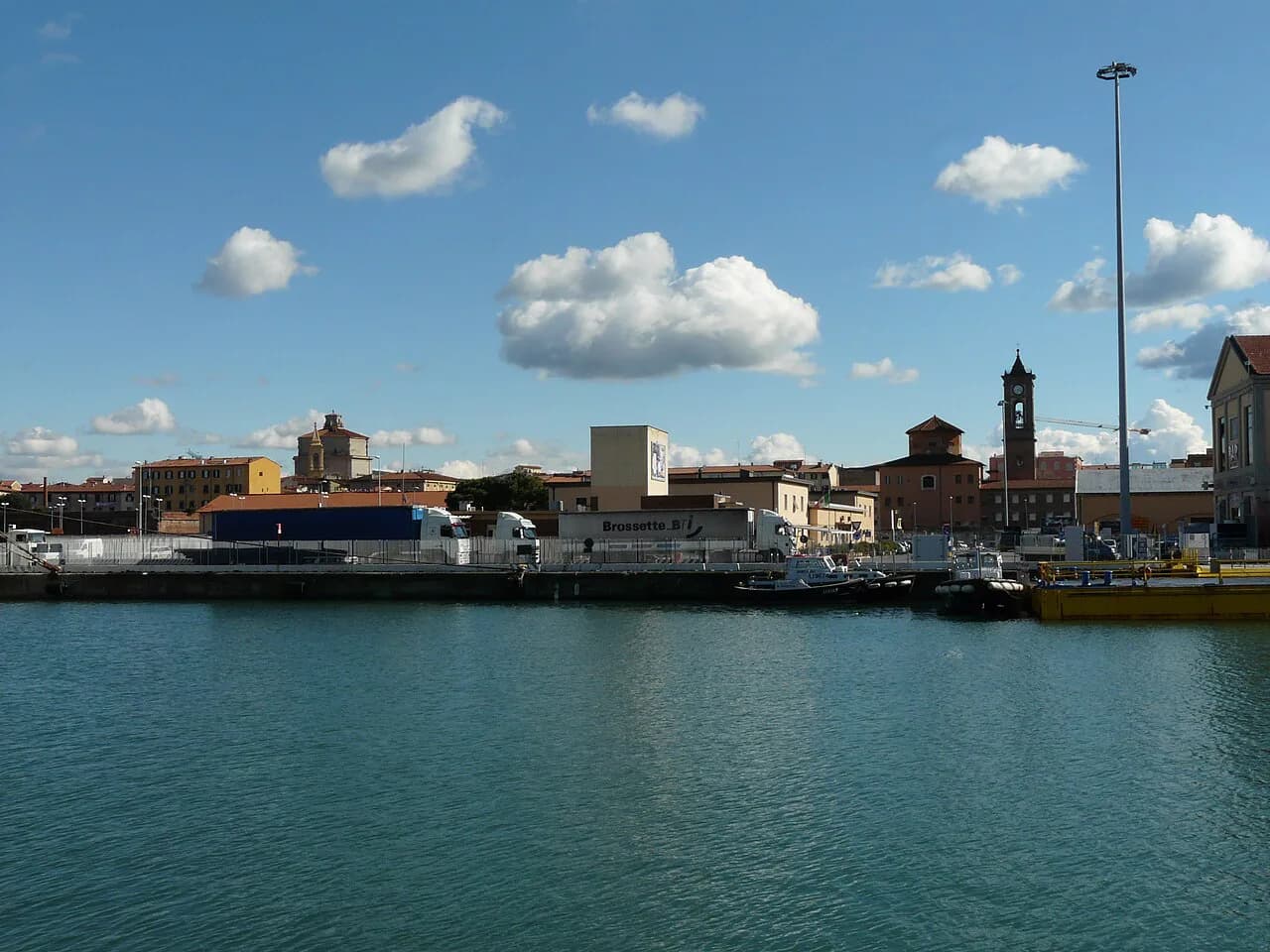
This is not a port where you walk straight into town. Both terminals sit inside a working industrial harbor, and the route to the port gate is the part passengers most often underestimate. The good news is that the layout is predictable: berth, gate, then the shuttle stop.
Getting out of the port
From the berth, follow your ship's instructions to the port gate, and settle on board whether transport to the gate is provided and whether it is free, because this varies between operators. From the gate, a city shuttle arranged between the port and the cruise lines drops passengers on Via Cogorano beside Piazza del Municipio. That stop is one to two minutes on foot from the city centre, so the transfer, once done, leaves you right where you want to be.
Treat the whole exit as three separate legs with different operators: berth to gate, gate to shuttle, shuttle to town. Knowing that structure makes the return easier to plan, because you reverse it with one extra buffer for the port gate.
The city shuttle
No operator publishes a fixed tariff for the city shuttle. Some cruise lines include it, and the local operator Shore Emotion publishes roughly EUR 7 to 10 per person paid on the spot, so carry a little cash for the day rather than relying solely on cards. The drop-off on Via Cogorano is also where almost every organized tour meets, at the corner of Piazza del Municipio, which makes meeting points simple to find.
Shuttle frequency and first and last departures are not published in advance, so the practical approach is to note the return instructions when you board in the morning and build your afternoon around them. Because the drop-off is central, you can also walk back to it from the market, the museums or a lunch stop without needing another bus.
Getting to the central station
Livorno Centrale, the station that unlocks Pisa and Florence, is 2.5 kilometers from the shuttle stop, roughly 34 minutes on foot. Autolinee Toscane lines 1+ and 2+ both connect Piazza Grande with Stazione Centrale, and a single urban ticket costs EUR 2.00 and remains valid for 70 minutes. That validity covers the return leg if you complete it inside the window. Taxis are the faster option and the fares are fixed by the municipal tariff: EUR 22 for up to four people or EUR 28 for five to eight between Livorno Centrale and the cruise terminal, and EUR 18 or EUR 24 between the terminal and the city centre. For a group of three or four heading for the station, the fixed taxi fare is close to four bus singles and saves the walk to the stop.
Trains to Pisa
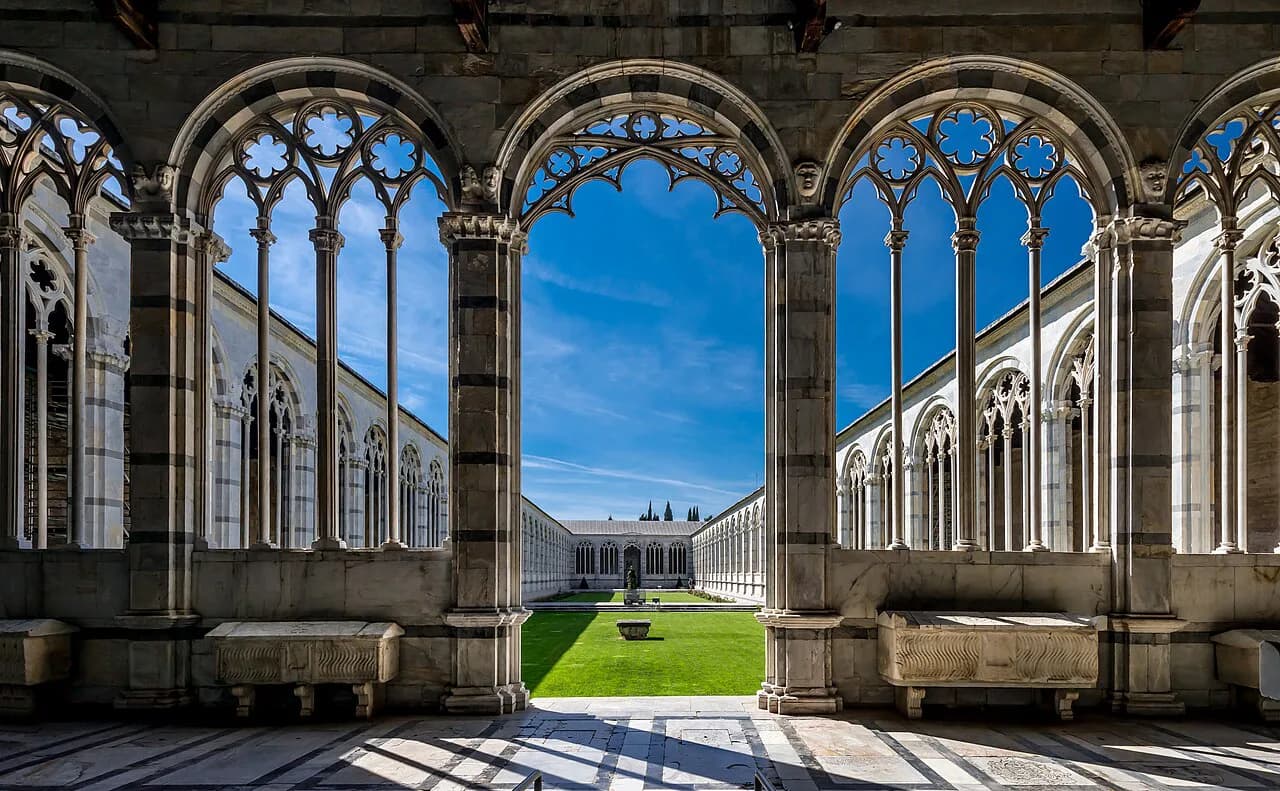
Pisa Centrale is 13 to 16 minutes from Livorno Centrale, with roughly 59 trains a day, and a second-class Regionale single is EUR 3.00 under Trenitalia's Tuscany regional tariff. The short ride and low fare make Pisa the easiest independent trip from this port. From Pisa Centrale, the Leaning Tower and the Duomo are a signposted walk across the river, so the station-to-sight leg adds time on top of the train.
The city walls, the baptistery and the tower square sit close together, which suits a compact visit rather than a rushed one. If Pisa is your whole objective, you can be back at Livorno Centrale well before the afternoon, leaving room for the shuttle and the port gate on the return.
Trains to Florence
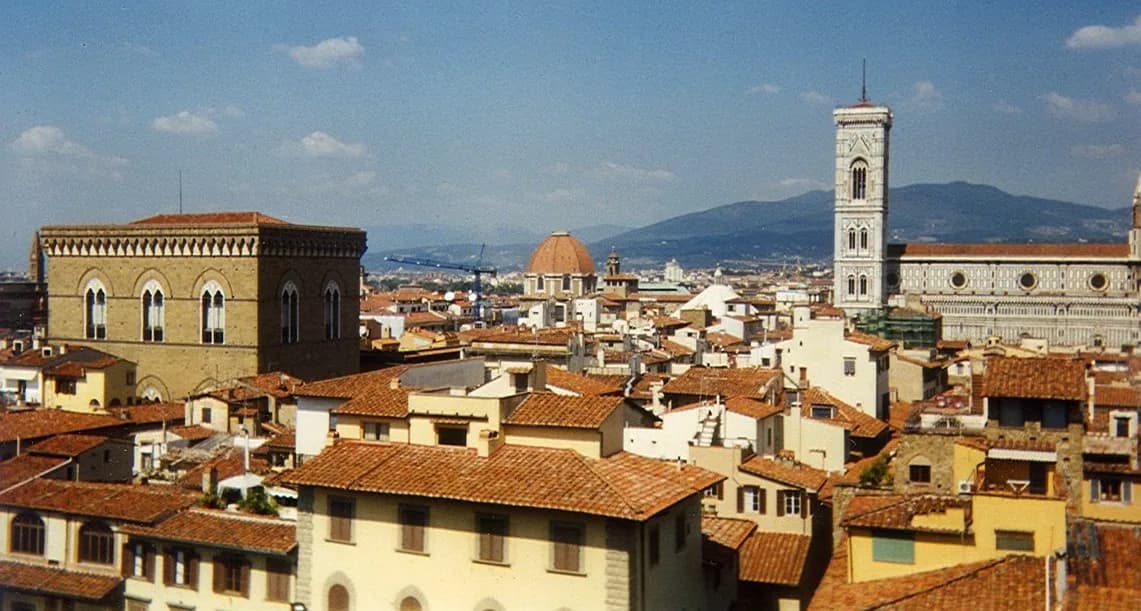
Florence Santa Maria Novella is reached direct from Livorno Centrale, with a fastest journey of 1 hour 27 minutes and a typical time of about 1 hour 44 minutes, roughly 34 trains a day, with second-class travel under the same regional tariff. The fastest and typical times differ enough to matter: a slower service can eat 20 minutes of your Florence time each way. Aim for the faster departures when you buy.
Add the last mile honestly to work out what Florence really costs in hours. From the shuttle stop you need the bus or taxi to Livorno Centrale, the train ride, and then a walk from Santa Maria Novella into the historic core. Whether that fits depends entirely on your all-aboard time.
What fits a 6-hour call
Six hours is a Livorno day. The shuttle puts you beside Piazza del Municipio, and the old town, the canals and the covered market are within walking distance of that stop. The covered market opens Monday to Saturday from 07:00 to 15:00 and is closed on Sunday, so a lunchtime call can catch it while a Sunday call cannot.
If Pisa matters more than Livorno, it is possible: shuttle, bus or taxi to Livorno Centrale, a 13-to-16-minute train, then the walk to the tower square. That leaves time for the tower square and a quick return, but not for both cities. Choose one objective and build the day backward from all-aboard, the same approach that pays off at the Bari cruise port.
What fits an 8-hour call
Eight hours covers Pisa and Florence by rail with the transfers built in, but only on the faster trains and with a disciplined timetable. Work forward on the way out and backward on the way back, and treat the 1-hour-27-minute Florence service as your target rather than the 1-hour-44-minute one. Buy onward tickets at Livorno Centrale before you leave.
The alternative at eight hours is a fuller Pisa visit plus an hour or two in central Livorno on the way back to the shuttle. That version trades Florence's density for far more margin at the port gate, which is the trade most first-time visitors underestimate.
What fits a 10-hour call
Ten hours is the comfortable Florence day: a morning train, a proper stretch in the centre, and an afternoon return without sprinting for the station. It also opens up Pisa plus Lucca on the same rail network if both stops are kept short, because Lucca sits on the Pisa line and adds a short onward hop rather than a separate journey.
Use the extra hours on the Florence day for a museum booking or a sit-down lunch rather than a second city. Trying to add Pisa to Florence on a 10-hour call produces three station transfers and no margin for a delayed regional train.
Ship tour versus local operator versus independent trains
A ship tour removes the logistics problem: no shuttle, no bus, no ticket machine, and the group moves as one. What it cannot remove is the drive time, since Florence sits roughly two hours from the berth by road on a good day. If the ship is held for a tour, that is the line's arrangement rather than a guarantee you can carry over to independent travel.
Local operators occupy the middle ground, often meeting at Via Cogorano where the shuttle drops you, with small groups and a known return vehicle. Going independently by regional train is the cheapest and most flexible option, but you carry the risk of a missed connection with no ship-held return. Which you choose is a decision about that risk, not about the sights.

Return-time buffer
Work backward from all-aboard on the actual train times you intend to use. A sensible build is the Florence return train, then a taxi to the cruise terminal rather than the bus so the last mile is not tied to a 70-minute ticket window, then the shuttle to the gate. On regional trains there is no reservation and no waiting for latecomers, so the buffer has to sit on land, not on the platform.
Keep one earlier connection in mind as a fallback, and note the taxi fare from the station to the terminal so a late arrival does not become a negotiation. The municipal fixed fares apply for up to four people and for five to eight, which makes splitting a taxi predictable.
Eating and drinking ashore
Livorno's food is worth an hour of your day: the local fish stew, the sandwich known locally as un cinque e cinque and the ponce, a coffee-and-liquor drink served in the older bars near the centre. Cards are normal in restaurants, museums and the aquarium, but the old counter places are cash only, and ATMs cluster along Via Grande and around Piazza Grande, a minute from the shuttle stop.
Several trattorie serve lunch only until 15:00 and a few close Sunday or Monday, so plan a mid-afternoon meal rather than a late one. The covered market, Monday to Saturday from 07:00 to 15:00, is the best place to see the everyday city if your call lands on a weekday.
Practical points for the port day
Livorno uses the euro, English is normal in museums and tour-facing places but patchier in old bars, and 112 covers all emergencies. A municipal pharmacy on Piazza Grande, a minute from the shuttle stop, is open 24 hours a day, every day of the year, and the Alto Fondale terminal itself has toilets, an information desk, a taxi desk and car hire.
The IAT tourist office sits in the same square at Piazza Municipio 8/10, open daily from 09:00 to 15:00 in winter and 09:00 to 17:00 in summer. Museums close on Mondays: both the Museo della Città and the Museo Fattori run Tuesday to Sunday, 10:00 to 19:00, which makes Monday a good day for Florence or Pisa instead.
Plan Your Livorno Port Day
Decide first whether this is a Florence day, a Pisa day or a Livorno day, then build around the shuttle stop at Via Cogorano and the fixed taxi and bus options to the station. Keep the covered market hours and the Monday museum closures in mind when you pick.
Check the ship's all-aboard time and the shuttle return instructions with your cruise line, and confirm onward train times with Trenitalia for your date before committing to a Florence round trip.
Explore more Livorno cruise port guides
Frequently Asked Questions
Where do cruise ships dock in Livorno?
Large ships berth at the Alto Fondale Cruise Terminal at quays 46/47, built for vessels over 300 meters, and the Port Authority also lists a second cruise terminal at Porto Mediceo, which is closer to the old town. Both sit inside a working commercial port rather than beside the centre.
How far is the Livorno cruise terminal from the city centre?
The berths are inside an industrial port, so the first step is reaching the port gate and then the city shuttle, which drops passengers on Via Cogorano beside Piazza del Municipio, one to two minutes on foot from the centre.
Do I need the shuttle from the cruise ship in Livorno?
For the largest ships at Alto Fondale, the shuttle is the standard way in. Some cruise lines include it, while local operator Shore Emotion publishes a per-person fare paid on the spot, so carry small notes and settle the arrangement on board before you go ashore.
How do I get from Livorno to Florence?
Take the shuttle to Via Cogorano, then a bus or taxi to Livorno Centrale, and a direct regional train to Florence Santa Maria Novella, with the fastest services around 1 hour 27 minutes and typical journeys about 1 hour 44 minutes.
How do I get from Livorno to Pisa?
From Livorno Centrale, regional trains reach Pisa Centrale in 13 to 16 minutes and run roughly 59 times a day, then the Leaning Tower and Duomo are a signposted walk from the station across the river.
How far is Livorno Centrale from the cruise shuttle stop?
It is 2.5 kilometers, roughly 34 minutes on foot. Autolinee Toscane buses 1+ and 2+ link Piazza Grande with the station, and a taxi has a fixed fare under the municipal tariff.
Can you walk from the Livorno cruise port into town?
Walking is realistic only after the shuttle stage: from Via Cogorano the centre is one to two minutes away. The berth-to-gate leg inside the port depends on your ship's arrangement, so follow the onboard instructions.
What is the closest airport to Livorno, Italy?
Pisa Airport is the nearest major airport, and the rail network links it with Pisa and Livorno. If you are traveling independently before or after a cruise, check current connections with the rail operator for your date.
Sources
Port-day notes for your next cruise
Optional updates to our port guides.
You might also like

Continue reading
More guides you'll find useful