Rotterdam Cruise Port Guide: Terminal and City Access
Rotterdam's cruise terminal sits on Wilhelminapier, steps from the Erasmus Bridge. Plan your day with walking routes, tram and metro options, and time buffers.
On this page
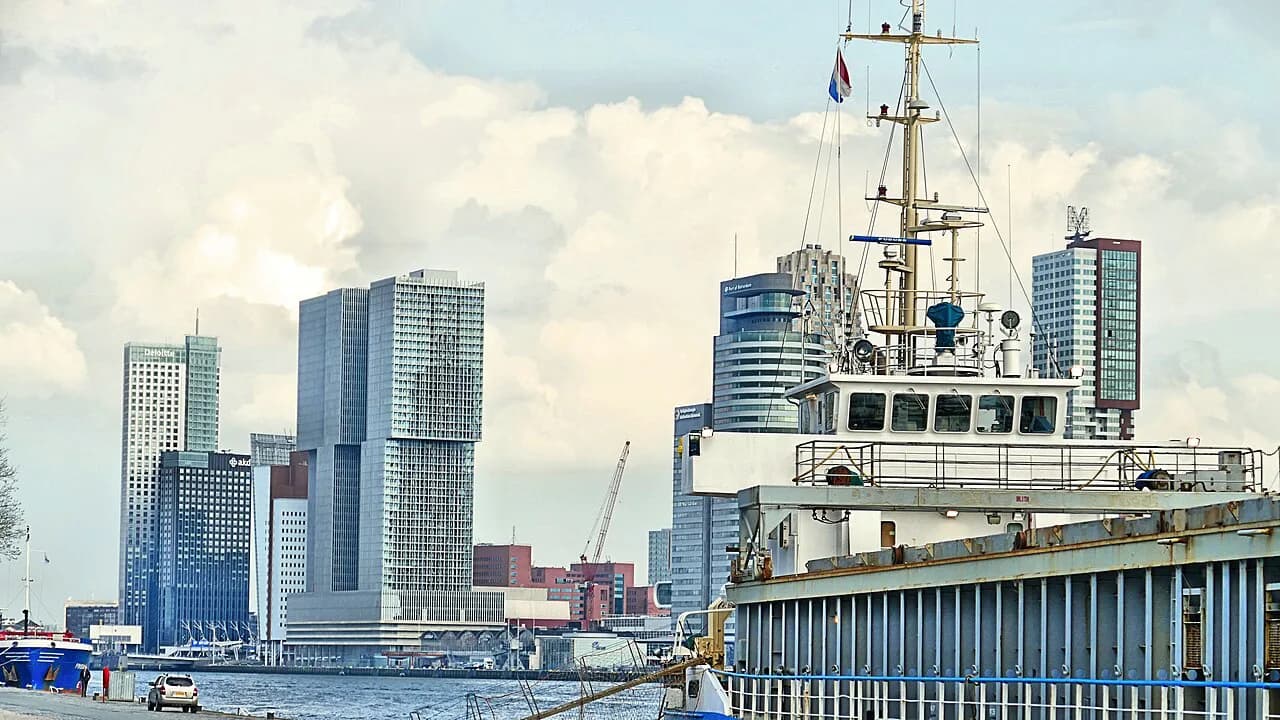
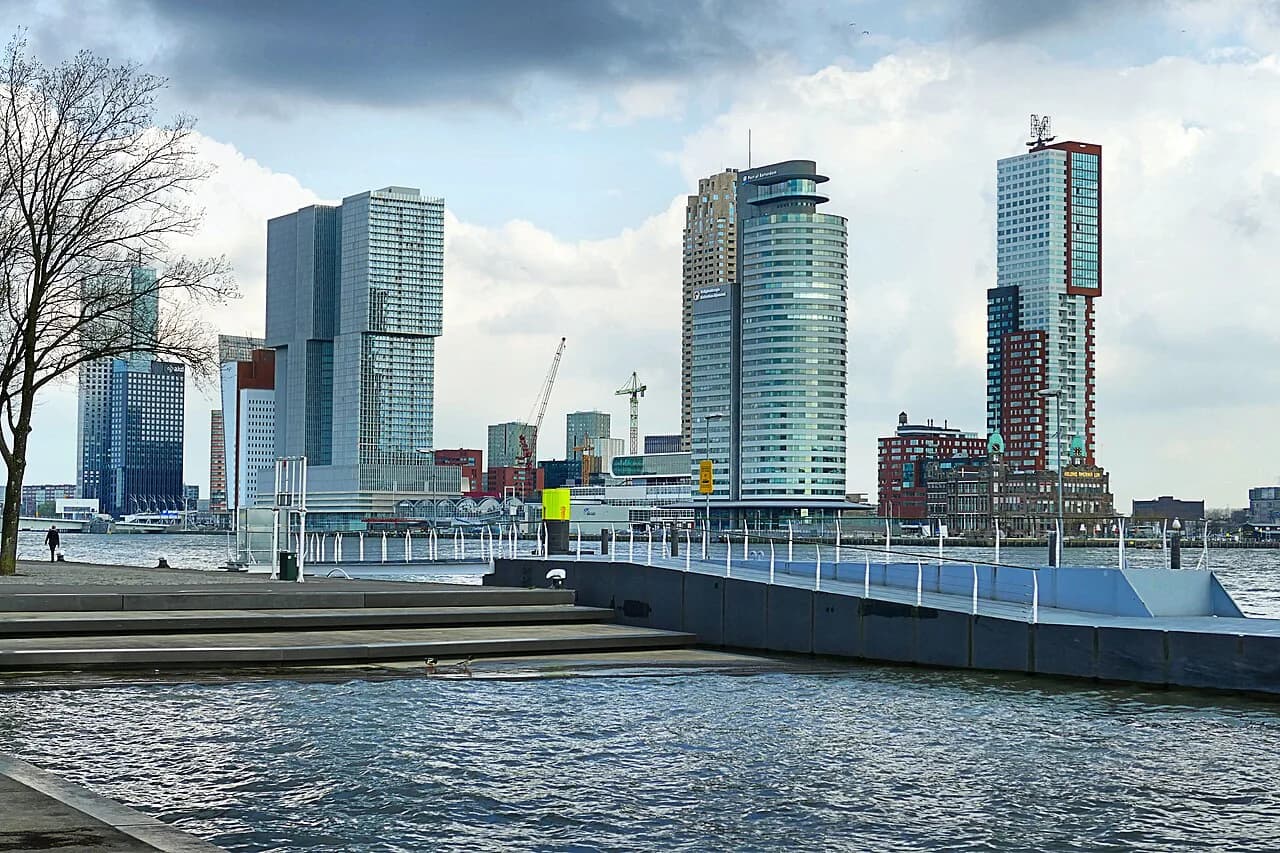
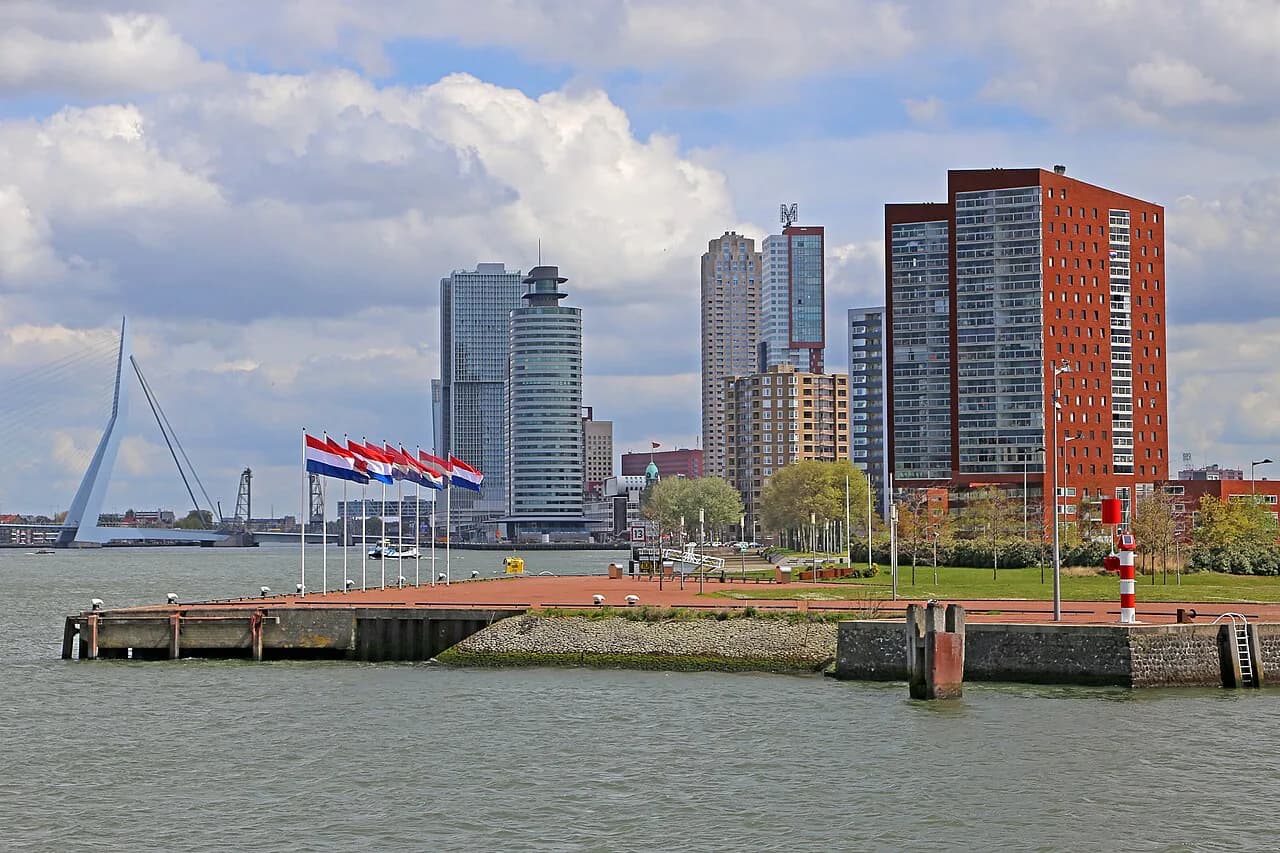
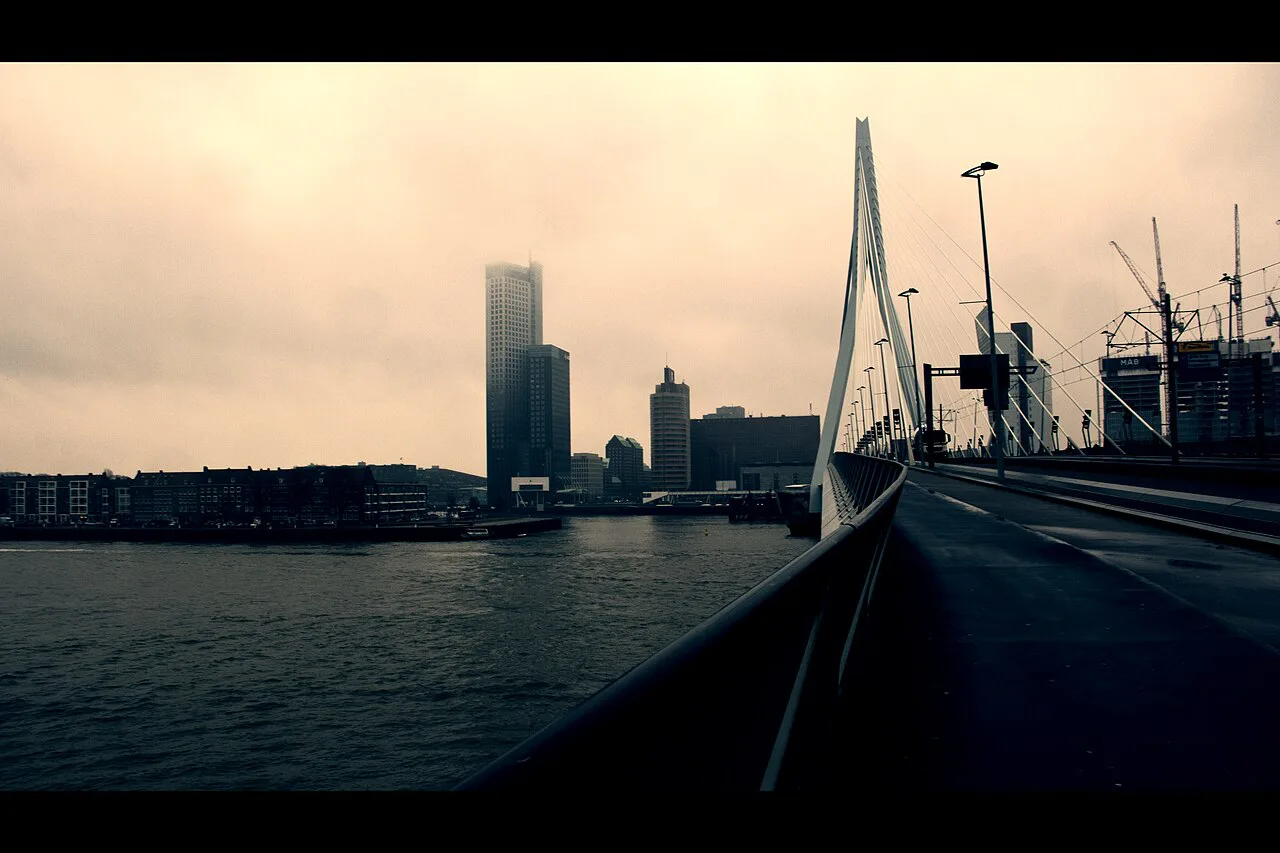
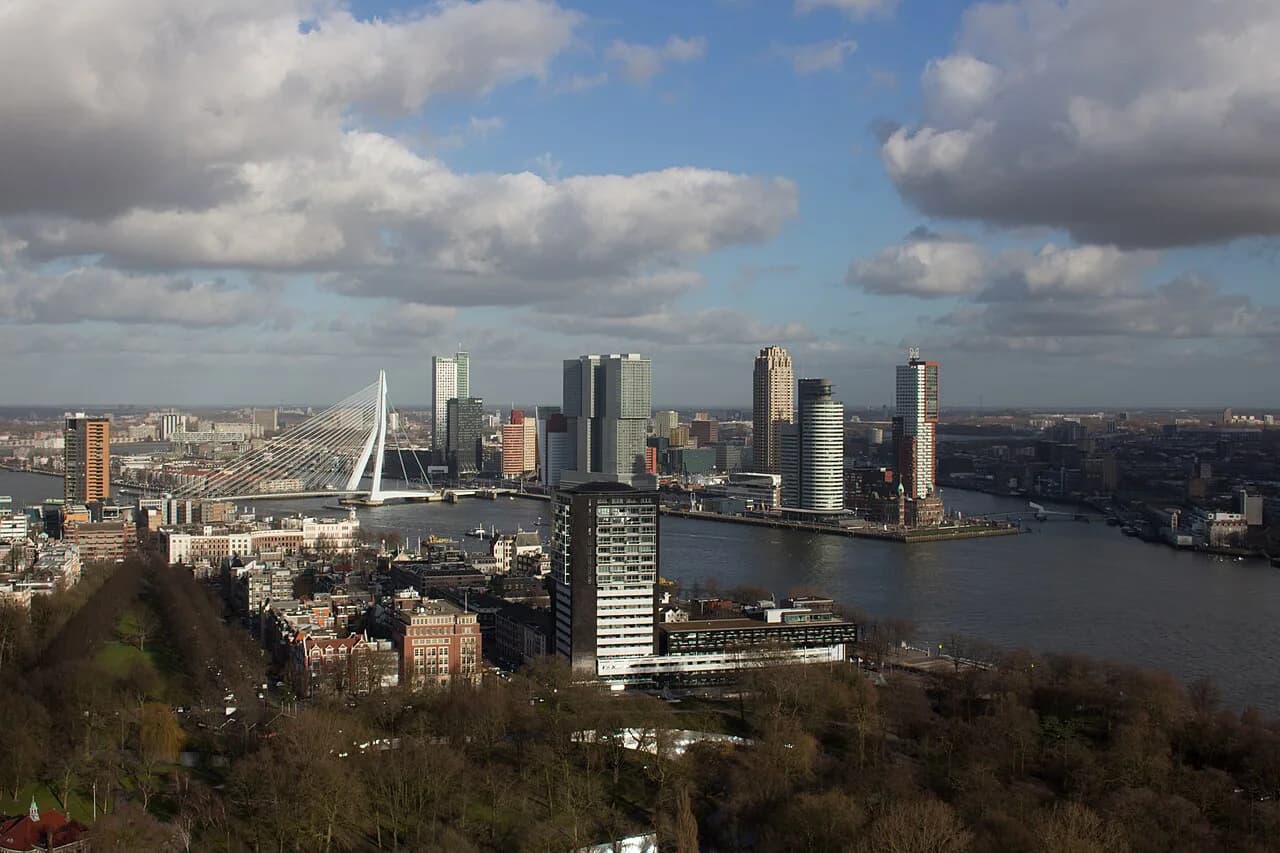
A Rotterdam port day puts you in a rebuilt city of tilted cube houses, a horseshoe-shaped market hall and a white cable-stayed bridge over the Nieuwe Maas, with your ship tied up in the middle of it. Because the terminal sits on Wilhelminapier, one of the most interesting waterfront neighborhoods, you can be photographing the Erasmus Bridge within minutes of stepping off. This guide suits passengers who want a compact city day on foot and those willing to trade hours for windmills or a working container port.
Where ships dock
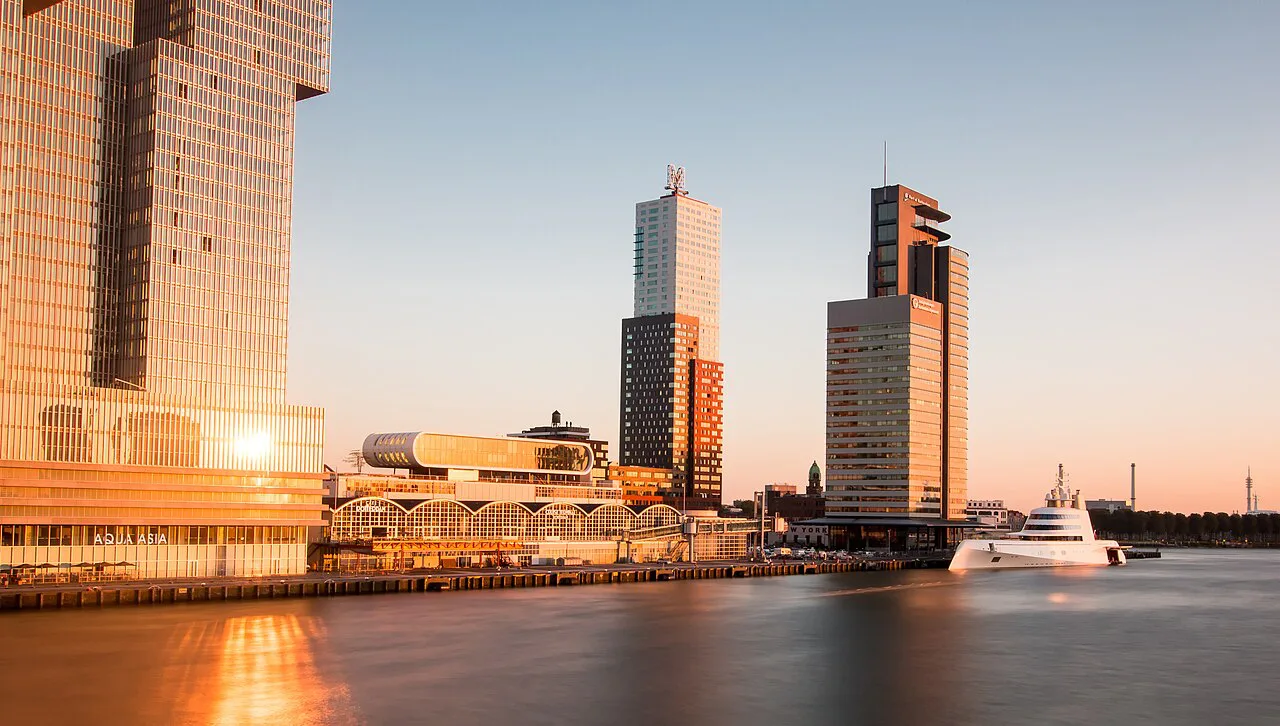
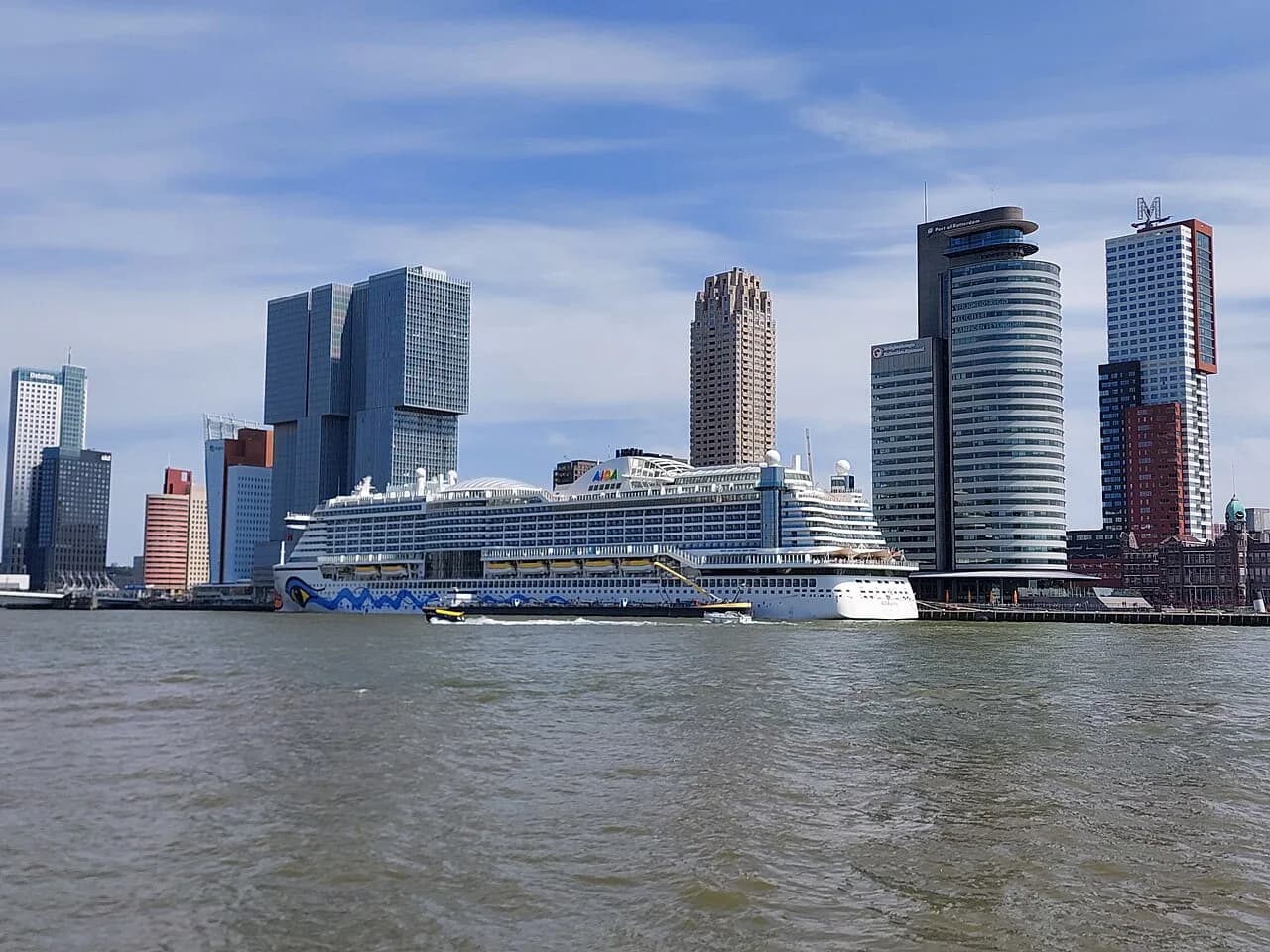
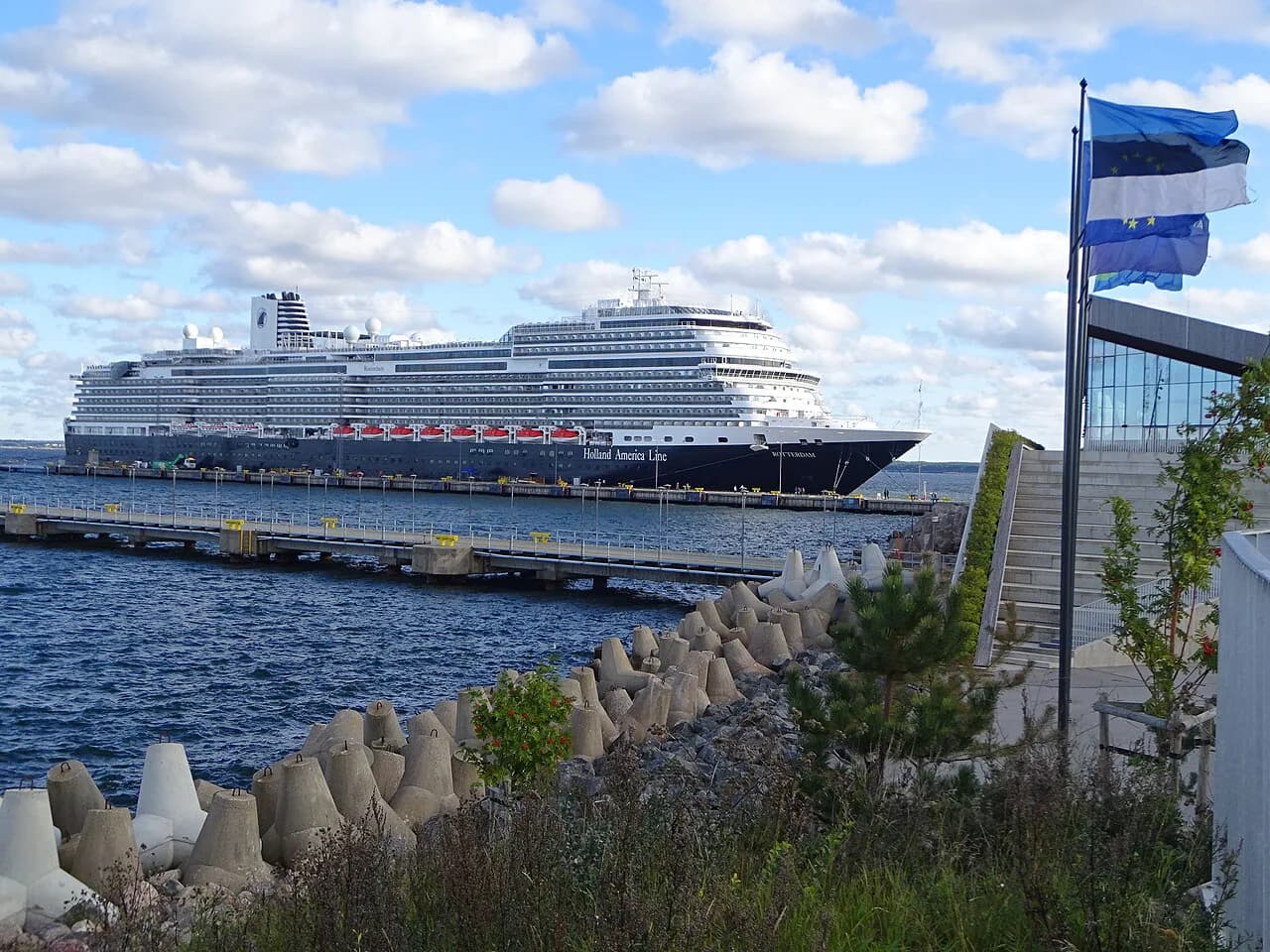
Cruise ships call at Cruise Port Rotterdam on Wilhelminakade, the quay along Wilhelminapier on the south bank of the Nieuwe Maas. The terminal address published for passengers is Wilhelminakade 699, 3072 AP Rotterdam. Berths here are alongside, so you walk off the gangway onto the quay rather than onto a tender.
The immediate surroundings are part of the attraction: the Erasmus Bridge is a few minutes' walk from the quay, and the former Holland America Line headquarters now operating as Hotel New York sits on the same pier. The ss Rotterdam, the retired liner turned hotel and attraction, is a waterfront walk away. Booking a cabin at one of the hotels near cruise port gives you this same front-row position before or after a sailing.
Distance and orientation
Cruise passengers report the city center as roughly 1–1.5 miles (1.5–2.5 km) from the Wilhelminapier terminal, or about 20–30 minutes on foot, with the exact distance depending on your berth. The Markthal is the far end of that walk, reported at 30–40 minutes from the ship. Treat these as passenger-reported walking times and add slack for crowds.
Orient yourself by the river: the ship faces the water, the Erasmus Bridge is upstream on your left as you look inland, and the tall towers of the center sit beyond it. That means your day naturally splits into the Wilhelminapier waterfront, the bridge and Oude Haven area, and the Markthal and Laurenskerk cluster further inland. Decide before you leave the ship whether you are walking both halves or riding the second.
Walking into town
The classic route follows the waterfront from the terminal toward the Erasmus Bridge, crosses or passes beneath it, and continues along the Nieuwe Maas to the old harbor district, where historic ships, waterfront cafés and the Maritime Museum sit together. From there you head inland to the Cube Houses and the Markthal next door. The Laurenskerk, one of the few medieval buildings left in the center, is a short further walk.
This is a flat, signposted city walk rather than a hike, but it adds up over a full day of sightseeing. Passengers who want the shortest version should target the bridge, Oude Haven and the Cube Houses, then decide at the Markthal whether to walk back or ride. Our guide to the cruise port to city centre breaks the route down leg by leg.
Trams, metro and water taxis
Rotterdam's tram and metro network covers the ground between Wilhelminapier and the center far faster than walking, and the metro is the reliable choice when you have a fixed all-aboard time. Pick-up points sit along the Wilhelminapier and near the bridge, with the center stations serving the Markthal and Laurenskerk area. Buy tickets from the machines at the stop or station before boarding.
Water taxis are the scenic shortcut across the Nieuwe Maas, but treat them as something to book ahead rather than a fallback. One passenger reported a 90-minute wait after trying to book a return boat on the day, which is exactly the kind of delay that eats a port call. If a water taxi is part of your plan, reserve it before you go ashore and keep the walking or metro option open.
Shuttle buses
Some ships have run a complimentary shuttle from the terminal into the center, dropping passengers near the Markthal and the central station, according to passenger reports. This is a service individual cruise lines arrange, not a fixture of the port. Ask at the shore-excursions desk or the terminal information point on the morning of arrival whether a shuttle is running and where it stops.
If a shuttle exists, use it one way rather than both: ride in to the Markthal in the morning and walk back through the Cube Houses, Oude Haven and the bridge in the afternoon. That sequence puts the architecture at the end of the day, close to the ship, when a delay matters least. Keep the shuttle's last departure time written down.
The core circuit on foot
The compact circuit runs from the terminal to the Erasmus Bridge, along to Oude Haven, inland to the Cube Houses and Markthal, and on to the Laurenskerk before you turn back. It covers the city's signature modern architecture and its surviving historic core in one loop, with cafés and food stalls at the Markthal for a mid-day stop. Allow a half day of walking with time inside the market hall.
Passengers consistently rank the bridge, the Cube Houses, the Markthal, the old harbor and the Maritime Museum as the short-visit priorities, so this loop is the safest use of a modest call. If you would rather build the day around one theme, our picks for what to do in Rotterdam from a cruise ship separate the architecture circuit from the maritime one.
Museum and harbor options
The Maritime Museum sits in the city center and covers Rotterdam's relationship with the sea, including historic vessels in its museum harbor, which makes it the natural second stop on the old-harbor leg of the walk. Delfshaven, one of the few districts where pre-war buildings survived, rewards passengers who want historic streets rather than skyline. Both fit inside a walking day if you pick one and skip the other.
The ss Rotterdam, moored on the waterfront, gives you a ship-within-a-ship experience with its hotel, restaurant and attraction spaces, and it is close enough to the terminal to visit without transport planning. Passengers interested in ships and ports tend to rate it highly. Confirm access arrangements and any charges with the ss Rotterdam's own ticket desk when you arrive.
Going further: Kinderdijk and Portlantis
Kinderdijk's windmill landscape is reachable by road through the Dutch countryside, and passengers who have taken the trip describe an enjoyable bus ride out and back. It is a half-day commitment once you count the drive in each direction, so it only works on a long call. Ship excursions handle the transport; independent travelers need to organize a bus or tour and protect their return time.
Portlantis, the interactive experience center at Maasvlakte 2, is about 42 km (26 miles) from central Rotterdam, so it requires transport and is not a walk from the terminal. It offers exhibitions, panoramic views and tours of the modern container port, including automated terminals. Treat it like Kinderdijk: a single-purpose trip for a long call, not an add-on to a city morning.
Ship tours vs. independent sightseeing
For the city circuit, going independently costs nothing in time and gives you the freedom to skip a stop; the terminal-to-center walk and the tram or metro make it low-risk as long as you build in a return buffer. For Kinderdijk and Portlantis, the ship's tour removes the transport logistics, while a local operator usually gives a smaller group and a tighter itinerary. The deciding factor is how much road time stands between you and the gangway. The same choice plays out at other ports, so it is worth comparing the Dublin cruise port, where the city center sits a similar walk from the quay.
A workable rule: keep independent sightseeing inside the city and use an organized tour for anything beyond it. If you are extending your trip, Rotterdam Cruise Port to Amsterdam explains the rail and road link for a pre- or post-cruise stay.
How long you need
On a six-hour call, stay on the Wilhelminapier-to-Markthal loop: bridge, Oude Haven, Cube Houses, Markthal, then back along the water. Skip the museums and any out-of-town trip, and plan to be walking back toward the ship with well over an hour to spare. That call rewards a tight, single loop rather than a checklist.
Eight hours opens up one museum, either the Maritime Museum or the ss Rotterdam, or a slower lunch at the Markthal with time in Delfshaven. Ten hours or more is what Kinderdijk or Portlantis requires, and even then only one of them, with the return leg treated as fixed rather than flexible. Match the plan to the call length rather than trying to compress everything into the shortest one.
Return-time buffer
From the center, allow 30–40 minutes to walk back to Wilhelminapier, or less on the metro, and add waiting time at the stop. Aim to be at the terminal an hour before all-aboard when you have been traveling independently. From Kinderdijk or Maasvlakte 2, the drive itself is the buffer, so leave on the tour's schedule and do not add a detour on the way back.
Use the ship's published all-aboard time, not the departure time, as your deadline, and set a phone alarm for the moment you need to start moving. CruiseMapper's port and itinerary pages show scheduled calls if you want to see how long your ship is listed in port.
Practical notes
Long-term parking at the port is listed at €13 per day through CruiseExperts.com, which publishes the terminal address and parking note; treat it as a third-party figure and confirm the current tariff with the port authority before you rely on it. Drivers should also check drop-off and luggage arrangements with their cruise line.
Before going ashore, settle three things: your all-aboard time, whether a shuttle is running and from where, and your return transport if you are leaving the center. Carry a card for tram or metro tickets and keep the terminal address on your phone in case you need a taxi back. Everything else can be decided on the quay.
Plan Your Visit
Rotterdam rewards a simple plan: walk the bridge and old harbor early, use the Markthal as your turning point, and keep anything beyond the city for a long call with organized transport. The terminal's position on Wilhelminapier makes the first hour easy and the last hour manageable if you respect the walk back. Decide your circuit by call length, not by ambition.
Explore more Rotterdam cruise port guides
Frequently Asked Questions
Where do cruise ships dock in Rotterdam?
Ships berth alongside at Cruise Port Rotterdam on Wilhelminakade, on Wilhelminapier on the south bank of the Nieuwe Maas. You walk off the gangway onto the quay, and the Erasmus Bridge is a few minutes away on foot.
How far is the cruise terminal from the city center?
Passengers report the center as roughly 1–1.5 miles (1.5–2.5 km), about 20–30 minutes on foot, with the exact distance depending on the berth. The Markthal is reported at 30–40 minutes from the ship, so the tram or metro saves real time.
Can you walk from the terminal into town?
Yes. The waterfront route from Wilhelminapier past the Erasmus Bridge to Oude Haven, the Cube Houses and the Markthal is flat and signposted. It is a full walking day if you add the Laurenskerk and a museum, so plan a one-way walk with a ride back.
Is Kinderdijk possible on a Rotterdam port call?
It needs a long call, because the drive through the countryside takes real time in each direction. Book a ship tour or a local operator and treat the return leg as fixed. It does not fit a short call alongside the city circuit.
Do you need a shuttle bus from the cruise terminal?
Not necessarily. The center is walkable, and trams and metro cover the distance faster. Some ships have run a complimentary shuttle to the Markthal and central station area, so ask at the shore-excursions desk on arrival whether one is operating.
How early should you head back to the ship in Rotterdam?
From the center, start back 30–40 minutes before you need to be aboard on foot, or earlier if you are relying on a tram or metro. Aim for the terminal an hour before all-aboard. From Kinderdijk or Portlantis, leave on the tour's schedule.
Sources
Port-day notes for your next cruise
Optional updates to our port guides.
You might also like
Continue reading
More guides you'll find useful