Tenerife Cruise Port Guide: Dock & Plan Your Day
Ships dock at Muelle Sur or Muelle Norte in Santa Cruz de Tenerife. Compare walking times into town, buses to Las Teresitas and La Laguna, and Teide day trips.
On this page
Tenerife suits passengers who want a real city at the gangway and, if the call is long enough, a volcanic landscape that looks nothing like the coast. Ships tie up in Santa Cruz de Tenerife, the island capital, so you can walk to a market and a Calatrava-designed waterfront auditorium, or ride a bus to a Sahara-sand beach. Decide first how many hours you have, then choose between the city, a nearby town and a mountain.
Where ships dock in Santa Cruz de Tenerife: Muelle Sur vs Muelle Norte
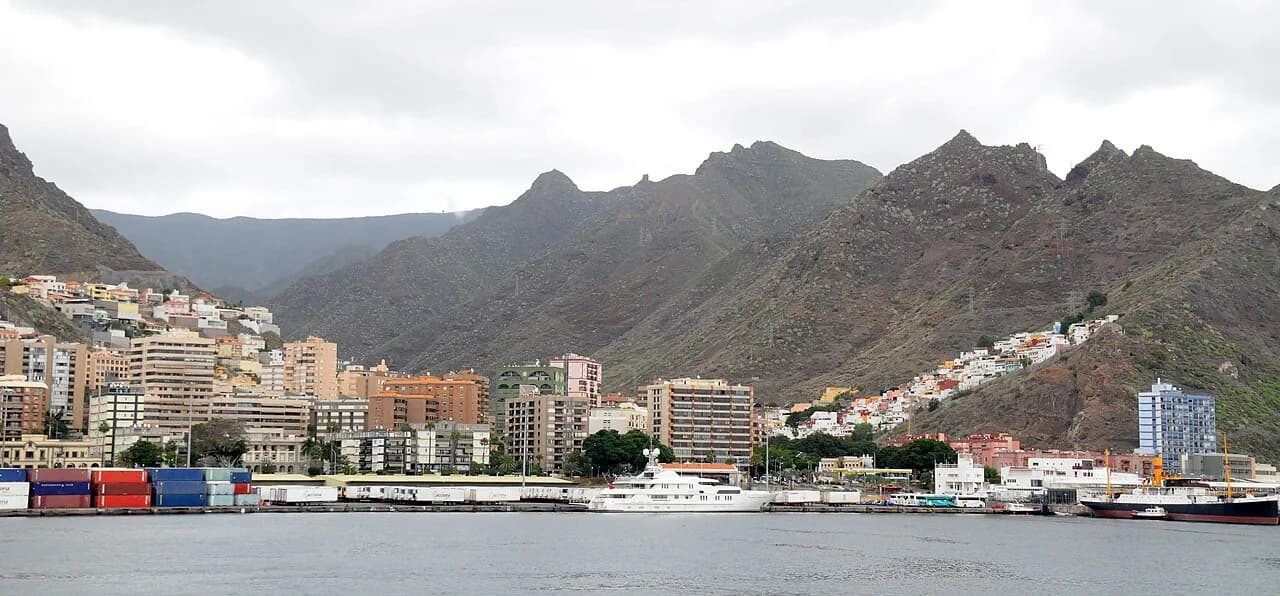
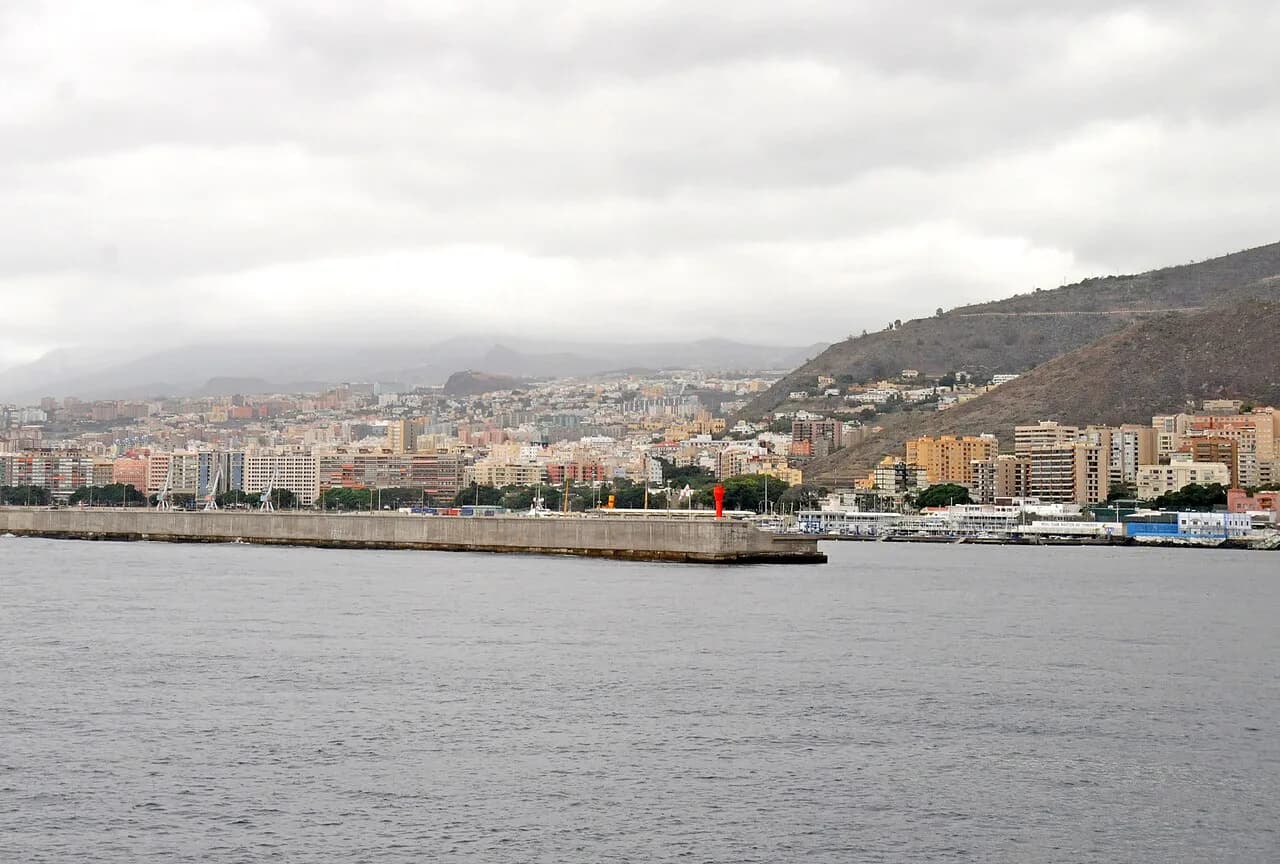
Cruise ships dock alongside in Santa Cruz de Tenerife; there is no tendering. Two areas handle the calls: Muelle Sur, a long breakwater with several berths where most cruise ships tie up, and Muelle Norte, closer to the city. Your exact walking distance on Muelle Sur depends on where along the breakwater the ship is positioned, so the first decision of the day is reading the terminal exit signs and working out which pier you are on.
From Muelle Norte, the centre is roughly 1 km away, a 15-minute walk, and the modern terminal building handles check-in areas, waiting lounges and space for buses and taxis. The cruise terminal at Muelle Norte is named Agustín de Betancourt. If you are on Muelle Sur, expect 1.5–2 km to the centre, or 25–30 minutes on foot, plus shuttle buses in many cases that drop near Plaza de España. For an expanded walk-through of both berths, see this guide to the santa cruz de tenerife cruise port. If you are comparing how different European ports handle berth-to-city distances, the barcelona cruise port guide shows how a Mediterranean call stacks up against Santa Cruz.
Walking into Santa Cruz: routes, times and the Plaza de España entry point
Santa Cruz is flat and easy to navigate, which makes walking the default from either pier. From Muelle Norte the route is short and direct; from Muelle Sur, follow the shoreline and the signs toward Plaza de España, the main square just across from the port where a city walk begins. Once there, Calle del Castillo, the main pedestrian shopping street, and the seafront Auditorio de Tenerife are within a 20-minute walk or a short bus ride.
If your ship is on Muelle Sur and you want to save the 25–30 minutes for the return leg, take the shuttle or a taxi into town and walk back at your own pace. Either way, leave the pier on foot only if you are comfortable with a 3–4 km round trip on top of your sightseeing. Passengers who plan to spend the day in the city should treat Plaza de España as the anchor and branch out from there.
Shuttle buses, taxis and the TITSA buses along the port road
Taxis usually wait at both Muelle Sur and Muelle Norte, are metered, and reach the centre in a few minutes; they are the fastest way to buy time on a short call. TITSA buses connect Santa Cruz with towns across the island, and several lines, including 910, 916 and 920, run along the main road between the port area, Plaza de España and the Intercambiador Santa Cruz bus station. Tickets are bought on board, and the Intercambiador sits near the Auditorio de Tenerife, about a 20-minute walk from Plaza de España.
The Intercambiador is the hub for anything beyond the city, so plan on a short taxi or local bus hop from the pier if you are heading to La Laguna or the north coast. For a deeper look at every option, including the santa cruz de tenerife cruise port layout and exits, read the dedicated terminal guide.
Getting to Playa de Las Teresitas on bus 910 versus a taxi
Playa de Las Teresitas is the closest beach to the port, about 15 minutes' drive away, and its sand was imported from the Sahara, which gives it a golden colour and calm water unlike most volcanic beaches on the island. Bus 910 runs between Las Teresitas and Santa Cruz, stopping by the cruise port, so the beach is one of the few island sights you can reach without a tour. Cruise lines offer transfers, but the public bus stop on the main road in front of the port is the simpler option.
A taxi buys you a later start and a fixed return time, but on a 6-hour call the bus leaves more of your hours for the sand. Bring a layer: the beach is sunny, while the higher ground you cross on the way can be windy and cooler.
La Laguna by bus from the Intercambiador and the tram alternative
San Cristóbal de La Laguna, the former capital and a UNESCO World Heritage town, is about a 15–20-minute drive from Santa Cruz. Lines 015, 102 and 103 run frequently from the Intercambiador, and the trip takes about 20–30 minutes, which makes La Laguna a realistic add-on to a city morning rather than a whole-day outing. Highlights include Plaza del Adelantado, the cathedral and the old-town streets laid out in a colonial grid that later influenced cities in Latin America.
The tram operated by Metropolitano de Tenerife connects Santa Cruz with La Laguna as an alternative to the bus, though for most cruise passengers the bus lines are the more practical fit because they serve the Intercambiador and the port road. Whichever you choose, work backwards from all-aboard: a 20–30-minute ride each way plus waiting time needs roughly three hours on the ground to be comfortable.
Mount Teide and Teide National Park: drive times, tour trade-offs and the all-aboard buffer
Teide National Park is the island's headline sight, a UNESCO-listed volcanic landscape of lava fields and craters around Mount Teide, Spain's highest peak. From the port, expect about 1–1.5 hours each way, and visiting takes most of the day, so it works best with a guided tour or a well-planned drive. The scenery, not the summit, is the reward for most cruise passengers, and tours typically string together several viewpoints on the way.
The arithmetic is what rules Teide in or out: three hours of driving plus stops means a 6-hour call is too tight for comfort, while an 8-hour call or longer gives you room. A ship tour removes the transport planning and returns you to the gangway, but you can never assume the ship will wait; independent drivers must build their own buffer for mountain roads and traffic back into Santa Cruz. Weather matters too, so pack a warm layer for the high ground even when the coast is mild.
Loro Parque and Puerto de la Cruz on the north coast
Loro Parque, a conservation-focused animal park in Puerto de la Cruz, sits about 40 minutes from the port on the north coast and is a popular family choice. Its shows, including dolphins, parrots, orcas and sea lions, run at specific times a few times a day, and you get a map with the schedule at the entrance, which is worth reading before you walk in. The resort town of Puerto de la Cruz, with its volcanic coastline and the Lago Martiánez seawater pool complex, is easy to combine with the park on a tour.
The 40-minute transfer each way means the north coast suits an 8-hour call rather than a half-day. If your priority is a calm beach or a city walk, skip it; if you have children or want a structured day out, the park plus Puerto de la Cruz fills the hours without mountain-road risk.
Masca Valley, Anaga Rural Park and the south-coast beaches: what a short call rules out
Masca Valley is one of the island's most dramatic sights, a village set in a deep gorge reached by narrow, winding roads, and most visits are short viewpoint stops rather than hikes. Driving there yourself is challenging and best suited to experienced drivers, so for cruise passengers it is usually a tour or nothing. Anaga Rural Park, a protected area of green mountains and remote villages in the northeast, is closer at around 40 minutes and still best done with a plan or a guided tour.
The southern resorts of Costa Adeje and Los Cristianos, about an hour from the port, offer sandy beaches and promenades but consume two hours of driving. Those three destinations do not fit a 4–5-hour call and crowd an 8-hour one; choose them only when the ship gives you a full day and you have accepted that the island's best scenery comes with a long return drive.
Car rental from the port for Teide and Masca
Renting a car gives you the most flexibility for Teide or the north coast, and Tenerife's roads are well maintained with clear signage. The trade-offs are real: you carry the return-drive risk, mountain roads to Masca are demanding, and you spend part of your call collecting and returning the vehicle. If you go this route, pick up near Santa Cruz and check the tenterife cruise port car rental options before you sail so the paperwork is not done on the clock.
Expect narrow, winding sections on the Masca road and cooler, windier conditions at altitude on Teide. A car makes sense for two to four passengers sharing the drive on an 8-hour call; on a 6-hour call the time spent on collection eats the margin you need.
Ship tours versus local operators versus going independently
For Santa Cruz, La Laguna and Las Teresitas, you do not need a tour: these are easy to do on your own with the city's buses, tram and taxis. The ship's tours and local operators are the practical choice for Teide, Masca, the north coast and the southern beaches, where longer distances make transport planning the main risk. A ship tour removes the worry of finding your own way back, but no operator can guarantee the ship will wait, so the return buffer is still your responsibility.
Local operators and the cruise line's own tenterife shore excursions follow similar routes on similar days; compare departure times and where you meet before choosing. Whatever you book, set a personal return deadline well before all-aboard and keep an eye on the clock in the mountains.
A 6-hour, 8-hour and 10-hour plan for Tenerife
On a 6-hour call, stay close: explore Santa Cruz on foot from Plaza de España, or take bus 910 to Las Teresitas and be back at the pier with time to spare. La Laguna is possible by bus if you prioritise it over the beach, but not both. Treat this as the low-stress day.
On an 8-hour call, combine the city with La Laguna or Las Teresitas, or commit most of the day to a Teide tour. Expect 1–1.5 hours each way to Teide, which leaves roughly four hours on the mountain and its viewpoints. The ship's tours or a local operator handle the long drives; independent passengers should keep a 45–60-minute buffer before all-aboard.
On a 10-hour call, Teide, Puerto de la Cruz and Loro Parque, or the south-coast beaches become realistic. The extra hours buy you distance, not slack: the return drive from Teide or Masca can slow in traffic, so the buffer grows, not shrinks. Passengers browsing 2026 showcase itineraries will find Santa Cruz de Tenerife on transatlantic and Canary Islands routes, and the same day-planning logic applies.
If you are embarking or disembarking in Tenerife: terminal, taxis and transfers
Tenerife is a common homeport, so some cruises start or end here rather than calling for a day. Muelle Norte's Agustín de Betancourt terminal handles check-in, waiting lounges and the bus and taxi spaces, making it the smoother start or end point. Check with the cruise line which terminal your sailing uses before booking an airport transfer, because Muelle Sur calls add bus or taxi running at the start of the day.
The island's airport sits away from Santa Cruz on the southern side, so allow real time for the transfer: see the tenterife airport to cruise port guide for the route, terminals and taxi versus bus trade-offs. Arrive with a generous cushion on embarkation day rather than squeezing the transfer into a morning.
What to do within a 20-minute walk of the ship
Start at Plaza de España, then walk Calle del Castillo for duty-free perfumes and local shops, and stop at Mercado de Nuestra Señora de África for a more local feel. The Auditorio de Tenerife on the waterfront is the city's best-known landmark, next to the Parque Marítimo César Manrique seafront pool complex. For views, the Palmetum botanical garden overlooks the port and the city, though the garden itself is secondary to the view.
This city loop fills an easy half-day and pairs with a morning at Las Teresitas. The euro is the local currency, cards are widely accepted and English is common in tourist areas, so you barely need cash for the walk. Santa Cruz is a duty-free zone, which makes the shopping streets worth a browse if you have time.
Practical notes: currency, cards, layers for Teide, duty-free shopping
Bring a light layer for Teide even when the coast is warm: the weather is usually warm, but higher ground can be cooler and windy. Cash is rarely needed for the city centre, where cards work widely, but buy any bus tickets on board. If your plan includes the tram to La Laguna or the TITSA buses, note where you catch them before you leave the ship, and build waiting time into the return.
Duty-free shopping clusters around Plaza de España, Plaza de la Candelaria and Calle del Castillo, with El Corte Inglés about a 20-minute walk from the port. It is a genuine option for a short call that stays in town, not a reason to cut a Teide trip short.
Plan Your Visit
Tenerife rewards a simple decision made at the gangway: which pier, how long, and whether you want the city or the mountain. The city, the beach and La Laguna fit 6 hours; Teide, Masca, Puerto de la Cruz and the south coast are for a full day and a driven plan. Check the port authority's berth assignment and your cruise line's all-aboard time before you finalize the day.
Explore more Tenerife cruise port guides
Frequently Asked Questions
Where do cruise ships dock in Tenerife?
Ships dock alongside in Santa Cruz de Tenerife, mostly at Muelle Sur, a long breakwater with several berths, and sometimes at Muelle Norte, which is closer to the city. There is no tendering.
How far is the Tenerife cruise port from the city center?
From Muelle Norte it is about a 1 km, 15-minute walk. From Muelle Sur the centre is 1.5–2 km away, or 25–30 minutes on foot, with shuttle buses often available.
Do you need to tender at Tenerife cruise port?
No. Ships dock directly at the Antonio de Betancourt and Muelle Sur berths in Santa Cruz de Tenerife.
How do you get to the beach from the Tenerife cruise port?
Playa de Las Teresitas is about 15 minutes' drive. Bus 910 runs from near the port to the beach, and taxis and cruise-line transfers are alternatives.
Can you visit Mount Teide on a cruise stop?
Yes, but expect 1–1.5 hours each way from the port, so it takes most of a day. An 8-hour call or longer is the realistic minimum, ideally on a guided tour.
Is Santa Cruz de Tenerife worth visiting on a cruise?
Yes. The city is walkable, flat and has markets, shopping streets and the Auditorio on the waterfront. It suits a 6-hour call and can be paired with Las Teresitas.
Sources
Port-day notes for your next cruise
Optional updates to our port guides.
You might also like
Continue reading
More guides you'll find useful