One Day in Marseille From a Cruise Ship: Port-Day Guide
Plan one day in Marseille from your cruise ship: which terminal your ship uses, how to reach the Vieux Port, and what fits a six- to ten-hour call.
On this page
Marseille gives you a compact, salty city centre, a basilica on a hill and boats heading out to island fortresses, which suits passengers who want a full day without a long transfer. The day only works if you know which berth your ship uses, because the walkable terminals sit close to the old harbour while the large-ship terminal lies well to the north.
Treat the Vieux Port as your anchor point, with the fish market, ferry quays and restaurant terraces in one place, and add one hill or one old quarter on top. Passengers on a short call should stay central, while a longer call opens up the islands or a Provençal town inland.
Why the terminal decides your day
Marseille spreads its cruise berths across two distinct areas, and the difference between them can swallow an hour of your day in each direction. Joliette sits in the city's northern dock zone within walking distance of the Vieux Port, while the large-ship facility to the north is several kilometres out. Confirm your berth on the ship's port information or ask at the gangway before you plan the morning.
At Joliette you step off and walk, which means you set your own schedule and can stay in town until close to all-aboard. At the northern terminal you depend on a shuttle, taxi or bus for both directions, so the return leg becomes the fixed point around which everything else is arranged.
Where ships dock in Marseille
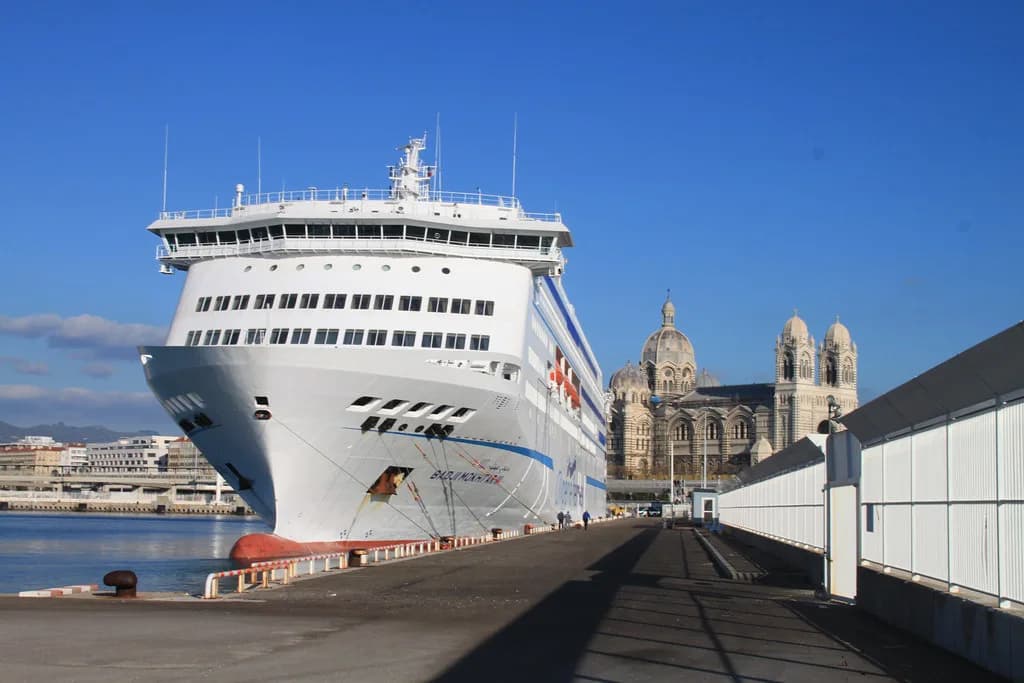
The Joliette terminal sits at Place de la Joliette in the northern dock area, roughly one to one and a half kilometres from the Vieux Port, which is a realistic walk for most passengers. Ships berth alongside here rather than tendering, so you walk off onto the quay and out through the terminal building.
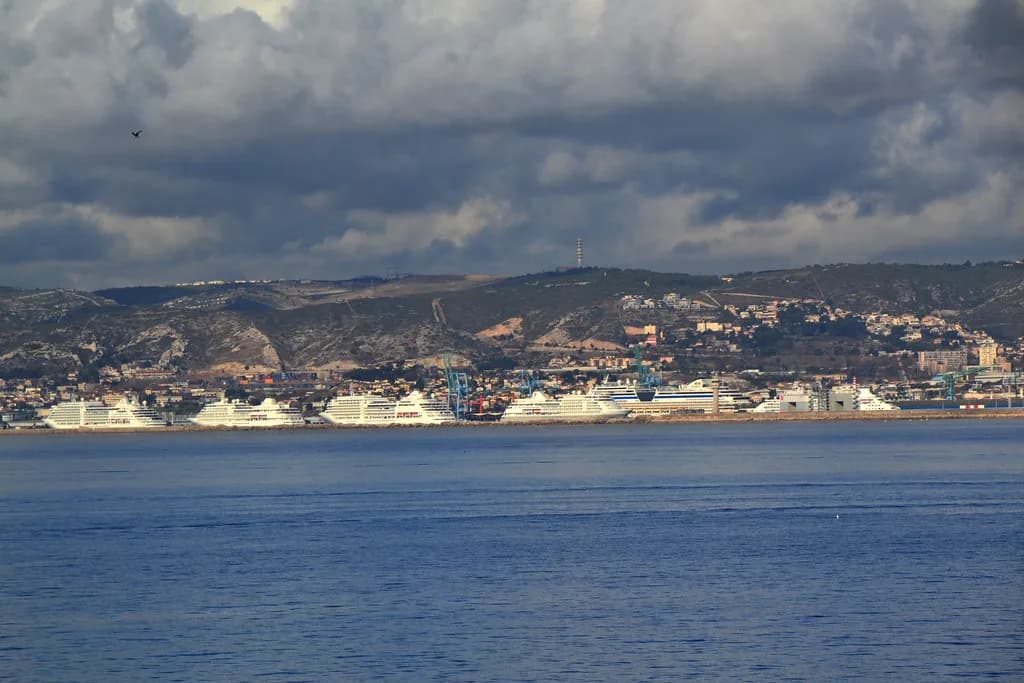
The second facility, known as MPCT, handles the bigger vessels and lies about eight kilometres north of the centre. Larger ships generally use it, but berth allocation is the port's decision rather than something you can predict from the itinerary alone, so treat your cruise line's port sheet as the authority for the day.
Getting into town from Joliette on foot
From Joliette, head south along the quays toward the Joliette waterfront and follow the shopping centre and waterfront buildings toward the old harbour. The route is flat and signposted, and the twenty to thirty minute walk brings you out at the Vieux Port where the fish market and ferry quays are.
Walking costs nothing and gives you the freedom to leave when you like, which matters on a fixed all-aboard. If the weather turns or you are carrying shopping, a taxi for the short hop back is a sensible use of a few euros rather than a risk to your timing.
Getting into town from MPCT
Ships at the northern terminal are met by a shuttle into the city, and whether that shuttle is free or paid depends on the call, so read the information left in your cabin rather than assuming either way. The shuttle drops passengers near the centre, and you then continue on foot or by taxi to the Vieux Port.
Taxis wait at the terminal rank and are the quickest option for small groups, but the supply thins when several ships arrive together, so build a queue into your plan. Public buses run along the coast road from the northern districts, though they add time and require a ticket bought locally.
Tickets and where to buy them
City buses and the metro are run by the local transport authority, and tickets are sold at machines at metro stations and at authorised outlets rather than on the vehicle in most cases. Buy a ticket before you board and keep it until you leave the network, because inspectors work the system.
For the port shuttle, the fare and timetable are set for each call and circulated on board rather than published as a permanent city service, so ask at the shore excursions desk or read the daily programme. For boat trips out of the Vieux Port, buy at the ticket kiosks on the quay and take the departure that leaves you a generous margin before all-aboard.
The Vieux Port as your base
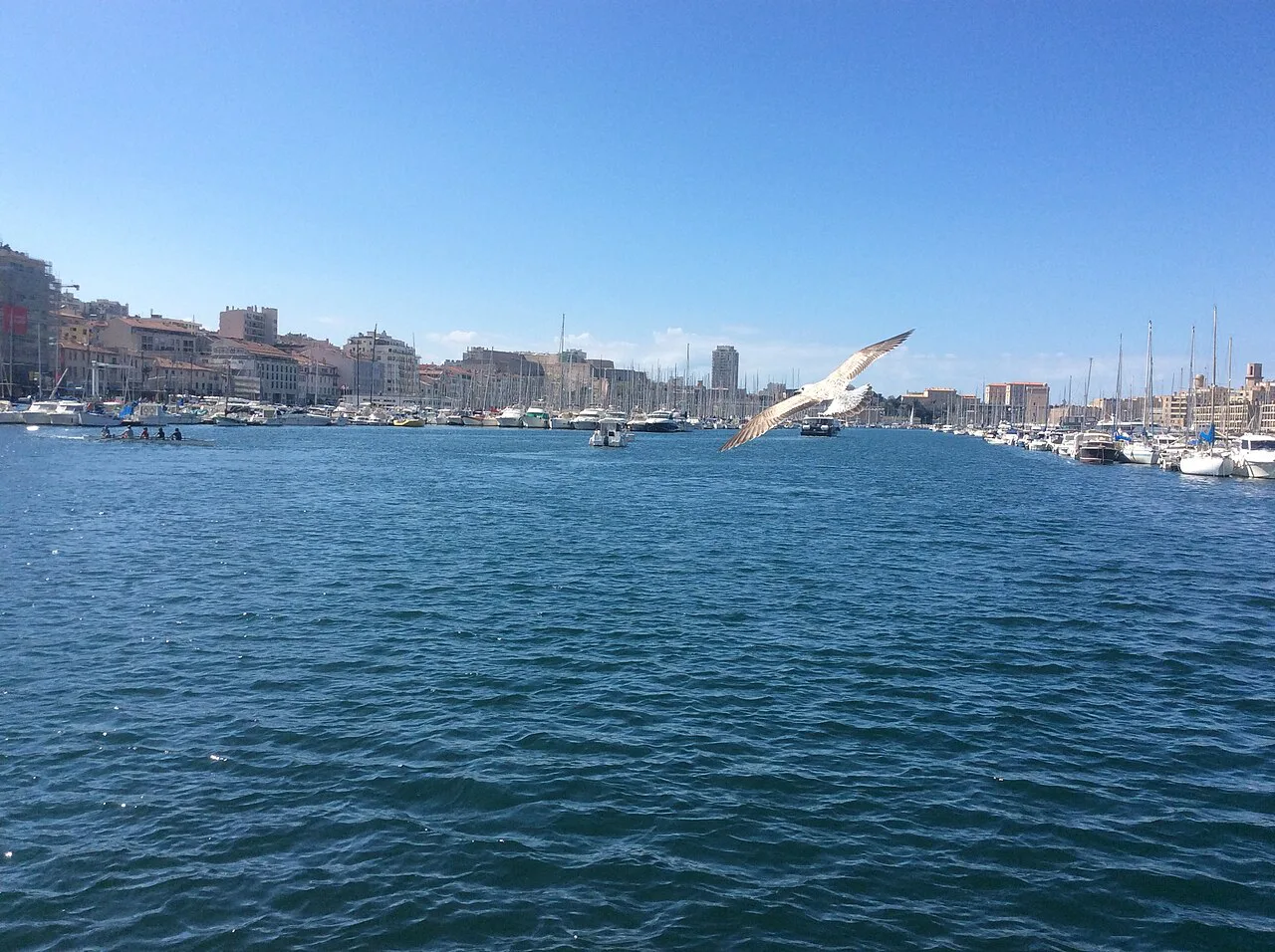
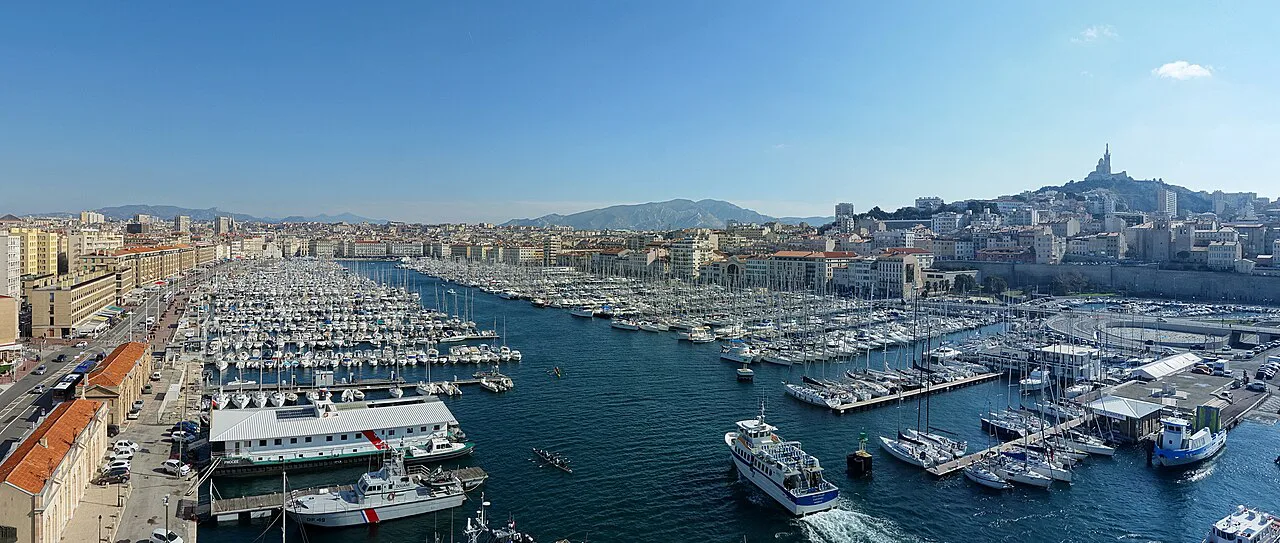
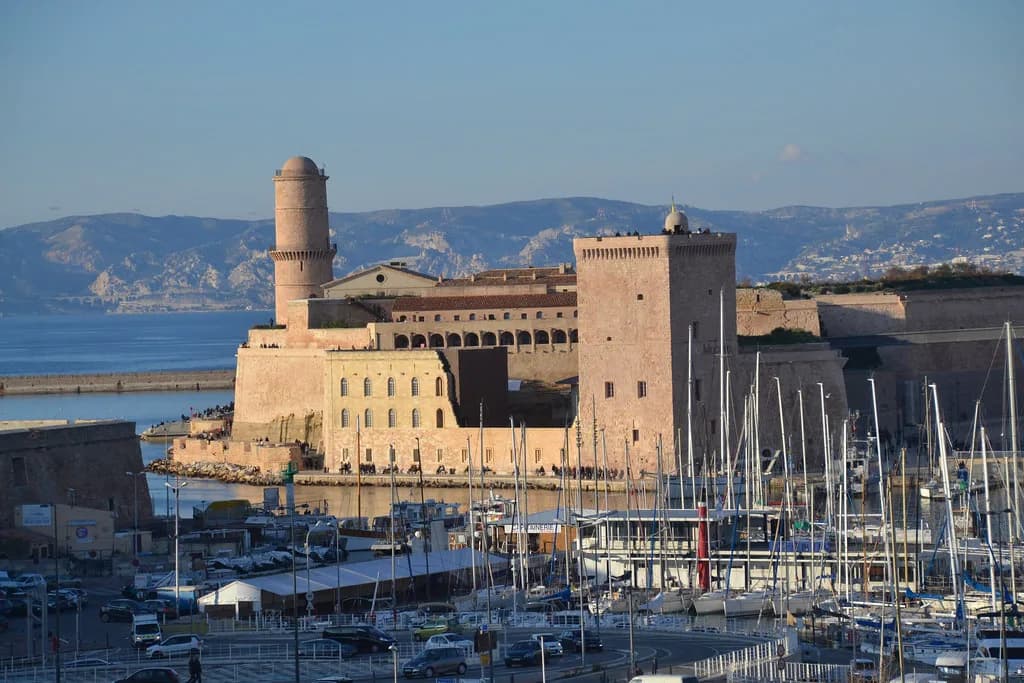
The old harbour is the natural centre of a port day: the fish market runs along the quay in the morning, the ferry pontoons for the island boats are right there, and the surrounding streets hold restaurants and cafes. Arrive before the stalls pack up if you want to see the catch being sold.
From the Vieux Port you can walk into Le Panier, climb or ride up to Notre-Dame de la Garde, or board a boat for the islands, all within a compact area. That concentration is why a short call can still feel full rather than rushed.
Notre-Dame de la Garde
The basilica on the limestone hill dominates the skyline and gives you the best orientation over the city, the harbour and the islands. It is a working place of worship, so dress and behave accordingly, and expect crowds when several ships are in port.
You can walk up from the Vieux Port through the streets below, which takes effort in the heat, or take a taxi up and walk back down. Set aside a comfortable margin for the hill and the viewpoint, and do not stack it immediately before a boat departure.
Le Panier on foot from the Vieux Port
Le Panier sits on the slope just north of the old harbour, a grid of narrow lanes, small squares and graffiti-covered walls that rewards slow wandering. It is close enough to combine with the Vieux Port and the basilica in a single morning without any transport.
The streets are steep and uneven in places, so wear shoes that cope with cobbles and steps. Go early, because the quarter is quietest before the midday heat and the tour groups arrive.
Château d'If and the Calanques by boat
Boats leave from the Vieux Port for Château d'If, the island fortress offshore, and the crossing is short enough to fit a half-day in port. The trip is weather-dependent, and rough seas can cancel sailings, so keep a fallback plan in the city.
The Calanques national park lies south of the city, about a forty-five minute drive from the Old Port, and its rocky inlets are reached on foot from trailheads or by boat from the harbour. The driving distance makes it a poor fit for a short call unless you join an organised tour that handles the return timing.
Aix-en-Provence as a day trip
Aix-en-Provence is the classic inland excursion, with its plane-tree boulevards, fountains and market squares a short drive from Marseille. The cost is time: you spend a chunk of the call on the road in each direction, and the return leg is exposed to traffic on the motorway.
For an eight-hour call, a half-day in Aix leaves little room for Marseille itself, so choose one or the other rather than trying to do both. Passengers who want the Provençal town experience will get more from a ship tour or a pre-booked driver than from public transport connections that eat into a fixed window. If comparing inland add-ons, it helps to check the things to do in Le Havre from a cruise ship for a similar town-versus-port trade-off.
Ship excursion versus going independently
A ship tour solves the logistics: the coach meets the gangway, the route is pre-planned and the tour company is in contact with the vessel. That convenience costs money and usually means a fixed itinerary with a group, but it reduces the risk of being late, and it is worth checking current prices and dates before you book.
Going independently is easy from Joliette, where you can walk off and use your own feet and taxis, and manageable from the northern terminal if you allow for shuttle queues. Book local guides directly only when you can guarantee the return leg with a margin, and treat the all-aboard time as a hard deadline rather than a target.
Sample plans for a 6, 8 and 10-hour call
On a six-hour call from Joliette, walk to the Vieux Port, see the fish market, wander Le Panier, and stop for lunch before heading back, which leaves a comfortable buffer. From the northern terminal, shorten to the Vieux Port and Le Panier and skip the basilica if the shuttle is running late.
An eight-hour call adds Notre-Dame de la Garde or an island boat trip, but not both, because each has its own queue and travel time. A ten-hour call is the one that can take in the basilica, Le Panier and an afternoon boat to Château d'If, provided the first two are done efficiently in the morning.
Return timing and the last realistic departure
Work back from all-aboard rather than from the ship's departure time, because the gangway closes before the ship moves. Aim to be at the terminal at least an hour before all-aboard when using the shuttle or public transport, and longer on days when several ships are in port together.
From the Vieux Port back to Joliette the walk takes twenty to thirty minutes, so leaving the quay with sixty minutes to spare is sensible. From the city centre to the northern terminal, add shuttle waiting time and take the earlier service rather than the last one that theoretically works.
What to skip on a short call
The Calanques and Aix-en-Provence both consume a large share of a short call in road time, so leave them for a longer port day or a land-based visit. The Marseille beaches and the modern waterfront museums are pleasant but secondary when the clock is tight.
If your call is under six hours and you berth at the northern terminal, treat the Vieux Port and Le Panier as your whole day and do not attempt the basilica. A short, well-paced visit to the old harbour beats a rushed loop of three sights with no margin.
Plan Your Visit
The successful Marseille port day starts with one fact: whether you berth at Joliette or the northern terminal. That determines whether you walk or rely on the shuttle, and it sets how much of the day you can give to the basilica, the old quarter and the islands.
Build the plan around the Vieux Port, add one hill or one boat trip, and leave the harbour with an hour to spare before all-aboard. Passengers who accept the terminal's constraint rather than fighting it get a fuller, calmer day in the city.
Frequently Asked Questions
What can you do in Marseille from a cruise ship for a day?
Most passengers base the day on the Vieux Port, where the fish market, ferry quays and restaurants sit together, then add Le Panier old quarter on foot or a trip up to Notre-Dame de la Garde. A longer call can include a boat to Château d'If or a drive into the Calanques, but not both.
How do you get from the Marseille cruise port to the city centre?
From Joliette you can walk to the Vieux Port in twenty to thirty minutes along the quays. From the northern MPCT terminal you take the port shuttle or a taxi, both of which leave from the terminal and drop you near the centre.
Is there a shuttle bus from Marseille cruise port?
A shuttle runs from the northern terminal into the city; whether it is free or paid is set for each call. Read the information left in your cabin or ask at the shore excursions desk for that day's arrangement.
How long do you need in Marseille on a port day?
Six hours is enough for the Vieux Port and Le Panier from Joliette, while eight hours adds the basilica or an island boat trip. Ten hours lets you combine the central sights with an afternoon on the water, provided you keep a generous return buffer.
Can you visit Aix-en-Provence from a Marseille cruise call?
Yes, but it costs a large share of the day in road time each way, so it suits an eight-hour call or longer and works best as an organised tour. Trying to combine Aix with central Marseille in a short call leaves no margin.
How much time should you allow to get back to the ship?
Aim to be at the terminal at least an hour before all-aboard, and allow longer when several ships are in port. From the Vieux Port to Joliette the walk takes twenty to thirty minutes, and from the city centre to the northern terminal you need shuttle waiting time on top.
Sources
Port-day notes for your next cruise
Optional updates to our port guides.
You might also like
Continue reading
More guides you'll find useful