Marseille Cruise Port Guide: Terminals & Port Days
Most Marseille cruise ships dock at Marseille Provence Cruise Terminal, 7–10 km from the Old Port. Compare shuttles, taxis and bus 35T, plus 6- and 8-hour plans.
On this page
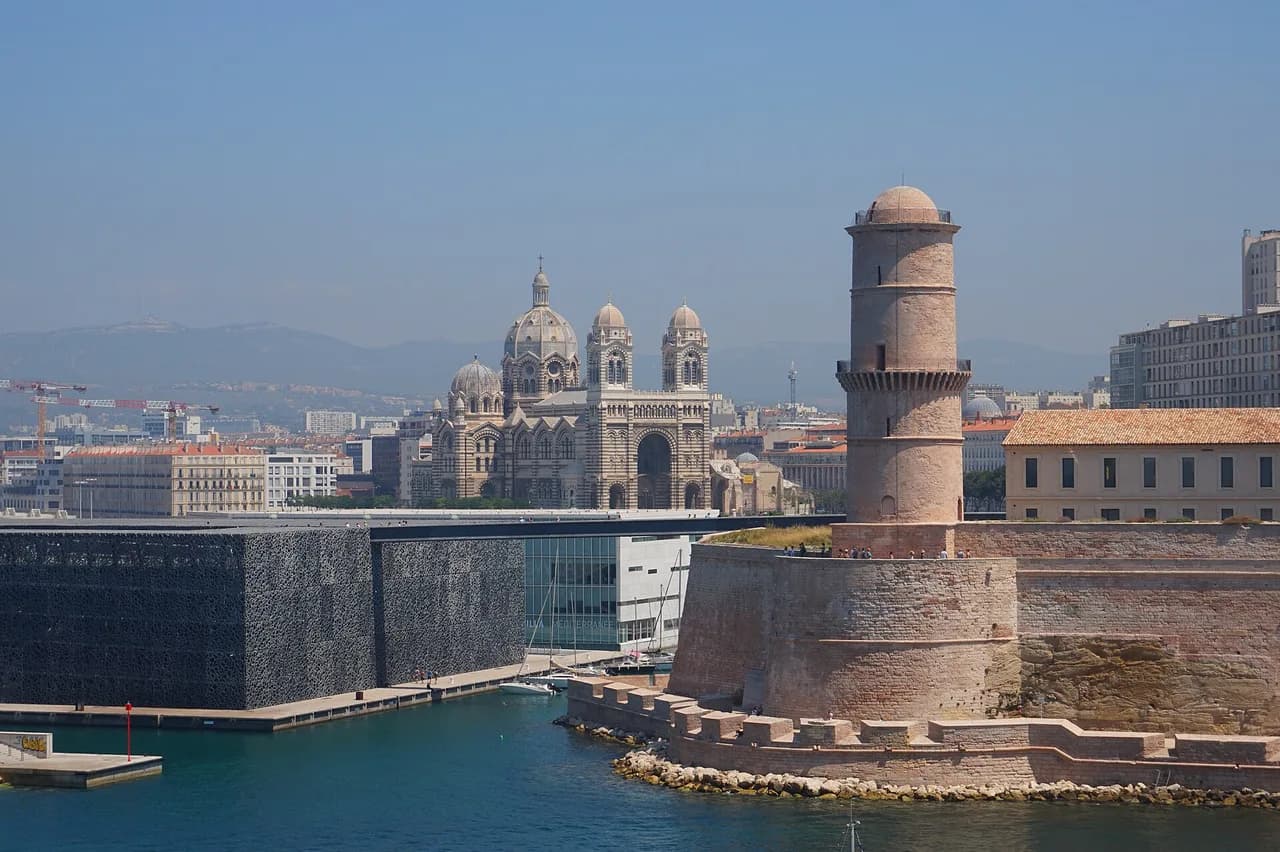
A Marseille port day splits into two very different experiences depending on where your ship ties up. Most cruise ships berth at Marseille Provence Cruise Terminal, roughly 7–10 km from the Old Port and a 15–20 minute drive away, while a smaller number dock at La Joliette, about a 15-minute walk from the Vieux-Port. Knowing which one applies to your call is the single decision that shapes the rest of the day.
Marseille suits passengers who want a big, gritty Mediterranean city with a working harbour, a hilltop basilica and boats to island fortresses, as well as those using it as a gateway to Provence. If you are still choosing between a city day and a trip further out, the trade-offs below show what each option costs you in transfer time and walking.
Where ships dock in Marseille
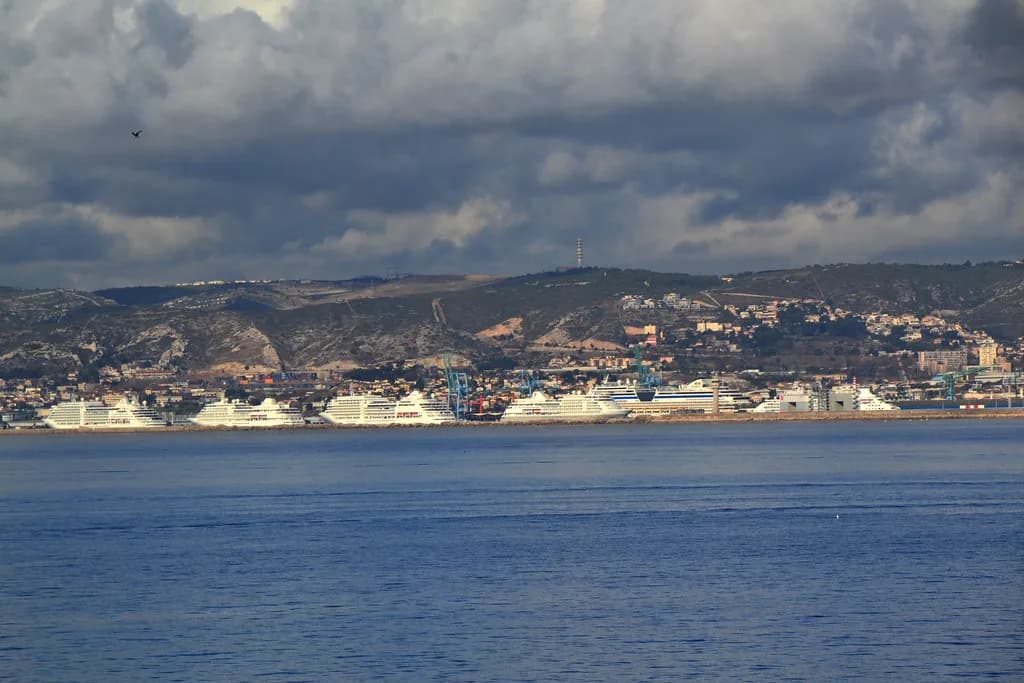
Marseille-Fos is one of the largest ports in the Mediterranean and handles cruise ships alongside ferry traffic, so your berth is assigned by the port rather than chosen by you. In practice cruise passengers see two locations: the Marseille Provence Cruise Terminal inside the commercial harbour, and the La Joliette area closer to the city. Your cruise line's shore programme or the port's own information is the place to confirm which applies before you plan a walking route.
The distinction matters because La Joliette turns Marseille into a walkable port: the Old Port and the main sightseeing districts are reachable on foot and the layout is straightforward once you are there. From the main terminal, nothing in the city is within walking distance, so every plan starts with a transfer. Check your ship's daily programme the evening before arrival for the berth name.
Marseille Provence Cruise Terminal: what to expect
The main terminal is a large, modern facility built to handle several ships at once, with basic facilities such as restrooms and waiting areas. It sits inside the commercial port zone, surrounded by industrial land, so it functions as a transit point rather than a place to spend time. Treat the terminal as the start and end of a transfer, not as part of the sightseeing.
Because the terminal is 7–10 km from the Vieux-Port and the surroundings are industrial, you cannot walk out of the gate and stroll into town. Plan your onward transport before you disembark, and note that walking from the ship to the port exit alone can take 10–20 minutes depending on which berth you are on. That walk time applies to the public bus option in particular.
La Joliette berths and the walk to the Vieux-Port
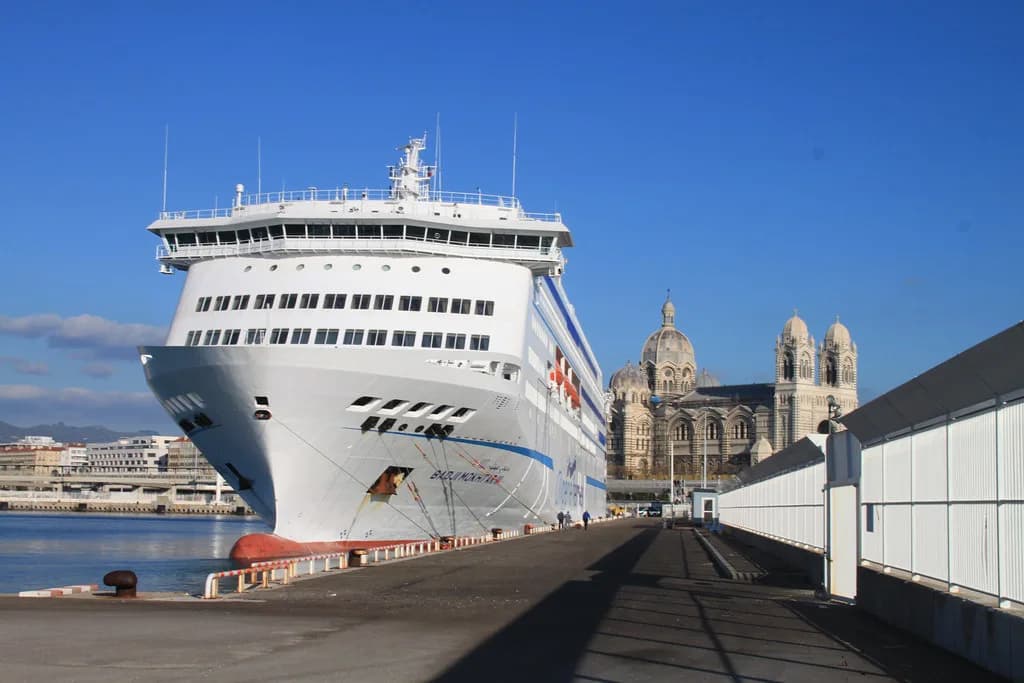
The La Joliette cruise area sits close to the city and mainly serves smaller cruise ships, expedition vessels and ferry traffic. From here the Old Port is about a 15-minute walk, which makes a do-it-yourself day genuinely simple: step off, walk along the waterfront, and you are in the café-lined harbour district. This is the berth to hope for if you have booked nothing and want a low-logistics day.
If you dock at La Joliette, the practical plan is to walk into town, cover the Old Port, Le Panier and the cathedral quarter on foot, and use city transport only for the hilltop basilica. Allow time at the end to walk back rather than relying on a taxi being available at the quay.
Getting into town: cruise line shuttle from MPCT
Most cruise lines run a shuttle from the main terminal to the Old Port, dropping passengers near the main sightseeing area. The journey takes roughly 15–20 minutes and the fare is typically around €20 return, which is the simplest option if you want zero planning but adds up for a family. Confirm the pick-up point and last return time with the shore excursions desk on board, since the return leg is the one that matters.
The shuttle is also the safest choice for passengers who find long walks difficult, because it removes both the port walk and the city navigation in one move. Its weakness is that everyone on your ship uses it at the same time, so the first departures and the last returns are the busiest.
Taxis from the terminal
Taxis wait outside the terminal and cover the same 15–20 minute run into the city. They cost more than the shuttle per person but become reasonable when shared by a group, and they give you flexibility over where you are dropped and picked up. For a family of four heading straight to the Vieux-Port, a taxi is often the better value and the faster departure.
The trade-off is availability at peak times: when several ships disembark together, the rank can empty quickly. On the return leg, allow extra slack and ask your driver to note the terminal name, since drivers know the cruise berths but not your ship's exact position.
Public transport: bus 35T from Porte 4
The cheapest route into town uses the local bus 35T, which leaves from outside the port at Porte 4. Reaching that stop means a 10–20 minute walk from your berth through the port area, then a ride to Joliette, followed by another walk of about 15 minutes to the Old Port. It works, but it is the least predictable option on a fixed all-aboard time.
Choose this option if you are travelling light, are confident about timings, and accept the walking. Skip it if anyone in your party has mobility limits or if your call is short, because the three-stage journey eats into your hours ashore before you have seen anything.
The port shuttle and Les Terrasses du Port
A free port shuttle sometimes links the main terminal with Joliette, stopping at Les Terrasses du Port shopping centre, from where you can take a local bus or walk toward the Old Port. It runs about every 30 minutes when it operates, but it is not always available and queues can be long on busy days. Treat it as a bonus rather than the backbone of your plan.
If it is running, the combination of free port shuttle, short bus hop or walk to the Vieux-Port is the cheapest realistic way into town. Have a fallback in mind, whether that is the paid cruise shuttle or a taxi, so a queue does not decide your morning.
RTM metro, tram and bus from the Old Port
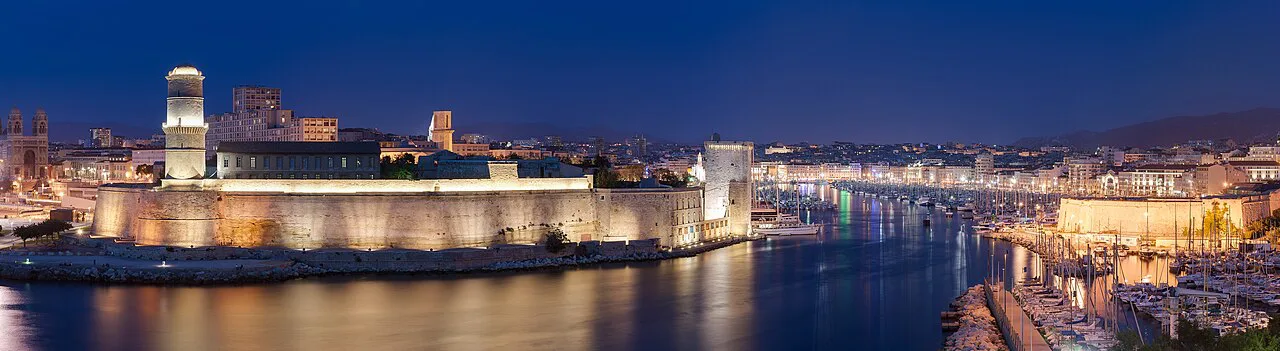
Once you reach the Vieux-Port, the city is easy to navigate: metro, buses and trams run by RTM converge on the Old Port, and a day pass costs roughly €5–6 for unlimited travel. Tickets can be bought at metro stations, from ticket machines in the city, and at the bus stop near the cruise terminal. For a single day of city sightseeing, the pass pays for itself quickly.
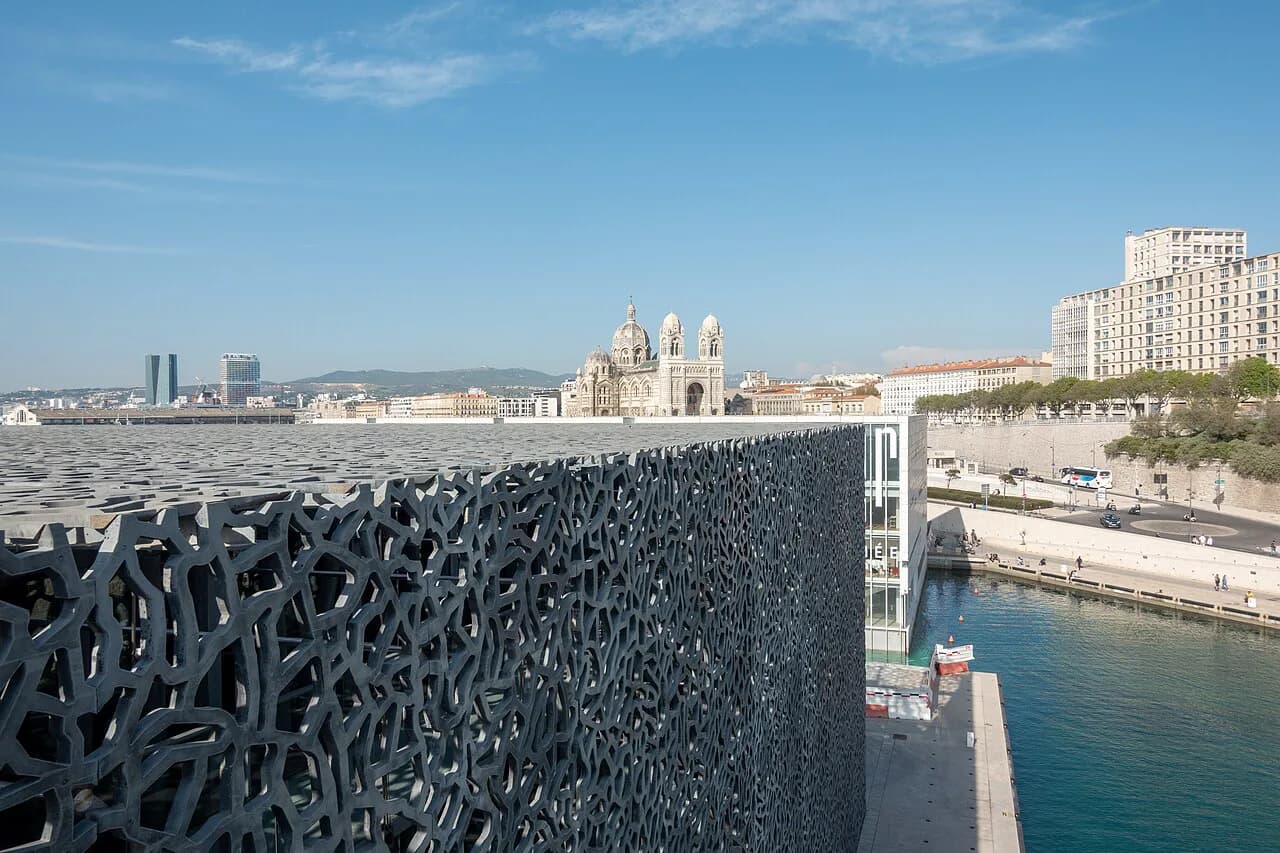
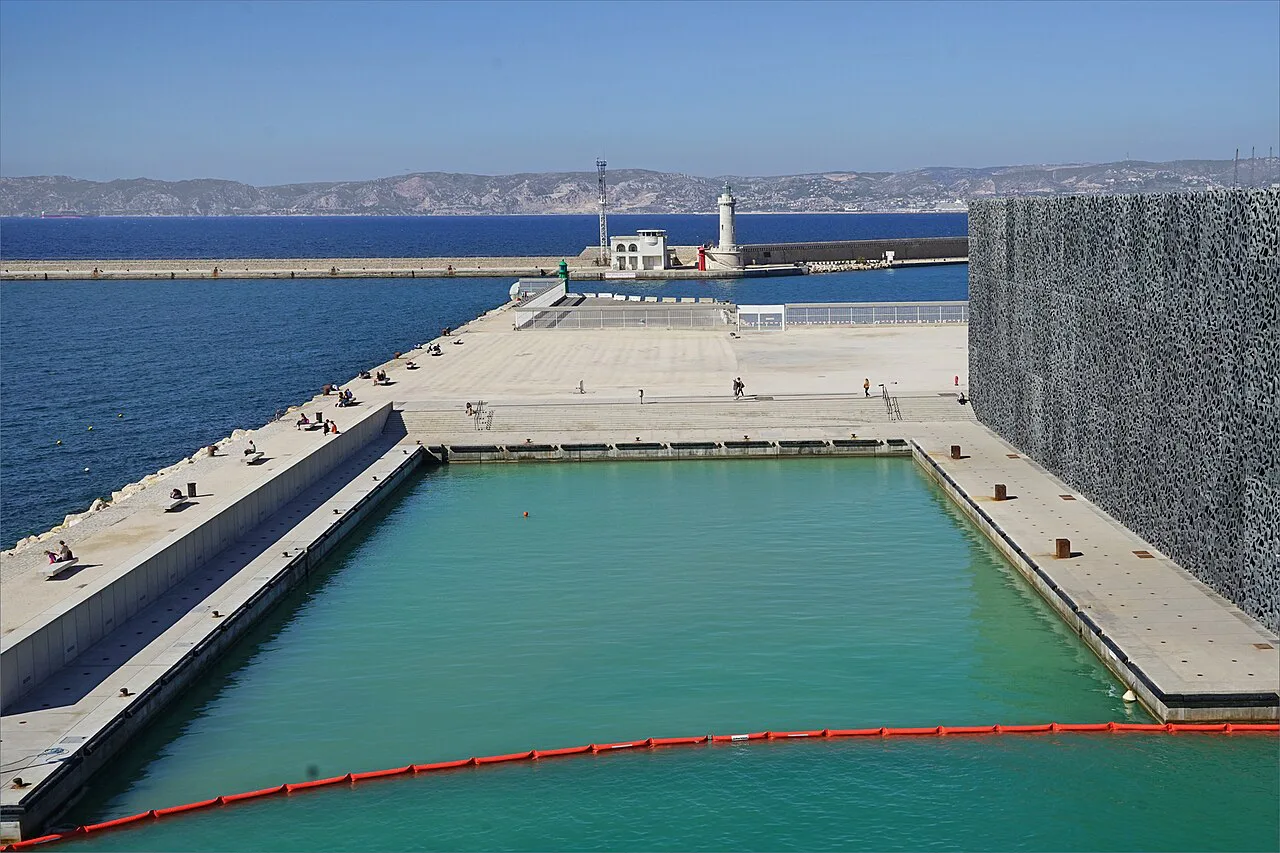
Use the metro for longer hops such as Palais Longchamp, about 10 minutes from the Old Port, and keep the Old Port itself for walking. Le Panier, the cathedral and MUCEM are all within easy reach on foot from the harbour, so do not waste pass validity on routes you could stroll.
Notre-Dame de la Garde: bus 60, petit train or hop-on hop-off
The basilica on the highest hill above Marseille is the city's defining viewpoint, with views over the Old Port, the coastline and the Frioul islands. Walking up involves a steep climb, so most passengers take transport: bus 60 runs directly from the Old Port to the church, the Petit Train de Marseille runs from the Old Port to the basilica, and the Colorbüs hop-on hop-off bus stops a short walk below. Allow 1–2 hours in total.
The tourist train and the hop-on hop-off bus both depart from the Old Port next to each other and run frequently through the day, with departures and fares displayed at the stop. These are the low-effort choices for passengers who want one structured sight without learning the bus network. Whichever you pick, build in queue time on mornings when several ships are in port.
Château d'If by boat from the Old Port
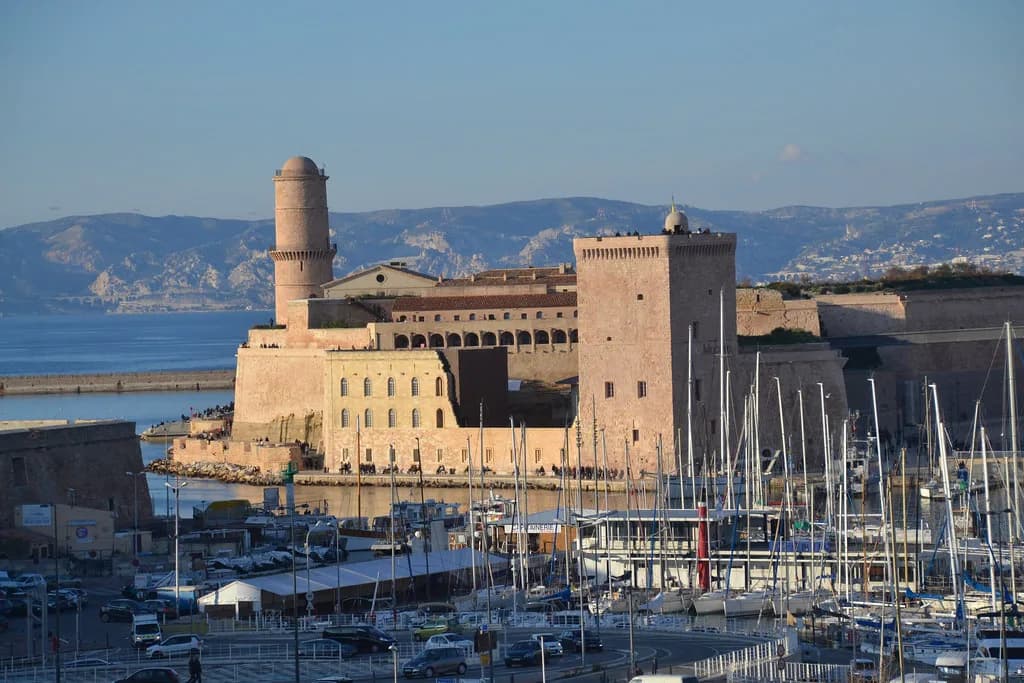
Boats to the island fortress of Château d'If leave directly from the Old Port, and the crossing takes about 20 minutes. The castle, a 16th-century defence turned prison and famous through The Count of Monte Cristo, is a good half-day change of scene without leaving Marseille. Allow 2–3 hours including the crossing and time on the island.
Because departures are tied to sailing times, this is the excursion most sensitive to your return buffer: take an early crossing so a delayed boat does not compress your trip back to the ship. If the weather is turning, the Old Port and Le Panier fill the day comfortably instead.
The Calanques: boat tours versus hiking
The Calanques, the limestone inlets with turquoise water between Marseille and Cassis, are a protected national park and one of the main reasons ships call here. Boat tours from the city are the easiest way to see them; hiking routes take more time and planning. Allow 3–5 hours, and only commit on a longer call with settled weather.
The honest trade-off is that a Calanques trip consumes most of a standard call, so it competes with a city day rather than adding to one. Pick the coast or the city, not both. Given the transfer time from the terminal, a boat tour booked in advance removes the risk of arriving at the quay to find the morning departure full.
Aix-en-Provence and Cassis as longer day trips
Aix-en-Provence, roughly 30 minutes from Marseille, offers elegant streets, fountains and the Cours Mirabeau, a calmer contrast to the port city. Allow 4–6 hours in total once transfers are counted. It is the most common excursion out of Marseille and a sensible choice if you have seen the city before.
Cassis, a small harbour town with access to the Calanques, and the Frioul islands off Marseille are quieter alternatives that need more planning and suit longer port stays. Both depend on road or boat timings you do not control, which is exactly where an organised tour earns its place.
Ship tours, local operators or going independently
The decision comes down to distance. Inside Marseille, going independently is straightforward once you have reached the Old Port, and a shuttle or taxi plus a little planning covers the city. For the Calanques, Cassis or Aix-en-Provence, an organised tour simplifies transport and timing, and an excursion sold by the ship carries the guarantee that the vessel waits for its own tour group.
Local operators offer similar itineraries, sometimes at lower cost and in smaller groups, but you own the return risk entirely: no operator can promise the ship will wait, and the terminal's industrial location makes a late dash harder than in a compact port. If you book independently, choose morning departures and a return time well inside your all-aboard call.
What fits a 4–5, 6–8 and 8-hour-plus call
On a 4–5 hour call, stay in the city: reach the Vieux-Port, walk the harbour, Le Panier and the cathedral quarter, and return with margin. On a 6–8 hour call, typical for Marseille, add one main highlight such as Notre-Dame de la Garde or a boat to Château d'If. Beyond 8 hours, the Calanques or a half-day to Aix-en-Provence becomes realistic while still leaving a comfortable return.
Whatever the length, subtract the transfer twice before you commit: 15–20 minutes each way by shuttle or taxi from the main terminal, plus the port walk if you use the bus. A ship tour compresses those logistics for you, which is why it fits tight calls better than an ambitious independent plan. The same transfer-first thinking shapes a day at the Le Havre cruise port, so compare its terminal-to-town setup before you commit to an independent plan there. If you are weighing how other French calls handle berth-to-town transfers, the guide to cruise ports in France sets out the same decision for each port.
Return-to-ship buffer and the ride back to the terminal
The return leg deserves more attention than the outbound one. The terminal sits inside an industrial zone, far from the city, so the last transfer is not something to improvise at the end of a long afternoon. Aim to be back at the berth well before all-aboard, with enough slack for traffic on the approach roads and for the walk from the terminal gate to your ship.
Cruise shuttle passengers should note the published last departure and take an earlier service if queues form. Independent travellers using the bus 35T need the Joliette connection plus the Porte 4 walk in their calculation, and a taxi is the sensible fallback if the afternoon runs late.
Arriving by air or rail for embarkation
Marseille Airport is about 20 km from the cruise port, roughly 20–30 minutes by car, and Saint-Charles station is about 10 minutes from Joliette and 15–20 minutes from the main terminal. Taxis and private transfers are the easiest option with luggage. By public transport from the airport you first take the shuttle to Saint-Charles, then continue by metro, taxi or bus to the port, which takes longer and suits passengers with time to spare.
If you are boarding at Marseille, give yourself a comfortable window between flight or train arrival and the terminal, and keep your cruise line's boarding deadline in mind rather than the sailing time. Passengers transferring independently should confirm the drop-off point at their specific terminal, since the port complex is large.
Practical points for the day
The local currency is the euro and cards are widely accepted around the Old Port and La Canebière, the main shopping street, which starts at the harbour and runs inland. The Old Port itself is flat and easy walking, but sights such as Notre-Dame de la Garde involve steep climbs and summer heat, so carry water and wear shoes that cope with hills.
Pickpocketing occurs around the Old Port and on public transport, so keep bags zipped and valuables out of sight in crowds. Build your plan around one anchor sight plus the harbour rather than a checklist, and you will see more of Marseille with less time spent in transit.
Plan Your Visit
Start by confirming where your ship berths: La Joliette means a walkable city day, while the main terminal means choosing between the cruise shuttle, a taxi and the bus 35T before you step ashore. Then match your hours to one anchor sight and keep the return leg deliberately early.
Marseille rewards a little planning more than most Mediterranean ports, because the distance from the berth to the Vieux-Port sets the shape of everything else. Decide the transfer first, pick what fits your call, and the day runs on your terms.
Explore more Marseille cruise port guides
Frequently Asked Questions
Where do cruise ships dock in Marseille?
Most ships berth at Marseille Provence Cruise Terminal inside the commercial harbour, about 7–10 km from the Old Port. A smaller number dock at La Joliette, roughly a 15-minute walk from the Vieux-Port. Your ship's daily programme or shore desk names the berth for your call.
How far is the Marseille cruise port from the Old Port?
From the main terminal the Old Port is about 7–10 km away, a 15–20 minute drive. From La Joliette it is a 15-minute walk. That difference decides whether your day needs a transfer at all.
Do you need a shuttle in Marseille cruise port?
Yes if you dock at the main terminal, since the route into town crosses an industrial port zone and is not walkable. Options are the cruise line shuttle, a taxi, or the bus 35T from Porte 4. At La Joliette you can simply walk.
How much time do you need in Marseille on a cruise?
A 4–5 hour call covers the Old Port, Le Panier and the cathedral quarter. A 6–8 hour call adds one highlight such as Notre-Dame de la Garde or Château d'If. The Calanques or Aix-en-Provence needs 8 hours or more.
Can you visit the Calanques from a cruise stop in Marseille?
Yes, but it uses 3–5 hours and competes with a city day rather than adding to it. Boat tours are the easiest option and hiking needs more time. It works best on longer calls with settled weather and a pre-booked departure.
How do I get from Marseille airport or Saint-Charles station to the cruise terminal?
Taxis and private transfers are simplest with luggage: the airport is roughly 20–30 minutes from the terminal, and Saint-Charles is about 15–20 minutes away. By public transport from the airport, take the shuttle to Saint-Charles first, then continue to the port.
Sources
Port-day notes for your next cruise
Optional updates to our port guides.
You might also like
Continue reading
More guides you'll find useful