Naples Cruise Port to Amalfi Coast: Transport Guide
Compare ferries, trains, buses and ship tours from Naples cruise port to the Amalfi Coast, with realistic plans for a 6, 8 or 10 hour call.
On this page
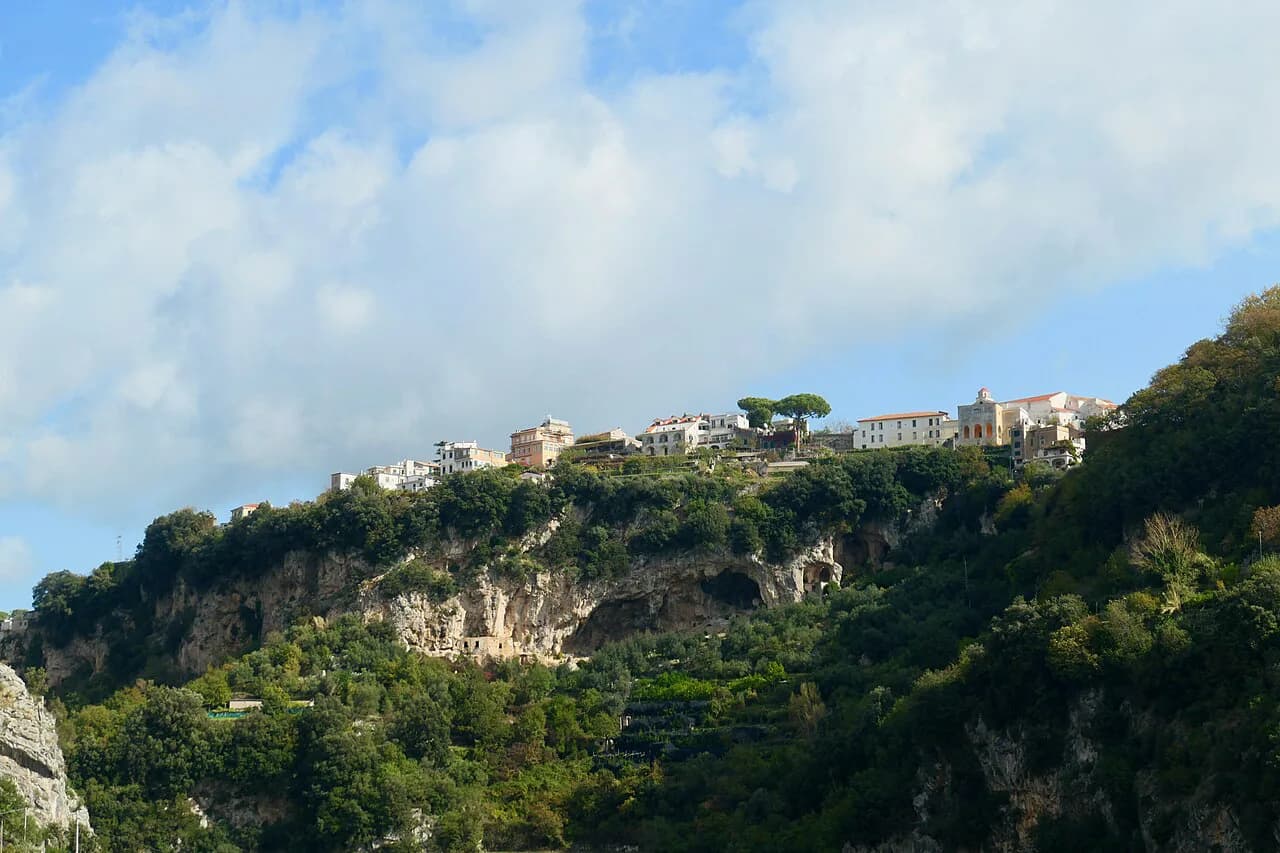
The Amalfi Coast rewards a Naples port call with cliff roads, vertical towns and a sea crossing that beats sitting in coastal traffic. It suits passengers with a full day ashore and a tolerance for two transport legs, not anyone hoping to stroll off the ship and be there.
Distance is the constraint. Nothing on the coast has a train station, so every land route runs through Sorrento or Salerno, while the fastest direct option is a hydrofoil from the port itself. Use the Naples Cruise Port Guide to fix your bearings before choosing between water and road.
Where ships dock in Naples
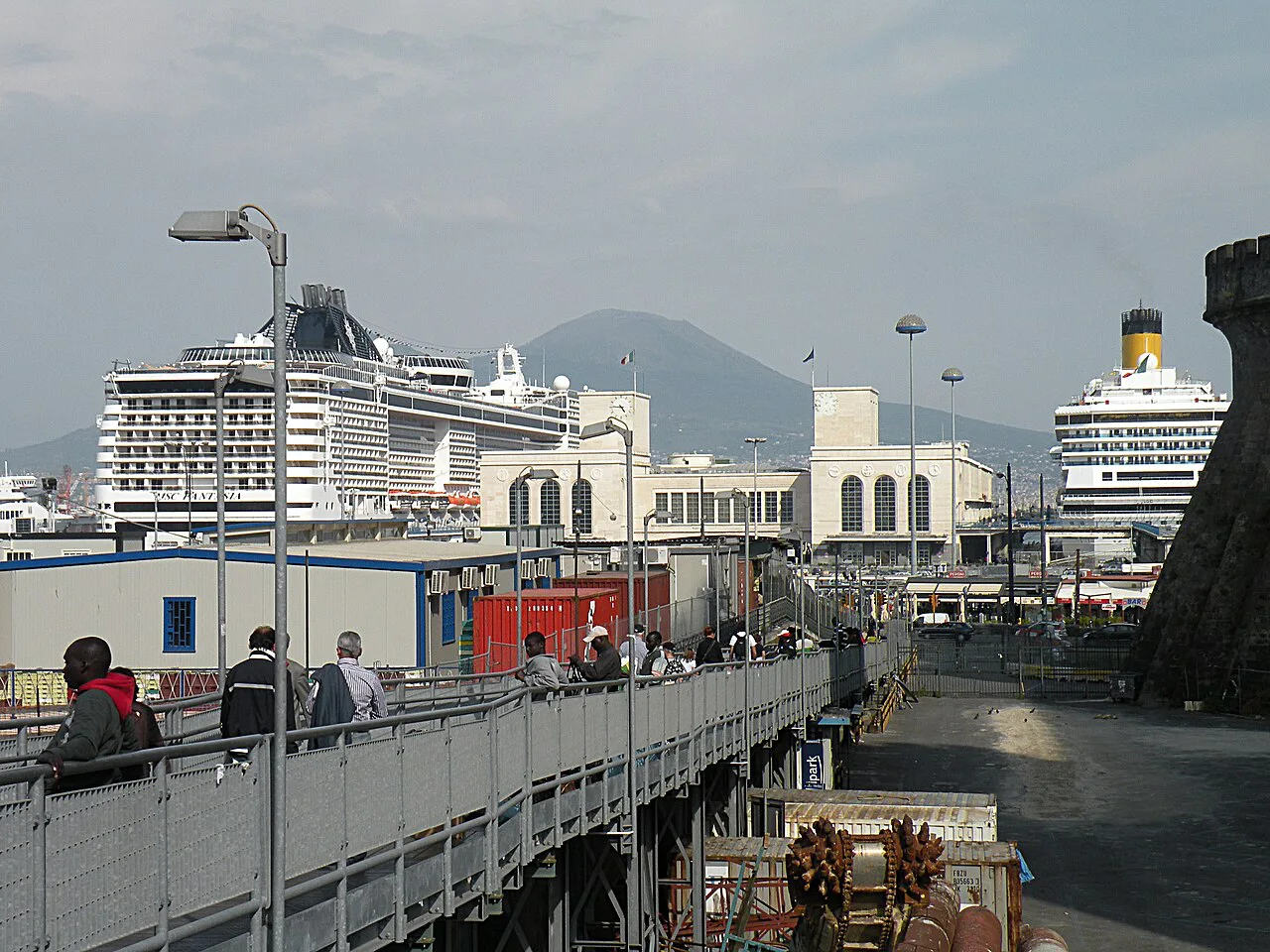
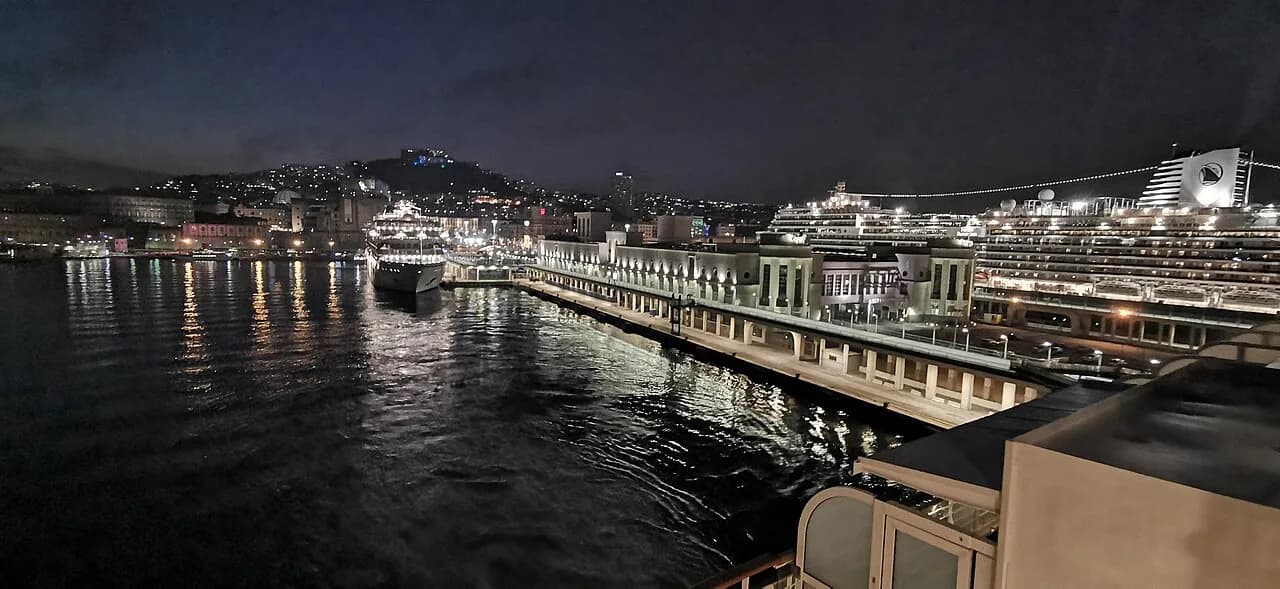
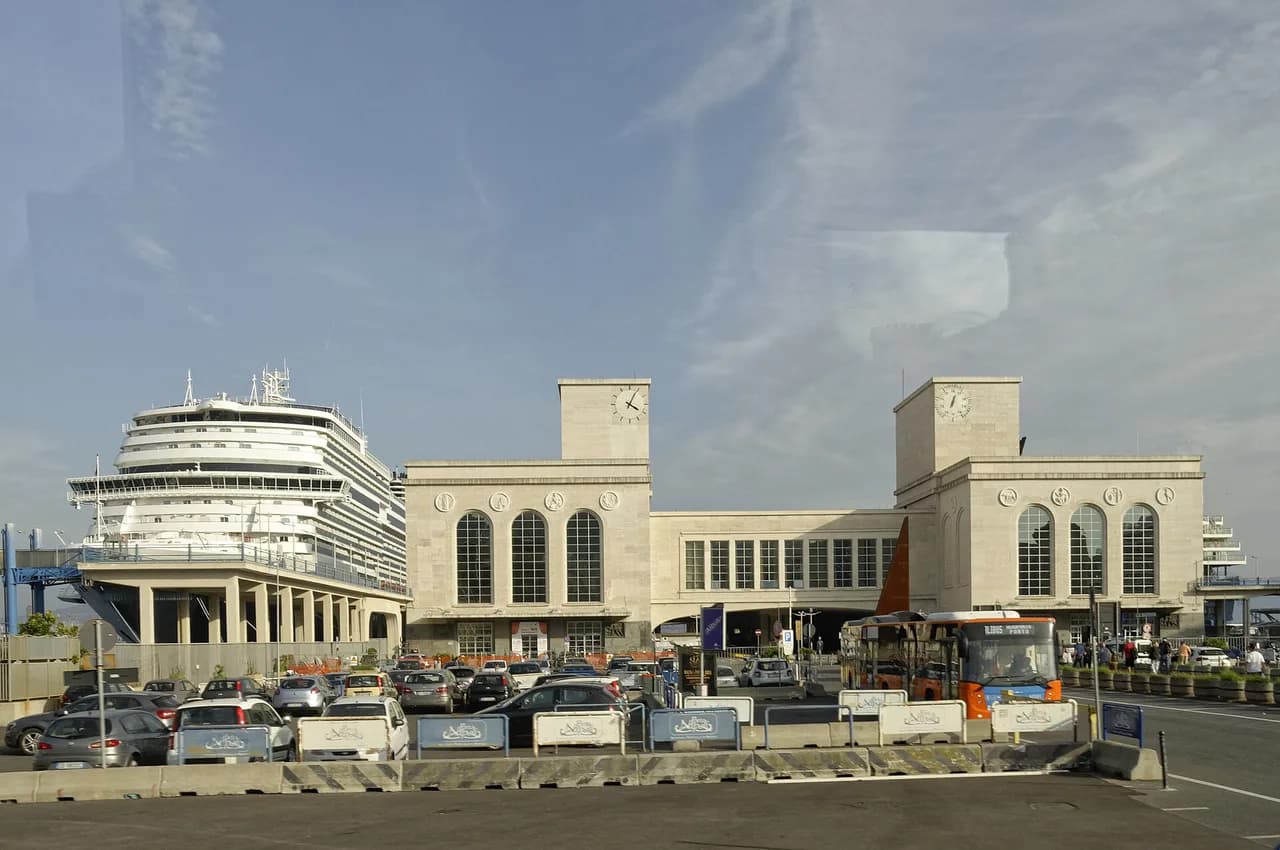
Cruise ships berth along the Naples waterfront, and the hydrofoil terminal at Molo Beverello sits in the same port area, next to the ferry quays below the historic center. That proximity is the reason a water-based day works: you can walk or take a short shuttle hop from your berth to the boat rather than crossing the city first. Confirm your exact berth and boarding point with your cruise line before you plan the walk.
If you want a closer look at how the terminal area, the exits and the walk into town fit together, the Naples Cruise Port guide covers the layout and the connections onward to Pompeii, Sorrento and Capri. Treat Molo Beverello as your fixed reference point for the day and build every other leg around it.
The geography problem: no train reaches the coast
Only Sorrento and Salerno have railway stations on this stretch of coast; Amalfi, Positano and the smaller towns are reached by bus, ferry or road transfer after a rail leg. That means a train-based day costs you at least two connections each way: Naples to Sorrento or Salerno, then bus, boat or taxi to the town you actually want to see.
The coastal road itself is one slow lane of traffic in high season, and the SITA bus that serves every town runs slowly with some services stopping at Amalfi and turning back rather than continuing to Salerno. Ask the driver which service you are boarding, because a bus that ends at Amalfi forces another wait mid-journey.
Hydrofoil from Molo Beverello to Amalfi and Positano
Navigazione Libera del Golfo runs a hydrofoil day trip from Naples Molo Beverello that reaches Amalfi and Positano in one loop, with boarding at the Molo Beverello port and ticket collection at the NLG office inside the temporary ticket structures behind the snack bars. The counter carries the NLG logo, a blue flag outlined in yellow, and you exchange your booking voucher there for actual boarding tickets before you queue.
The published schedule departs Naples at 8:35 AM, reaches Amalfi at 10:20 AM, leaves Amalfi at 1:40 PM, docks in Positano at 2:00 PM next to Spiaggia Grande, departs Positano at 4:24 PM and is back at Molo Beverello at 5:45 PM. That gives roughly three hours in Amalfi and about two and a half hours in Positano, which is the realistic ceiling for a single port day.
The service is valid from April 1 to November 3, 2026, so a winter call has to fall back on road transport or a ship excursion. NLG sells the day at from 93 euros per person, with a non-refundable rate discounted against the standard fare. Navigazione Libera del Golfo asks passengers to reach the ticket office 30 to 45 minutes before departure, and 45 to 60 minutes in peak summer.
Making the hydrofoil schedule work with all-aboard
Work backward from your all-aboard time rather than forward from breakfast. A 5:45 PM return to Molo Beverello leaves roughly the right margin for a ship departing in the early evening, but a 4 PM all-aboard means this particular loop is too long and you should look at a shorter crossing or a ship tour that returns earlier.
Seating is first come, first served, with outdoor deck space and an air-conditioned cabin, and outdoor seats are not guaranteed because the vessel can change for operational reasons. The same terms allow free cancellation up to two days before the excursion date and a full refund if the company cancels for sea conditions, which matters if your itinerary is already uncertain.
The hydrofoil does not eliminate the stairs problem at the far end: both Amalfi and Positano are built on slopes, so a day here involves climbs even if you only walk from the landing stage into the center. Wheelchair users can board with staff assistance, but the operator advises contacting NLG in advance to arrange support.
Ferries to Sorrento, Positano and Amalfi and their seasonality
Beyond the NLG day trip, fast ferries link Naples Beverello with Sorrento, Positano and Amalfi as well as Capri, Ischia and Procida, and the crossings put the marinas right in the town centers. That is the practical advantage over road transport: you step off close to the sights instead of climbing from a bus stop on the coast road.
Ferry service between the coast towns is thin, often only three to five departures a day, and most routes run from April to November with schedules that shift with the season. One-way fares between coastal points sit in a band of roughly 5 to 20 euros depending on the route, and luggage can carry a small per-bag charge.
Naples to Sorrento by ferry takes about 40 minutes while Naples to Positano runs about 1.5 hours, so a one-town day is far safer than trying to combine both by water. Buy at the marina ticket offices or through the ferry companies, and remember that a late-afternoon return may be the only one available.
Train via Sorrento or Salerno, then onward by bus, ferry or taxi
For the rail route, the Circumvesuviana commuter line from Naples to Sorrento costs around 5 euros and takes 1.5 hours or more because it stops frequently, with no assigned seats, no luggage storage and no air conditioning. It runs from early morning with about two departures an hour, and tickets are bought at the station rather than online. The Campania Express is the tourist-oriented alternative to Sorrento, running mid-March through October with about a one-hour journey and tickets around 15 euros, sold at the station or online. Paying on board carries a surcharge, so buy before you board. Trenitalia trains from Napoli Centrale to Salerno leave roughly every 20 minutes, take 40 to 60 minutes and cost about 5 euros, which makes Salerno the faster rail gateway. From Salerno you continue to Amalfi or Positano by ferry or bus. Note that Sorrento trains leave from Napoli Piazza Garibaldi, a separate sub-station within the Napoli Centrale complex, so follow the signs rather than assuming one platform does both.
If you are weighing this rail-and-bus day against a simpler transfer, the Naples Port to Sorrento on a Cruise Call guide shows how much of a port day the Circumvesuviana leg alone consumes. Building the coast on top of it leaves very little slack for a delayed return.
For the Salerno end, the Salerno Cruise Port to the Amalfi Coast guide explains the final hop from that city, which is a useful benchmark if you are comparing a Naples call with a Salerno call on the same itinerary.
SITA buses along the coast road
The SITA bus covers the entire coastline from Sorrento to Salerno, stopping at every town, with buses passing through each town roughly twice an hour from early morning until evening. A Sorrento to Salerno run on that bus takes about two hours, which tells you how much of a port day a long coastal hop consumes.
Single fares are typically a few euros and a 24-hour unlimited ticket costs around 10 euros, available from station ticket offices, tabacchi shops, vending machines or the driver. In high season the bus is slow and often full, so plan to board at the start of a route rather than mid-way.
Taxis and private drivers from Naples
A taxi from Naples to the coast towns normally takes one to two hours depending on destination for a one-way trip, and hops between coast towns are also available. In high season taxis must be arranged in advance in most towns, and Uber is not available. Private drivers charge a little more than taxis for transfers but guarantee someone waiting, and full-day driving tours typically use vehicles that carry groups of up to eight. For a cruise group of four to eight people, that option can undercut ship-tour pricing, though traffic on the single coastal road remains the shared risk.
Ship shore excursions versus local operators versus going alone
Going independently by hydrofoil is the fastest route to the coast and the easiest to self-manage, since you board and disembark in the same port area you started from. The trade-off is that the boat leaves on its own timetable, and no one holds it for a late ship.
A ship excursion absorbs the connection risk but usually runs by coach, and the coastal road is where a coach day loses time in summer. Local drivers give more flexibility than a coach and can wait at the pier, but a private road transfer back through coastal traffic can still miss all-aboard if you leave a town too late.
For alternatives that start at the same pier, including Pompeii and Capri, the Excursions from Naples Cruise Port guide compares what each one costs you in hours away from the ship. A two-town coast day and a Pompeii morning are hard to combine.
What fits a 6-hour call
A six-hour call does not fit the full Amalfi and Positano loop, because the hydrofoil alone accounts for most of the day once you allow for ticket collection and the walk from berth to quay. Stay in Naples, take a short ferry to Sorrento, or join a ship excursion that returns with a wide buffer.
If you want one coast town anyway, a fast ferry to Sorrento takes about 40 minutes each way, which is the only realistic water-based coast visit inside six hours. Anything further east on the coast turns into a dash with no margin.
What fits an 8-hour call
An eight-hour call is the realistic minimum for a hydrofoil day to Amalfi and Positano, provided the ship departs around the time the 5:45 PM hydrofoil returns to Naples. If your all-aboard falls before 5:30 PM, choose a single town or a ship tour instead of the loop.
Alternatively, run the rail route to Salerno on Trenitalia, then continue by ferry to Amalfi, and come back the same way. The two legs each take under an hour on paper, but the connection time and the return ferry frequency are what actually decide whether you make it.
What fits a 10-hour call
Ten hours opens up the full NLG loop with time to walk Amalfi's center and reach the Spiaggia Grande waterfront in Positano, or a private driver day that takes in two towns and a viewpoint stop. Even then, road traffic can erase the extra slack you gained.
A private driver day is limited by the coast's single bottleneck road, so a 10-hour call buys you a second town, not three. If the coastline is the priority and you want to avoid the road entirely, build the day around the water crossing and one town rather than a checklist.
Return-time buffer and the all-aboard risk
On a two-leg journey back to Naples, your buffer has to cover both legs, so plan to leave your furthest point at least an hour earlier than feels necessary. A hydrofoil crossing that docks at 5:45 PM when your all-aboard is 6:30 PM is not a comfortable connection: collect your onward ticket and be at the quay early.
Remember that the ship will not wait, and neither the hydrofoil nor the bus operator is obliged to hold a departure if you are late. The one guaranteed protection is a ship tour, which is the reason its price is higher than a ferry ticket.
Rough seas and cancellations
NLG can cancel the crossing if conditions are unsafe and issues a full refund when it does, while standard bookings are cancellable free up to two days before departure. That gives you a fallback but not a plan B on the day itself, since you cannot count on an alternative boat running at short notice in poor weather.
Build a rain-day alternative that stays in Naples or close by, and if the coast is the priority regardless of weather, weigh a coach or driver day that is not dependent on sea conditions. The Excursions from Naples Cruise Port guide lists options by travel time from the pier.
Planning the Coast Day Around Your All-Aboard
Decide first whether the ship is in port past early evening. If it is, the Molo Beverello hydrofoil gives you Amalfi and Positano in a single day with the simplest geometry. If it is not, choose one town by water or stay closer to Naples.
Check your cruise line's published all-aboard time, then compare it against NLG's return crossing and the last sensible connection on the rail route. The Naples Cruise Port guide covers the rest of the terminal-area logistics, and the Excursions from Naples Cruise Port guide covers what else is on offer from the same pier.
Frequently Asked Questions
Is there a direct train from Naples to the Amalfi Coast?
No. The only stations on this stretch are at Sorrento and Salerno, so any rail day involves a second leg by bus, ferry or taxi. The rail portion from Naples is the fast part; the coastal connection is what eats the hours.
Can you reach the Amalfi Coast from Naples cruise port in one day?
Yes, if the ship stays into the early evening. The hydrofoil from Molo Beverello reaches Amalfi and Positano and returns to Naples before 6 PM. A call ending earlier in the afternoon does not fit both towns.
How long does the hydrofoil take from Naples to Amalfi?
The published schedule allows about 1 hour 45 minutes from departure at Molo Beverello to arrival in Amalfi, including the sea crossing along the Sorrento coast. Passengers should be at the ticket office well before departure.
What is the cheapest way from Naples to the Amalfi Coast?
The train and SITA bus combination is the cheapest, since the Circumvesuviana and Trenitalia fares are low and bus tickets cost a few euros. It is also the slowest, and the connections are what make it unsuitable for a short call.
How far is Molo Beverello from the Naples cruise terminal?
Both sit on the same waterfront, so the hydrofoil quays are a short walk or shuttle hop from the cruise berths. Your cruise line can confirm your exact berth and the walking route on the day.
Should you take a ship tour to the Amalfi Coast or go independently?
A ship tour absorbs the connection risk, which matters most when the ship leaves early. Going independently by hydrofoil is quicker and cheaper per person but leaves you responsible for every leg, and the ship will not wait.
Sources
Port-day notes for your next cruise
Optional updates to our port guides.
You might also like
Continue reading
More guides you'll find useful