Cádiz Cruise Port to City Centre: Walk, Shuttle or Taxi
Cádiz ships dock at Muelle Alfonso XIII beside the old town, so most passengers walk ashore in five to ten minutes. Here is when a shuttle or taxi helps.
On this page
Cádiz gives you a port day that most cruise stops cannot: the ship ties up alongside the inner harbour and the old town begins just beyond the port gate. That makes it ideal for passengers who want a compact, flat city on foot, and equally good for anyone weighing a longer run to Seville or Jerez.
The city sits on a narrow peninsula almost surrounded by the Atlantic, so the historic core, the cathedral, the market and the seafront all sit within a walkable loop. The decisions that shape your day are simple: whether to stay in Cádiz at all, and how much of your all-aboard window you are willing to spend in transit.
Where ships dock
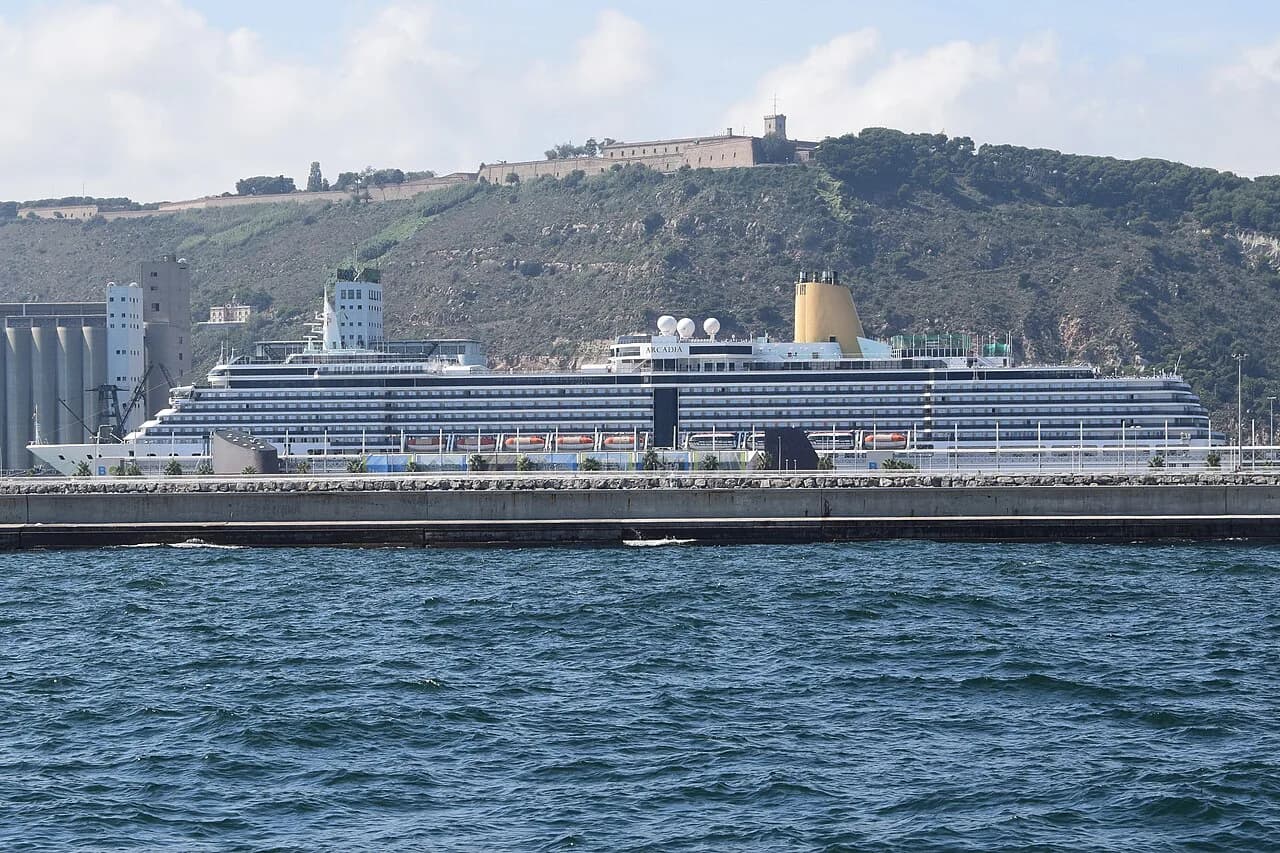
Cruise ships and ferries dock almost in the middle of the city alongside Pier Alfonso XIII, a short walk from the passenger terminal and directly across Avenida del Puerto from Plaza de San Juan de Dios. There is no tendering, so you step ashore rather than queue for a boat.
The terminal building was expanded in 2014 to roughly 1,300 square meters of covered space, housing a waiting hall, check-in desks, tourist information desks that hand out free city maps, luggage storage, free Wi-Fi, and food and souvenir outlets. That makes it a useful base for dropping bags before a long walk or collecting a map if your phone plan is not active in Spain.
Ships berth at Muelle Alfonso XIII for the central call, just a few minutes from the old town, with standard ID checks at the port gates and easy re-entry using your cruise card and photo ID. Which exit you use depends on the assigned berth, so note the gate on your way out.
Walking into the city centre
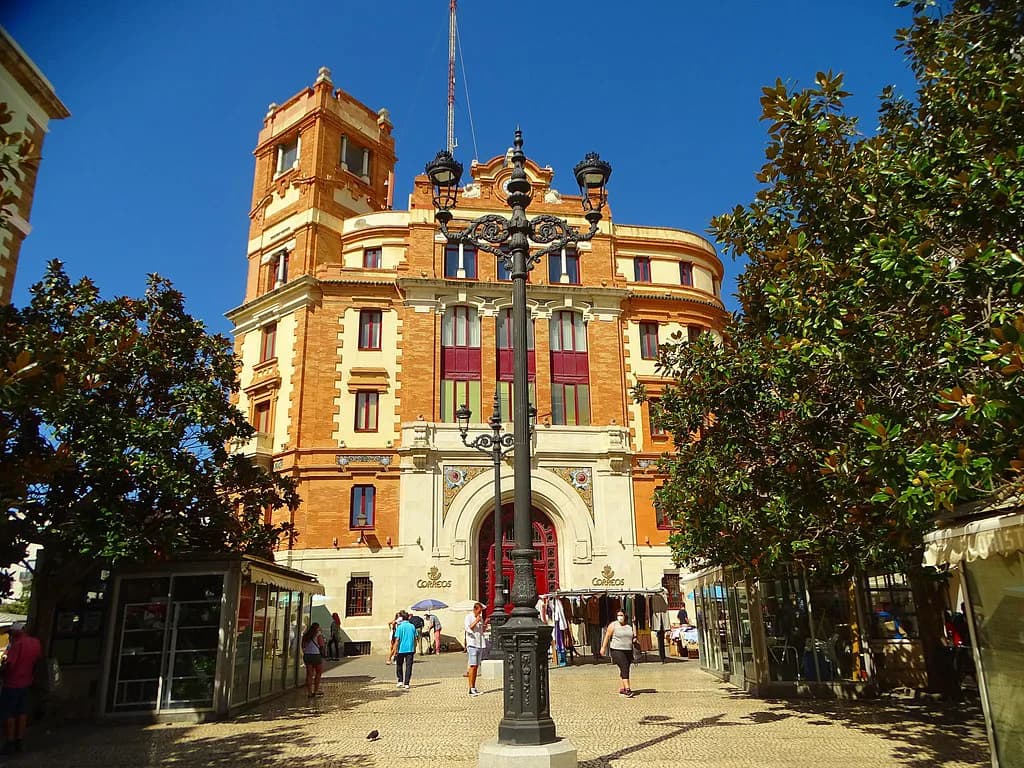
From the port area, cross to Plaza de San Juan de Dios, the city's main square, where the dining and shopping start immediately. From there the Arco del Pópulo leads into the oldest streets, and the route continues to the cathedral and its waterfront square.
Expect five to ten minutes of walking to reach the historic centre, on mostly flat stone and paved streets. The surface is uneven in places, and the towers, cathedral viewpoints and some fortifications involve stairs, so plan footwear accordingly.
Landmarks fall into a natural sequence: Plaza de España and the 1812 Constitution monument within about five minutes, the Casa de las Cuatro Torres at around ten, the Alameda Apodaca gardens at fifteen and Parque Genovés at twenty. The cathedral and Torre Tavira sit further into the old town at roughly thirty to thirty-five minutes on foot from the ship.
Shuttle buses
For central sightseeing, a shuttle is generally unnecessary because the berths sit directly beside the old town and passengers can walk straight from the controlled port area toward the plazas. Where a shuttle does appear, it is typically provided when several ships are in port at once, so treat it as a bonus rather than something to build your day around.
One Cádiz call involved a mandatory shuttle from the pier to the port entrance, after which the walk to the Renfe station at Plaza de Sevilla began from the gate. If your ship runs a shuttle to the port entrance, take it when there is room, since it shortens the walk toward the station and the town.
Taxis from the terminal
Official blue-and-white taxis are normally available near the terminal and also work fixed-rate tours rather than running only on the meter. Published guide rates are around 45 euros per hour for a city tour, about 140 euros for a three-hour run to Jerez and about 250 euros for a four-hour run to Seville.
For beach runs, expect roughly 6 to 8 euros to La Caleta and 10 to 12 euros to the wider Playa de la Victoria. Those fares are short-hop figures from a port guide, so agree the price before you get in when the meter is not in use.
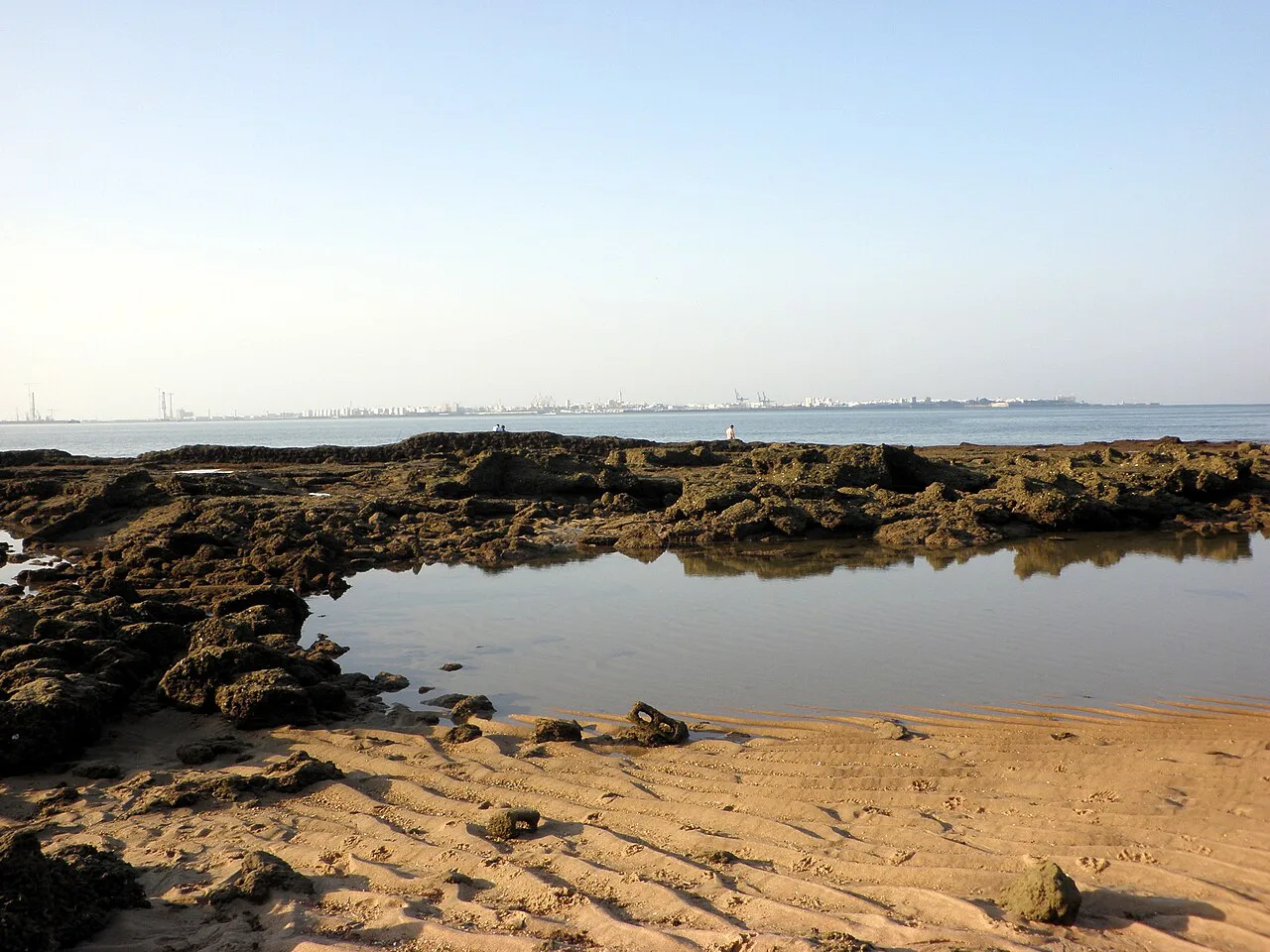
La Caleta is about 2 km from the cruise area on a direct route, which is 25 to 35 minutes each way on foot, or longer if you follow the waterfront. A taxi makes sense if you want a swim without spending an hour of the call walking there and back.
Public buses and the hop-on hop-off bus
Local buses and sightseeing buses are useful for passengers who prefer less walking, and a hop-on hop-off bus operates from the port gate with an accessible route that gives a quick overview of the city. It is a sensible choice for anyone with limited mobility who still wants to see the seafront and the outer sights.
Passengers with limited mobility can enjoy the plazas and waterfront without climbing the cathedral or Torre Tavira, which keeps a port day gentle without cutting you off from the best of the old town.
Trains and buses to Jerez and Seville
The Renfe station at Plaza de Sevilla is about a kilometer north of the port entrance, an easy walk down Avenida del Puerto. Trains run frequently from Cádiz, but not every service stops at the same Seville stations, so match your train to the stop you want.
For Seville, aim for San Bernardo station, which leaves roughly a 900-meter walk via Avenue Portugal to the Plaza de España area; the main Santa Justa station leaves about a 2.5 km walk or a taxi ride. Journey times run about 1 hour 23 minutes to 1 hour 41 minutes depending on the service.
A round-trip train ticket to Seville runs 23.50 euros per person, which is the cheapest way to make the trip independently. On a Cádiz call that began with an early arrival but a slow disembarkation, the return train still left comfortable margin before a 7:30 pm sailing.
Jerez is far closer at about 35 km from Cádiz, with trains typically taking around 45 to 55 minutes each way, which makes a sherry bodega or horse show realistic on a standard call. Seville sits around 120 km away, so transport alone can consume three to four hours of your time ashore.
Ticket machines at Cádiz station may require a contactless card, so carry cash as a backup if your card is chip-and-signature. Planning the return leg is where most of the work lies, and a dedicated guide walks through it step by step.
How long you need
A compact old-town loop of about 3 km covers the main plazas, the Arco del Pópulo, the Roman Theatre, the cathedral and Mercado Central. Pure walking time is about 45 minutes, but plan 2.5 to 4 hours once you add a cathedral or Torre Tavira stop.
The seafront circuit to La Caleta runs about 6 km, with roughly 1.5 hours of walking and a realistic 3.5 to 5 hours total once you allow for the beach and the castles. The route is mostly flat but exposed, with limited shade along parts of the seafront.
On a 6-hour call, the old town plus a seafront stroll is comfortable, with time for tapas near the cathedral or the market. An 8-hour call opens up La Caleta and a swim, while Jerez fits a 6-hour call only if you leave promptly and return with margin.
A Seville day needs a long call, ideally with a late departure, because the round trip plus getting from the station to the sights eats three to four hours. Cádiz itself is best treated as the low-risk option when your time is short, the same trade-off you weigh between town and a day trip at the Santa Cruz de Tenerife cruise port.
Return-time buffer and all-aboard
Plan around the ship's all-aboard time rather than its published departure, since the gangway closes well before the ship moves. For a Cádiz-only day, a 45-minute buffer is ample given the short walk back; for Jerez, allow at least an hour; for Seville, build in more because the return train can be delayed.
Allow extra return time when several ships are in port, since the terminal and port gates get busier, and remember that opening hours for churches, towers, museums and markets may change on Sundays, holidays or during local events. Keep a note of the terminal gate you left through so the return is straightforward.
Shore excursions versus going independently
The ship's Seville excursion was priced between about 119 and 329 euros per person on one Cádiz call, against 23.50 euros for the train, though the coach removes the planning risk. Whether that premium is worth it depends on how confident you are with Spanish rail and how late your ship sails.
A local small-group operator offers a Seville shore excursion from Cádiz at 89 euros per person, including port pick-up and drop-off, an English-speaking guide in groups of 12 to 18, and an optional Alcázar entry at 16 euros. That sits between the train and the ship tour on both cost and convenience.
Ship tours and local operators both return you to the pier, but only the ship's own tour carries any line-level protection if traffic runs late. An independent train trip puts the return leg in your hands, so choose a train that lands you in Cádiz with an hour or more to spare.
If your priority is a relaxed day without transport logistics, Cádiz itself rewards staying put: the cathedral, the Roman Theatre, the market and the seafront are all within a short walk of the gangway.
Plan the Cádiz Port Day
For most passengers, the answer is simple: walk off the ship, cross to Plaza de San Juan de Dios, and let the old town unfold from there. No shuttle or taxi is needed for the central sights, and the 5- to 10-minute walk means you can return to the ship quickly if plans change.
Save Seville for a long call with a late departure, take the train to San Bernardo if you go independently, and treat Jerez as the middle option that fits a normal port day. Whichever you choose, note your all-aboard time at the gangway and work backwards from it.
If you are still choosing between a Cádiz-only day and a Seville run, weigh the three-plus hours of transport against what you want from the call. Confirm current train times with Renfe and the exact berth with the port authority before you set out.
Frequently Asked Questions
Where does the cruise ship dock in Cádiz?
Ships dock alongside Muelle Alfonso XIII on the inner harbour, a few minutes from the old town, with no tendering. The terminal is across Avenida del Puerto from Plaza de San Juan de Dios, and the exit you use depends on the assigned berth.
Can you walk from the Cádiz cruise port to the city centre?
Yes. The historic centre is a five- to ten-minute walk from the terminal gates, crossing to Plaza de San Juan de Dios and then through the Arco del Pópulo toward the cathedral. The route is mostly flat stone paving.
Is there a shuttle bus from the Cádiz cruise terminal into town?
A shuttle is usually unnecessary for central sightseeing because the berths sit beside the old town. Shuttles are sometimes provided when several ships are in port, and some ships run one from the pier to the port entrance, which helps if you are heading to the station.
How far is Cádiz cruise port from the old town?
The historic centre begins just beyond the port gates, about five to ten minutes on foot. Plaza de España is roughly five minutes away, the Casa de las Cuatro Torres about ten, and the cathedral around thirty to thirty-five minutes at an easy pace.
How much is a taxi from Cádiz cruise port to the beach?
Fares for the short run to La Caleta and the longer run to Playa de la Victoria are published in the city's cruise port guide, so check the taxi rank's posted rates at the terminal before you get in. Agree the fare before you set off if the meter is not running.
How far is Seville from the Cádiz cruise port?
Seville is about 120 km from Cádiz, with road and rail journeys usually taking 1.5 to 2 hours each way. That makes it realistic mainly on a long port call with a late departure.
Can you visit Seville independently from Cádiz by train?
Yes. Renfe trains run frequently from the Cádiz station at Plaza de Sevilla to Seville in about 1 hour 23 minutes to 1 hour 41 minutes. Choose a service that stops at San Bernardo if you want the shorter walk to the main sights, and leave a generous margin before all-aboard.
How long does it take to walk from the port to Cádiz Cathedral?
Allow around thirty to thirty-five minutes from the ship to the cathedral at a relaxed pace through the old town. A compact 3 km loop covering the plazas, Roman Theatre and cathedral typically takes 2.5 to 4 hours with stops.
Sources
Port-day notes for your next cruise
Optional updates to our port guides.
You might also like

Continue reading
More guides you'll find useful