A Coruña Cruise Port to City Centre: Walking, Bus and Taxi
Ships berth at the TransAtlantic Quay, about five minutes on foot from the old centre. Here is how to walk into A Coruña or take the bus to the Tower of Hercules.
On this page
A Coruña is a working Galician port where the ship ties up beside the town rather than out among the container stacks, so the day starts on foot almost as soon as you step off. The city rewards that layout with a compact old town, a harbour-front square and a UNESCO-listed Roman lighthouse at the end of a long Atlantic promenade. It suits passengers who want a real Spanish city within a few minutes of the gangway, and it suits walkers prepared to cover ground.
Where ships dock
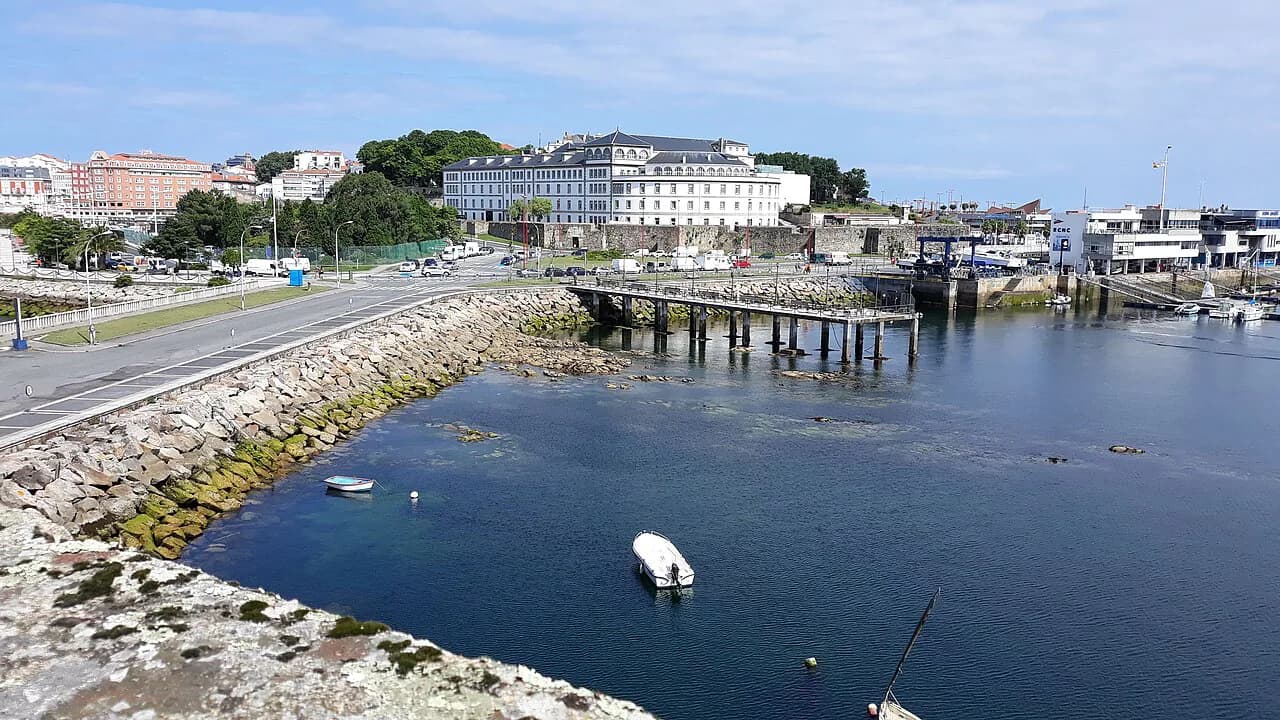
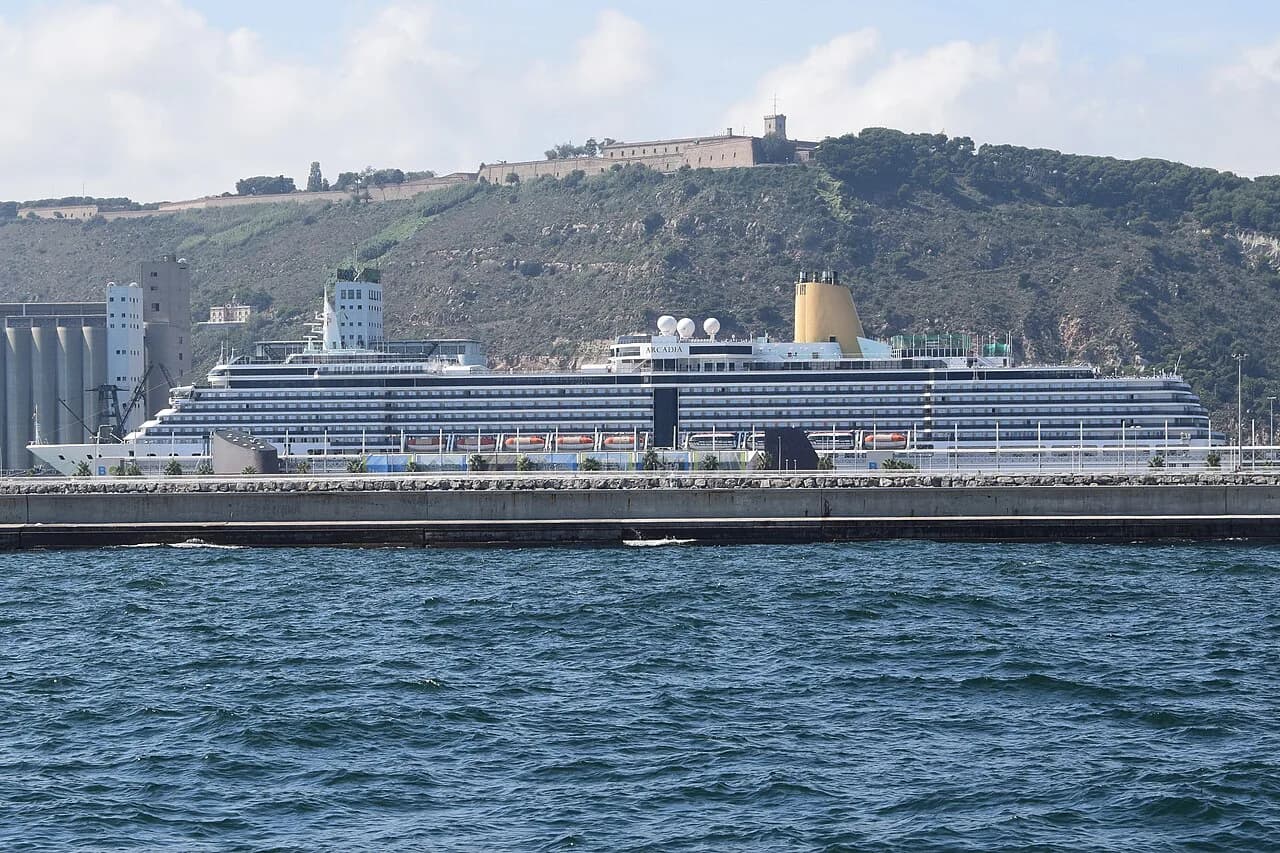
Cruise ships visiting A Coruña generally berth at the TransAtlantic Quay, an exclusive cruise berth with a passenger terminal providing the standard tourist services for passengers and crew. The ship comes alongside here rather than tendering, so you walk down the gangway onto the quay and straight into the terminal. From the terminal it is around a five minutes walk to the city centre, with the Méndez Núñez Gardens immediately adjacent. If you are comparing Atlantic port calls, the santa cruz de tenerife cruise port works the same way, with the town on the doorstep rather than a transfer away.
Some descriptions of the port place the dock 1 to 2 km from the centre and describe it as a functional working area beside commercial shipping, with city access given as 20 to 25 minutes on foot. The discrepancy matters when you plan your buffer, so treat the shorter time as the realistic figure from the terminal building itself and allow more if your ship is berthed further along the quay. Either way, no terminal is far from the historic core.
Walking into town
The walk from the terminal leads past the Méndez Núñez Gardens and on to Palacio Provincial Square with the Palacio Provincial at its end. Circling around the Palacio brings you to the marina, and the gap in the buildings to the left of the waterfront leads through to the Plaza de María Pita, where the bronze statue of the city's heroine stands. This is the natural first stop of any port day and the easiest orientation point in the city.
María Pita is the main square, a rectangle of more than 10,000 square metres with the City Hall on one side and arcaded buildings housing cafés and restaurants on the other three. A bronze statue of the city's heroine stands in the middle, and the arcades give you shade or shelter depending on the weather. From here the old town streets climb away from the harbour and the marina sits at your back.
Because the centre is so close, most passengers do not need any transport at all to reach the main sights. Walking straight off the ship puts you into the city with no shuttle transfer required, which is unusual for a port of this size. Save your transport budget for the far end of the day, when tired legs make a taxi back worth considering.
Buses and taxis
If you would rather ride than walk, one port guide describes local buses taking 10 to 15 minutes into the centre and recommends the bus over walking, with the key drop-off points given as the Plaza de María Pita or the bus station. Treat that as one writer's preference rather than a port rule, but it is a sensible fallback in wet Atlantic weather or for anyone with limited mobility.
Taxis queue near the cruise port, which makes them the simplest option for covering ground quickly in one direction. The most useful use of a taxi is not the short hop into town but the run out to the Tower of Hercules, letting you walk the coast back with the scenery in front of you instead of saving energy for a return leg. Ask the driver to drop you at the tower and agree where you will rejoin the city.
Things to see on foot
Beyond María Pita, the Iglesia de San Jorge sits a stone's throw from the square, and the old town behind it is a maze of winding alleys, small shops and quiet corners. Follow the marina promenade and you reach the Castelo de Santo Antón, a twelfth-century fortress watching over the port and old town that now houses a historical and archaeological museum. The San Miguel Gate and a stretch of the old city wall lie a short distance beyond it.
For a compact half-day, this cluster is enough: square, church, old town, castle and marina, all within easy walking of the berth. It also leaves room for a proper sit-down lunch, which in this city means seafood and a plate of paella rather than a rushed sandwich. If you want the full menu of options beyond the centre, there is a wider list of things to do in A Coruña from a cruise ship.
The Tower of Hercules
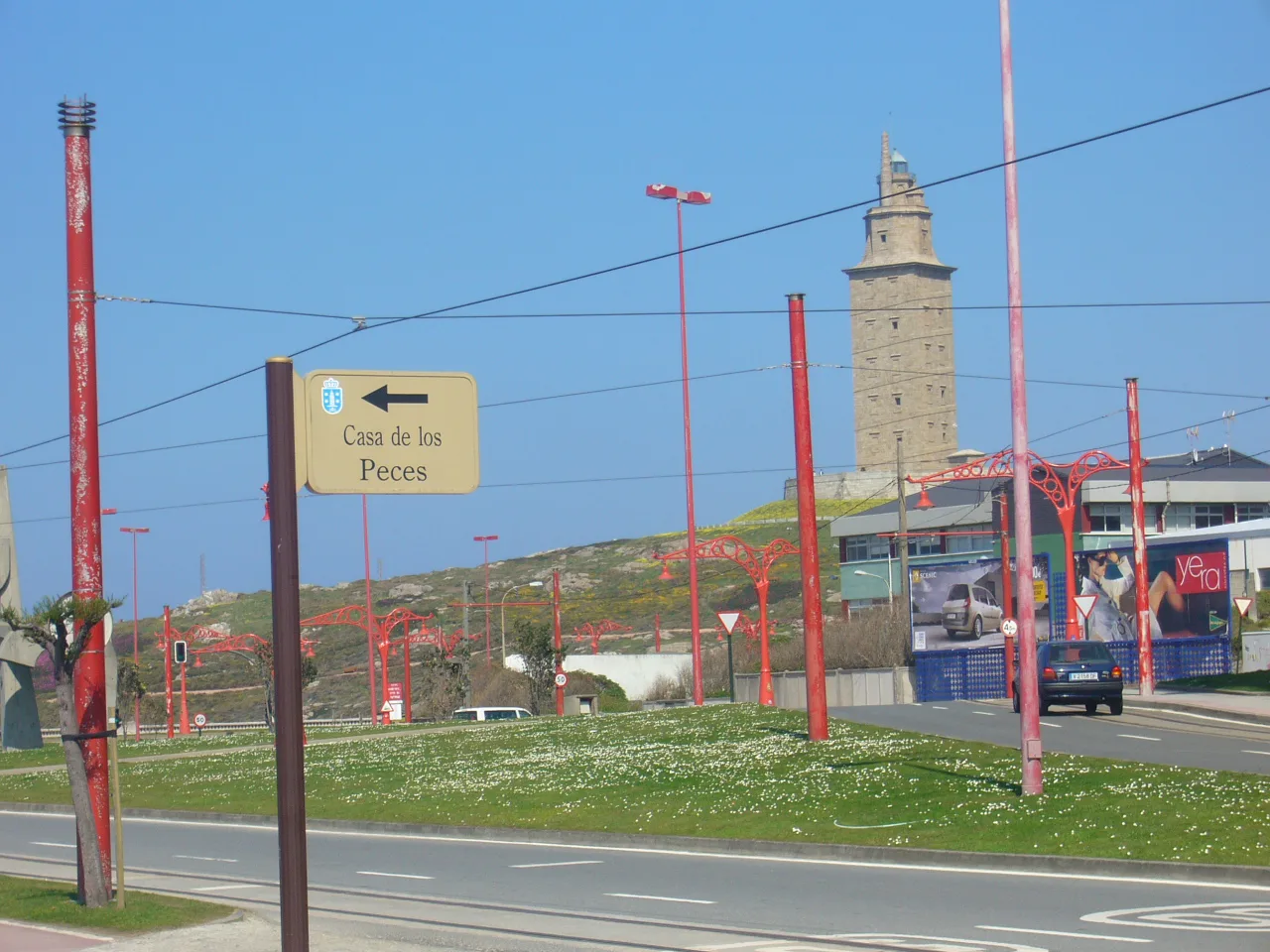
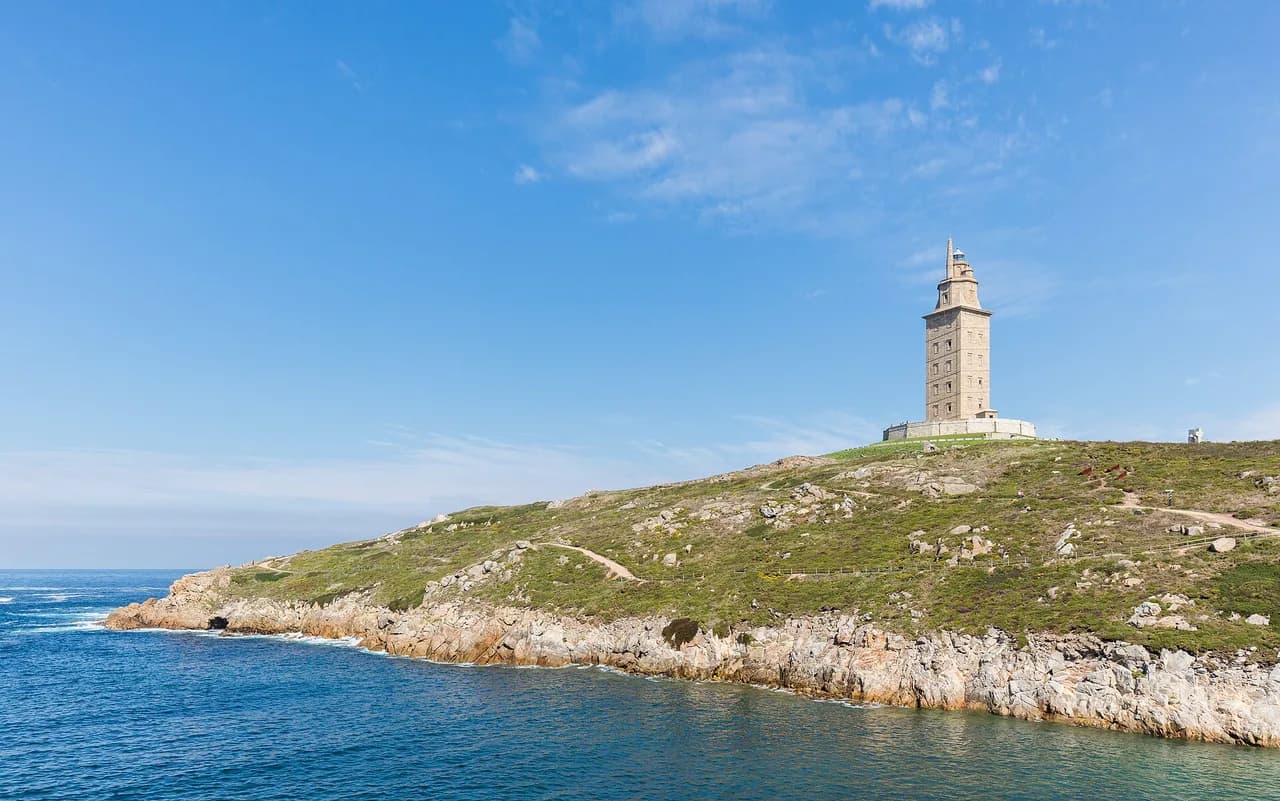
The Tower of Hercules is the only fully preserved Roman lighthouse still used for maritime signaling, and it is the landmark you can pick out from the ship. Climbing it means 234 steps through the tower's inner core and three floors, past information boards on its history, to a rotunda and a 360-degree balcony over the Atlantic. The Roman foundations uncovered in the 1990s are visible on the way up.
The tower is not a short stroll from the terminal. One account of a full walking circuit, taking in the old town, the castle, the promenade and the tower before returning past the Orzán beachfront and the Méndez Núñez Gardens, clocked four hours and three minutes including a coffee stop. Use that as a planning figure for a brisk, purposeful circuit rather than a leisurely one, and note it does not include time inside the tower.
The reward for the walk is the sculpture park and coastal path around the tower, with Iron Age rock carvings at Monte dos Bicos and a Muslim cemetery among the artworks. Beaches at Lapas and Orzán lie along the return leg if the weather is warm.
Beaches and the promenade
A Coruña's seafront is a genuine asset rather than a distant extra. Praia de Santo Amaro is a sheltered bay popular for swimming, with an outdoor pool overlooking the beach, and a kiosk nearby for a cold drink before the long stretch of coast path. Playa del Orzán is the big city beach, busy with locals for sunbathing, volleyball and surfing.
Pack a towel and swimwear if the forecast is fair, because the beaches sit directly on the walking route between the tower and the centre. A detour for a swim costs you time but not distance, and it breaks up the return leg nicely. If your call is short, pick the beach nearest your route back rather than trying to see all three.
Fitting it into your call
On a six-hour call, stay inside the city: María Pita, the old town, San Jorge, the castle and the marina make a full and satisfying day with time for lunch and no transport needed. On eight hours, add the promenade out towards the tower, or take a taxi to the lighthouse and walk one way back along the coast. A ten-hour call is the one that comfortably absorbs the full four-hour walking circuit plus a tower visit and a beach stop.
Build your own buffer rather than trusting to luck. The coastal stretch to the tower is an out-and-back along an exposed Atlantic path, and the return leg is where tired walkers lose time. Aim to be back at the terminal well before all-aboard, and remember that no schedule or tour guarantees the ship will wait for you if you are late.
If you want a Galicia day beyond the city, Santiago de Compostela is the obvious extension and needs its own timing plan.
Ship tours versus going independently
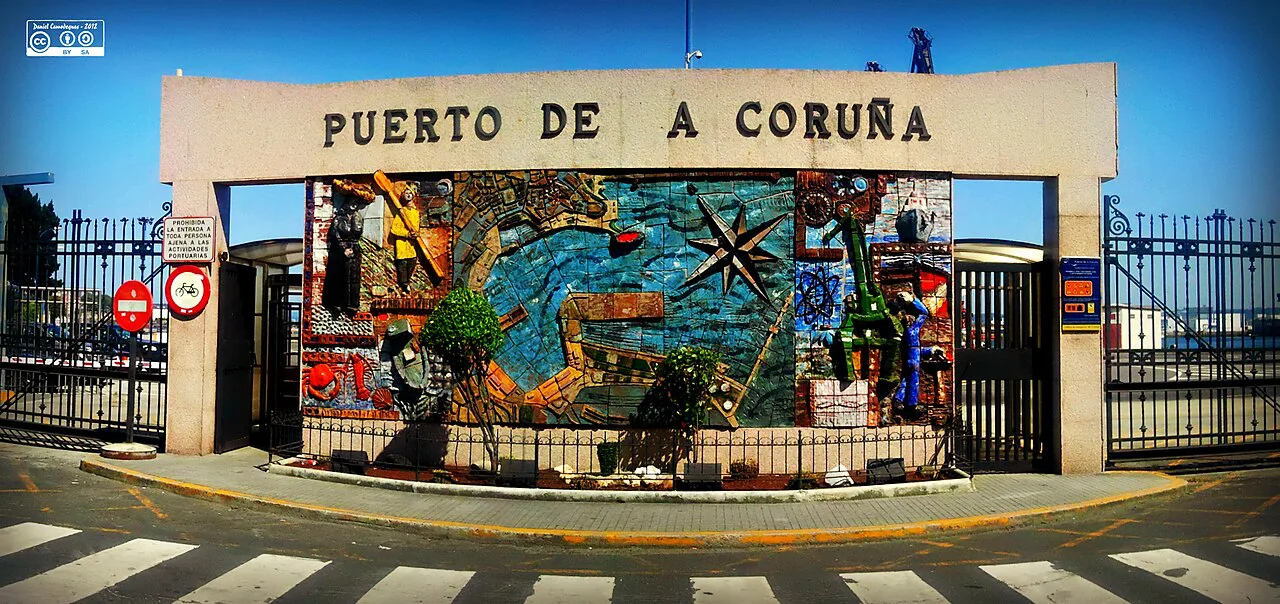
A Coruña is one of the easier ports for independent travel because the berth, the old town and the lighthouse all sit on a route you can walk without booking anything. The case for a ship's tour is narrower here than in a spread-out port: it buys you certainty of return and a guide, but you give up the freedom to linger in the arcades of María Pita or swim at Orzán. Local operators offer much the same ground with more flexibility but the same return risk you carry when travelling on your own.
The decisive factor is how far you go. A day confined to the centre carries almost no risk, because the ship is minutes away and you can see it from the waterfront. A day out at the tower or on the beaches is a different calculation, and the wise trade-off is to keep the long walk for the morning and the near-at-hand sights for the afternoon.
Practical points for the day
Local life runs in Spanish and Galician, with less English spoken than in the big Mediterranean ports, so have your destination written down or saved offline before you leave the ship. Cards work in most establishments, but carry some cash for small cafés and market stalls. Pickpocket risk is moderate and standard urban caution applies in busy markets and on public transport.
The full circuit is a long walking day, and one report of a similar independent day ashore logged around 25,000 steps. Wear broken-in shoes, carry water, and treat the promenade sections as exposed to Atlantic weather. If that step count sounds like too much, plan a shorter loop around the old town and take a taxi for any point further out.
For the wider picture of terminals, transport and facilities, work through the La Coruña Cruise Port guide before you sail, and use this page for the walk into town on the day.
Plan Your Day Ashore
A Coruña rewards a simple plan: walk off the ship, orient yourself at María Pita, spend the morning on the old town and castle, then use your remaining hours either on the promenade towards the tower or on a beach. The berth is close enough that the day needs no shuttle and no excursion to work.
Decide your turnaround point before you leave the terminal, keep an eye on the time on the coastal path, and leave a comfortable margin for the walk back. Confirm the all-aboard time with your cruise line the evening before, since it drives every choice you make on the day.
Frequently Asked Questions
Can you walk into A Coruña from a cruise ship?
Yes. Ships berth at the TransAtlantic Quay with a passenger terminal, and from there it is around a five-minute walk to the city centre past the Méndez Núñez Gardens. You come alongside rather than tendering, so you walk off the gangway and into town.
How far is the cruise port from the city centre?
The terminal is roughly a five-minute walk from the centre on the usual estimate. Some port descriptions put the dock 1 to 2 km out and give 20 to 25 minutes on foot, so allow more if your ship is berthed further along the quay.
Does A Coruña have a port shuttle bus?
The berth is close enough to the centre that most passengers simply walk, and no shuttle is needed to reach María Pita or the old town. Local buses run into the centre in 10 to 15 minutes if you prefer not to walk, and taxis wait near the port.
How long does it take to walk to the Tower of Hercules?
A full walking circuit taking in the castle, the promenade, the tower and the Orzán beachfront before returning to the terminal took one visitor just over four hours including a coffee stop. The tower climb itself adds 234 steps on top of that coastal walk.
What can you do in A Coruña in a few hours from the ship?
In a short call, focus on María Pita square, the Iglesia de San Jorge, the old town lanes, the Castelo de Santo Antón and the marina. Add the promenade or a beach if you have longer, and take a taxi to the lighthouse if you want it without the return walk.
Is it worth taking a taxi from the cruise port in A Coruña?
A taxi earns its place for the run out to the Tower of Hercules so you can walk the coast back one way rather than tiring yourself on a return leg. For the centre itself, walking is quicker than finding and waiting for a car.
When should you be back at the ship?
Work backwards from your cruise line's all-aboard time and allow extra for the exposed coastal path back from the tower. No tour or schedule obliges the ship to wait for independent passengers, so leave a comfortable margin rather than cutting it fine.
Sources
Port-day notes for your next cruise
Optional updates to our port guides.
You might also like


Continue reading
More guides you'll find useful