Things to Do in A Coruña from a Cruise Ship: Port Day Guide
Plan a port day in A Coruña: walk from the terminal to María Pita and the Old Town, climb the Tower of Hercules, or trade the city for Santiago de Compostela.
On this page
A Coruña hands cruise passengers a rare gift: a working Atlantic city whose old town, marina and main square sit within an easy stroll of the ship. The day suits walkers, seafood eaters and anyone who wants Roman history or a lighthouse at the end of a seafront promenade rather than a coach transfer.
The city speaks Spanish and Galician, and English is less widespread than in Spain's big tourist cities, though hotels, tourist offices and key attractions usually have someone who can help. Layering matters, because the weather is mild but breezy and can change quickly on this exposed north-west coast.
Where ships dock and how close you are to town
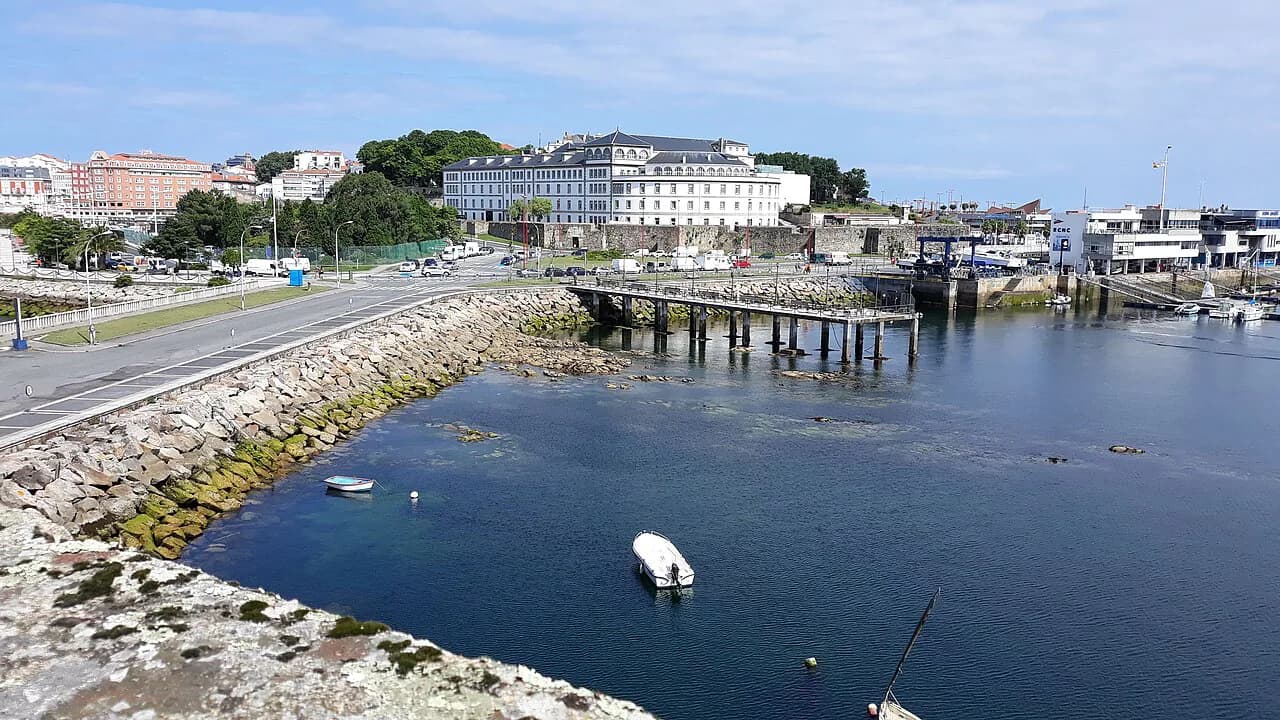
The cruise terminal sits right beside the city, so the marina, the Old Town and María Pita square are all a short walk from the dock rather than a taxi ride away. That single fact shapes the whole day: you can step off, walk into the centre, and keep the ship in sight for much of the morning.
Taxis are metered and local buses cover most of the city, which matters if you want to reach the far end of the promenade or Monte de San Pedro without spending the afternoon walking. The city centre itself is compact and easily walkable, so save vehicles for the longer hops.
Port information describes a terminal integrated into the city, with the marina, the Old Town and the main shopping streets a short stroll from the dock. Check the berth on your cruise line's daily programme before you set out, since the walk into town is short from any of the central quays.
Getting into town on foot: the marina, Avenida Marina and María Pita
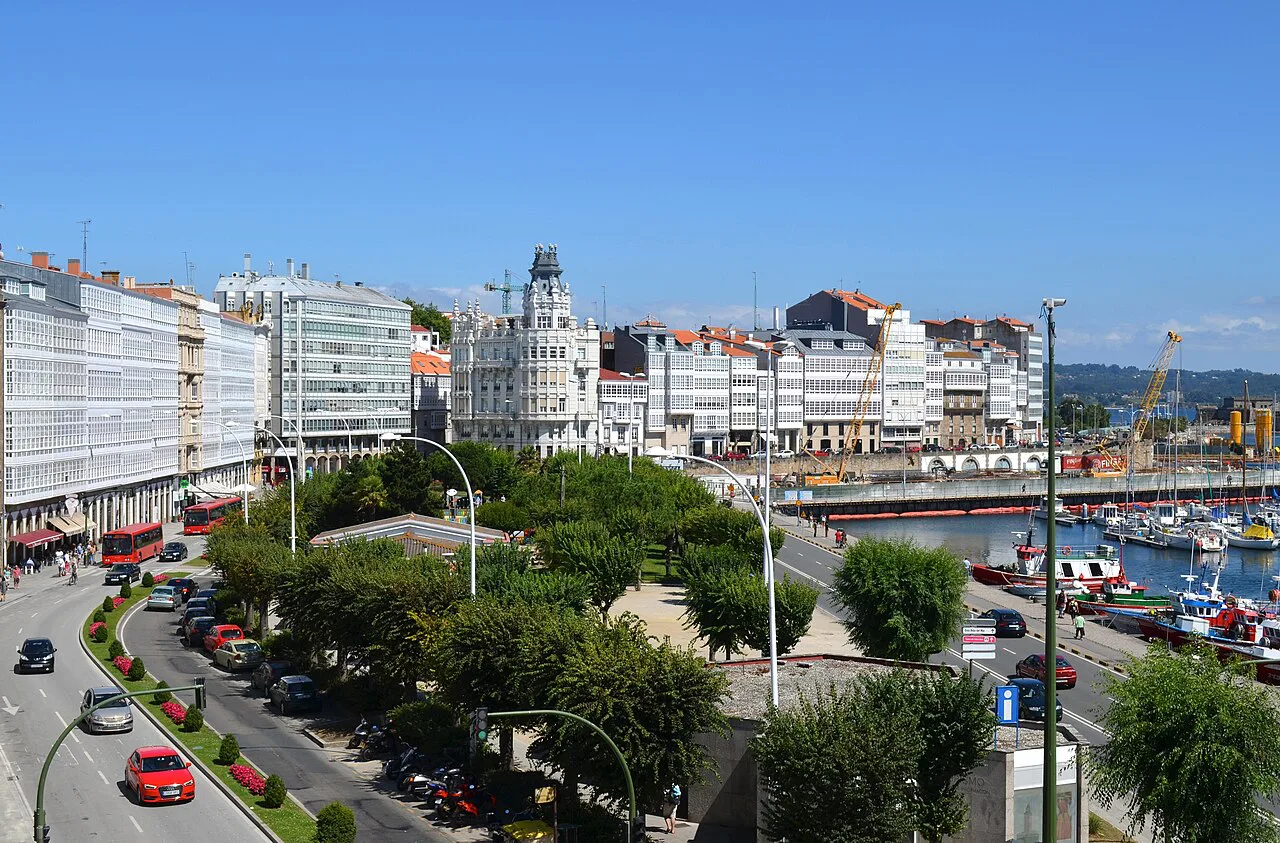
The walk in from the ship takes you past the marina, where the most striking buildings line Avenida Marina. Their enclosed glass balconies, called galerías, date from the 19th century and give A Coruña its nickname, the Glass City.
From there you reach Plaza de María Pita, the city's main square, named for the local heroine whose statue stands prominently in it. The Town Hall occupies the square, and the surrounding streets give you a natural place to orient yourself before choosing a direction.
A good walking route from the terminal runs along the waterfront, through the marina, into María Pita and on into the Old Town, which lets you see the centre without retracing steps. Do it in this order in the morning and you can decide over lunch whether to head for the lighthouse end of the promenade.
The Old Town: churches, squares and San Antón
Ciudad Vieja is a compact web of churches and small squares, and the Iglesia de Santiago Apóstol, built in the 12th century, is the oldest church in the city. Give the Old Town an unhurried hour and you will pass most of what matters without a map.
At the water's edge, the Castillo de San Antón started life as an island fortress and was later attached to the mainland. It now houses an archaeological museum, and the massive cistern underneath is the part visitors remember, so take the stairs down.
The Tower of Hercules and the Paseo Marítimo walk
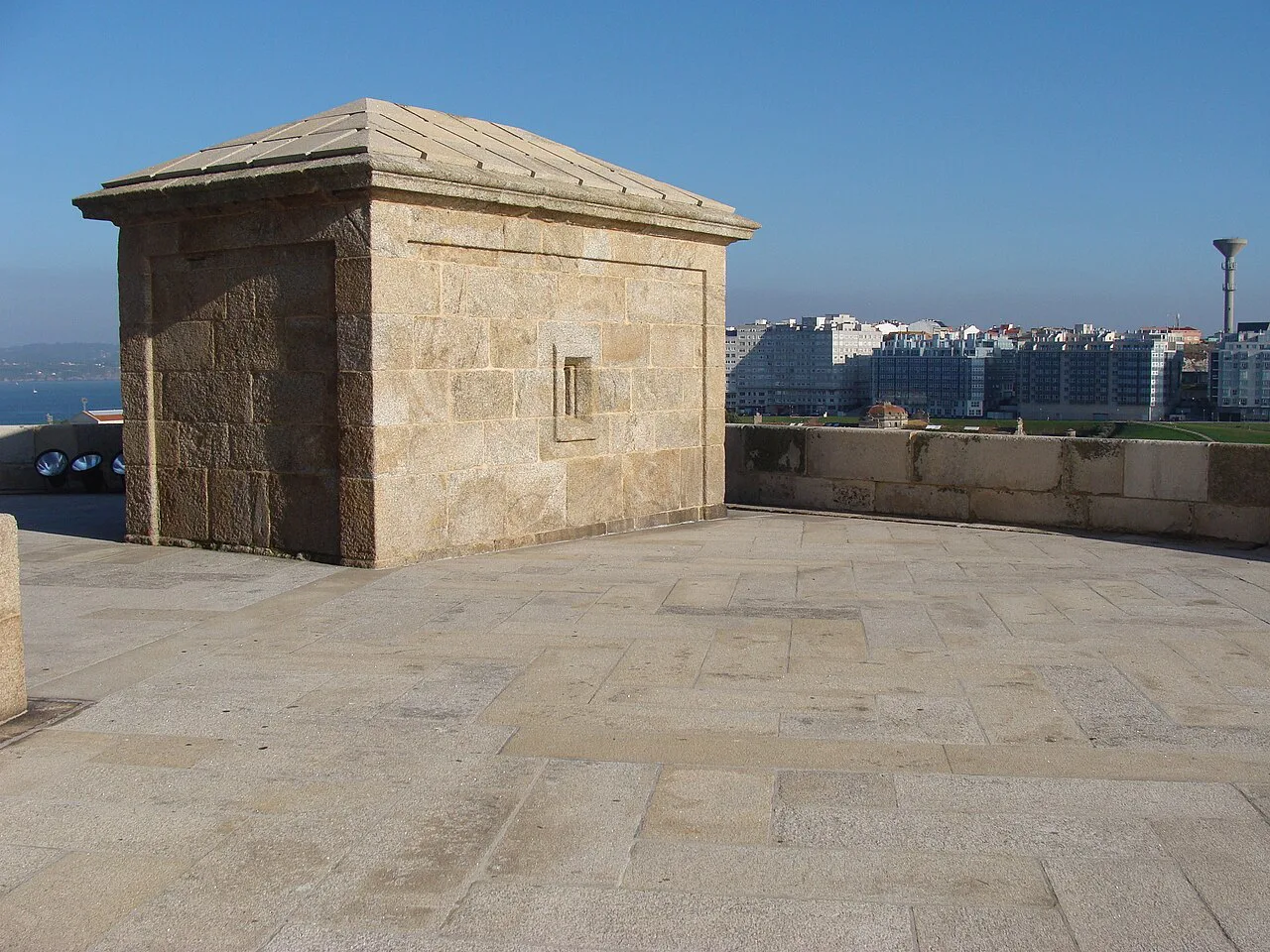
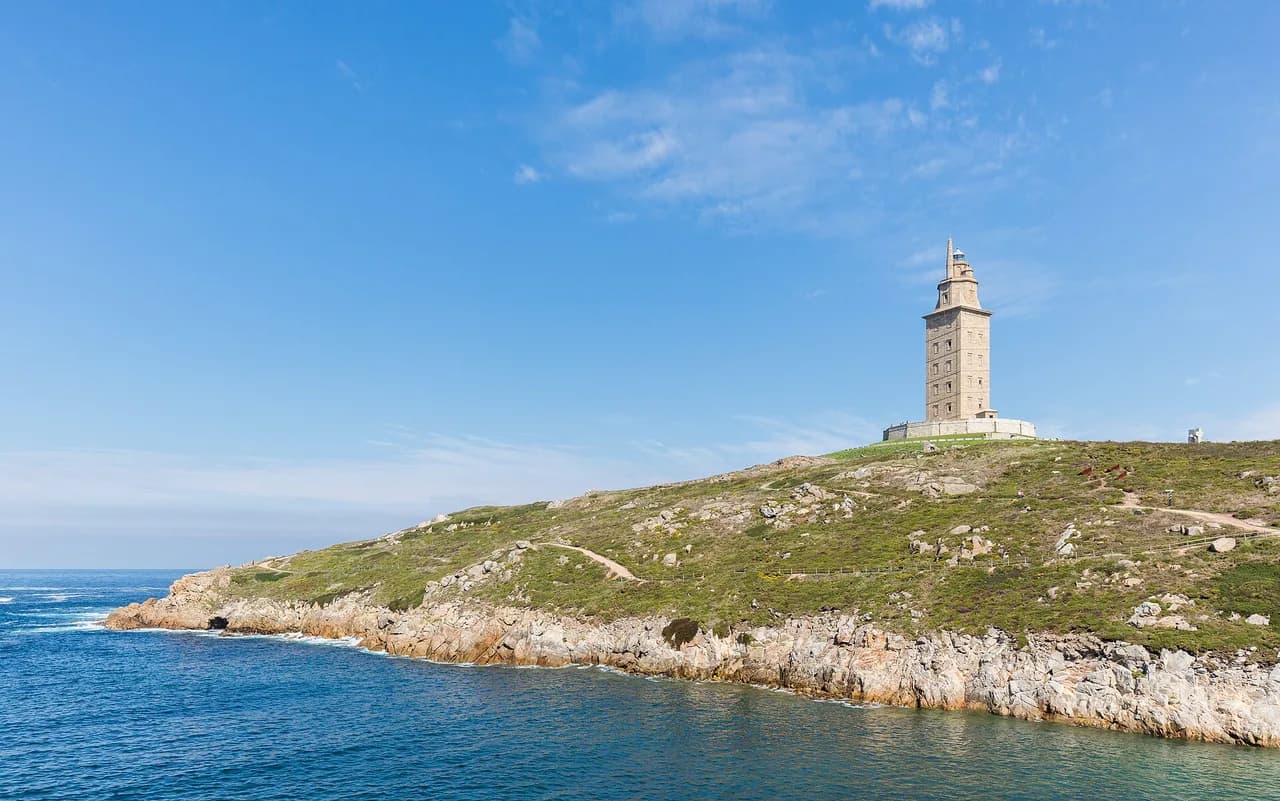
The Torre de Hércules is the world's oldest working lighthouse and a UNESCO World Heritage Site, and it is the city's number one sight. It stands at the far end of the seafront promenade, so reaching it is a walk in itself rather than a quick detour from the Old Town.
The Paseo Marítimo runs about nine kilometres from the main beaches to the lighthouse, passing the Old Town, the aquarium and the human body museum along the way. You do not need to walk all of it: cover the stretch between the marina and whichever sight is your priority, then turn back.
Climbing the lighthouse is the highlight for many visitors, and timed tickets are used to limit the number of people inside at once, so an early arrival shortens the queue. Treat the climb as the optional extra and the coastal walk as the reliable part, since waiting at the tower can eat into a short call.
The practical split is simple: if your call is short, choose either the Old Town or the lighthouse end, not both. Trying to cover María Pita, San Antón and the tower in a few hours means spending most of the day walking and none of it looking.
Beaches: Orzán and Riazor
A Coruña's city beaches run along the protected Ensenada del Orzán, close to the centre and within reach on foot from the promenade. They range from family-friendly sand to surf beaches, and many have lifeguard stations.
The Atlantic water here is genuinely cold even in summer, so treat the beach as a place to walk and look rather than a swimming stop if you are back on board by mid-afternoon. It works best as a detour on the promenade rather than a destination in itself.
Museums suited to a short call
The Museo Histórico Militar is free to enter and walks you through the city's military history, with visual exhibits that work even if you do not read Spanish. Because little is in English, most visitors move through it fairly quickly, which suits a port day.
The Picasso Museum occupies the house where the artist lived as a child from 1891, the aquarium focuses on the local marine environment, and the science museum is heavy on interactive exhibits that overcome the language gap. Pick one, not three: each sits on a different part of the waterfront.
Monte de San Pedro and city viewpoints
Monte de San Pedro offers sweeping views over the city, and a large spherical glass funicular carries you up from the bottom of the hill. It is a short ride and an easy trade if the weather is clear; in wind and rain, the view is the first thing to go.
Treat the hill as a half-day option rather than a quick stop, since it sits away from the terminal and the promenade. The Tower of Hercules also delivers a panoramic view from the opposite direction, so do not plan both unless your call is long.
Santiago de Compostela as a day trip from the port
Santiago de Compostela is the region's best-known destination and the end point of the Camino pilgrimage route. Travelers report it as roughly an hour away from A Coruña by train or bus, which makes it a plausible day trip, though you should build the buffer around the actual service you book.
The trade-off is stark: Santiago costs you most of the day in transit and leaves no time for A Coruña itself. If this is your only visit to Galicia, take the pilgrimage city; if you sail the Atlantic coast often, keep the port day local and save Santiago for a land trip.
Ship excursion vs local operator vs going independently
For Santiago, a ship excursion or a booked local tour removes the transport problem, and ship-organized groups are the ones the crew accounts for at all-aboard. Independent rail travel is cheaper in theory, but a missed connection on the way back is entirely yours to solve.
For A Coruña itself, going independently is the sensible default, because the sights sit within walking distance of the terminal and the risk of missing the ship is minimal. Book a tour only if you want the city explained or you are heading somewhere outside the centre.
Two-hour city walking tours start in María Pita square and cover the Old Town and local markets, with departures in both English and Spanish. If you take one, it uses up the morning but gives you the context to spend the afternoon alone.
How long you need: 6-, 8- and 10-hour calls
On a six-hour call, stay in the city: marina, María Pita, the Old Town and San Antón can all be covered at a stroll, with time for a seafood lunch. Skip both the lighthouse end and Santiago, because the walking alone would fill the time you have.
With eight hours, add the Tower of Hercules and a stretch of the Paseo Marítimo, walking out or taking a taxi one way to save your legs. Ten hours is the first sensible window for Santiago, and even then only if you book transport you trust for the return.
Return-time buffer and all-aboard planning
Because the terminal is next to the centre, the return walk is short and predictable, which makes A Coruña one of the easier ports for cutting it fine. Do not test that: aim to be back at the gangway well before all-aboard, and treat the ship's stated time as the hard limit.
If you go to Santiago by train or bus, the buffer has to cover the journey back plus the walk from the station, so take the earlier service even if the later one looks comfortable. Independent travelers have no one to hold the ship for them. The same all-aboard arithmetic applies if your itinerary also includes one day in barcelona from cruise ship, where the sights are spread across a much larger city.
Eating and drinking around María Pita and the galerías
Galician food is the real reason many passengers rate this port: pulpo a la gallega, fresh shellfish, empanadas and Albariño wine are the local staples. The bars and restaurants around María Pita and the galerías put you close to the ship, so lunch does not have to be a long detour.
Mercado de San Agustín gives you a look at the local market culture and a cheaper way to try regional produce. Eat early by Spanish standards if your call ends in the afternoon, since the lunch rush can swallow an hour you had budgeted for walking.
Practical points: languages, weather and layering
Signs are in Galician or Spanish, and English is thinner on the ground than in Madrid or Barcelona, though tourist offices and main attractions usually cope. A few phrases and a translation app solve most of it, and the museums that lack English signage tend to be visual enough to follow.
The climate is oceanic, with mild summers and cool, wet winters, and sudden changes are common on this coast. Bring a light waterproof layer even on a bright morning, because the promenade and the lighthouse are the least sheltered parts of the day.
If your itinerary also calls at Cádiz, the two ports make a useful contrast, since Cádiz puts you alongside at Muelle Alfonso XIII with a different set of walking decisions. Reading things to do in Cadiz cruise port alongside this guide helps you plan both days without repeating the same mistakes.
Plan Your Port Day
A Coruña rewards a simple plan: walk into town, see María Pita and the Old Town, eat well, and choose one far sight, either the Tower of Hercules or Monte de San Pedro. Only trade that for Santiago if the pilgrimage city matters more than seeing the port you are actually in.
Frequently Asked Questions
Can you walk from the A Coruña cruise terminal into the city centre?
Yes. The cruise terminal is next to the city centre, and the marina, María Pita square and the Old Town are all within a short walk of the dock. That makes A Coruña one of the easier Spanish ports to explore without any transport at all.
Is A Coruña worth visiting on a cruise?
It is, especially if you like walking, seafood and Roman history. The city combines a working Atlantic port with a compact old town, the world's oldest working lighthouse and a long seafront promenade, all reachable from the terminal without a coach.
How far is the Tower of Hercules from the cruise port?
It sits at the far end of the Paseo Marítimo, away from the terminal and the Old Town. The promenade runs about nine kilometres in total, so plan to walk one stretch or take a taxi one way rather than covering the whole route on foot.
Should you visit Santiago de Compostela from the A Coruña cruise port?
Only if this is likely to be your only visit to Galicia. Santiago is roughly an hour away by train or bus, which consumes most of a port day and leaves no time for A Coruña itself. Check the actual service times before committing.
What can you do in A Coruña in a few hours?
Stay close to the ship: walk the marina and Avenida Marina, cross María Pita square, wander the Old Town and visit the Castillo de San Antón. That fills a short call comfortably, with time left for pulpo and a glass of Albariño.
Do you need a shore excursion to see A Coruña?
No. The main sights are within walking distance of the terminal, so independent exploration works well. A guided walking tour helps if you want the history explained, and a ship excursion makes sense mainly for a Santiago day trip.
What is A Coruña famous for?
The Tower of Hercules, the world's oldest working lighthouse and a UNESCO World Heritage Site, the glass galerías along Avenida Marina, and Galician seafood. It is also the city where Picasso spent part of his childhood.
Sources
Port-day notes for your next cruise
Optional updates to our port guides.
You might also like


Continue reading
More guides you'll find useful