Cruise Ports in Greece: Where Ships Dock and What Fits a Port Day
Greece mixes big-city turnaround ports, docked regional calls and tender landings below cliff towns. Match each port to the hours you actually have ashore.
On this page
A Greek itinerary rarely repeats the same kind of port twice. One day you step off in a city and walk to a metro, the next you are anchored below a 300-meter caldera wall waiting for a cable car, and the day after that you face an hour each way to an ancient site.
Sorting each call into one of three types — turnaround city, docked regional port, or tender landing — is the fastest way to decide what genuinely fits on a port day. The Greek ports listed by Costa Cruises show how widely that mix varies across a single sailing.
Why Greek ports split into three types
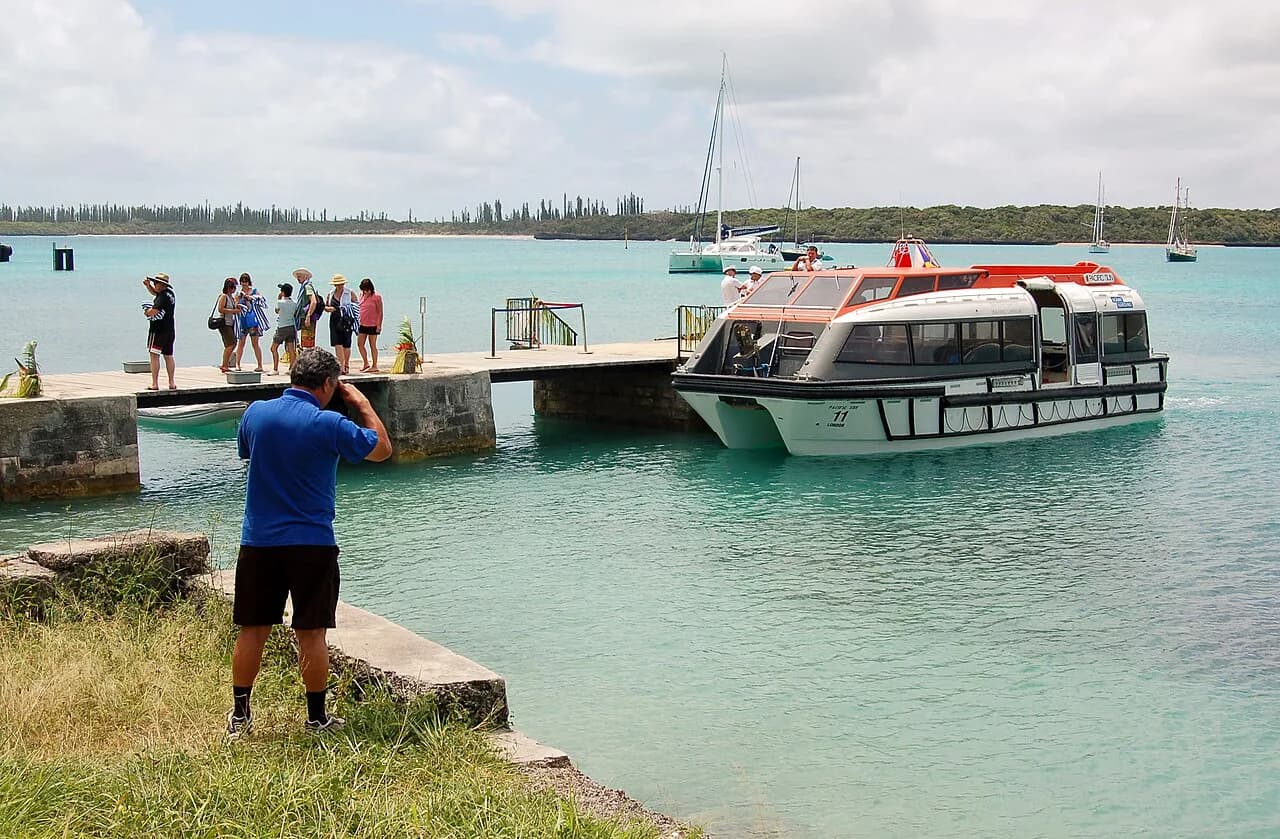
A turnaround city such as Piraeus hands you urban transport, a huge hinterland and the widest choice of how to spend a day. A docked regional port such as Katakolon or Heraklion puts you alongside a small town with one headline sight that may sit an hour inland. A tender call such as Santorini, Patmos or Gythion adds a boat ride and a queue at each end, which quietly eats an hour or more of your time ashore.
That classification decides your risk, not the distance on a map. At a docked port you control your return because the ship is tied to a quay you can see; at a tender port you depend on a landing schedule and sea conditions you do not control, so the same sight can be comfortable on an eight-hour call and reckless on a six-hour one.
Greece also sits beside the Adriatic on many Eastern Mediterranean routings, so a single sailing can pair island tender calls with walled cities across the water. The ports on a typical Greek islands cruise show that spread across mainland Greece, the islands and a couple of Adriatic stops.
Piraeus (Athens): the turnaround port
Piraeus is where most Greek sailings begin or end, so treat it as a travel day rather than a sightseeing stop unless you have built in a hotel night. Athens rewards that extra time with the Acropolis and its Parthenon, plus the large Acropolis Museum nearby that holds the finds from the site.
If your call is a port day rather than an embarkation, plan the Acropolis as a half-day and keep the rest close to the ship. The archaeological site sits on a hill above the city, so the climb and the crowd control at the entrance take longer than the map suggests.
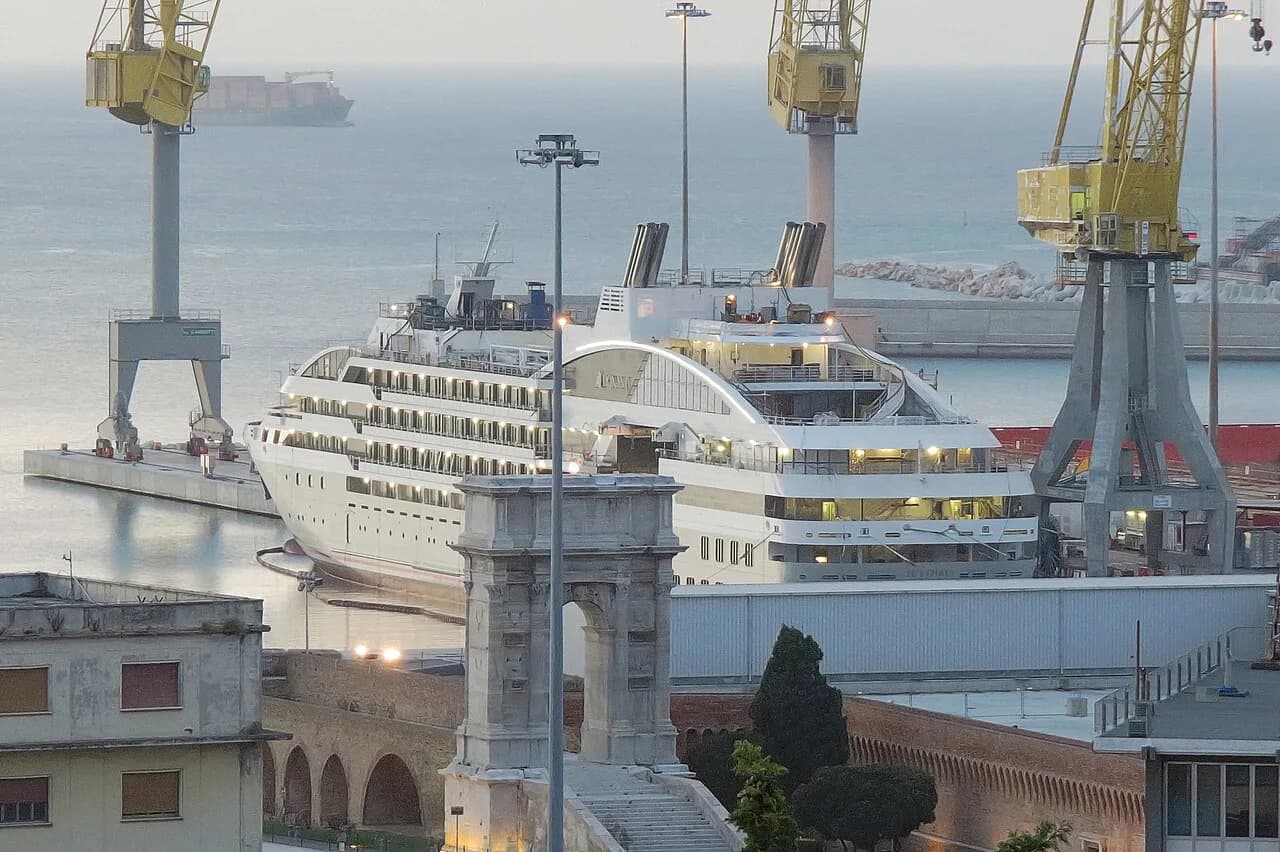
Cruise lines list Piraeus as the Athens port, and it is the one Greek call where public transport genuinely does the work for you. Confirm your ship's berth with the cruise line before arranging a pick-up, because the harbour area is large and drop-off points differ between terminals. For the wider regional picture, the european cruise ports hub groups these city turnarounds with comparable ports elsewhere. For berths, terminal numbers and the metro run into Athens, keep the Piraeus cruise port guide to hand.
Katakolon: the gateway to Olympia
Katakolon exists as a cruise port because of Olympia, the site of the original Olympic Games, and the transfer is the whole planning problem. Olympia is about an hour or so from Katakolon, which turns the day into roughly two hours of road travel before you count time at the site.
The site itself is a sprawling complex that includes the stadium where the races were run, and there are two museums nearby. The museum close to the entrance covers the history of Olympia and is the one to prioritize if you have to choose, since it fills in what the ruins no longer show.
On a six-hour call this is a tight independent trip; on eight hours or more, a ship tour or a booked local transfer removes the risk of finding a return vehicle late in the day. Whatever you choose, fix your return time against the all-aboard, not against the ship's published departure.
Heraklion, Crete: the Knossos call
Heraklion on Crete is the port to look for if you want the Palace of Knossos, the Minoan complex closest to this call. Parts of the palace have been reconstructed, and the site carries the Minotaur legend attached to the labyrinth beneath it, which makes it the most story-rich ruin on a Greek itinerary.
The site is a large, exposed complex rather than a single building, so budget more time walking it than the entrance suggests. Cruise lines also list Chania and Agios Nikolaos as Cretan calls, and each sits in a different part of the island, so check which one your itinerary actually names before planning a Knossos visit. If your Aegean routing also calls at Rhodes on a similar docked day, the Rhodes cruise port guide applies the same rule of matching sights to the time ashore.
Because Heraklion is a docked call, an independent taxi or a ship transfer both work; the ship's tour is worth the premium mainly for the guaranteed return if the site is busy. If you want the island's archaeology without the crowds of the palace, use the museum in town as the shorter alternative.
Santorini: tender below the caldera and the climb to Fira
Santorini is the classic tender-and-climb call. Ships anchor outside Fira beneath cliffs around 300 meters high, with the towns perched along the top, so you reach the main town by walking up, by donkey, or by waiting for the cable car, which gets very busy when several ships are in.
Many passengers skip Fira first and head for Oia, the prettier town and the source of the classic photographs. Boats at the landing run a shuttle service, with roughly a 15-minute crossing followed by a bus up the hill into Oia, and the package normally includes a bus back to Fira so you can explore there before descending.
The descent is the part people misjudge. Walking down is around 800 steps, which is manageable but slow in heat, and the cable car queue at peak departure time can cost you the buffer you built in; treat your return to the landing as the hard deadline, not the ship's departure time.
Mykonos: Mykonos Town, the windmills and the old-town wander
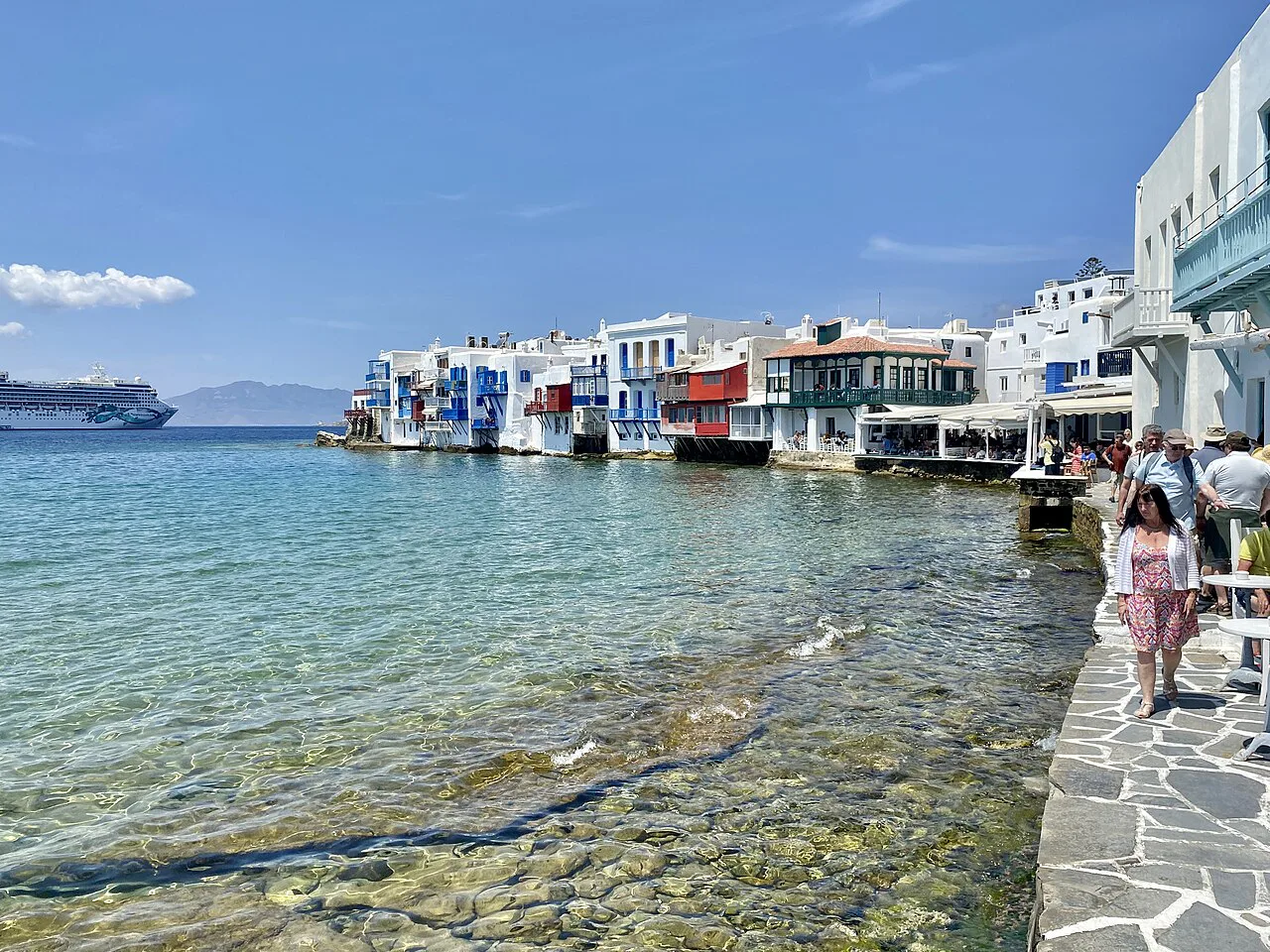
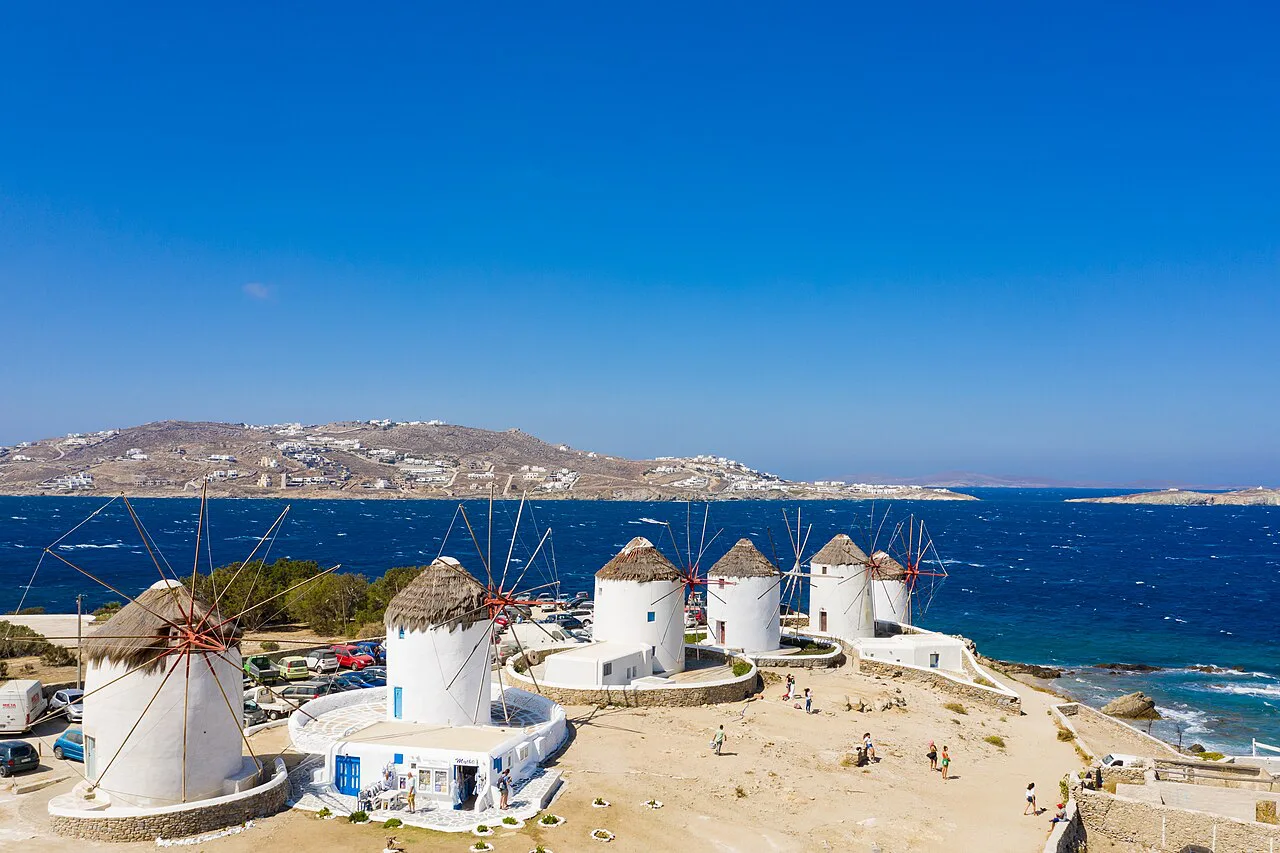
Mykonos Town is a walking port day, built around a maze of small winding streets full of boutiques, shops, restaurants and bars. Most passengers work through the old town toward the windmills, the island's iconic sight, which is the natural turnaround point for a short call.
The town gets very busy when several ships are in, so the old-town wander is best done early, leaving the windmills and the waterfront for the middle of the day. Mykonos pairs naturally with Santorini on the same itinerary, and both reward the same strategy: do the headline sight first and let the shopping fill the tail end near the ship.
Mykonos appears on Greek schedules from the major operators, so itineraries often pair it with Kusadasi or Athens rather than giving it a full day.
Corfu: the old town stop and the hop-on hop-off option
Corfu is a land-based holiday island that works well as a cruise call because the old town and the water are close together. The hop-on hop-off bus is the simple way to get out of the town toward the beach areas and swimming spots when you want more than a stroll.
Swimming at the base of the old fortress, with the views back across the water, is the kind of short, high-value stop a port day suits. If you would rather stay on foot, the old town itself absorbs an easy half-day without any transfer at all.
Rhodes, Chania and Argostoli: the other docked calls
Greek schedules run well beyond the headline islands, and the Costa Cruises port list is the quickest way to see the full spread a single line covers. Argostoli on Kefalonia, Kos and Nafplion sit alongside Corfu, Heraklion and Katakolon in the Greek program, so an itinerary can stack several docked calls in a row.
Ports such as Chania, Agios Nikolaos and the smaller Aegean islands appear across Greek cruise schedules, and each is a docked or anchored call with its own distance to the main town. The longer Greek port index is useful for matching an island name on your itinerary to what the call actually involves.
Docked calls are where independent planning pays off most, because you can walk or take a short taxi and still see the ship. Reserve ship tours for the days when the sight sits far inland, and spend the docked days on the town itself.
Patmos and Gythion: small-ship tender ports
Patmos is a quiet island that normally takes tenders, and it mostly draws smaller ships. From the landing at Skala, the town at the bottom, you head up the hill to Hora and the Monastery of St. John, which holds original biblical scrolls and sits above the cave of St John further down the slope.
The climb is genuinely steep, and a taxi up is a better use of a short call than walking it. The cave draws pilgrims but disappoints some visitors, so weight your time toward the monastery and the town rather than treating the cave as the main event.
Gythion usually tenders, though a ship can sometimes dock, which makes it the least predictable call on this list. The town itself is a pleasure, with harborside restaurants and good bakeries, and the Glyfada cave at Dira is about a 40-minute drive away with a half-hour boat trip through the caverns, so the cruise line's excursion is the sensible way to fit it.
Kotor, Dubrovnik and Venice: the Adriatic ports that pair with a Greek itinerary
Many Greek island sailings run between Athens and Venice, which pulls in a handful of Adriatic calls on the way. Kotor in Montenegro is the scenic highlight, with a long sail inland through a bay framed by mountains that feels closer to the Norwegian fjords than the Mediterranean.
Kotor's old town is small, walled and easy to stroll, but the real draw for fit passengers is the climb up the mountain behind the town, which runs over a thousand steps. Dubrovnik pairs with it, with the old walls walk and the cable car giving views over the walled city, though the centre is increasingly crowded.
Venice is usually the start or end of the sailing rather than a port call, and the cruise ports now used sit about two hours from the city itself, so build that transfer into your arrival or departure day. For the Italian side of the same routing, cruise ports in italy covers the mainland turnaround terminals, while the Adriatic Sea guide on european cruise ports sets these calls in the wider regional picture.
Matching the port to your hours ashore: 6, 8 and 10 hours
On a six-hour call, stay close: a docked town like Mykonos, Corfu's old town, or Kotor's walled centre. Skip anything with an hour of road each way, and at a tender port like Santorini treat the cable car and the boat shuttle as the day's activity rather than the prelude to one.
At eight hours, the inner-ring sights open up. Katakolon to Olympia becomes feasible if you move quickly at the site, Heraklion to Knossos fits comfortably, and Santorini allows the Oia shuttle plus a wander through Fira before the descent.
At ten hours, take the long transfers without worry — Gythion to the Glyfada cave, or a full Athens day from Piraeus — but only if you are back at the landing or the quay well before all-aboard. The european cruise ports reference helps you compare these Greek windows with port days elsewhere on the same sailing.
Sort the Greek calls by type before you book anything. A turnaround city, a docked regional port and a caldera tender landing each demand a different plan, and the same eight hours buys very different days in each.
Ship tour, local operator or independent: the trade-offs by port type
At docked ports, independent travel is low-risk and usually cheaper, because the ship is visible from the town and you can walk back. The exception is the long-transfer archaeology days at Katakolon and Heraklion, where a delay on the road is the whole risk and a ship tour is the simplest way to remove it, though it never guarantees the ship will wait.
At tender ports, the calculus changes because the landing itself is the bottleneck. A ship tour boards ahead of independent passengers and returns you to the ship directly, which matters most at Santorini, where the cable car queue at peak departure is the real threat to your all-aboard time.
A local operator is a middle path when you want a small group and a fixed itinerary, but only if you confirm the return time against the ship's schedule yourself. The tender process explains why landing queues and sea conditions change what a port day costs you in time at these calls.
Return-time buffer at tender ports
At a tender port, aim to be at the landing at least an hour before all-aboard, and more when several ships are in, because the boat ride and the queue both add time you cannot compress. Santorini during a busy departure window is where this matters most, and the cable car is the single biggest source of delay.
At Patmos and Gythion, the landing is quieter, but the hill at Patmos and the 40-minute road transfer at Gythion still eat into the margin. Set your phone alarm for the return leg rather than relying on the ship's announcements, which may not carry ashore.
What the ship charges for versus what you arrange yourself
The ship bundles transport, entrance timing and the return guarantee into one fare, and on long-transfer days like Olympia and Knossos that bundle is genuinely worth comparing against doing it yourself. At a docked town like Mykonos or Corfu, the ship's offering usually adds little over walking, so spend that budget on a meal instead.
Cruise lines publish what each shore excursion includes, so read the inclusions line by line rather than the headline title. Where a port's transport is public and cheap, the ticket is a trivial cost and the ship's premium buys convenience, not access; where a ship tour is the simplest way to remove the return risk on a long-transfer day, that premium buys you a guarantee you cannot get independently.
Plan Your Greek Port Days by Type
Sort your Greek itinerary before you sail: a turnaround city, a handful of docked regional ports, and one or more tender calls. That single step tells you where to book a ship tour, where to walk off independently, and how much of your hours ashore disappears before you reach the sight.
Treat the long-transfer archaeology days and the caldera tender calls as the two places where time is tightest, and build your return buffer around them rather than around the ship's departure time.
Frequently Asked Questions
Where do cruise ships dock in Greece?
Greek calls fall into three groups: the turnaround city of Piraeus for Athens, docked regional ports such as Katakolon, Heraklion, Corfu, Mykonos and the smaller Aegean islands, and anchorages where ships tender ashore, including Santorini, Patmos and Gythion. Which one your sailing uses depends on the itinerary, so check the port name and the tender note on your cruise line's schedule.
Which Greek cruise ports use tenders instead of docks?
Santorini anchors outside Fira beneath the caldera, Patmos normally tenders into Skala, and Gythion usually tenders though a ship can sometimes dock. Tender calls add a boat ride and a queue at each end, so plan the day around the landing rather than around the distance to the sight.
How far is Olympia from the Katakolon cruise port?
Olympia is about an hour or so from Katakolon, which turns the day into roughly two hours of road travel on top of time at the site. On a six-hour call that is tight; on eight hours or more it fits comfortably, and a ship tour or booked transfer removes the return risk.
Can you walk from the Santorini tender landing to Fira?
Yes, but the landing sits beneath cliffs around 300 meters high. You can walk up, take a donkey, or wait for the cable car, which gets very busy when several ships are in. Walking down is around 800 steps, so allow more time than you expect for the return.
Which Greek port is best for a first cruise?
A docked town such as Mykonos, Corfu or Kotor gives the easiest introduction, because the ship is visible and you can walk back. Save the tender calls and the long inland transfers for a later sailing when you know how you pace a port day.
How much time do you need ashore at Mykonos?
Mykonos Town is a walking day, so a half-day covers the old town and the windmills comfortably. Do the headline sight early, while the town is quieter, and leave the shopping and waterfront for the hours closest to all-aboard.
Is it worth booking a ship tour to Knossos from Heraklion?
It depends on the length of the call and your tolerance for road delays. Knossos is a large, exposed site and Heraklion is a docked port, so an independent taxi works; the ship tour mainly buys you a guaranteed return on a busy day. It does not guarantee the ship will wait for independent travelers.
What is the return buffer for a tender port in Greece?
Aim to be at the landing at least an hour before all-aboard, and longer when several ships are in. At Santorini the cable car queue is the biggest source of delay, while Patmos and Gythion are quieter but still absorb time on the hill or the road transfer.
Sources
Port-day notes for your next cruise
Optional updates to our port guides.
You might also like
Continue reading
More guides you'll find useful