Le Havre Cruise Port Guide: Terminals and Port Days
Le Havre cruise port sits inside a working commercial harbour, about a 50-minute walk from the UNESCO city centre. Plan your port day with shuttles and timing.
On this page
A Le Havre port day gives you a UNESCO World Heritage city rebuilt in concrete after the Second World War, a working harbour full of cranes and containers, and a gateway to Normandy and Paris. It suits passengers who want a walkable, low-cost day ashore in a city most cruisers overlook, or who accept a long transfer in exchange for a half day at a major destination.
The catch is geography: the cruise terminal sits deep inside one of France's busiest commercial ports, not beside cafés or a historic quayside. That single fact shapes every decision you make about how to reach town and how much time to leave for the return.
What a Le Havre port day offers and who it suits
Le Havre is not a medieval French port. Wartime bombing destroyed much of the city, and architect Auguste Perret led a reconstruction that earned the rebuilt centre UNESCO World Heritage status, with wide boulevards, open squares and carefully planned public spaces. Expect modern architecture, a maritime working city and a handful of striking landmarks rather than timber-framed alleyways.
That makes the city a good fit for passengers who have already seen Normandy's picturesque harbours, who want a cheap independent day with free attractions, or who prefer shopping and promenades to coach tours. It suits less well anyone expecting postcard charm straight off the gangway; the appeal builds as you walk into the centre.
Where ships dock: the terminal inside the commercial harbour
Cruise ships berth within Le Havre's commercial port, and you step ashore into a landscape of warehouses, shipping containers, cranes and industrial infrastructure on every side of the terminal. A security check in the terminal building is part of the way out, so allow a few minutes before you reach the street.
Port operators promote direct access to the city centre and modern cruise infrastructure, so treat the berth as a working port facility rather than a destination in itself. The first decision of the day is simply how to cross the port area: on foot, on the cruise line's shuttle, or in a taxi.
Distance to town: the walk from the terminal to the centre
The walk is longer than at most European cruise ports but flat and easy to follow. On one cruise call, it took roughly 20 minutes to clear the secure port area and about 50 minutes in total to reach the city centre, with Le Volcan about 50 minutes, the Hôtel de Ville about 50 to 55 minutes and Saint-Joseph's Church about 45 to 50 minutes from the terminal. Treat these as approximations rather than a published timetable.
The key trade-off is weather and mobility. The route is flat but exposed, and the industrial stretch has little to shelter you, so steady rain or strong coastal wind makes the shuttle money well spent even for confident walkers. If you plan to walk both ways, you are committing roughly an hour and forty minutes of your port day to the approach and return.
If you want the route broken down landmark by landmark before you commit, the guide to getting from the cruise port to city centre sets out the options in more detail.
Shuttle buses into the centre
Most cruise lines run a shuttle between the terminal and the city centre, which is the simplest option if the walk does not appeal. On one MSC Cruises sailing the return shuttle cost 11 euros per person, which shows the service is a chargeable cruise-line extra rather than a free public port bus; the fare varies by cruise line and sailing.
Set your budget assuming a paid service, and check pickup points and last-return times on board rather than on the quay. Because the shuttle is operated for the ship, its drop-off in the centre and its final departure usually link to your all-aboard time, which is exactly why it is the lower-risk choice for a short call.
Taxis and public transport: trams and the Funiculaire
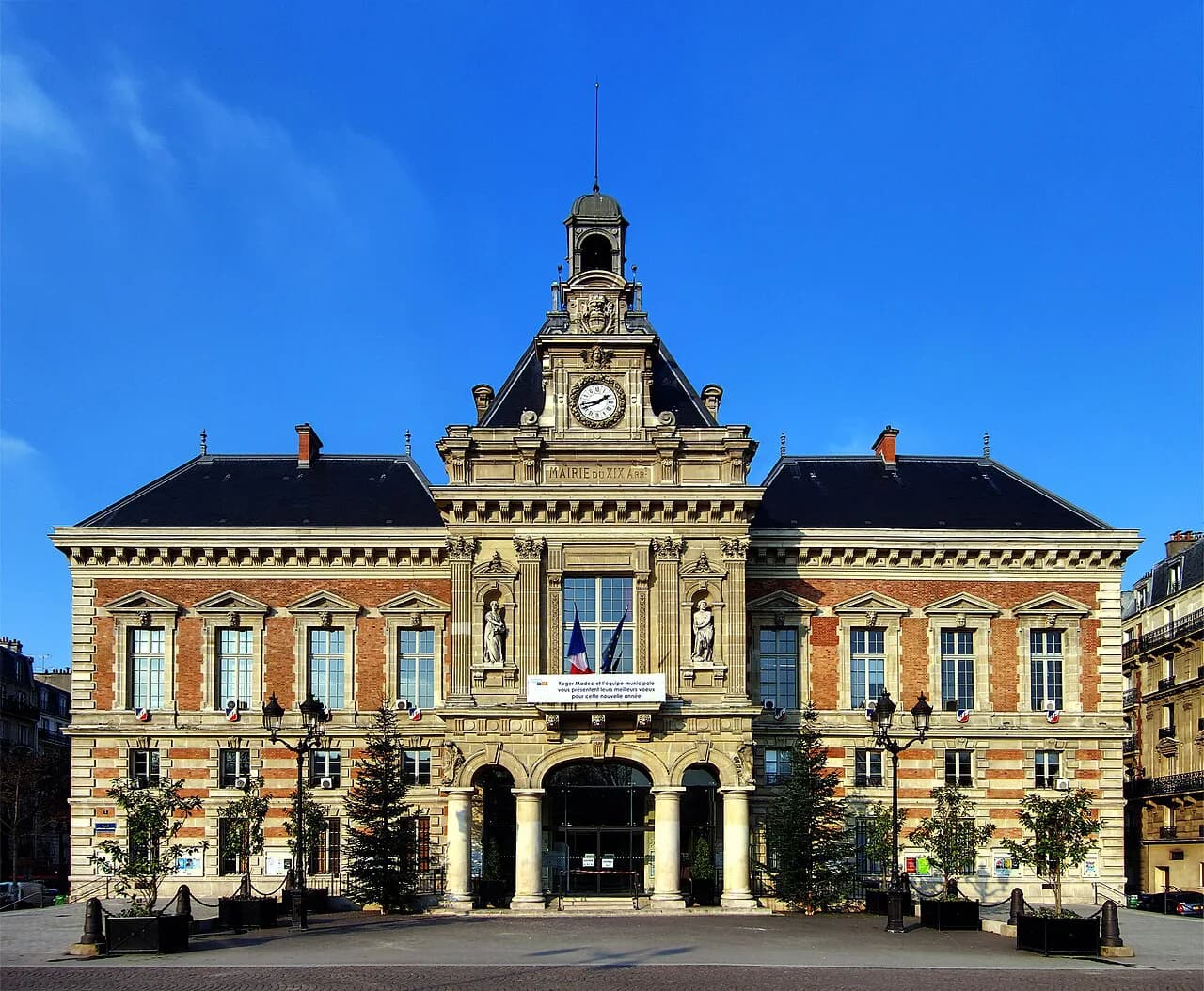
If you skip the shuttle, taxi and public transport are the alternatives. Le Havre has modern trams linking many parts of the city and buses to surrounding destinations, and the Hôtel de Ville square functions as the main transport hub, which makes it a sensible target for a taxi drop-off if you want to start in the centre.
The Funiculaire du Havre is a distinctive way to travel between the lower town and the residential districts above, and it pairs well with a short city walk if you have already covered the core sights. Fares and operating times are not fixed here, so pick them up from the funicular's own information point when you arrive in the centre.
Le Havre on foot: containers, fish market and waterfront
Walking from the terminal brings you past a busy fish market where locals buy the day's catch, an easy introduction to the city's maritime character. A little further on stands the Catène de Containers, Vincent Ganivet's sculpture of stacked shipping containers formed into two giant arches, roughly 25 to 30 minutes from the terminal and one of the best photographs near the port.
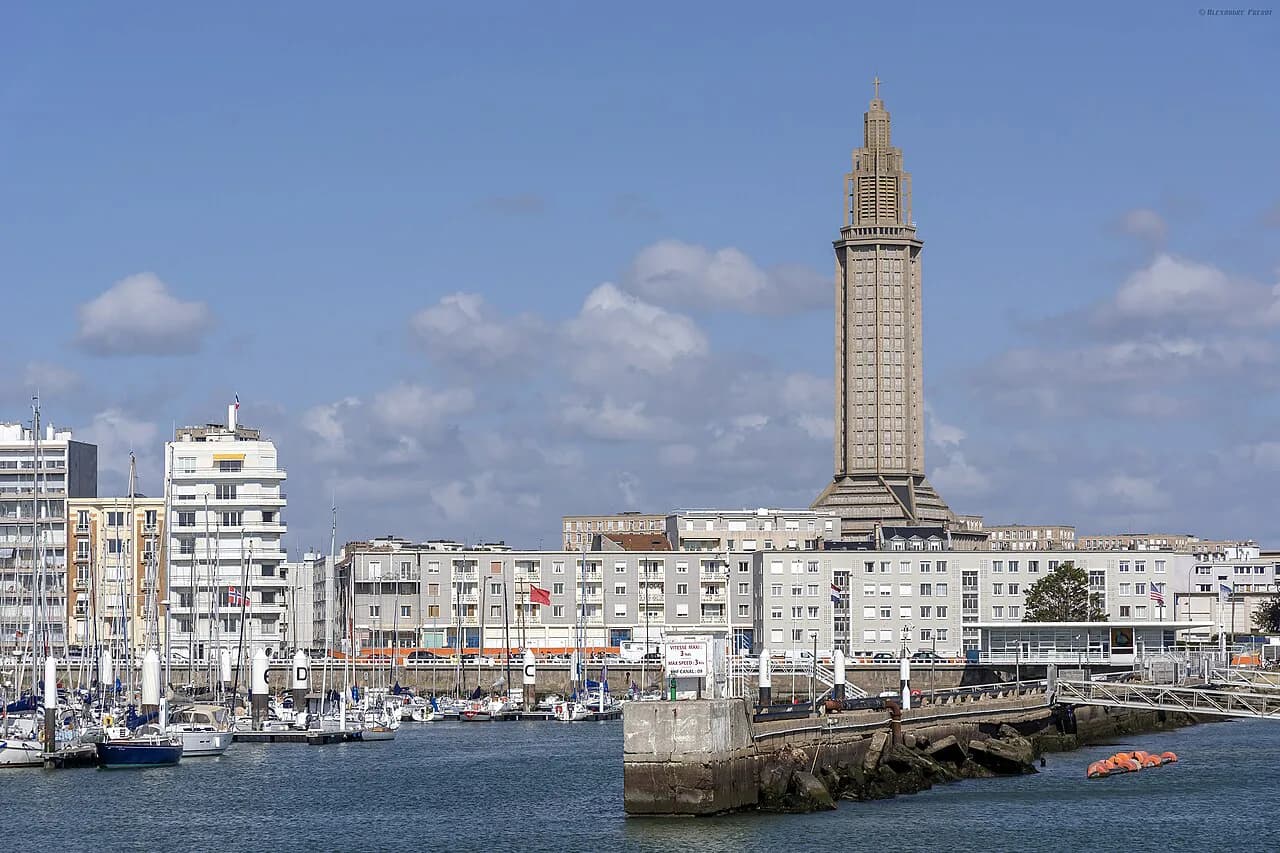
The waterfront itself is worth an hour: wide promenades follow the marina and harbour with views of both leisure boats and commercial shipping, and a modern white pedestrian bridge over the docks gives a sweeping view of the skyline. The bridge's incline is fairly steep, so passengers with mobility difficulties may prefer to enjoy the harbour from the flat paths instead.
For a fuller list of landmarks, museums and lunch stops sorted by how far they sit from the berth, see the guide to things to do in le havre cruise port.
Saint-Joseph's Church: the concrete tower with the glass interior
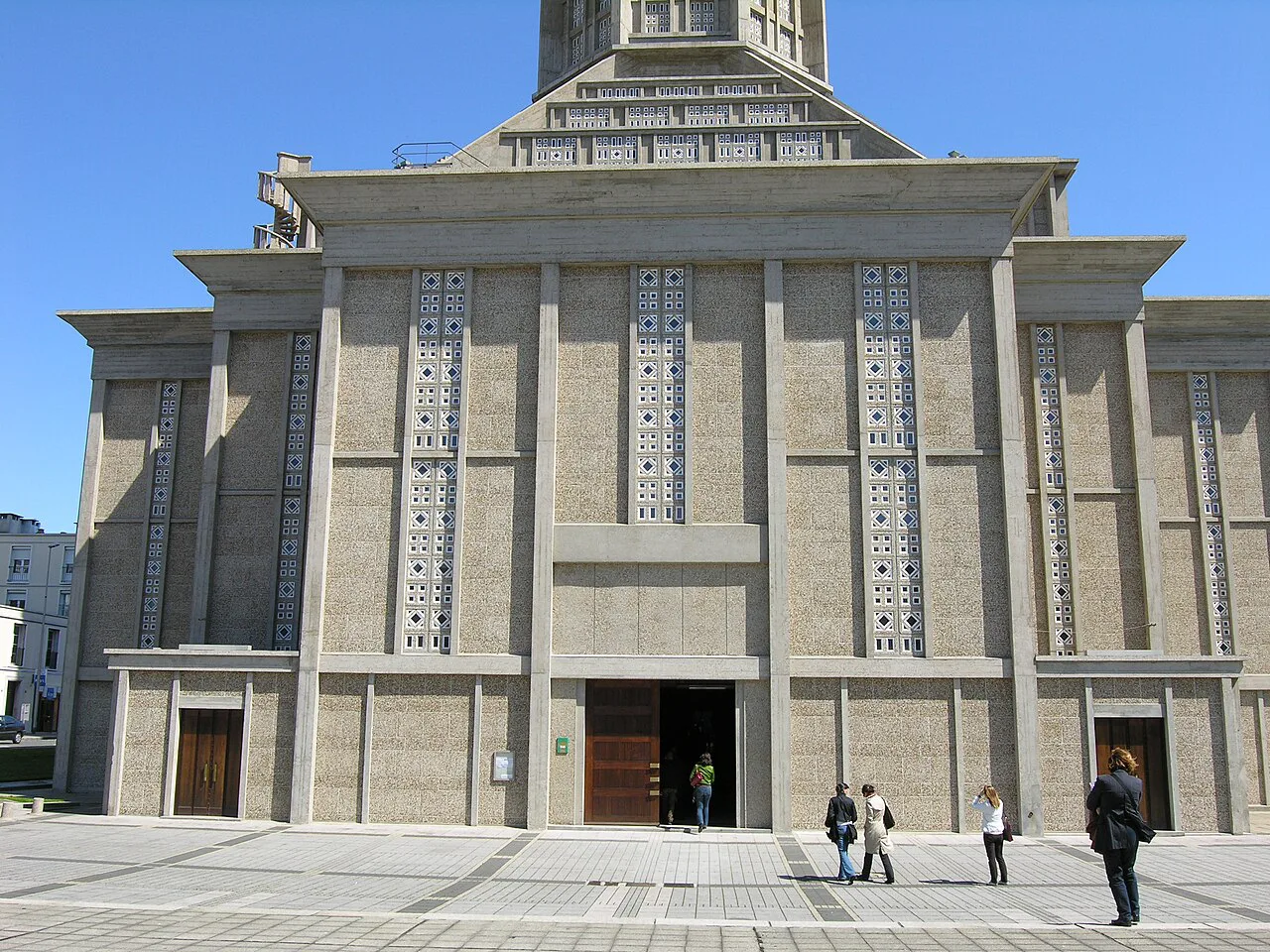
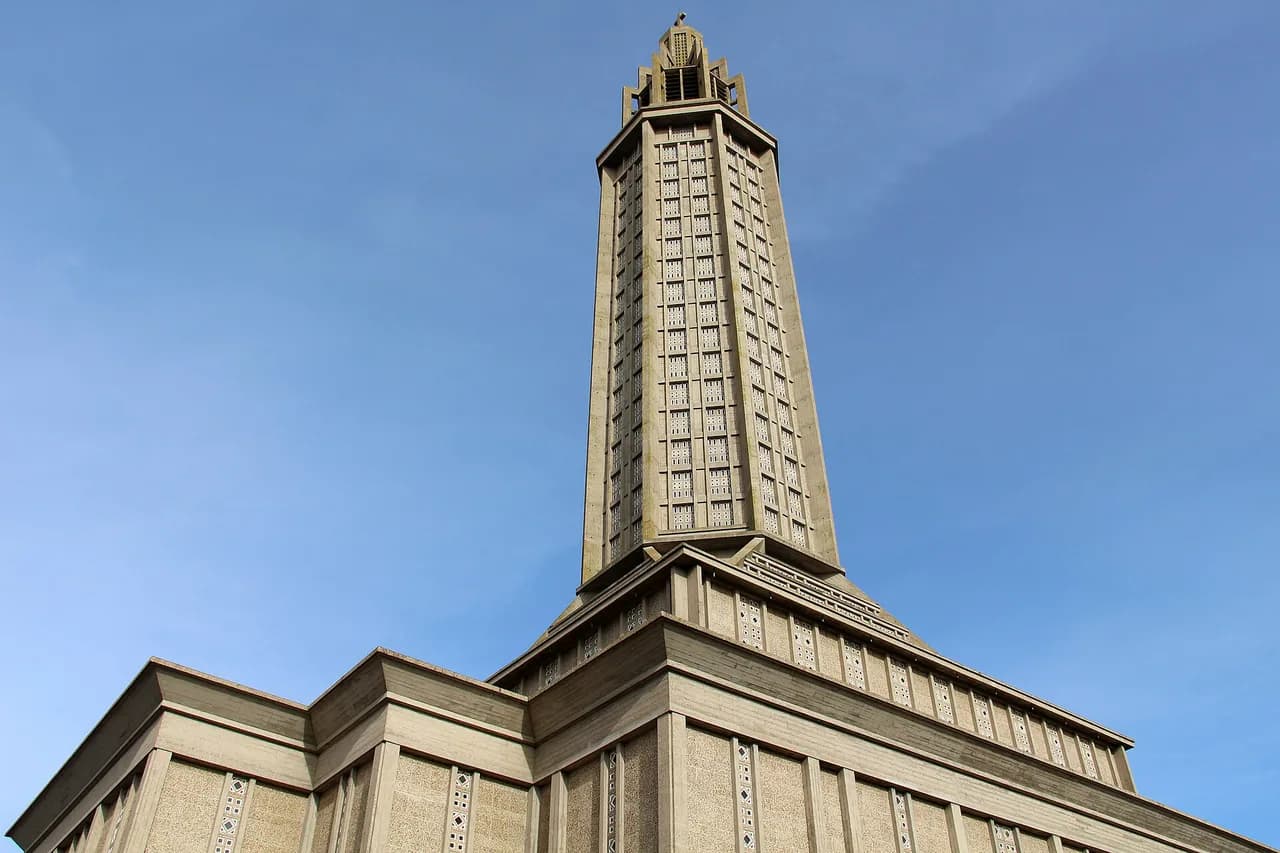
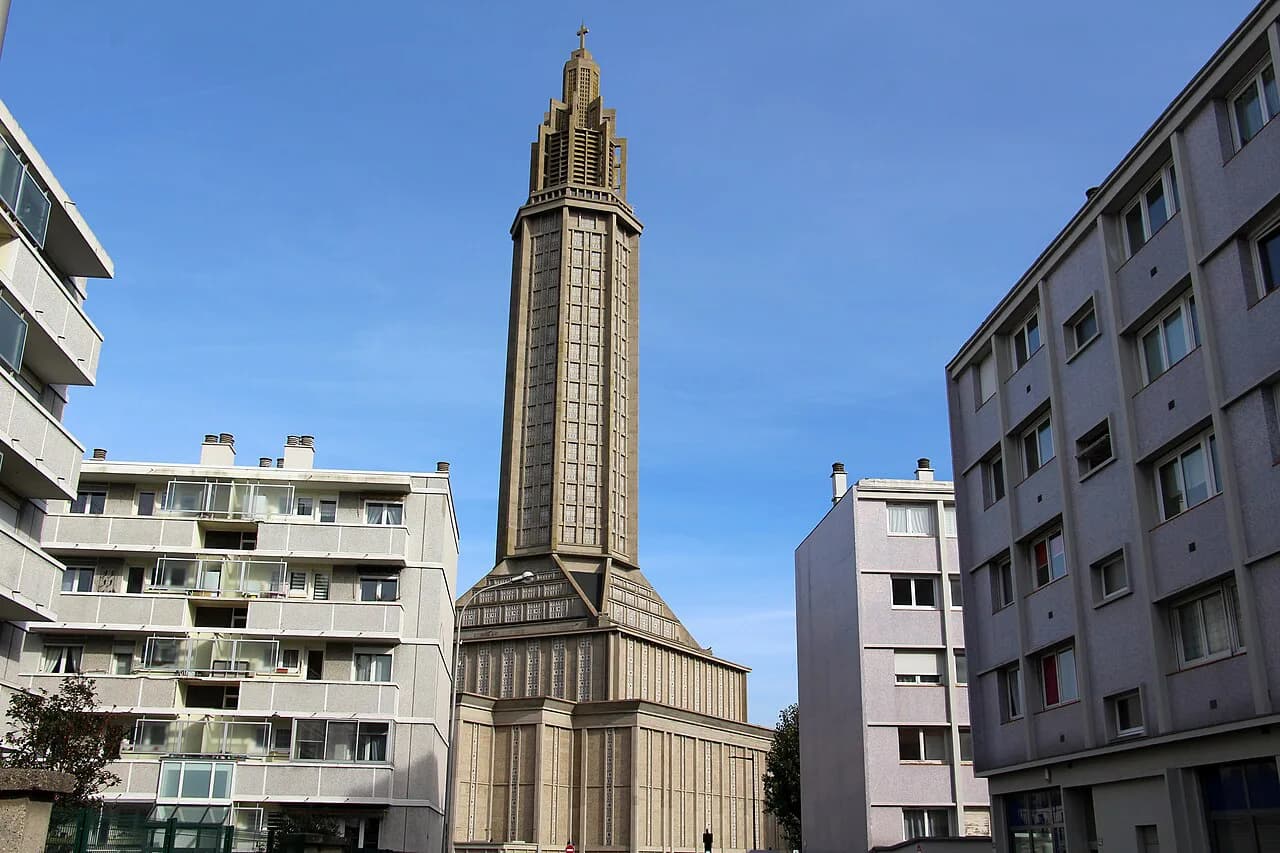
Saint-Joseph's Church is the one sight to prioritise. Its 107-metre tower dominates the skyline from almost every direction and looks plain from outside, a slab of exposed 1950s concrete in the modernist style that defines post-war Le Havre. Inside, the central tower rises through thousands of coloured glass panels, so the interior glows red, blue, yellow and green in sunlight.
Entry is free, and 15 to 20 minutes covers a visit comfortably, which makes it a high-value stop even on a six-hour call. Budget about 45 to 50 minutes to walk there from the terminal, or take the shuttle and walk from the centre instead.
Le Volcan and the Perret reconstruction
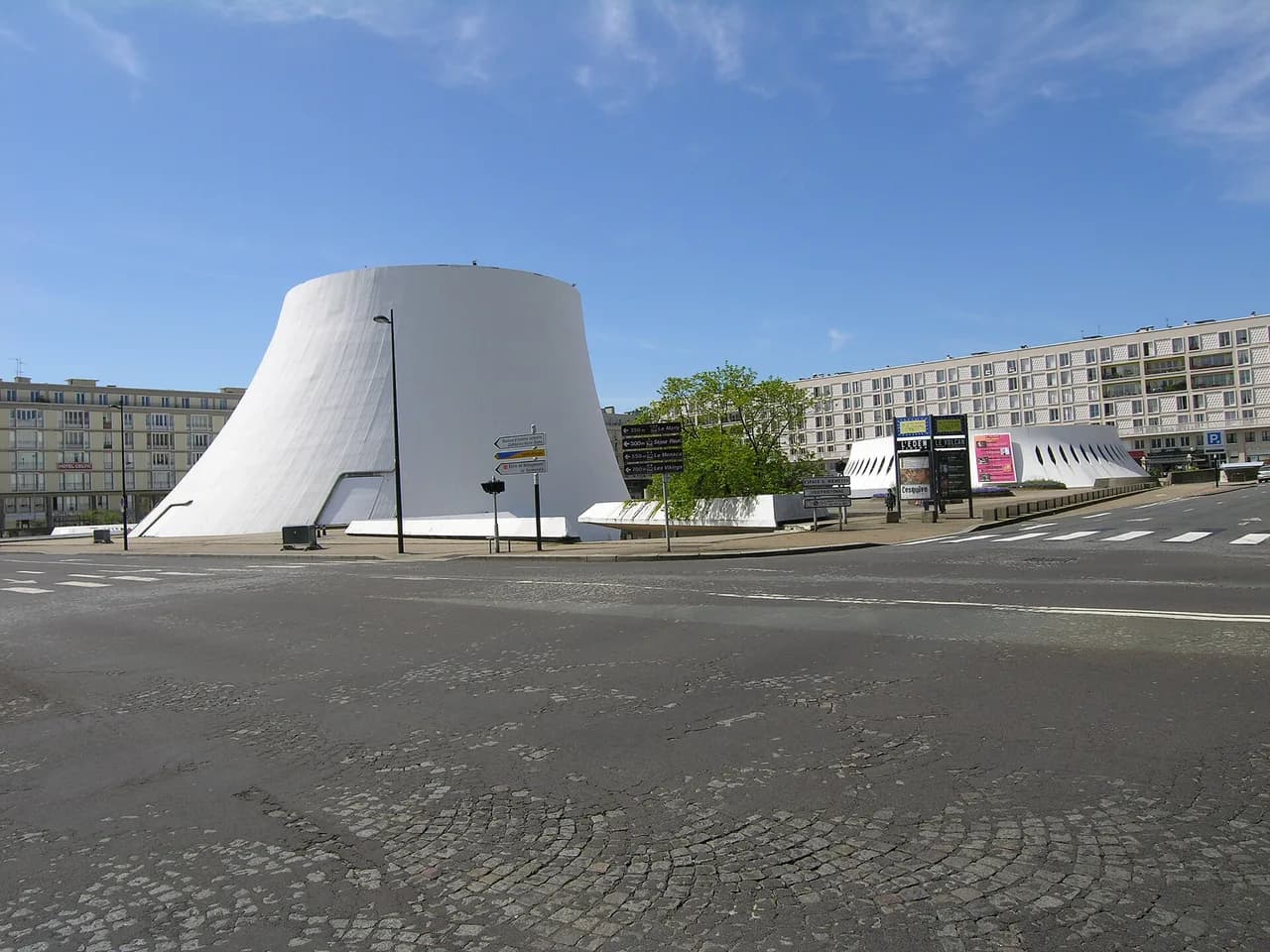
Le Volcan, Oscar Niemeyer's white building shaped like a volcanic crater, houses a theatre, cultural spaces and a public library, and its futuristic form plays against the geometric streets around it. You can see it from outside in minutes, and it sits about 50 minutes' walk from the terminal, close enough to combine with the Hôtel de Ville and the Perret grid.
Two hours in the centre covers the UNESCO core comfortably: the rebuilt squares and boulevards, the Hôtel de Ville with its fountains and gardens, the Volcan exterior and Saint-Joseph's Church. Add time for the waterfront and the container arches if you are walking in from the port anyway.
Honfleur, Étretat and the D-Day beaches
Honfleur's historic harbour and colourful buildings make it Normandy's most popular day trip from this berth, and it is a genuinely different experience from Le Havre's modern streets. The cost is time: a coach or taxi transfer each way eats into your hours ashore, so a first visit to the region often works better as a choice between the two rather than both. For a port call that keeps everything close to the berth, compare it with the Marseille Cruise Port Guide, where the terminals and transfers shape the day in the same way.
Étretat's cliffs and the D-Day beaches involve longer road transfers still, which pushes them firmly into the eight-hour-plus bracket and makes them a poor fit for a short call. Compare the driving time against your actual hours in port before booking anything, and remember the return leg runs in the same traffic.
Paris from Le Havre: the two-hour rule
Paris and Le Havre sit just over two hours apart by road, a figure the cruise lines themselves use when selling the transfer. That means a Paris day from this berth is at least four to four and a half hours in a vehicle, before any traffic, leaving a compressed block of sightseeing in the middle of the call.
On a six-hour call, Paris is not realistic. Even on a ten-hour call you are choosing one or two landmarks near your drop-off point rather than a tour of the city, and the risk of a delayed return sits with you unless you booked through the ship. Rail via Paris Saint-Lazare is an option for confident independent travelers, but it adds station transfers at both ends.
Ship tour vs local operator vs independent
The ship's tours carry the highest price and the smallest group flexibility, but they also come with the line's own return arrangements if a coach is delayed. Local operators and independent travel cost less and give you freedom over pace, yet you carry the risk of a late return yourself; no one can promise the ship will wait.
For long transfers such as Paris or the D-Day beaches, the equation tilts toward the organised option because a mechanical problem or traffic jam two hours from the ship leaves no margin. For Le Havre itself, where everything is within walking distance of the centre, going independent costs almost nothing and the risk is minimal as long as you watch the clock.
What fits a 6-, 8- and 10-hour call
On a six-hour call, stay in Le Havre: take the shuttle or walk in, see Saint-Joseph's Church, the Volcan and the Perret centre, then return with time to spare. An eight-hour call adds the waterfront promenade, the fish market and the container arches at an unhurried pace, or allows Honfleur if you accept a tighter afternoon. A ten-hour call is the first point at which Paris or the D-Day beaches become arguable rather than reckless.
Build your return buffer around the length of the journey back, not the length of the visit. Walking from the centre takes about 50 minutes, which is a long buffer on foot; a shuttle queue at the end of the day can absorb twenty minutes on its own, so aim to be at the pickup point well before the last advertised departure.
Shopping and lunch before the run back
Le Havre is a serious retail centre for the wider Normandy region, with pedestrianised streets branching off the centre lined with international brands, French retailers, department stores and shopping centres. If shopping is on your list, keep it to the centre rather than the port area, where there is nothing to browse.
For lunch, eat in the centre before you head back, then leave the walk or shuttle ride as a clean block at the end of the day. Carrying food or drink through the terminal security check slows you down, and the port stretch has no stops worth making.
Plan Your Port Day
Treat Le Havre as two decisions: how you cross the port, and how far you are willing to travel beyond it. Walking is flat and free but takes about 50 minutes each way to the centre; the cruise-line shuttle is paid but preserves your legs and your weather tolerance; taxis and trams work best if you want to start at the Hôtel de Ville hub.
Then match the day to your hours: the UNESCO centre and Saint-Joseph's Church for a short call, Honfleur or the coast for a medium one, and Paris only when the arithmetic of a four-hour round trip still leaves you a usable half day. Confirm shuttle pickup times and all-aboard on board, and keep the return buffer generous.
Explore more Le Havre cruise port guides
Frequently Asked Questions
Is Le Havre walkable from the cruise port?
Yes. The route out of the commercial port and into the city centre is flat and straightforward, though long: roughly 20 minutes to clear the secure port area and about 50 minutes in total to reach the centre, with Saint-Joseph's Church about 45 to 50 minutes away. The walk is exposed to weather, so the shuttle is worth considering in rain or wind.
How far is the Le Havre cruise terminal from the city centre?
Allow around 50 minutes on foot from the terminal to the centre, and 50 to 55 minutes to the Hôtel de Ville. The distance is the main reason many passengers take the cruise line's shuttle rather than walking both ways.
Is there a shuttle bus from Le Havre cruise port into town?
Most cruise lines run a shuttle between the terminal and the city centre. It is a chargeable cruise-line service rather than a free port bus, and the fare varies by operator and sailing, so check the price and the last return time on board.
Is Le Havre worth visiting on a cruise?
Yes, if you want something different from Normandy's postcard harbours. The UNESCO-listed Perret reconstruction, Saint-Joseph's Church with its coloured glass interior, the Volcan and the waterfront fill a day comfortably, and most of the key sights cost nothing to see.
How long does it take to get from Le Havre to Paris?
Paris is just over two hours from Le Havre by road, so a Paris day means at least four hours of driving round trip before any sightseeing. That rules Paris out on a short call and limits it to one or two landmarks even on a long one.
Should you choose Le Havre or Honfleur on a port day?
Honfleur offers the historic harbour and colourful streets that Le Havre lacks, at the cost of a road transfer each way. First-time visitors often get more from exploring Le Havre independently; Honfleur suits repeat visitors or those with a full day and a taste for the classic Normandy scene.
How much time do you need in Le Havre?
About two hours covers the UNESCO core, including the Hôtel de Ville, Le Volcan and Saint-Joseph's Church. Add an hour for the waterfront and the Catène de Containers, plus roughly 50 minutes each way if you walk from the terminal.
Sources
Port-day notes for your next cruise
Optional updates to our port guides.
You might also like
Continue reading
More guides you'll find useful