Naples Port to Pompeii: Train, Bus, Shuttle or Tour
How to reach Pompeii from the Naples cruise port by Circumvesuviana train, taxi or ship tour, with journey times and a realistic all-aboard buffer.
On this page
Pompeii is the headline sight within reach of the Naples cruise port, and it rewards the passengers who treat the day as two separate journeys rather than one. The first leg is the ship to Napoli Garibaldi, the second is the commuter train to the ruins. Get both right and a six-hour call works.
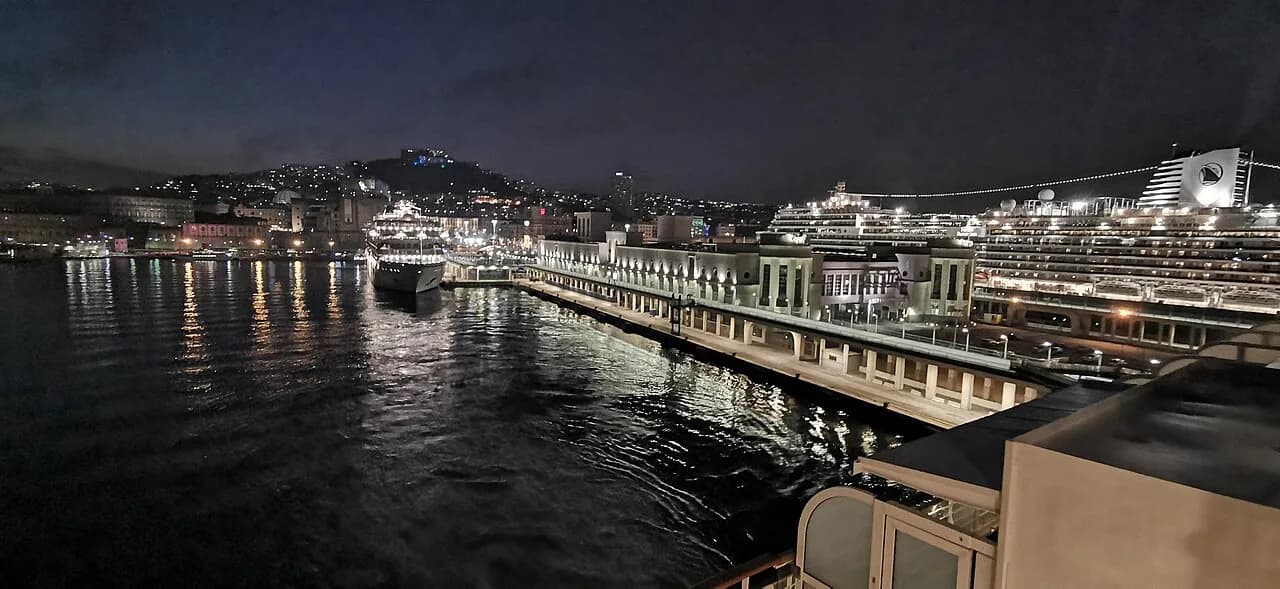
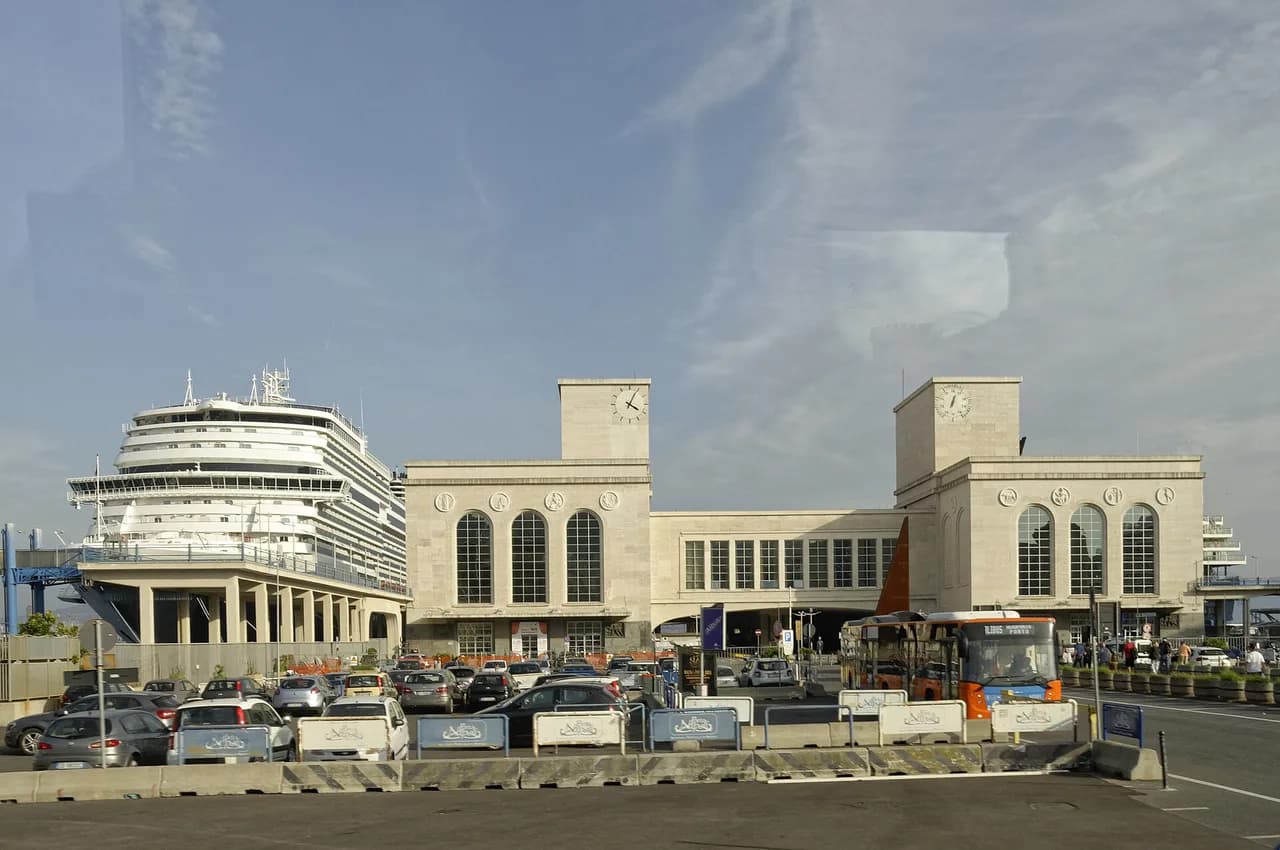
Most ships berth at Stazione Marittima on Molo Angioino, which puts you a 15- to 30-minute walk from the station depending on pace and crowds. Larger numbers of ships can berth further east, where the terminal exit is less pleasant and the walk is longer. Knowing which berth you have changes the plan for the first 20 minutes of your morning.
Where ships dock in Naples
Stazione Marittima on Molo Angioino is the main cruise terminal, sitting inside the city rather than beside it. The pedestrian exit brings you out at the edge of Piazza Municipio, with Castel Nuovo roughly 150 metres to your right and a walk into the old city of 15 to 20 minutes uphill.
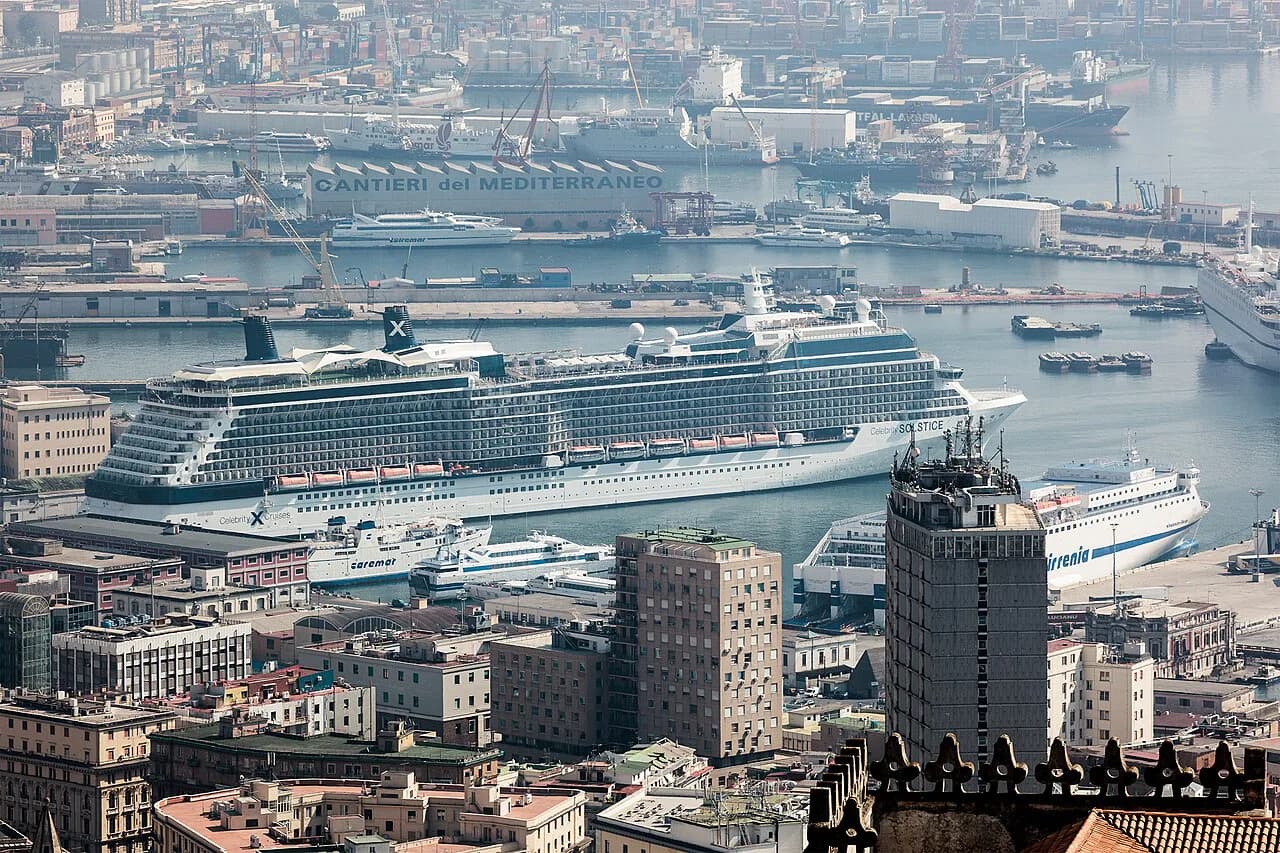
When ship volumes are high, some berths sit further east along the waterfront at Molo Pisacane or the Calata Porta di Massa side. If you land there, the walk to the terminal exit is longer and lines usually run a shuttle to the Stazione Marittima gate, so take it rather than walking from a working quay.
Molo Beverello sits right beside the cruise terminal, and that proximity is why so many passengers try Capri on a Naples call. For a Pompeii day it is irrelevant: ignore the hydrofoil queues and head for the train station instead.
The route in brief: port to Garibaldi, then train to Pompei Scavi
You need to reach Napoli Garibaldi, which sits on the lower level inside Napoli Centrale, then take the commuter train toward Sorrento and get off at Pompei Scavi–Villa dei Misteri. The run from Garibaldi to Pompei Scavi takes 33 to 37 minutes and costs around €3.30 each way.
The station exit is roughly two minutes from the Porta Marina gate, so the total journey is dominated by the first leg, not the train. That is why passengers who walk the port-to-station leg briskly and catch the next departure gain far more site time than those who save a few euros on the fare.
Follow the blue and white signs inside Napoli Centrale for Linee Vesuviane. The station board, not the platform announcement, tells you which train you are on, and two different lines serve the Ercolano and Pompei area, so read it before boarding.
Circumvesuviana train from Garibaldi to Pompei Scavi
The Circumvesuviana is a commuter line, and the Naples to Sorrento service starts around 6:00 am with two departures an hour until late in the evening. Fares are low and tickets are cheap enough that you do not need to plan around them, but you buy them at the station rather than online, so allow time at the counter or use the turnstiles fitted with card readers.
Comfort is the trade-off. There are no assigned seats, no dedicated luggage racks and no air conditioning, and the carriages show their age, so travel light and keep bags where you can see them. For a 35-minute ride it is entirely manageable; for a long haul with suitcases it is not.
From the ship, budget 15 to 30 minutes to walk to Garibaldi, then wait for the next departure, then 35 minutes on the train. That gives a realistic one-way total of about an hour and 15 minutes from gangway to the Porta Marina gate.
Campania Express: what the extra fare buys
The Campania Express runs on the same line but is aimed at visitors, with reserved seats, air conditioning and luggage racks, and a journey of roughly an hour from Naples to Sorrento. That comfort premium matters in July and August, when the ordinary trains are standing room only.
It costs 15 euros, runs only from mid-March through October, and offers just four daily departures in each direction. Boarding and paying on the train adds a 5-euro surcharge, so buy at the station or online before you travel.
On a port day, four departures a day is the problem rather than the fare. Unless one of those times matches your all-aboard with a comfortable margin, the ordinary Circumvesuviana gives you far more flexibility for a fraction of the cost.
The station mistake: Pompei Scavi versus Pompei Santuario
Pompei Scavi–Villa dei Misteri serves the ruins and is a two-minute walk from the Porta Marina gate. Pompei Santuario is a different station on a different branch and serves the modern town and its basilica, not the archaeological park.
Getting off at the wrong one costs you around 40 minutes in each direction, which is most of your site time on a short call. Watch which branch the train is on before it leaves Garibaldi, and treat a platform announcement alone as insufficient.
Getting from the ship to Napoli Garibaldi
Walking is the honest answer for a Stazione Marittima berth. Piazza Municipio, Galleria Umberto I and Piazza del Plebiscito are all within 15 minutes, and the climb to the station and old city adds another ten, which is a fair price for avoiding a queue.
The Municipio metro station is around 300 metres from the pier and serves Line 1, which runs to Garibaldi via Toledo, Dante and Museo. A single city ride costs a little over a euro, and an integrated 90-minute ticket covering metro, buses and funiculars is under two, bought from the machine and validated on the platform.
Taxis are fine if you use the municipal fixed fares, which apply per cab rather than per person. From the port, the published fares include about €15.50 to Napoli Centrale, so traveling as a group of three or four costs little more than the metro. Ask for the tariffa predeterminata before the car moves.
If you want the simplest possible start, excursions from port that collect you at the quay remove the station leg entirely, which is the single biggest time saving available on this route.
Pompeii tickets and entry rules
Pompeii has capped admissions at 20,000 visitors a day since November 2024, and tickets are nominative, checked against ID and timed in high season. Turning up on spec between spring and autumn is a genuine risk, so book before you sail through the park's official site rather than inventing a plan at the gangway.
Expect to pay somewhere in the region of €18 to €20 for the standard adult ticket, and confirm the current rate when you buy because prices changed in 2026. Bags larger than 30 by 30 by 15 centimetres go into the free left luggage, so travel light and skip the locker queue.
Avoid the first Sunday of the month. State sites are free that day, the crowd arrives early, and entries have been suspended in the past once the cap was hit, which is a poor trade for a port day with a fixed all-aboard.
From the Pompei Scavi stop to the Porta Marina gate
The walk from Pompei Scavi to the Porta Marina entrance takes about two minutes, and signage from the platform is clear. That short hop is why this station, not Pompei Santuario, is the one to aim for.
Allow two hours minimum inside the site if you want the forum, the main streets and a couple of the famous houses. Four hours is what Pompeii really wants; anything less and you are choosing between the amphitheatre end and the Villa dei Misteri end rather than seeing both.
Ship tour versus local operator versus going independently
A ship tour handles the risk question differently from anything you arrange yourself. The coach leaves from the quay, the guide manages the entry rules, and the cruise line's shore-excursions team is responsible for the timing. What it does not do is guarantee the ship will wait, so the all-aboard time still governs your day.
A local operator or a private driver offers a middle path. Private transfers cost a bit more than taxis, and drivers will spend eight or nine hours with you in a van for up to eight people on a full-day tour, which suits families and small groups splitting the cost.
Going independently is cheapest and most flexible, but you carry the return risk alone. On the Circumvesuviana that risk is modest because trains run twice an hour most of the day, and the walk from Pompei Scavi to the platform is short and signposted.
Taxis and private transfers from the port to Pompeii
Taxis wait at designated ranks at the port, the train station and the airport, and the municipal fixed fares apply to set routes. From the port, the published one-way fare to Pompei Scavi covers the whole cab rather than each passenger, with motorway tolls and any minivan supplement extra.
Ask for the fixed fare before the car moves, and confirm what is included. A taxi is the fastest way to reach the ruins directly, but the fare only makes sense if you are splitting it three or four ways, and the driver waits at your cost or not at all.
For a guaranteed return, a pre-booked private transfer is the more reliable choice than hailing a cab at the ruins, where ranks are thin. Arrange it for a fixed pickup time at Porta Marina and build in 20 minutes of slack on the way back.
Half-day Pompeii: what a 6-hour call really allows
Six hours ashore is enough for Pompeii if you move purposefully. Count roughly 75 minutes from the gangway to the gate, two hours inside, and 75 minutes back, which leaves a comfortable buffer before all-aboard and no time for a sit-down lunch in the old city.
Six to eight hours also opens up Herculaneum as an alternative, with time left to eat properly in Naples afterward. If you want both ruins in one call you need closer to nine hours, because each site carries its own travel and entry time.
Four to five hours is not a Pompeii call. Once you account for the walk to the station, the wait, the train and the site itself, the math does not close, and the city on foot is the better use of a short call.
Pompeii plus Herculaneum or Vesuvius on an 8- to 10-hour call
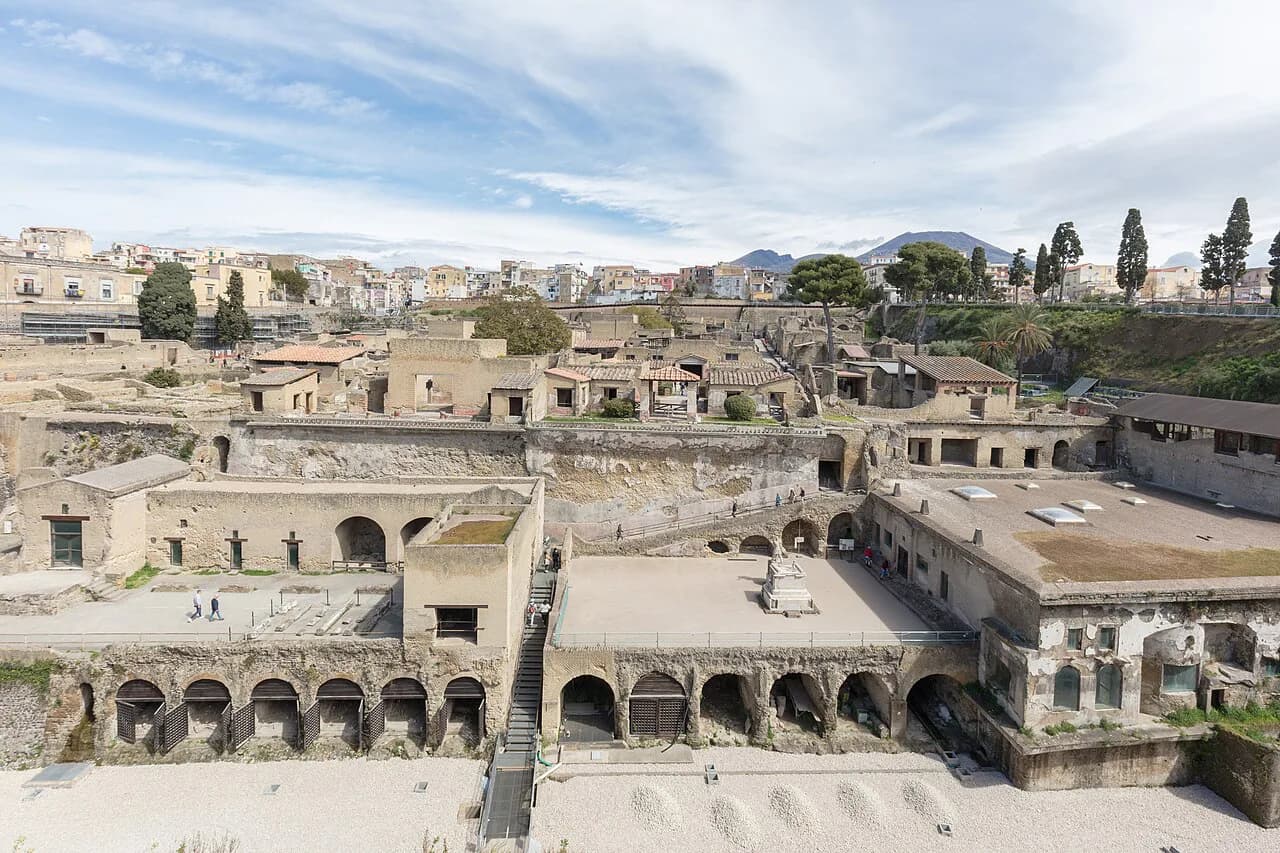
Herculaneum is the smarter second site for a long call. It is about 15 minutes by train from Garibaldi, a 600-metre walk downhill to the entrance at Corso Resina 187, and a quarter of the size of Pompeii with far better preservation, including wooden beams, upper floors and carbonised furniture. Adult entry has a standard rate, with a reduced rate for EU citizens aged 18 to 25.
Vesuvius is a different proposition. The Gran Cono trail is the only route to the crater rim, tickets are timed and sold online in advance rather than at the gate, and the park closes the trail on weather alert days. That combination of pre-booking and cancellation risk makes it a poor bet on a port day unless your transport carries the return.
On a nine-hour or longer call, Pompeii plus a couple of hours in the old city is realistic. Book the ruins for the morning, take the train back early, and spend the afternoon on Spaccanapoli rather than squeezing in a third stop.

Pompeii plus an hour in old Naples
If your call runs long enough, the old city is a ten-minute climb from the terminal gate and needs no transport at all. The straight street of Spaccanapoli runs through the Greek grid, and Via dei Tribunali is the pizza street, so an hour buys you a proper lunch and a look at the centre.
The Sansevero Chapel and its Veiled Christ is the one sight worth a timed slot, booked on the museum's own site before you sail, and it closes on Tuesdays. Allow 45 minutes inside and check the closing day against your call.
The alternative near the station is the National Archaeological Museum, which holds the frescoes and mosaics lifted out of Pompeii and Herculaneum. It also closes on Tuesdays and is mid-refurbishment, with some rooms closed on rotation, so treat it as a bonus rather than a substitute for the ruins.
The return leg and the buffer you need
Coming back, the Circumvesuviana runs twice an hour from Pompei Scavi, so a missed train costs you 30 minutes rather than an hour. Leave the site two hours before all-aboard on a short call and allow 75 minutes of travel plus a 30-minute cushion against queues at the ticket machine.
The walk back from Garibaldi to the terminal is uphill in reverse and slower than you expect in the afternoon heat. Add 20 minutes to whatever the outward walk took, and let yourself be early rather than cutting it fine through Piazza Municipio.
If you are on a ship tour or a pre-booked transfer, the tour company or driver sets the return time, and you should still check the meeting point in the morning. No operator on this route controls traffic on the coastal road or delays on the commuter line.
Naples alternative for short calls: Herculaneum or the city on foot
On a four- or five-hour call, stay in Naples. Castel Nuovo is 150 metres from the pedestrian exit, Piazza del Plebiscito is 15 minutes on foot, and the historic centre is another ten uphill, all without a train, taxi or timetable.
Herculaneum is the better short-call ruin if you want archaeology. The train takes about 15 minutes each way, the site needs two hours, and the crowd is a fraction of Pompeii's, which makes the return timing far easier to hold.
For passengers weighing up other coastal days from this berth, the route to Sorrento leaves from the same terminal, and the walk-to-station logic applies there just as it does to Pompeii. Ships calling at the Salerno cruise port to Pompei face the same train-versus-transfer decision on a shorter leg.
What to book before you sail
Two things justify booking ahead: a Pompeii entry slot and a timed Sansevero Chapel visit. Both are timed, both sell out, and both have closing days that catch passengers out, so check them against your call before you pay.
Book the Campania Express online if you want a reserved seat in summer, and buy ordinary Circumvesuviana tickets at the station on the day. For a group, pre-book a private transfer rather than relying on a rank at the ruins.
Plan Your Visit
Pompeii from the Naples cruise port rewards a simple plan: walk or take the metro to Garibaldi, ride the Circumvesuviana to Pompei Scavi, and book your entry slot before you sail. The trip is short enough for a six-hour call if you skip the detours and keep the return leg honest.
If your call is shorter, or the sea and the trains look uncertain, the old city starts 200 metres from the gangway and needs no timetable at all. Either way, name the berth on your daily programme the night before and plan your first 20 minutes around it.
Frequently Asked Questions
How far is Naples cruise port from Pompeii?
Stazione Marittima sits in central Naples roughly 25 kilometres from the ruins as the crow flies. In practice the journey is the walk or metro to Napoli Garibaldi plus a 33- to 37-minute train ride to Pompei Scavi, which works out at about 75 minutes from gangway to the Porta Marina gate.
How do you get from Naples port to Pompeii by train?
Reach Napoli Garibaldi, the lower level inside Napoli Centrale, follow the blue and white Linee Vesuviane signs and take the Circumvesuviana toward Sorrento. Get off at Pompei Scavi–Villa dei Misteri, a two-minute walk from the Porta Marina gate. The ride takes 33 to 37 minutes; the single fare is posted at the ticket desks and on the Linee Vesuviane site.
Is Pompeii worth it from a Naples cruise stop?
Yes, if your call is at least six hours and you book a timed entry slot before you sail. The trade-off is that a Pompeii day uses most of your hours ashore, so you will see little of Naples itself. Passengers on four- or five-hour calls get more from Herculaneum or the old city on foot.
Can you do Pompeii in a six-hour port call?
It fits if you move directly. Allow about 75 minutes each way, two hours inside the site and a 30-minute cushion before all-aboard, and skip a sit-down lunch in the city. Anything shorter and the arithmetic stops working.
Do you need to book Pompeii tickets in advance?
Pompeii has capped daily admissions since November 2024, and tickets are nominative, ID-checked and timed in high season. Book through the park's official site before you sail rather than deciding at the gangway. Bag limits also apply, with large bags going into free left luggage.
Which Pompeii train station is closest to the ruins?
Pompei Scavi–Villa dei Misteri, which is roughly two minutes from the Porta Marina entrance. Pompei Santuario is a different station on a different branch and serves the modern town, so getting off there costs you around 40 minutes in each direction.
Should you take the ship's Pompeii tour or go independently?
The ship's tour removes the station leg and the entry admin, at a higher cost. Going independently is cheap and the trains run twice an hour, but you carry the return risk yourself. A pre-booked private transfer sits between the two and suits small groups.
How much is a taxi from Naples cruise port to Pompeii?
Naples sets fixed municipal fares for set routes, and they cover the whole cab rather than each passenger. Ask the driver for the tariffa predeterminata before the car moves, and check the published route list for the current port-to-Pompei Scavi rate. Arrange the return pickup in advance.
Sources
Port-day notes for your next cruise
Optional updates to our port guides.
You might also like
Continue reading
More guides you'll find useful