Salerno Cruise Port to Pompeii: Train, Taxi or Ship Tour
Compare the train, taxi and ship tour from Salerno cruise port to Pompeii, with journey times, fares, station walks and the buffer you need before all-aboard.
On this page
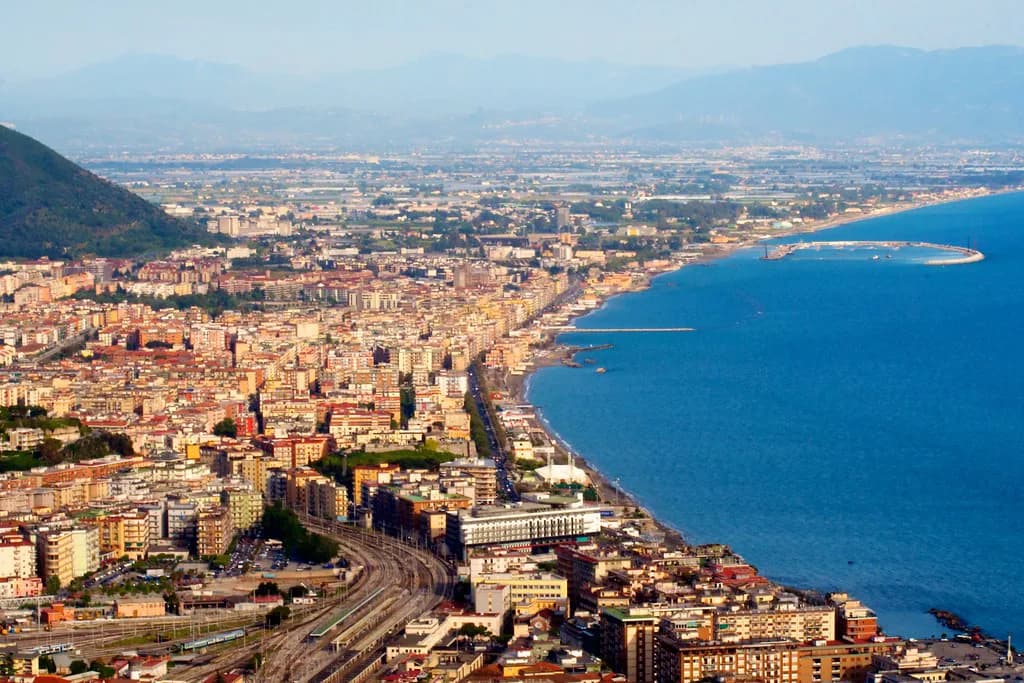
Salerno puts the ruins of Pompeii within a half-day reach, which is why so many passengers treat this stop as a history day rather than a beach day. The city sits south of the Bay of Naples, and the buried Roman town lies at the foot of Mount Vesuvius roughly northwest of the berth. With a 6- to 10-hour call you can be walking ancient streets by late morning and back on the waterfront in time for a slow lunch.
The decision is really about who carries the return risk. A regional train is the cheapest way out but ties you to a timetable you cannot control; a taxi you negotiate yourself buys waiting time and door-to-door drop-off; a ship tour buys a guaranteed boarding arrangement at the highest price. Read the sections below against your actual all-aboard time, not against a generic itinerary.
Where ships dock in Salerno and the walk out of the terminal
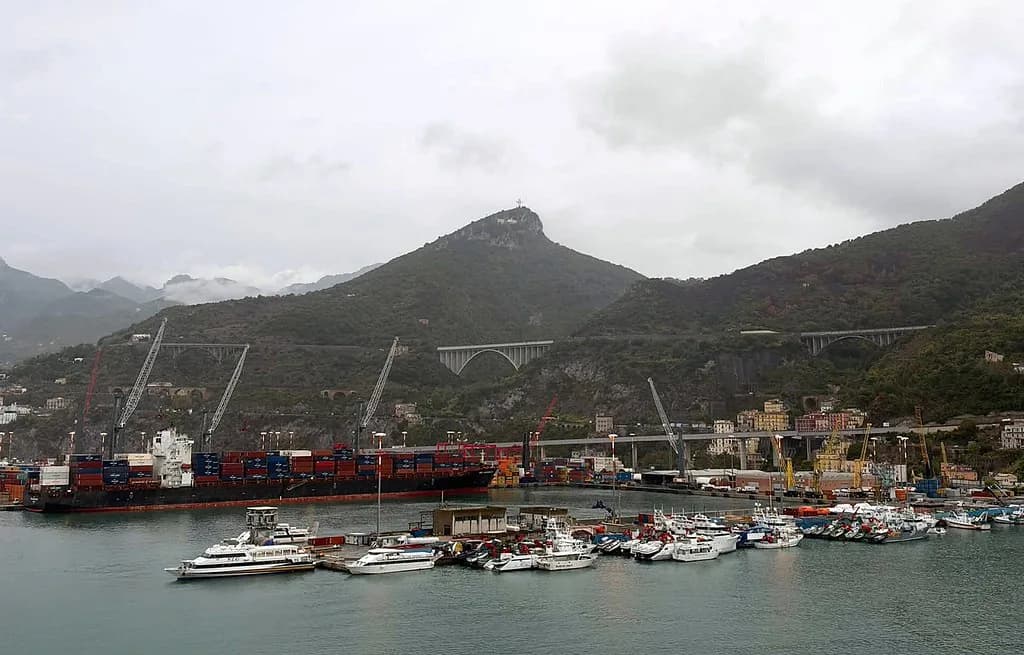
Cruise ships berth at Molo Manfredi, the cruise pier of the Stazione Marittima di Salerno on the western waterfront, beside Piazza della Libertà. There is no tendering: you walk off onto the pier and out of the port area on foot, which removes the shuttle-and-queue stage that eats time at bigger Italian ports.
Larger ships sometimes lie further along the quay from the terminal building, so count the exit walk as anything from a few minutes to a quarter of an hour. The old town, the Lungomare Trieste promenade and the main shopping streets all sit east of the berth and are reached on flat pavement. For a Pompeii day, though, you are heading inland to the station rather than into the centro storico.
How far Pompeii is and the three realistic ways to get there
Pompeii lies northwest of Salerno toward Naples, and there are exactly three practical ways to cover it in a port day: the regional train from Salerno Centrale, a taxi or private car from the terminal forecourt, and a ship excursion or pre-booked coach tour. A fourth option sometimes confuses passengers — ferries from Salerno run along the coast to Amalfi and Positano, not inland to Pompeii, so boats are no part of this plan. If you are weighing the same trip from a different berth, our guide to the Naples port to Pompeii covers how the logistics compare there.
The train puts you at Pompeii Scavi in roughly 40 to 45 minutes once you are aboard, and that is the route most independent travelers use. The catch is the two walking legs at either end: Salerno Centrale is about 1.5 miles (2.4 km) from the cruise berth, and the station at Pompeii is a further walk from the archaeological entrance.
Train from Salerno to Pompeii: station walk, journey time and fares
Salerno Centrale is the main rail hub, about 25 to 30 minutes from the pier on foot along the seafront and up into the city. If you would rather not spend the energy, taxis queue outside the terminal and a local bus from near Piazza della Libertà drops you close to the station. Either way, build the station transfer into your morning so you arrive at the platform with time in hand rather than counting on it from the gangway.
Trenitalia regional services run from Salerno toward the Pompeii stop, and the ride is short enough that the journey itself is not the constraint on your day. The fares reported for this leg vary by source, with one guide quoting around €6-7 each way and another around €3-5; treat those as an indicative range and read the price on the machine or at the ticket window when you buy.
At the Pompeii end, the station sits roughly ten minutes on foot from the Porta Marina entrance to the site, so the last leg is a short street walk rather than a bus ride. Allow for that walk in both directions, especially on the return when you cannot afford to miss a train.
Buying and validating tickets, and the return train
Buy your ticket from the machines or the ticket window at Salerno Centrale, and validate it in the yellow machines on the platform before boarding. Italian regional trains penalize unvalidated tickets, and a fine is the last thing you want on a port day with a fixed all-aboard.
Coming back, you are dependent on the next regional departure rather than on a vehicle waiting for you, so check the return times before you leave Salerno and note the last service that still gets you back with a comfortable margin. That timetable dependency, not the ticket price, is the real trade-off of the train. Passengers who find that juggling stressful should treat the train as a fallback rather than a first choice.
Taxi from the terminal to Pompeii: negotiating a round trip and waiting time
Taxis wait directly outside the cruise terminal, and for Pompeii the sensible structure is a round trip that includes the driver waiting while you tour the site. A negotiated day rate reported for exactly that arrangement — port to Pompeii, waiting during the visit, return to the ship — was €150 for the vehicle, settled on the spot before departure. That figure is a negotiation outcome, not a posted tariff, and it will move with group size, season and how long you keep the driver.
Agree the total, in writing or at least in a message you can show, before the wheels move, and confirm whether waiting time and the return leg are inside that number. Drivers may speak limited English, so a translation app earns its keep during the conversation. Short hops within Salerno are a different market and cost far less; the waiting element is what drives the price of a Pompeii day.
The advantage over the train is that the clock is yours: no station walks, no platform changes, and a car that can drop you at the entrance and collect you at an agreed time. The disadvantage is that a taxi you hired yourself carries no guarantee of boarding if traffic on the return leg runs long.

Ship excursions and pre-booked tours to Pompeii: what you pay for
A ship excursion to Pompeii costs more than the train and usually more than a shared taxi, but what you are buying is the return arrangement: the tour operator and the cruise line manage the timing, and the ship's departure is planned around the group. For a first visit to Pompeii, a guided tour also solves the site's scale problem, since the ruins are large and poorly explained without context.
Private operators sell comparable Pompeii tours from the Salerno cruise port, often with port pickup and a set group size, and they sit in price between the train and a private car. The distinction that matters is not the coach but the promise: an independent operator's guarantee is a commercial refund, not control over when your ship sails. Choose this route if you want interpretation without organizing transport, and read exactly what the tour includes before you pay, since pickup times and entry tickets vary between companies.
Private driver combined with the Amalfi Coast or Vesuvius
A private driver for the day is the option that lets you pair Pompeii with something else, and the going rate reported for a full day of this kind runs from about €150 to €250 depending on itinerary and group size. Combined Pompeii-and-coast tours exist but compress both stops, and the Amalfi Coast deserves its own day rather than a rushed hour in Amalfi after three hours in the ruins.
If Pompeii is the priority, ask the driver to keep the day inland and use the saved driving time for a longer site visit instead of a second destination. Add the Amalfi Coast only on calls of ten hours or more, and only when the coast is your second choice behind the ruins.
Which option fits a 6-, 8- or 10-hour call
On a short call of four or five hours, stay in Salerno: the old town, cathedral and waterfront are all within a short walk of the berth and require no transport planning at all. For a typical six- to eight-hour call, pick one destination — Pompeii or a coastal town — rather than attempting both, because the travel legs and the site visit together fill the available hours.
With eight hours or more, Pompeii becomes comfortable even by train, with time for a relaxed circuit of the site and a coffee before reboarding. Ten hours opens up a slower visit with a guide plus a wander through Salerno's old town on the way back to the ship.
Time on site: how long Pompeii takes and what to prioritize
Pompeii needs at least two to three hours on the ground, and the whole excursion from port to port is realistically four to five hours including travel and the entrance walk. The site is vast and exposed, with little shade, so the heat rather than the distance is what usually shortens a visit. Carry water and plan a mid-visit break rather than pushing through the afternoon sun.
If time is tight, concentrate on the Forum, the amphitheatre and the Villa of the Mysteries, which give you the civic heart, the spectacle and the best-preserved domestic interiors in one loop. Entry is charged separately from transport, with one source putting site admission at around €16, and buying ahead online shortens the queue at peak times. That entry figure is a reference point rather than a fixed price, so buy through the official site or at the gate.

Return-time buffer and the risk of a late train or traffic
Work backwards from all-aboard and keep at least an hour in hand before it, on top of the journey back to the berth. The return from Pompeii involves a walk to the station, a wait for a regional train, the ride into Salerno and then the walk or taxi back to Molo Manfredi, and each of those stages can stretch. Ships do not wait for independent travelers, so the buffer is your insurance, not an optional extra.
Road traffic around Salerno and toward Naples is the variable you cannot predict, which is why a driver-assisted day should still end with slack. If your planning leaves no margin for a delayed train or a slow return drive, switch to a ship-booked tour where the return logistics are handled for you.
Combining Pompeii with Salerno old town before all-aboard
The old town begins about ten to fifteen minutes from the pier, and it makes a good bookend to a Pompeii morning rather than a competing destination. Via dei Mercanti is the pedestrian spine, lined with shops and cafés, and the Duomo di Salerno sits at its heart with a bell tower and courtyard worth the detour.
If you return by train, walk from Salerno Centrale toward the centro storico for a late lunch, then follow the seafront back to the ship. Keep the final hour clear: the old town's cobbles and the terminal walk take longer than the map suggests when you are tired and carrying shopping.
What to bring and how to handle heat, water and tickets
Pompeii is an open archaeological park with uneven stone paving and limited shade, so sturdy shoes, a hat and a refillable bottle are the practical kit. Carry euros in small notes for machines, cafés and taxis, and keep your train ticket or booking confirmation where you can reach it quickly at barriers.
Buy Pompeii admission ahead where you can and keep the confirmation offline on your phone, since the site's scale makes backtracking to a ticket desk wasteful. Save your energy for the ruins rather than for the shopping streets, and leave the heavier purchases for the walk back along the promenade.
Plan Your Pompeii Day Around the Clock
Decide on the train, a negotiated taxi or a ship tour before you sail, because the right answer on the day depends on your call length and your appetite for a self-managed return. The train is the cheapest and most timetable-bound, the taxi buys waiting time and flexibility, and the ship tour buys peace of mind at the top of the price range.
Whichever you choose, fix your return time first and let the rest of the day fill in behind it. Check Trenitalia's regional times for the Pompeii leg on the morning itself, and confirm your all-aboard with the cruise line before you leave the ship.
Frequently Asked Questions
How do I get to Pompeii from the Salerno cruise port?
There are three realistic routes: a Trenitalia regional train from Salerno Centrale, a taxi or private car from the terminal forecourt, or a ship excursion and pre-booked tour. The train requires a walk of roughly 25 to 30 minutes from the pier to the station, then a short ride and a ten-minute walk to the Porta Marina entrance. A taxi removes the station legs and can wait while you visit. Ferries from Salerno run along the coast and do not serve Pompeii.
How long does the train take from Salerno to Pompeii?
The regional train ride is about 40 to 45 minutes. Add the walk from the cruise berth to Salerno Centrale and the walk from the Pompeii station to the site entrance, which together account for the bulk of the door-to-door time.
How much is a taxi from Salerno cruise port to Pompeii?
Fares are negotiated rather than posted, so ask the driver for a round-trip total before you set off and confirm that waiting time and the return leg are included. Compare it with the train fare at the station and with the cruise line's tour price for the same day, then decide which trade-off suits your call length.
Can I visit Pompeii on my own from Salerno?
Yes. The train route is straightforward for travelers comfortable with regional rail: buy and validate a ticket at Salerno Centrale, ride to the Pompeii stop, and walk to the entrance. The main risk is the fixed return timetable, so plan around a train that gets you back with a wide margin before all-aboard.
How much time do I need for Pompeii from a cruise ship?
Allow two to three hours at the site and four to five hours port to port once travel and the entrance walk are included. A call of six to eight hours fits Pompeii as your single destination, while four to five hours is better spent in Salerno itself.
Is there a ferry from Salerno to Pompeii?
No. Ferries from Salerno serve coastal destinations such as Amalfi, Positano and Capri, and are seasonal. Pompeii is inland, so the choices are rail, road or an organized tour.
Should I book a ship excursion to Pompeii from Salerno?
Book the ship excursion if you want the return logistics managed and are willing to pay more than the train. Book independently if you are confident with regional rail timing or can negotiate a taxi that waits. In both cases, ships do not wait for late independent travelers.
Sources
Port-day notes for your next cruise
Optional updates to our port guides.
You might also like

Continue reading
More guides you'll find useful