
Naples Port to Sorrento: Ferry, Train or Bus?
Compare the ferry from Molo Beverello, the Circumvesuviana train and the road options from Naples cruise port to Sorrento, with times for a 6- to 10-hour call.
On this page
Sorrento rewards a Naples port call with a cliff-top old town, a lively Piazza Tasso and views back across the Bay of Naples toward Vesuvius, all within a compact center you can cross on foot. The catch is the journey: the town sits about 50 kilometers from Naples, and the fastest way there is a hydrofoil from a pier a short walk from the cruise berths. This guide is for passengers weighing a Sorrento day against the fixed all-aboard time, whether the ship stays six, eight or ten hours.
Where ships dock in Naples and which exit leads toward Molo Beverello
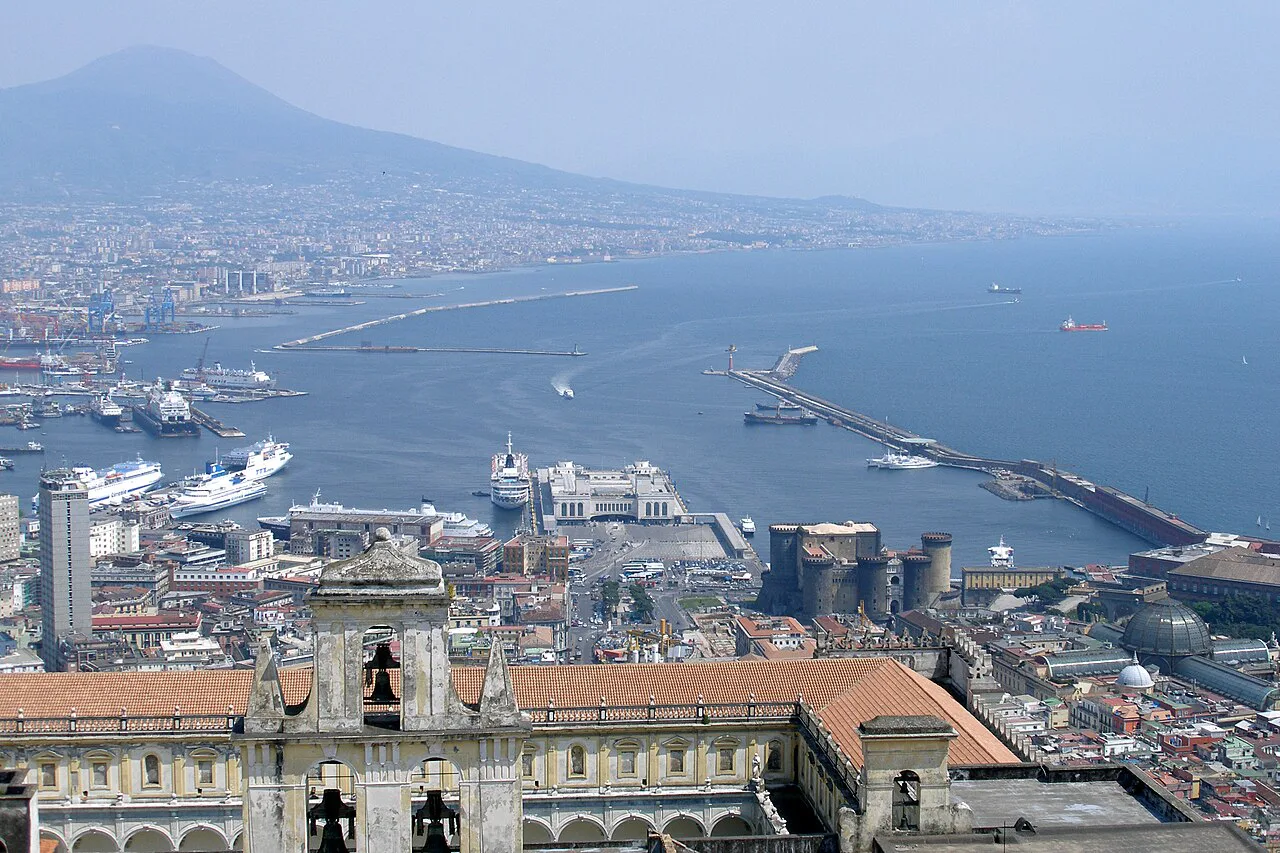
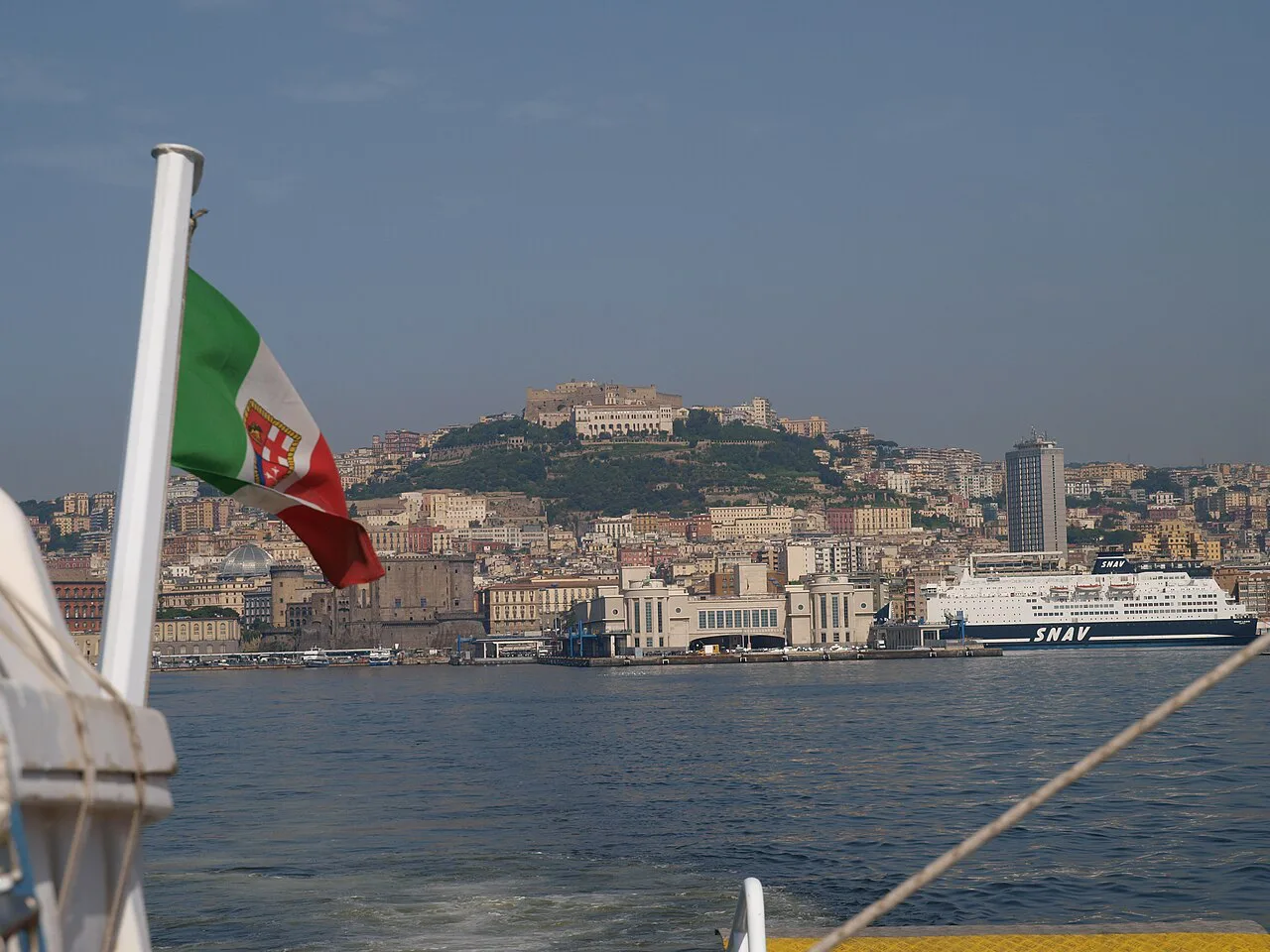
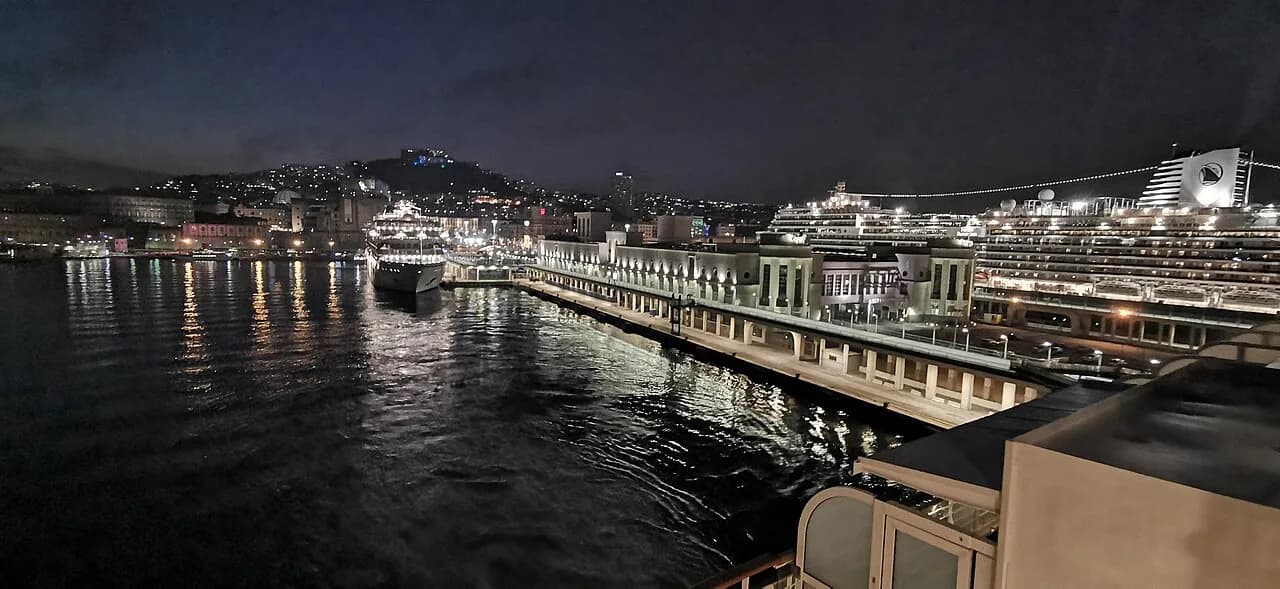
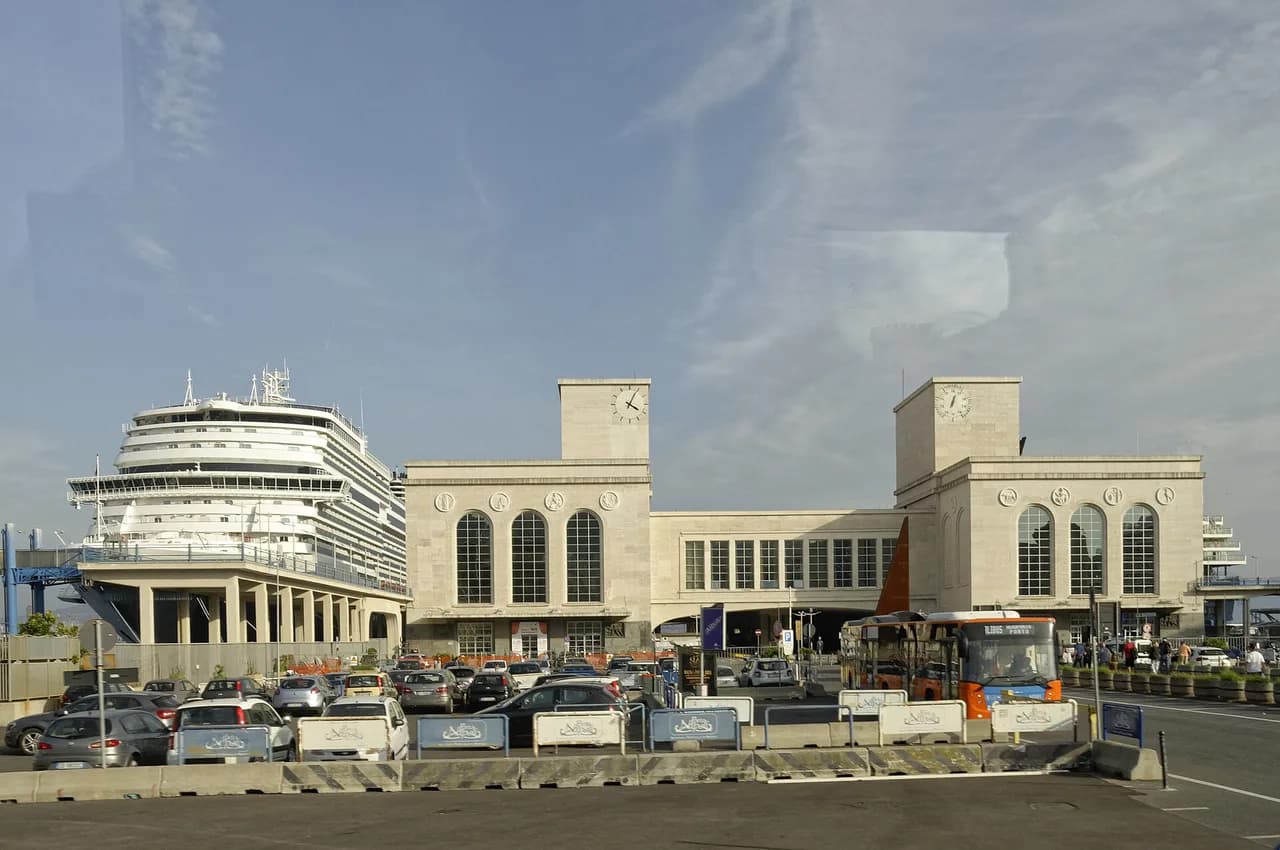
Cruise ships in Naples berth along the Stazione Marittima waterfront, with the terminal buildings facing the old center and the Castel Nuovo and Maschio Angioino castle across the road. The hydrofoil pier for Sorrento, Molo Beverello, sits directly opposite the Maschio Angioino, so the ferry leg starts within a short walk of the terminal rather than a taxi ride away. Naples is a working city port and the layout is easy to follow once you have the full picture, so read the naples cruise port guide before you plan the day.
For the train option you need to reach Napoli Centrale at Piazza Garibaldi, the city's main station, and the lower-level platforms there serve the Circumvesuviana line to Sorrento. Allow for that transfer on top of the rail journey itself when you are counting hours.
Sorrento at a glance: distance, cliff-top layout and Marina Piccola
Sorrento is built on cliffs above the water, and where you arrive determines how much climbing you do. Hydrofoils from Naples dock at Marina Piccola below the town, while the Circumvesuviana train ends at a station only a short walk from the center. That difference matters on a tight call: the ferry crossing is faster, but you land at the bottom of the cliff.
Naples and Sorrento are roughly 50 kilometers apart, and the two cities sit at opposite ends of the Circumvesuviana line with several intermediate stops between them. Plan your day around the harbor-to-harbor or station-to-station reality rather than the straight-line distance.
The ferry from Molo Beverello to Sorrento: crossing time, frequency and ticket buying
High-speed hydrofoils run from Molo Beverello to Sorrento in about 40 minutes, the quickest way across the bay and the one with the best views of Vesuvius and the coast. Several crossings operate daily in the busier months, while winter brings a reduced schedule with no weekend crossings between November and March. That seasonal pattern is the single most important thing to know if your call falls outside the summer.
A one-way hydrofoil ticket costs about 13 euros, with large suitcases charged around 2 euros extra per bag, and you can buy at the ticket office or online. Operators including Alilauro and SNAV run the route, and booking ahead avoids the queue at the pier on busy mornings.
Sea conditions can suspend the crossing when the water is choppy, which is the real risk on a cruise call: a canceled return sailing leaves you on the wrong side of the bay. Build your schedule around an earlier sailing than you think you need, and keep the train as your fallback. If you are prone to seasickness, take precautions before boarding.
The Circumvesuviana train from Napoli Centrale to Sorrento: cost, journey time and station access
The Circumvesuviana local train runs from the lower level of Napoli Centrale to Sorrento in about 70 minutes, ending at the far end of the line. Tickets cost about 4 euros one way, making this the cheapest option by a wide margin. Trains are basic commuter stock with no air conditioning, no bathrooms and little room for large bags, and they get crowded in the morning and afternoon peaks.
There is no elevator or escalator down to the Circumvesuviana platforms at Napoli Centrale, so anyone with mobility challenges or heavy bags should consider starting from Porta Nolana station instead. Keep valuables out of sight on the evening trains, when pickpockets are a known problem.
Campania Express: what the visitor train gives you for the higher fare
The Campania Express uses the same line but stops only at visitor-relevant stations such as Pompeii, Herculaneum, Vico Equense and Sorrento, cutting the run to around 60 minutes in more comfortable, modern carriages. You pay more than the Circumvesuviana fare for that time saving and the calmer ride. Tickets can be bought at the ticket desks in the lower concourse of Napoli Centrale or booked online in advance, which secures a seat in the popular summer months.
Getting from Naples cruise port to Napoli Centrale for the train
The station sits at Piazza Garibaldi, inland from the waterfront, and the straightforward link from the port area is a short taxi ride or a city bus. Allow time for the transfer on top of the roughly 70-minute rail leg, because the walk with luggage is not pleasant. On a cruise call you are better off taking a taxi directly from the terminal to Napoli Centrale than chaining together local buses.
If you are combining the train with a Pompeii stop, note that the Circumvesuviana and Campania Express both call at the Pompeii stations, so one rail day can cover both sites only if your hours ashore are generous. Compare that against the naples port to pompeii options before committing to Sorrento as well.
Bus options from Naples to Sorrento and who they suit
Road coaches connect Naples with Sorrento, including an airport shuttle from Capodichino that reaches Sorrento in just over an hour for about 10 euros, with luggage space on board and tickets sold on the vehicle. That service is aimed at air arrivals, but it shows what the road route can do when traffic cooperates. Road transfers are also available by taxi, typically around 120 euros one way, with the rate worth agreeing before you set off.
Coastal traffic between Naples and Sorrento is heavy almost year-round and can be severe on summer weekends, holidays and through August, which is precisely when a fixed all-aboard time makes road travel the riskiest choice. A private car is the most hassle-free option and the only realistic one for very early or very late departures, but it still sits in the same jams.
Arriving in Sorrento: climbing from Marina Piccola or walking from the station
From the hydrofoil landing at Marina Piccola, reaching the center means either a climb on foot that includes roughly 100 steps partway up, or a public bus or taxi up the hill. Factor that into your arrival and, more importantly, your departure: you need to be back at the pier with margin, not hailing a taxi five minutes before the boat leaves.
The Circumvesuviana station, by contrast, is a short walk from the center, and the Campania Express ends at the same Sorrento station. From there Piazza Tasso and the main shopping streets are within easy reach on foot. That convenience is the train's quiet advantage over the faster ferry.
How long you actually need ashore in Sorrento
Sorrento's historic core is compact: Piazza Tasso, the lanes behind it, the terrace viewpoints over the bay and the cathedral can be covered at an unhurried pace in a couple of hours, with time left for a coffee or a plate of gnocchi alla sorrentina. Add the cliff descent back to Marina Piccola or the walk to the station and you have a comfortable half day in town.
Anything beyond that, such as a drive along the Sorrentine Peninsula or a visit to a nearby village, eats into the return leg and pushes you toward a ship-organized tour. Treat Sorrento itself as the goal and you will not need to rush.
Fits and misfits: 6-hour, 8-hour and 10-hour calls
On a six-hour call, the ferry is the only version of Sorrento that makes sense: a 40-minute crossing each way leaves you roughly three hours in town once you allow for walking to the pier and the climb from Marina Piccola, and that is tight but workable if the sea is calm. The train, at 70 minutes each way plus the transfer to Napoli Centrale, consumes too much of the day.
An eight-hour call suits either the ferry or the Campania Express, giving you time for the center, the terraces and a proper lunch. A ten-hour call opens up a slower day with a walk down to Marina Grande or a look at the Bagni della Regina Giovanna area, and it gives you room to absorb a delayed crossing.
If your ship is in port for less than six hours, stay in Naples rather than gamble on the round trip. The city's own attractions, from the archaeological museum to the Veiled Christ, sit close to the port and carry no travel risk at all.
Ship tour vs local operator vs going independently: time, cost and return risk
A ship-organized Sorrento tour removes the logistics: transport, timing and the return are handled, and the ship will not leave a tour it has contracted. You pay a premium and lose flexibility, and you often see Sorrento through a coach window with a fixed photo stop or two.
A local operator or a private driver gives you a similar door-to-door service at a lower headline price and more control over the itinerary, but the ship has no obligation to wait if you are late. Going independently by ferry or train is the cheapest and most flexible option, and the one that puts the return risk squarely on your own schedule.
Whichever option you pick, the ship will not wait for independent travelers, so the deciding factor is how comfortable you are with a hard deadline. Compare the alternatives side by side with the excursions from port collection, and double-check the day's departure time before you set out.
The return buffer to build into your day
Work backward from all-aboard rather than from the ship's departure time, and aim to be back at the Naples terminal at least an hour before. The ferry is the leg most likely to fail you: choppy seas can suspend crossings, and the last useful sailing of the day may be earlier than you expect. Confirm the return times at the Molo Beverello ticket office when you buy your outbound ticket.
If you take the train, the buffer needs to cover the walk from Sorrento station, the ride to Napoli Centrale and the transfer back to the port, which together can easily run past two hours. A taxi from the station to the terminal costs money but removes one uncertainty.
Sorrento versus staying in Naples: a quick decision for short calls
Sorrento is worth the journey when you have at least six or seven hours ashore and calm weather, and when you are happy to move quickly through the transport legs. On a short or weather-threatened call, Naples wins: the historic center, the waterfront and the pizza are minutes from the ship. If your itinerary also calls further up the coast, the La Spezia cruise port guide weighs a similar port-day trade-off between a fast crossing and a longer rail leg.
If you are weighing other boat trips from the same pier, the capri from naples cruise port guide covers the alternative crossing from Molo Beverello. Both islands reward an early start and a conservative return plan.
Plan Your Sorrento Day
Decide the transport before you leave the ship: the hydrofoil from Molo Beverello for speed, the Circumvesuviana or Campania Express for reliability when the sea is up, and a road transfer only if you accept the traffic risk. Whichever you pick, buy your return ticket early and set a personal cutoff time well before all-aboard.
If you are staying in Naples before or after the cruise, the hotels near naples cruise port guide covers where to base yourself within walking distance of the terminal. For everything else about the port itself, start with the Naples Cruise Port Guide.
Frequently Asked Questions
How long is the ferry from Naples to Sorrento?
The hydrofoil from Molo Beverello takes about 40 to 45 minutes, depending on sea conditions. It lands at Marina Piccola, below the town, so add the climb or a short bus or taxi ride up to the center.
Do you need to book the Sorrento ferry in advance?
Booking ahead secures a seat on the sailing you want, particularly in summer and on the return leg. Tickets are also sold at the Molo Beverello ticket office, and buying there avoids any online booking fee.
Is there a train from Naples to Sorrento?
Yes. The Circumvesuviana commuter train runs from the lower level of Napoli Centrale to Sorrento in about 70 minutes, and the Campania Express covers the same route in around 60 minutes with fewer stops and more comfortable carriages.
How far is Naples from Sorrento?
The two cities are roughly 50 kilometers apart across the Bay of Naples. By water the crossing is about 40 minutes; by rail it is around an hour or more, plus the transfer between the cruise terminal and Napoli Centrale.
Can you visit Sorrento independently from a Naples cruise call?
Yes, if your call is long enough and the sea is calm. The ferry is the practical option for a six-hour call, while an eight-hour or longer call comfortably fits either the ferry or the train. The ship will not wait for independent travelers, so keep a generous return buffer.
Is the ferry or the train better from Naples cruise port to Sorrento?
The ferry is faster and starts a short walk from the terminal, but it can be suspended in choppy seas and lands below the cliffs. The train is cheaper, drops you near the center, but requires a transfer to Napoli Centrale and a longer ride.
Sources
Port-day notes for your next cruise
Optional updates to our port guides.
You might also like
Continue reading
More guides you'll find useful