Salerno Cruise Port to the Amalfi Coast: Ferry, Bus or Tour
Ferries from Molo Manfredi reach Amalfi in about 45 to 60 minutes. Compare ferry, bus and ship tours for your Salerno port day and plan the return buffer.
On this page
Salerno works as an Amalfi Coast port because the crossing leaves from the same pier area where your ship ties up at Molo Manfredi, rather than from a terminal across town. That single fact makes a coastal village reachable without a transfer, which suits passengers with six to eight hours who would rather see one place properly than collect three. If you are weighing up which port makes the easiest day on the coast, the options from the naples cruise port to amalfi coast are worth reading alongside this one.
The trade-off is time. Amalfi is the closest and most practical single stop, Positano takes longer and involves steep streets, and Pompeii competes as a history day reached by train from the town station. Decide on one destination before you leave the ship, then build the day backwards from your all-aboard time.
Where ships dock at Molo Manfredi
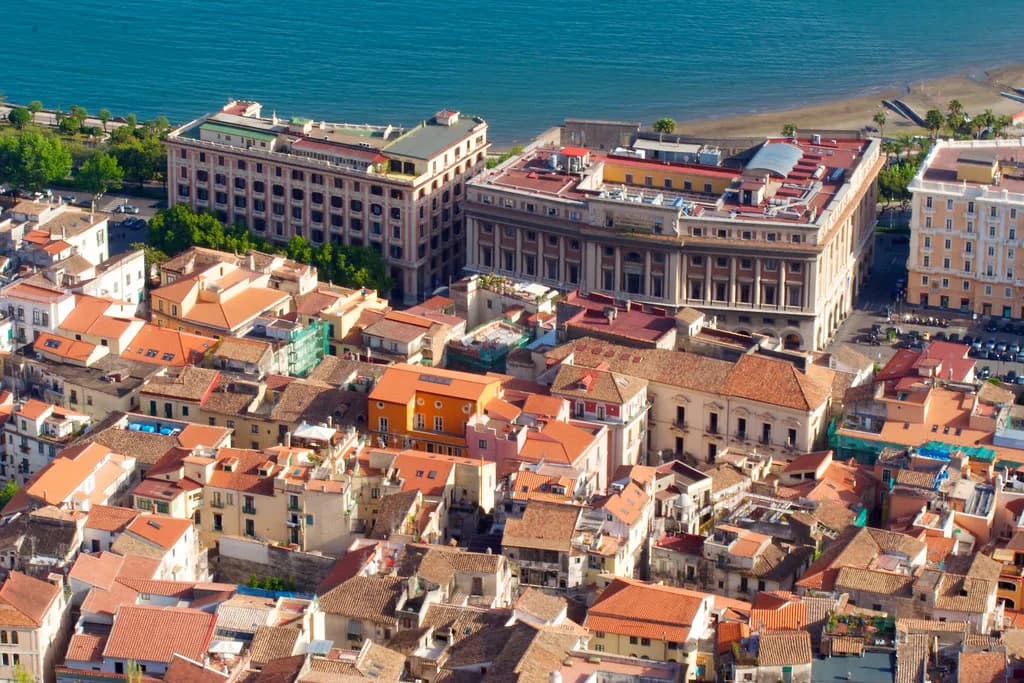
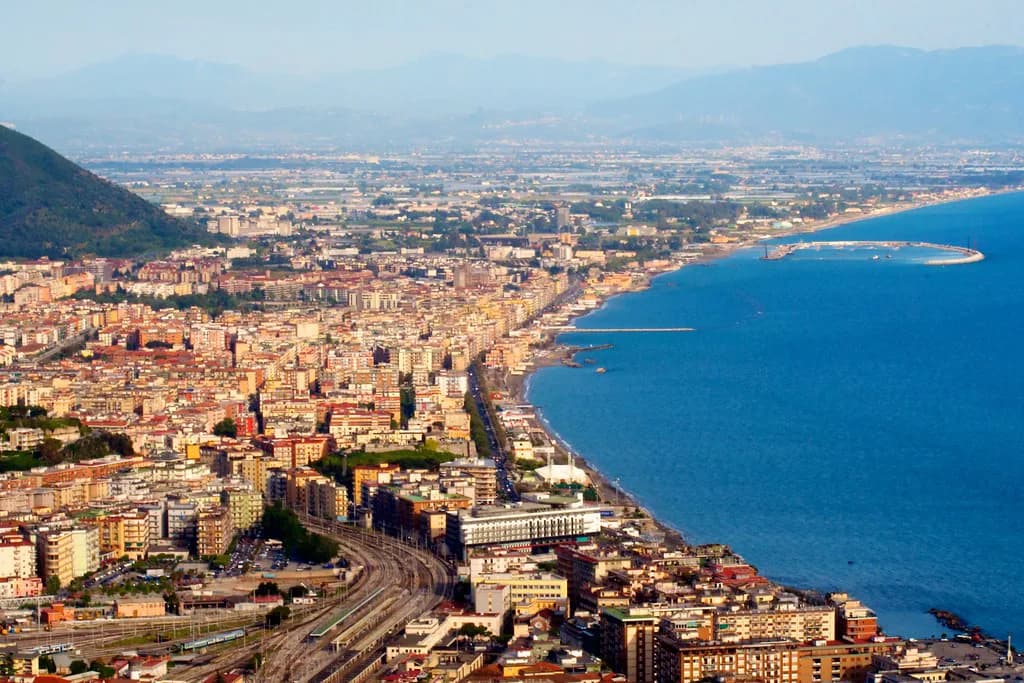
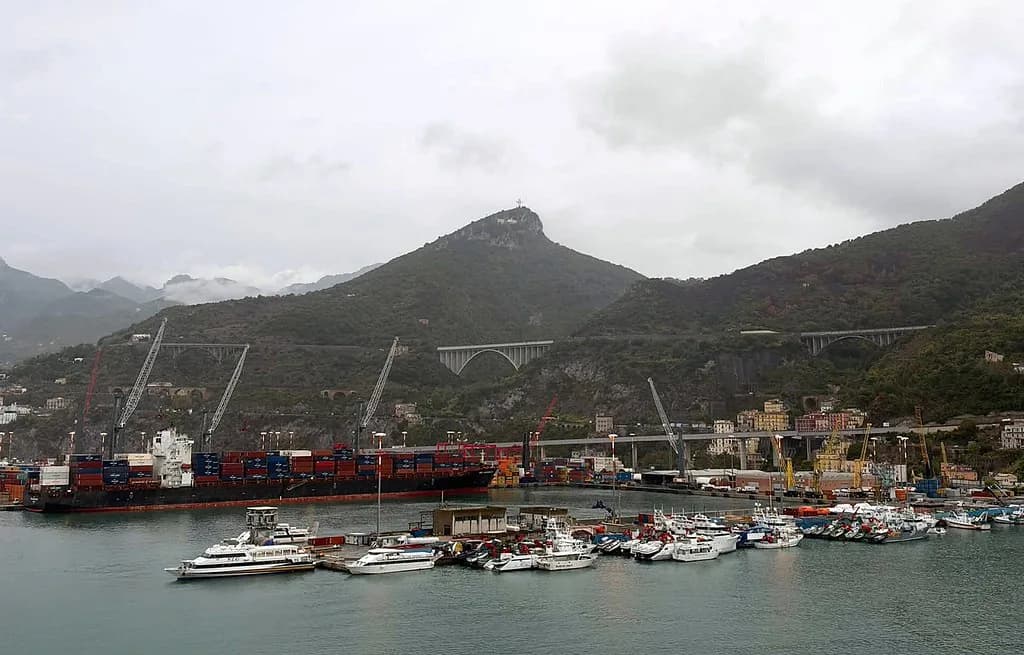
Cruise ships dock at Molo Manfredi, the pier of the Port of Salerno's Stazione Marittima on the western side of the city, next to Piazza della Libertà and facing the bay. Passengers walk off the ship onto the pier with no tendering, and the flat route into the Old Town takes roughly 10 to 15 minutes on foot.
Because the waterfront and the historic streets sit on level ground, you do not need a shuttle to start your day. The promenade at Lungomare Trieste begins near Piazza della Libertà, so a short walk from the gangway puts you on the seafront with the Old Town just inland.
The ferry terminal is steps from the pier
Molo Manfredi doubles as a ferry terminal, which is why Salerno is such a straightforward coast day. Boats to Amalfi, Positano and Capri leave from this same pier area, literally steps from where the cruise ship is berthed, so there is no bus or taxi leg before you board.
Sailings run frequently in season, and the crossing to Amalfi takes about 45 to 60 minutes. Positano takes longer at roughly 60 to 75 minutes, and Capri is about an hour away, so the ferry is your fastest reliable route along this coast.
In peak season these boats fill quickly, and booking ahead through an operator or ferry aggregator protects your place on a specific departure. That matters most on a port day, when a sold-out midday sailing can strand you on the quay with no fallback but the road.
The second ferry terminal at Masuccio Salernitano
Salerno has a second ferry terminal, Masuccio Salernitano, about 2 km south of the cruise pier near Piazza della Concordia and the train station. It handles additional routes to Amalfi Coast towns including Amalfi, Positano, Cetara and Maiori, plus seasonal links to Capri and Sorrento.
For a cruise passenger, Masuccio Salernitano is the fallback rather than the default, since Molo Manfredi is the closer and simpler departure point. It becomes relevant if your preferred sailing leaves from there, in which case budget the walk or a short taxi ride south along the waterfront before the crossing even begins.
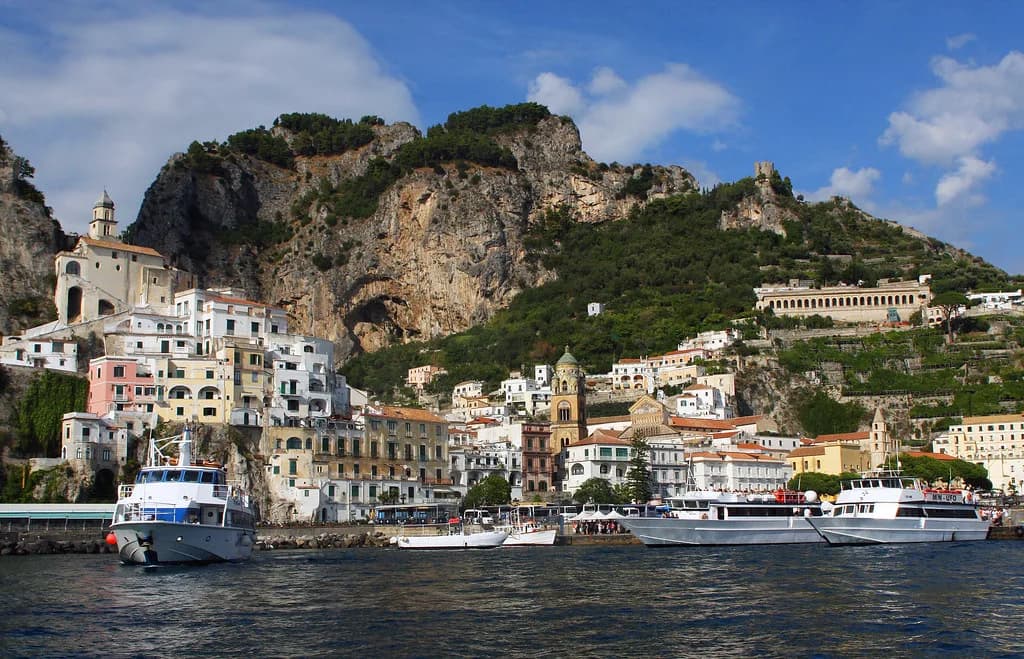
Amalfi by ferry: the practical single stop
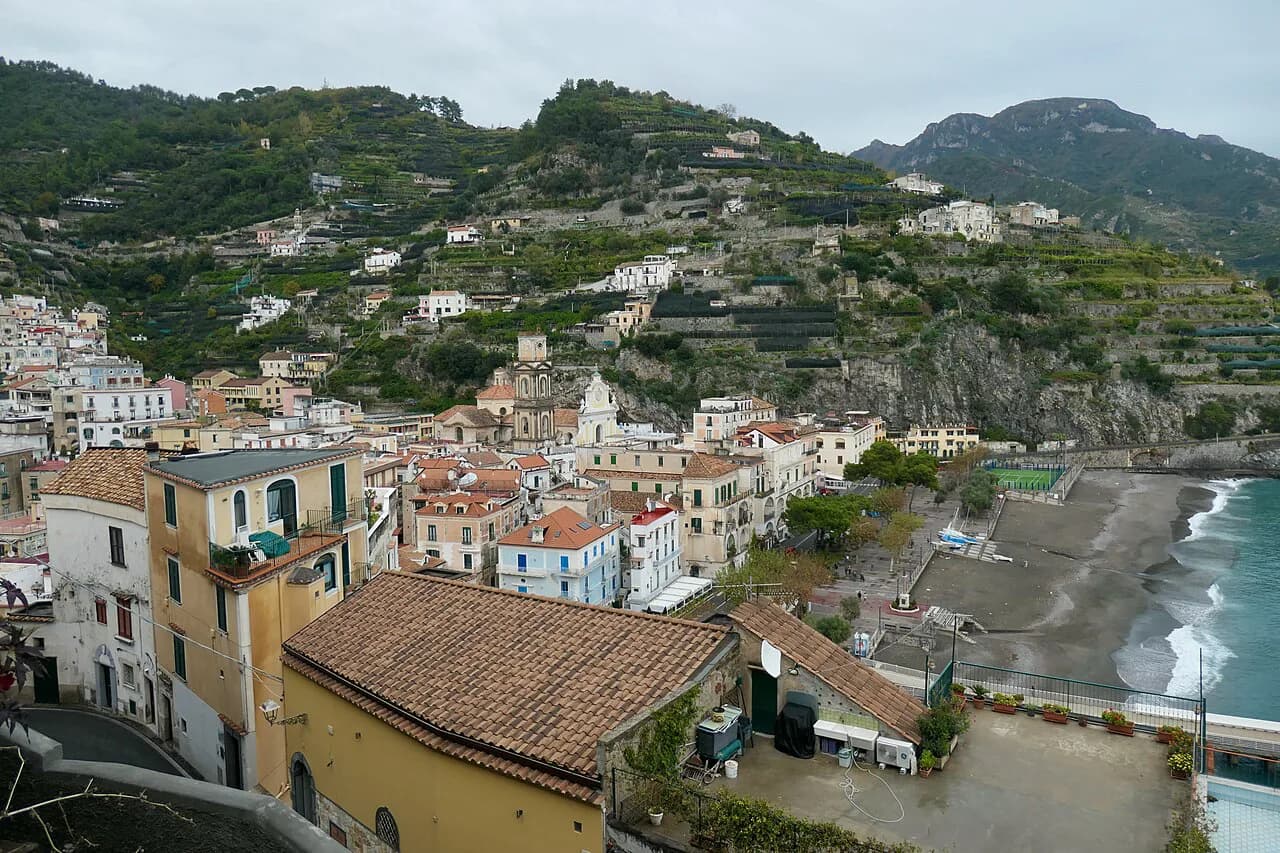
Amalfi is the strongest choice for a first visit because it packs the essentials into a compact centre: the ninth-century cathedral on the main square, a central beach and narrow streets that reward an hour or two of wandering. Including the round-trip crossing, allow at least four to six hours for the outing.
The pattern that works is an early sailing out, two or three hours ashore, and a return crossing that leaves a comfortable margin before all-aboard. Ferries expose you to queues at the ticket office and at the gangway in high season, so pick your return boat before you start sightseeing rather than deciding at the harbour.
Positano by ferry: longer crossing, steeper streets
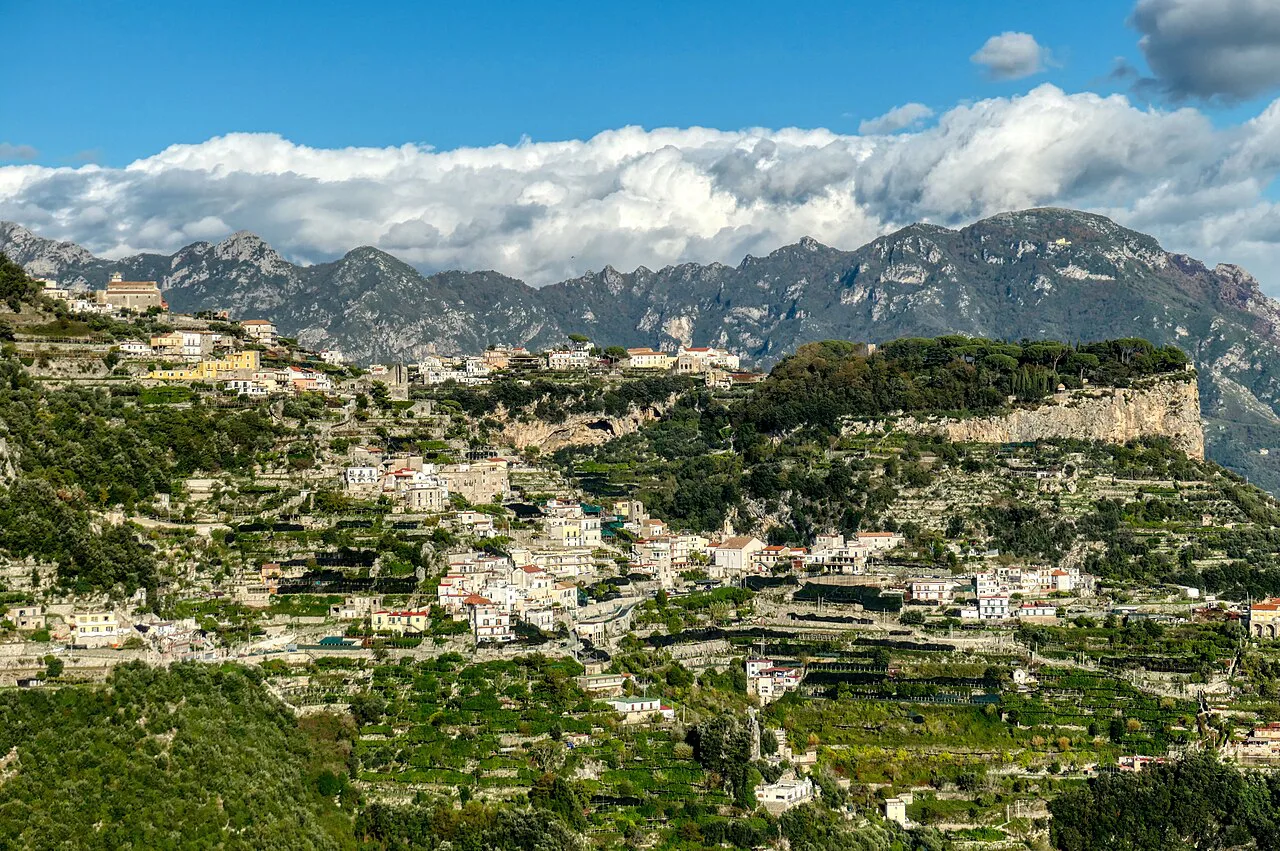
Positano is the more photogenic village, with houses stacked down the cliffs, but it costs you more time in both directions. The crossing runs about 60 to 75 minutes each way, and the village itself is built on steep flights of steps, so the walking is slower and harder than in Amalfi.
On an eight-hour call, Positano can work if you accept a short visit and skip the beach. On a six-hour call, the round-trip crossing alone eats a large share of your hours, which is why Amalfi is usually the better single coastal stop from Salerno.
Capri by ferry from Salerno
Capri is reachable from the same pier area in about an hour, but the island is a full day rather than a quick add-on. Between the crossing, the marina at the foot of the island and the climb or shuttle up to the towns, you need most of a long call to make the trip feel worthwhile.
Choose Capri only when your ship stays well beyond eight hours and you are comfortable managing two crossings and an island transfer on your own clock. For a standard call, the Amalfi Coast villages give you more coast per hour of travel.
The Amalfi Coast by SITA bus: cheaper, but traffic-exposed
Regional SITA buses run along the coastal road from Salerno to Amalfi and Positano, and they are the budget option for reaching the coast overland. The catch is the road itself: heavy traffic and unpredictable journey times make the bus a poor fit when your port hours are fixed and the ship will not wait.
If you take the bus anyway, ride it in one direction and consider the ferry for the return, so a traffic jam cannot consume your entire buffer. Local buses within Salerno also connect the port area with the train station, which is useful if you are heading to Pompeii instead.
Salerno to Pompeii by train as the alternative day
Pompeii is the competing day for history-focused passengers, reached by direct regional train from Salerno's main station. The ride takes about 40 to 60 minutes, followed by a walk or short transfer from the station to the site entrance, and the ruins themselves need two to three hours at an unhurried pace.
Budget four to six hours in total including travel, and note that the walk from the cruise pier to Stazione di Salerno takes 25 to 30 minutes, or a short taxi or local bus ride to the Concordia stop followed by about five minutes on foot. A guided tour earns its keep at Pompeii, where the site is large and short of signage in places.
Ship tours, local operators or independent ferry travel
Going independently by ferry is the fastest and most flexible route to Amalfi, and it suits confident travellers who will choose a return sailing with a real margin. The risk is yours to manage: if a crossing is cancelled or delayed, the ship will not hold the gangway, so pick a return boat that leaves slack rather than cutting it fine.
A ship tour removes the transport planning and usually handles a coach along the coastal road, which is slower than the ferry but protected by the cruise line's return arrangements. Local operators sit in between, often combining a boat leg with a guided walk, and they can cover more than one village in a day if that is what you want. Check current prices and dates before you sail.
How long the Amalfi Coast needs
On a four- to five-hour call, stay in Salerno: the Old Town, cathedral and waterfront are all within a short walk of the pier, and you avoid any transport risk. A six- to eight-hour call supports one main destination, normally Amalfi or Pompeii, and trying to add a second place rarely works.
With eight hours or more, you can manage a fuller coast run or a relaxed Pompeii visit, with room to adjust if a sailing slips. Longer calls also make Positano viable, since the extra crossing time stops being the deciding constraint.
Return-to-ship buffer
Work backwards from all-aboard, not from the published departure time, and treat the last feasible ferry as one sailing too late. Ferries are frequent in season but not immune to queues, and a return crossing that lands you at the pier with only a few minutes to spare turns a good day into a sprint.
Keep the buffer larger for Pompeii by train, because a missed regional service means waiting for the next one rather than walking to an alternative berth. Carry the port's location and your ship's name with you, and note that cash in euros is useful for small cafés and ticket windows even where cards are accepted.
Staying in Salerno: Old Town, cathedral and Lungomare Trieste
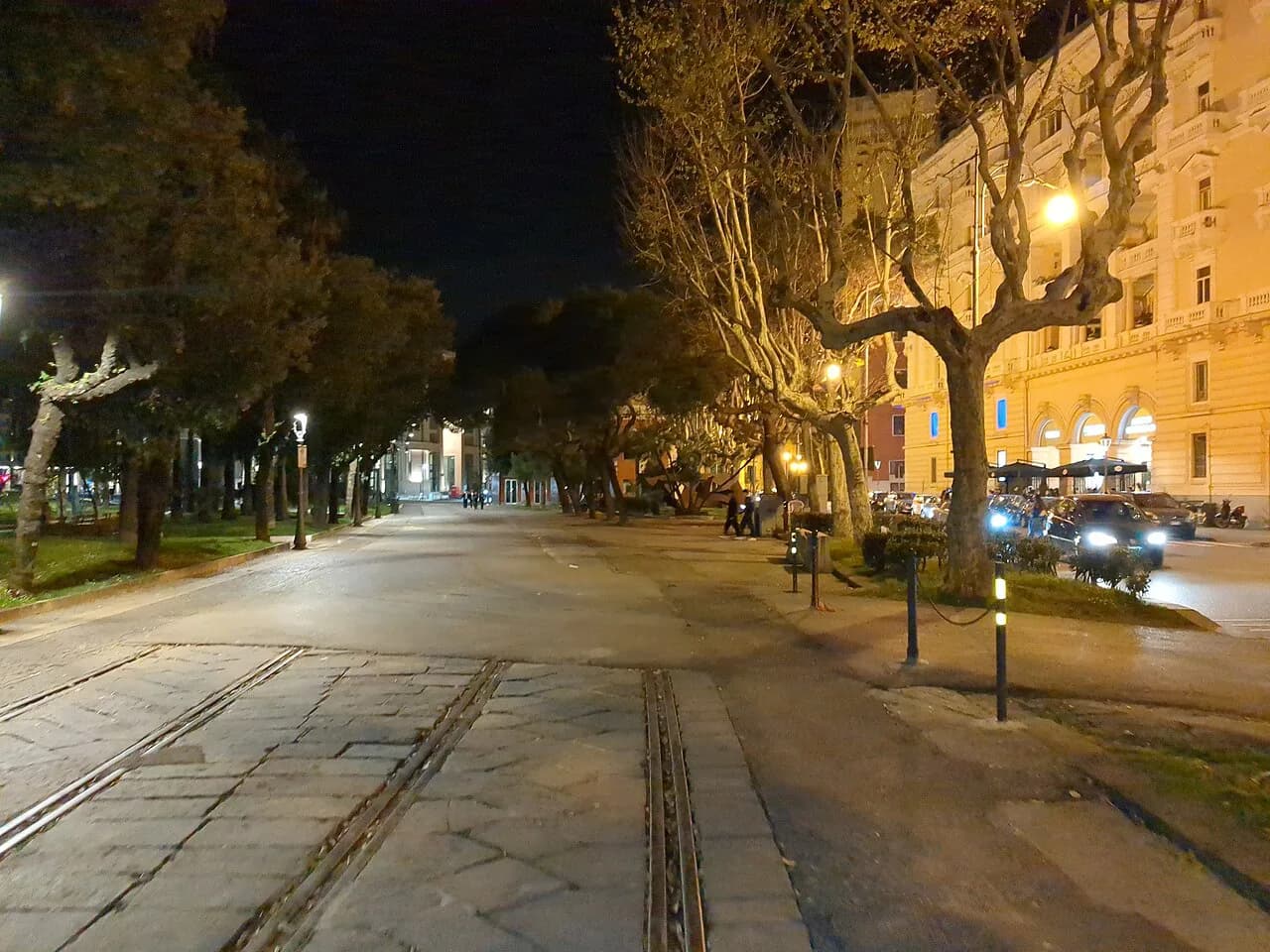
When the call is short or the weather turns, Salerno itself fills a port day comfortably. From the pier, walk into the compact medieval Old Town to see the cathedral with its crypt and bronze doors, follow Via dei Mercanti, and loop back along the palm-lined Lungomare Trieste past the Villa Comunale park.
Allow one to two hours for the centre at a relaxed pace, and shop earlier in the day since Old Town shops often close for several hours in the afternoon. The main shopping streets, Via dei Mercanti and Corso Vittorio Emanuele, are both within walking distance of the ship.
Practical notes for the walk from the pier into town
The port area, promenade and main streets are flat and easy to walk, but the Old Town has cobblestones and uneven surfaces, so sturdy shoes help. If you are heading up to Arechi Castle for the view over the Gulf of Salerno, expect steeper streets; a taxi is the most reliable way up, and the local bus that serves the castle runs infrequently.
Weather on this coast changes quickly outside summer, so a light jacket or umbrella belongs in your day bag even on a bright morning. Keep the pier's position relative to Piazza della Libertà in mind as your landmark for the walk back.
Plan Your Salerno Port Day
Treat the ferry berth beside your ship as the deciding advantage of a Salerno call. Book an early crossing to Amalfi, fix a return sailing with a real buffer, and you get a genuine Amalfi Coast morning without a coach transfer.
If your hours are tight or the forecast is poor, keep the Old Town and Lungomare Trieste as the fallback and enjoy a flat, low-risk day on foot. Either way, the pier's location makes Salerno one of the easiest Amalfi Coast ports to use independently.
Frequently Asked Questions
Is there a boat from Salerno to Amalfi?
Yes. Ferries run from the Molo Manfredi pier area, which is the same place where cruise ships berth, to Amalfi, Positano and Capri. The crossing to Amalfi takes roughly 45 to 60 minutes, and sailings are frequent in season. Booking ahead in peak season is sensible because boats fill quickly.
How long is the ferry from Salerno to Amalfi?
Allow about 45 to 60 minutes for the crossing to Amalfi, and roughly 60 to 75 minutes to Positano. Capri is about an hour away. These are typical times, so check the operator's timetable for your date before committing to a return boat.
Can you get from Salerno cruise port to the Amalfi Coast independently?
Yes. Ships dock at Molo Manfredi with no tendering, and the Old Town is a 10- to 15-minute walk from the gangway. Ferries to the coast leave from the same pier area, so you can reach Amalfi without a bus or taxi. Managing your return time is your own responsibility.
How do I get from Salerno to Positano?
Take the ferry, which runs from the pier area next to the cruise terminal and takes about 60 to 75 minutes each way. Positano's streets are steep, so walking is slower than in Amalfi. It works best on a call of eight hours or more.
Can you visit the Amalfi Coast from Salerno in a six-hour port call?
One destination, yes, provided you take the ferry rather than the road. Amalfi is the practical choice at that length, with a crossing of about 45 to 60 minutes each way and two or three hours ashore. Trying to combine Amalfi and Positano in that window leaves no margin.
Is the bus or ferry better from Salerno to Amalfi?
The ferry is faster and avoids coastal-road traffic, which makes it the safer option when your port hours are fixed. The SITA bus is the budget alternative but is exposed to heavy traffic and unpredictable journey times, so it suits passengers with generous schedules.
How far is Salerno cruise port from the ferry terminal?
The main ferry departure point is at Molo Manfredi, steps from where cruise ships dock. Salerno's second terminal, Masuccio Salernitano, is about 2 km south of the cruise pier near Piazza della Concordia and the train station, and is mainly relevant to rail arrivals.
Should you take a ship tour to the Amalfi Coast from Salerno?
A ship tour suits passengers who want the return logistics handled or who plan to see more than one village in a day. Independent ferry travel is quicker to Amalfi and gives you more time ashore, but you carry the risk of a delayed return. A local operator can bridge the two.
Sources
Port-day notes for your next cruise
Optional updates to our port guides.
You might also like
Continue reading
More guides you'll find useful