Salerno Cruise Port to Positano: Ferry, Boat or Tour
Ferries link Salerno's waterfront with Positano in about 40 minutes, and the piers sit close to the cruise berths. Plan the crossing and the return.
On this page
A call at Salerno puts one of the Amalfi Coast's most photographed towns within a short sea hop: fast ferries cover the crossing to Positano in around 40 minutes, so the day is built around boat timetables rather than long coach transfers. It suits passengers who want the Marina Grande waterfront, a swim and a slow lunch more than a checklist of sights.
The planning is straightforward once you separate two things: which Salerno pier your ferry leaves from, and how much climbing you are willing to do in Positano itself. The town rises steeply from the beach, so every extra uphill lane eats into the time you have before the return crossing.
What a Positano day from Salerno looks like
Positano sits about 15 nautical miles across the water, and the fastest scheduled crossings take roughly 40 minutes while slower conventional ferries can stretch the same trip to 1 hour 10 minutes or more. Add the walk to the pier, check-in and the return leg, and a comfortable day ashore means treating the crossings as roughly two hours of your port time in total.
Positano is built vertically into the cliffs, so reaching hotels, viewpoints and the upper lanes involves steep stairways and uphill paths from the Marina Grande pier. Pick one end of town rather than trying to cover it all: the beach and lower lanes for a relaxed day, or the climb toward the viewpoints if you have a long call and good shoes.
Where your ship docks in Salerno and how the cruise berths relate to Molo Concordia and Molo Manfredi
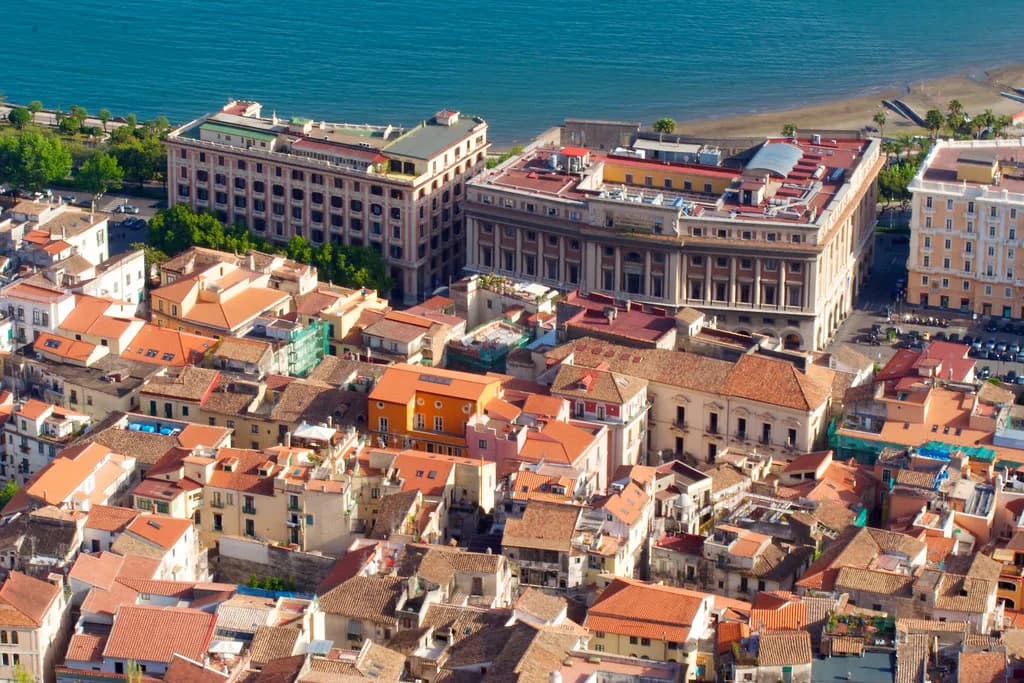
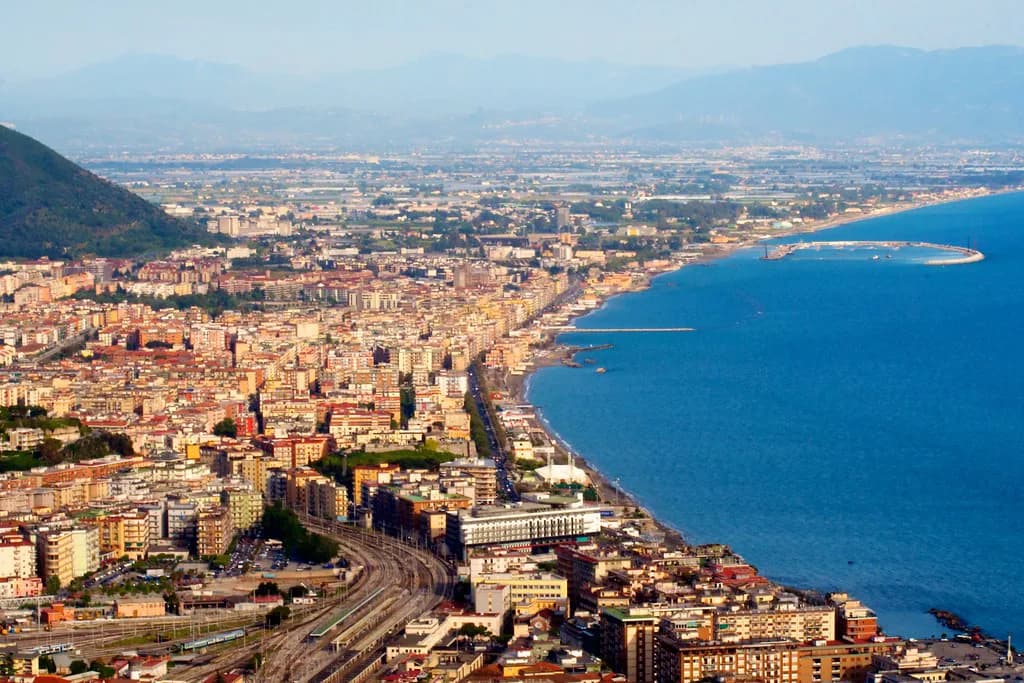
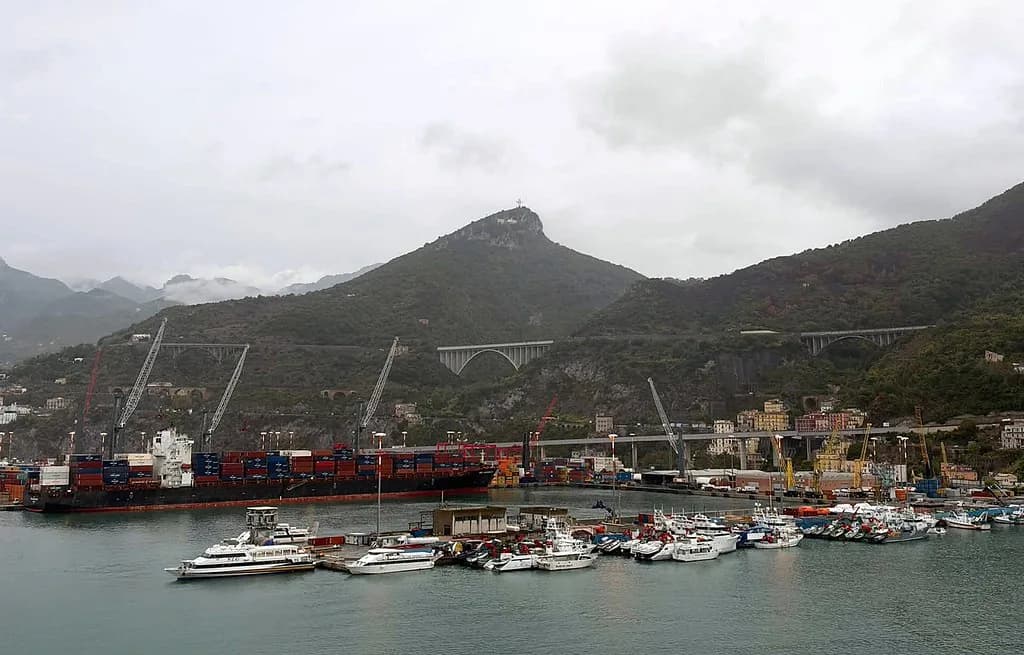
Cruise ships berth along Salerno's waterfront, the same seafront promenade that carries the ferry piers, so you do not need a bus or taxi to reach the boats to Positano. The two departure points that matter are Molo Concordia, also called Molo Masuccio, and Molo Manfredi further along the waterfront. For the wider layout of the port and its terminals, see this salerno cruise port guide.
Ferries to Positano leave from both Molo Concordia and Molo Manfredi, and some companies use both, so the pier printed on your ticket decides your walk. Molo Concordia offers the widest choice of companies and daily departures, while Molo Manfredi is served mainly by NLG, Alicost and Positano Jet.
Walking from the cruise berth to Molo Concordia
Allow more than the bare walking time on a busy morning, because the port area gets crowded and Ferryhopper recommends being at the pier at least an hour before departure in high season and at weekends. That hour covers ticket collection or phone check-in, boarding queues and the chance to pick an unassigned seat in the lounge.
In practice, walk off the ship, follow the seafront toward the station side of the port, and you will reach Molo Concordia without crossing the city. Keep your return crossing in mind on the way out: the same walk back to the ship is your buffer, so note how long it took you with the crowds.
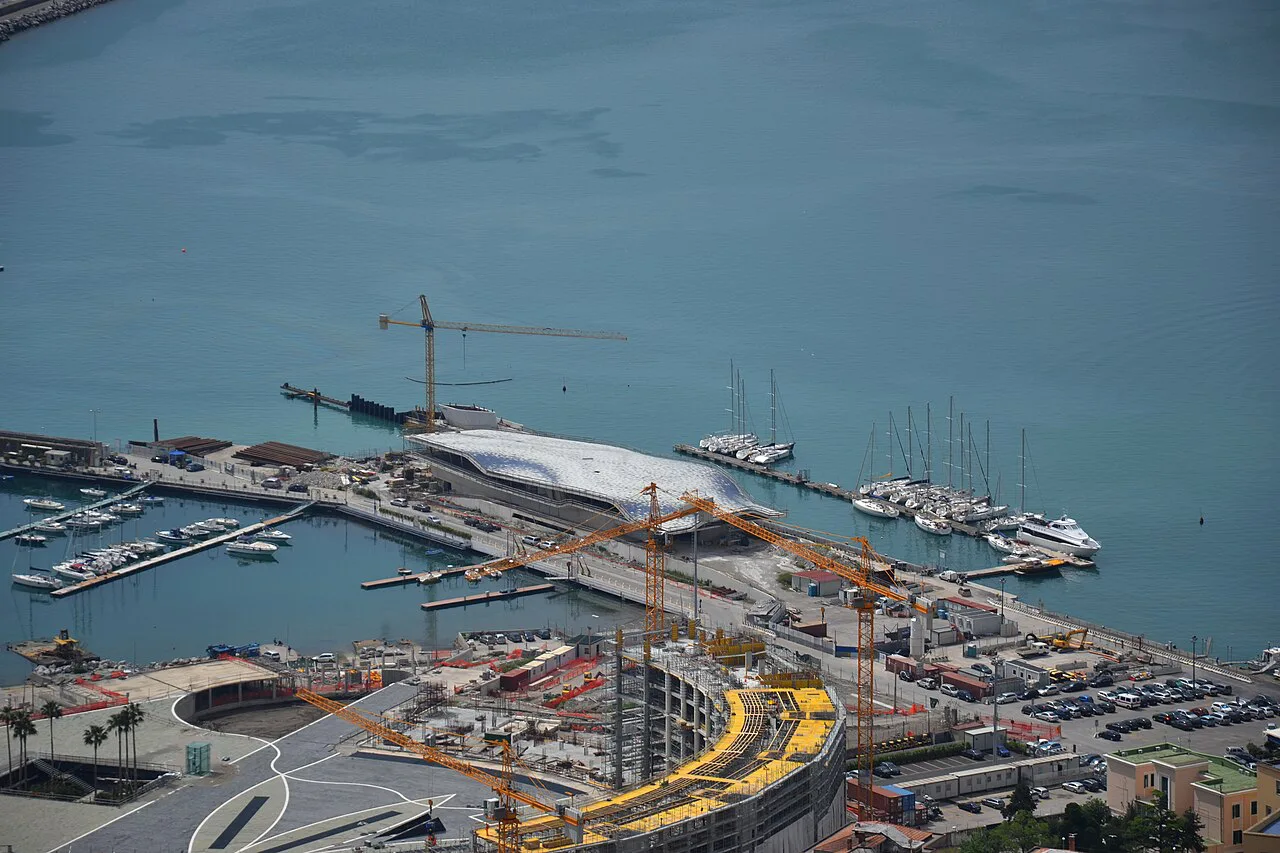
Molo Manfredi and the Zaha Hadid maritime station
Molo Manfredi lies a bit further along the waterfront and hosts the shell-shaped maritime station designed by Zaha Hadid, one of Salerno's landmarks in its own right. It can be the better departure point if you are coming from the historic center, Piazza della Libertà or the seafront side of town, and it is roughly a 10-minute taxi ride from the railway station.
Around the terminal you will find cafés, bars, pizzerias, shops and parking, which makes it a civilised place to wait if you arrive early. The trade-off is that departures here are fewer and concentrated among a handful of companies, so check the pier on your ticket before deciding which way to walk.
Ferry and hydrofoil crossings to Positano
Several operators run the route, including Travelmar, Grassi Junior, Coast Lines, Alicost, Positano Jet and NLG, mixing conventional ferries with high-speed catamarans and hydrofoils. The fastest scheduled crossings take around 40 minutes, usually on Positano Jet services, while NLG and Grassi Junior generally need 50 to 55 minutes.
Conventional ferries take longer, often 1 hour 10 minutes to 1 hour 45 minutes, because they call at extra stops such as Amalfi along the way. For a port day that difference matters: a slow outbound crossing plus a slow return can consume most of a short call, so favour the fastest available sailing in each direction.
Fares on the Salerno–Positano route and where to buy tickets
Published fares for the route start at about 14 euros one way from Molo Concordia and about 16.50 euros from Molo Manfredi, with individual companies quoting roughly 16.50 to 18.50 euros depending on speed and season. High-speed sailings tend to cost a couple of euros more than conventional ferries, which is a fair trade on a fixed port day.
Buy the return leg at the same time as the outbound, and book ahead in summer when morning departures to Positano and evening returns fill up. E-tickets on your phone are accepted at the port for many operators, so you can board without collecting paper tickets.
Arriving in Positano: the Marina Grande pier and the climb into town
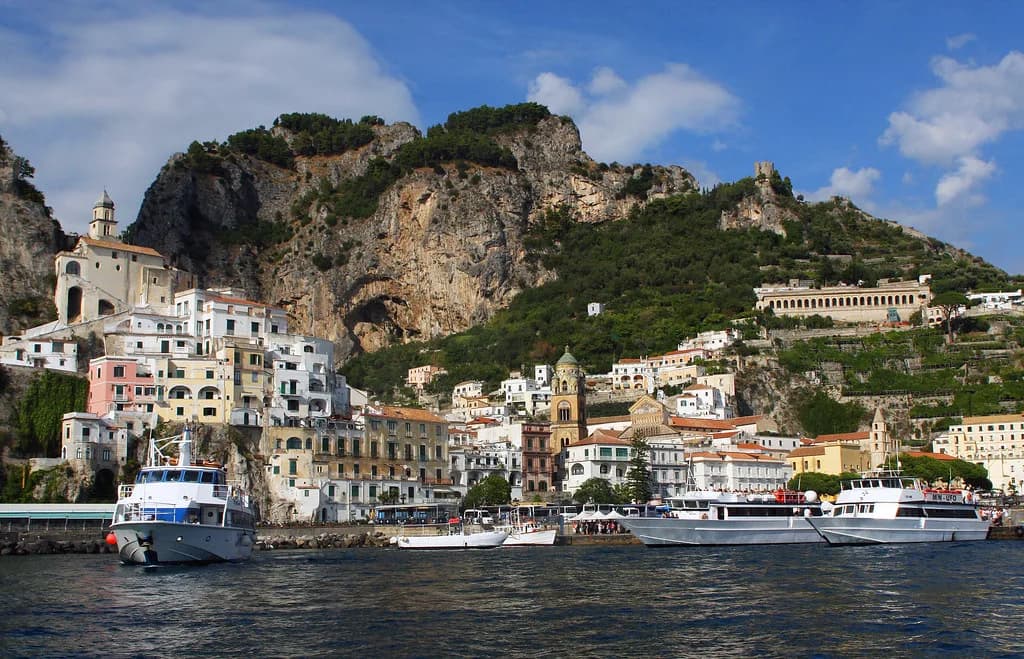
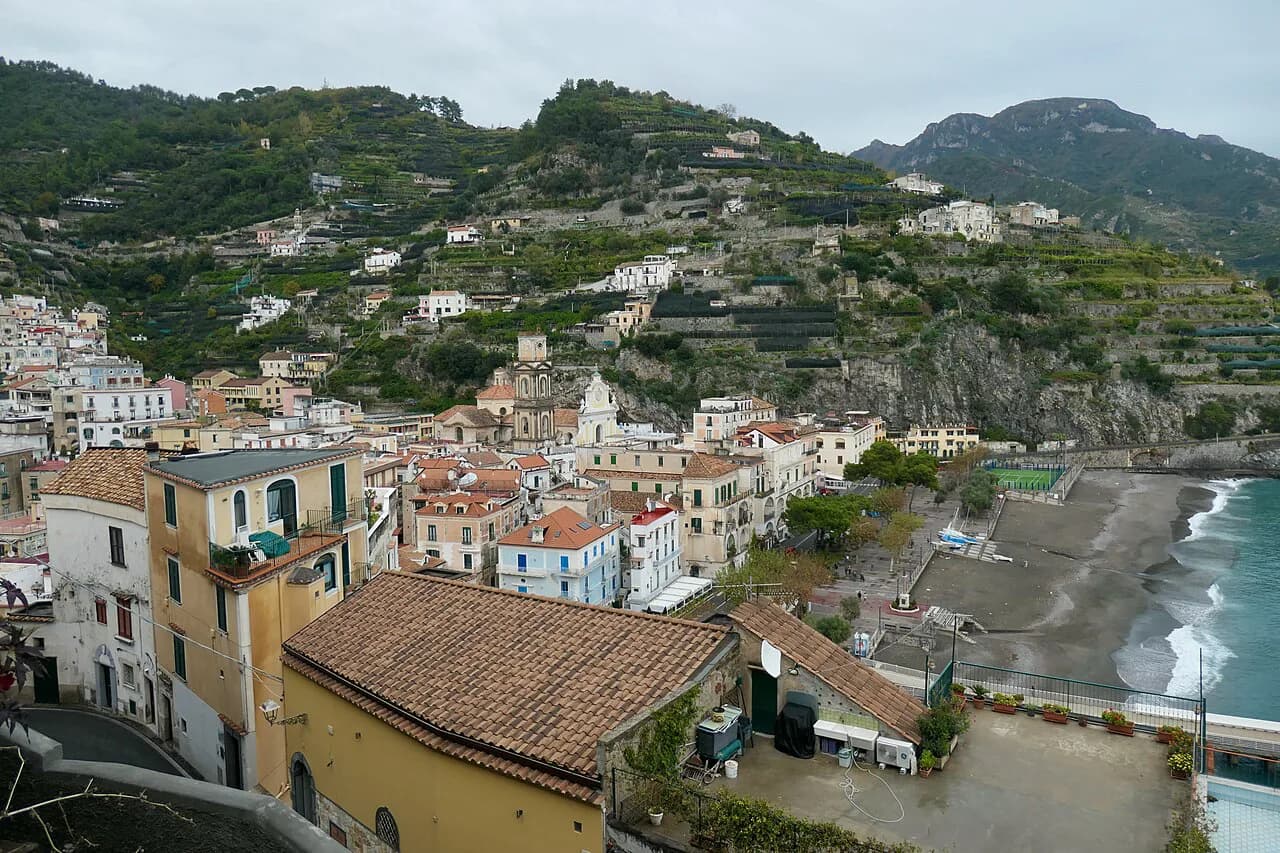
Ferries arrive at the main pier on Marina Grande beach, the town's central seaside area, and the center is only a few minutes away on foot. Around the pier you will find cafés, restaurants, beach clubs, boutiques and boat operators offering trips onward along the coast.
The flat part of Positano is small: the beach, the pier and the lower shopping lanes. Everything above that is stairs and sloping alleys, so decide before you land whether this is a beach-and-lunch day or a climb-and-viewpoint day, and dress for the second option if you choose it.
Getting around Positano on foot
Comfortable shoes are the single most useful thing you can bring ashore, because the town's lanes and stairways climb continuously away from the beach. A sensible plan is to walk up early while you are fresh, then descend toward Marina Grande for food and the return ferry rather than saving the climb for the end of the day.
Distances on the map are short, but vertical gain makes them slow. If anyone in your group struggles with steps, keep the day on the waterfront and treat the upper lanes as a view from below rather than a destination.
The road alternative: bus and car along the coast road
The coast road between Salerno and Positano exists, but it is slow, winding and exposed to summer traffic, which is exactly the kind of uncertainty a fixed all-aboard time cannot absorb. The ferry is the better bet on a port day: the crossing time is predictable and the return pier is on the same waterfront as your ship. Compared with a road-heavy day out of another port, the same sea-over-land logic shapes a Genoa port day too.
There is no direct rail link to Positano, so trains are not an option for the last stretch. If you prefer road transport, use it for a shorter coastal leg and keep the sea for the return when timing matters most.
Ship excursion vs local operator vs independent ferry
A ship excursion to Positano removes the timetable problem: transport is arranged and the group moves together, which suits anyone nervous about the return. The trade-off is less freedom in town and a schedule set by the tour rather than by you.
Going independently by ferry is cheap and fast, but the ship will not wait if you miss the last boarding, so your planning has to assume you catch the crossing you planned. Local boat operators offer a middle path with more flexibility than a coach tour, and you can compare options through these salerno shore excursions.
Whichever route you choose, the risk calculation is the same: the further you travel from Salerno, the more slack you need before all-aboard. Positano is close enough by fast ferry to keep that risk modest, provided you take an early outbound and an early return.
Fitting Positano into a 6-, 8- and 10-hour call
On a six-hour call, aim for the earliest fast ferry out and a return crossing roughly two hours before all-aboard, which leaves time for the beach, a short wander and lunch near the pier. Skip the upper town entirely.
On an eight-hour call you can add one climb to a viewpoint or a longer lunch, still returning on a mid-afternoon sailing rather than the last one of the day. A ten-hour call is the version that feels unhurried: an early crossing, a slow walk up through the lanes, and a return with an hour or more in hand at the Salerno pier.
Return-time buffer
Choose your return crossing by working backwards from all-aboard: subtract the walk from Molo Concordia or Molo Manfredi to the ship, then add at least an hour for delays and queues at the Positano pier. Aim to be at the pier well before the sailing you actually need, with a later ferry as your fallback rather than your plan.
Morning crossings fill up in summer, and Ferryhopper advises booking the return in advance so the day does not hinge on finding space on the spot. Schedules vary by season and day of the week, so check current prices and timetable for your chosen return when you book.
Common mistakes
The most frequent error is walking to the wrong Salerno pier: Molo Concordia and Molo Manfredi are both on the waterfront but far enough apart to cost you a sailing, so read the ticket. The second is booking a slow conventional ferry with extra stops when a fast crossing would have bought an extra hour in Positano.
The third is underestimating the stairways and arriving back at the Marina Grande pier hot, late and out of buffer. Leave the upper lanes with time to spare, and treat the return crossing as the fixed point around which the rest of the day is arranged.
Plan Your Port Day
Positano works well from Salerno because the sea route is short and the piers sit on the same waterfront as the cruise berths. Decide your departure pier from the ticket, take the fastest crossing you can, and pick one part of town to enjoy properly rather than racing the stairways.
Build the day around an early outbound and a return sailing with a clear hour or more of slack before all-aboard. That single decision does more for a stress-free Positano port day than any other part of the plan.
Frequently Asked Questions
How long is the boat ride from Salerno to Positano?
Fast hydrofoil crossings take around 40 minutes, and most high-speed services need 50 minutes to an hour. Conventional ferries that call at extra stops such as Amalfi usually take 1 hour 10 minutes to 1 hour 30 minutes, so the difference is worth weighing.
Can you walk from the Salerno cruise port to the ferry piers?
Yes. Both Molo Concordia and Molo Manfredi sit along the same seafront promenade as the cruise berths, and Molo Concordia is about a 10-minute walk from Piazza Vittorio Veneto and the railway station. Allow extra time in high season and at weekends, when the port area gets busy.
Which Salerno pier do ferries to Positano leave from?
They leave from both Molo Concordia, also called Molo Masuccio, and Molo Manfredi, and some companies use both piers. Molo Concordia has the widest choice of companies and departures; Molo Manfredi is served mainly by NLG, Alicost and Positano Jet. Always follow the pier printed on your ticket.
Is there a train from Salerno to Positano?
No direct rail link runs to Positano, so the last stretch is by sea or road. The ferry from Salerno is the fastest and most predictable option for a port day, while the coast road is slower and vulnerable to summer traffic.
Is Positano worth it on a cruise stop in Salerno?
It is the most convenient big Amalfi Coast name from Salerno, with fast crossings of around 40 minutes and a pier right on Marina Grande beach. It suits passengers who want the waterfront, a swim and a relaxed lunch more than a full day of sightseeing.
How much time do you need in Positano from a cruise ship?
Budget roughly two hours of your port time for the crossings and pier walks, then add the hours you want ashore. A six-hour call fits the beach and lower lanes, while eight to ten hours allows one climb to a viewpoint and a longer meal.
How much is the ferry from Salerno to Positano?
Fares depend on the operator, the crossing speed and the Salerno pier you leave from, and fast sailings usually cost a little more than conventional ferries. The operators' booking pages list the fare for your date and departure pier before you pay.
Sources
Port-day notes for your next cruise
Optional updates to our port guides.
You might also like
Continue reading
More guides you'll find useful