Valletta Cruise Port Guide: Terminals & Port Day Tips
Ships berth at the Valletta Waterfront terminal, a short walk from the city gate. Here is how to use your hours ashore in Malta's compact, walled capital.
On this page
Valletta suits passengers who want a dense, walkable capital rather than a coach transfer followed by a long stroll. The whole city is a UNESCO-listed fortress town built by the Knights of St John, with bastions, gardens and harbor views stacked inside a compact peninsula. A call of even a few hours puts the cathedral, the palace and the Barrakka terraces within reach on foot.
The trade-off is heat and stairs. Valletta sits on a grid of sloping streets behind fortifications, and the climb from the waterfront to the main gate is the first decision of the day. Walkers who pace themselves and use the lifts get the most out of a short call; anyone with limited mobility should plan the route around the level stretches and the lift access.
Where ships dock at Valletta Cruise Port
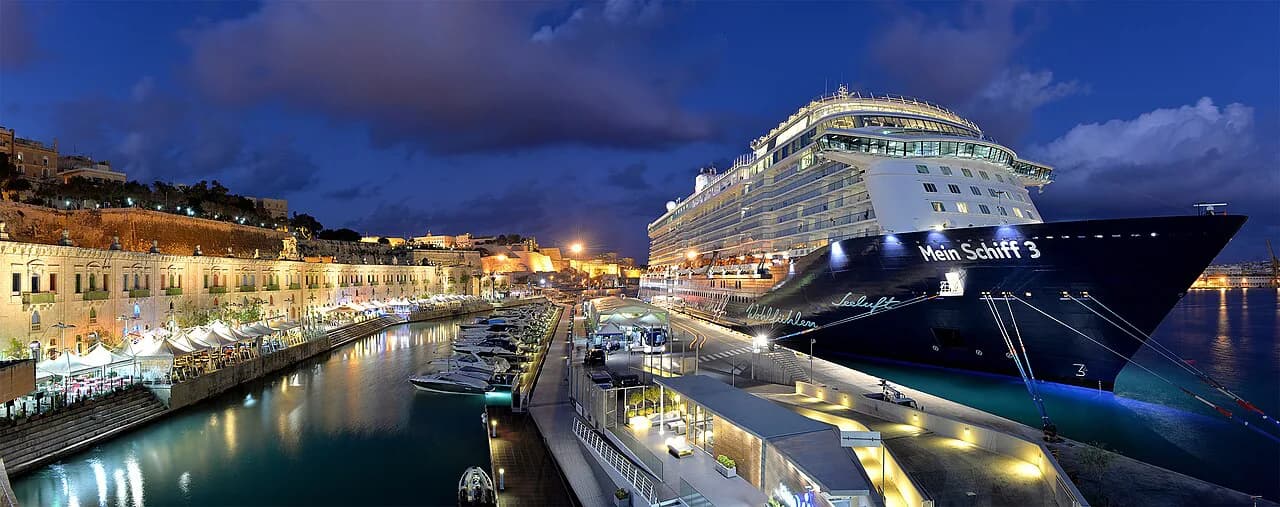
Cruise ships berth at the Valletta Waterfront Cruise Terminal, which sits inside Grand Harbour, one of the largest natural harbors in the Mediterranean. The terminal complex has three passenger facilities, with the main one housed in the historic Magazino Hall on the waterfront arcade.
The port operates eight quays, including the Pinto quays, Boiler Wharf, Deep Water Quay and Lab Wharf, so your gangway can be at any of several berths along the same waterfront. Treat the exact berth on your cruise line's daily programme as the one that matters for the walk back.
The terminal is about 1.5 km from the center of Valletta, which in practice means a walk of roughly fifteen to twenty minutes up to the City Gate, plus the climb. Because the quays line the same harbor edge, the route into town is straightforward and does not require a taxi.
The Valletta Waterfront and the walk to the city gate
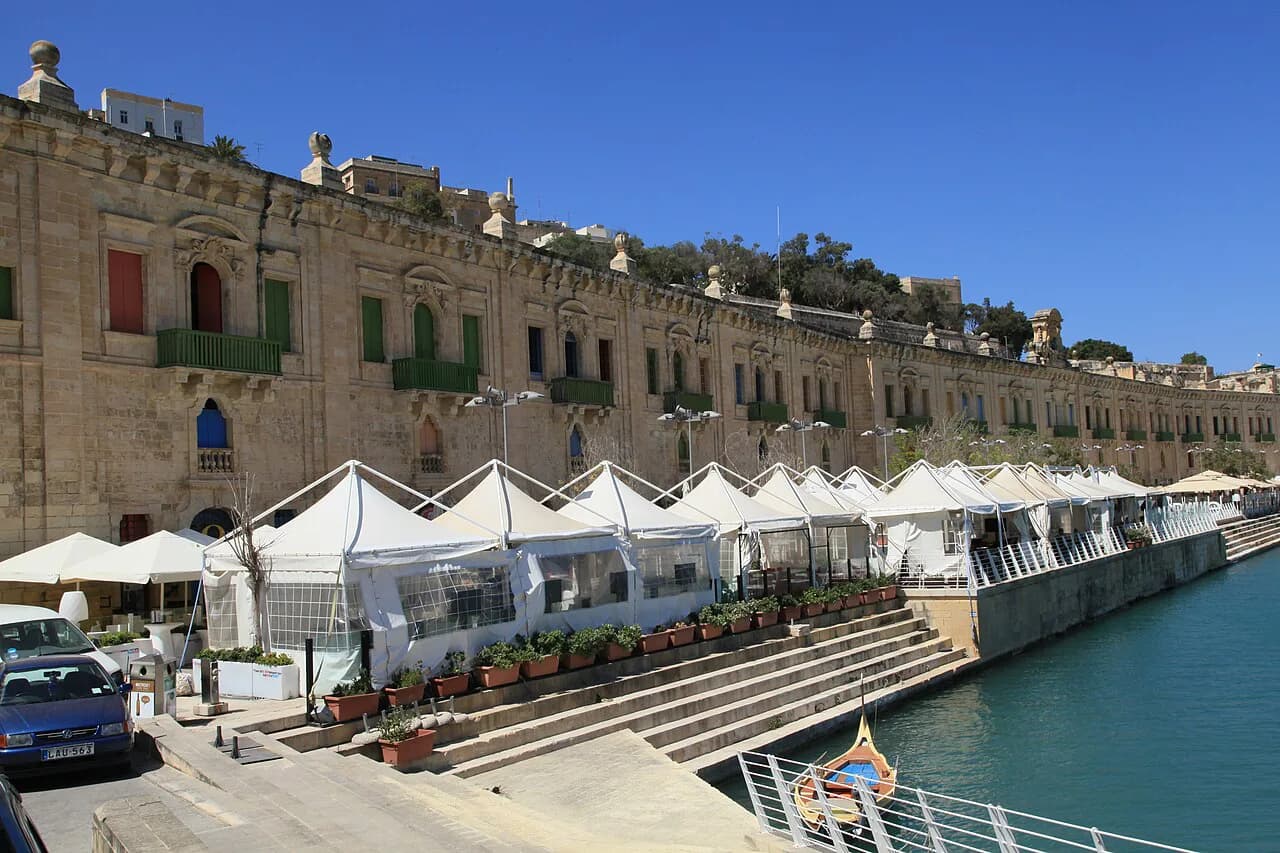
The Valletta Waterfront is the arcade of old warehousing that runs along the quays, now lined with restaurants and bars facing the ships. It is the natural first stop on the return leg, when you are tired and the all-aboard time is the only thing left to watch.
From the waterfront, follow the road uphill and around the bastion wall to reach the City Gate and the Triton Fountain, the main pedestrian entrance to the walled town. This is the same route the port shuttle and taxis use, so you can walk it in one direction and ride in the other depending on the heat.
Getting up the hill: on foot, by lift or by taxi
Walking is viable for most passengers: from the terminal to the city center it is a short distance, and the town itself is compact and pedestrian-friendly, so no transport is needed once you are through the gate. Save energy by walking up once and planning a downhill return rather than zig-zagging between sights.
For the steepest sections, Valletta has public lifts that connect the lower streets with the upper town, including the lift serving the Barrakka Gardens area. The precise operating hours and fare change, so read the notice at the lift entrance or ask at the terminal desk before you commit to that route.
Taxis wait at the terminal and can take you to the City Gate or on to Mdina and Mosta if you decide to leave the capital. Agree the fare before you get in, since meters and fixed prices vary by operator. Detailed routing from the quay to the center is set out in the guide to the Valletta Cruise Port to the City Centre.
Getting around Valletta on foot
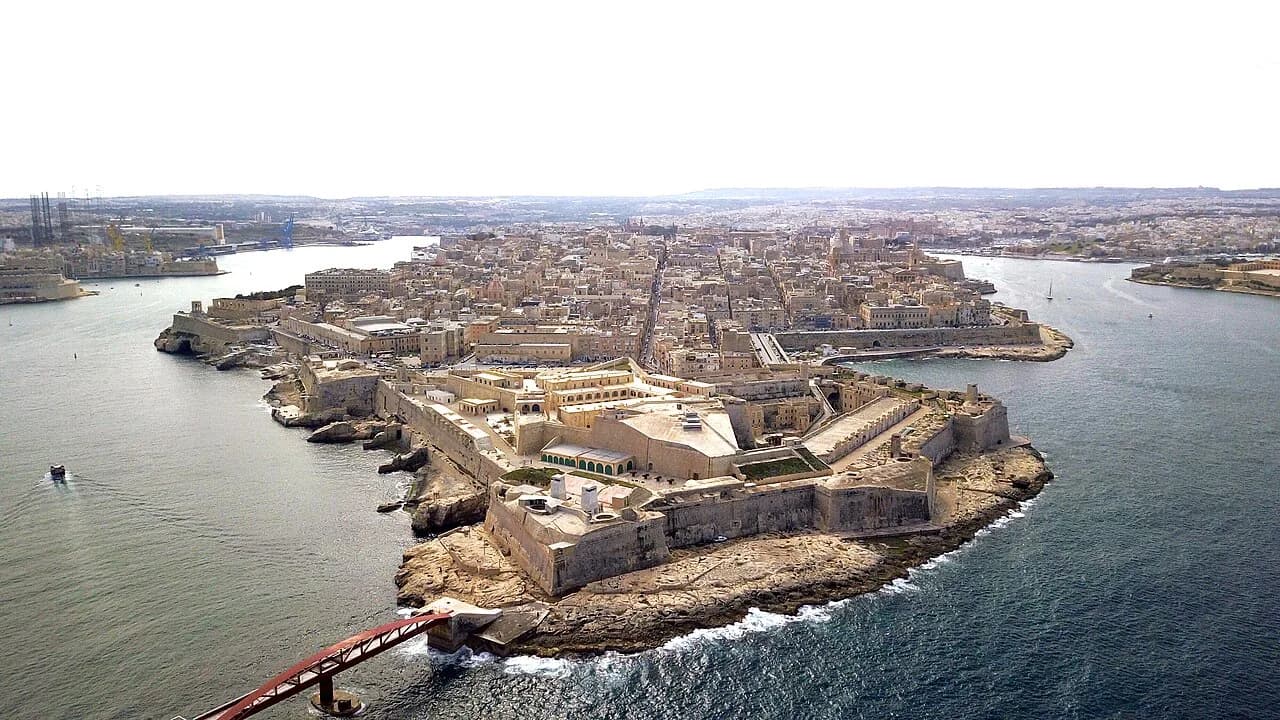
Valletta is Europe's smallest capital city, and its grid of streets is short enough to cross in a single loop. Use Republic Street as the spine: it runs from the City Gate past the co-cathedral and the palace toward Fort St Elmo, with side streets dropping to the bastions on either side.
Build the loop so that the uphill work happens early. Start at the City Gate, work up to the cathedral and palace, then continue to the gardens and Fort St Elmo before descending toward the waterfront for the walk back to the ship.
St John's Co-Cathedral and the Grandmaster's Palace
St John's Co-Cathedral is the interior most passengers remember, built by the Knights of St John in the sixteenth century and lined with marble tombstones and Caravaggio works in its museum. The Grandmaster's Palace nearby now houses the Maltese Parliament, with frescoes of the Great Siege and the Armoury of the Knights on display.
Both sit within a few minutes of each other on the upper grid, so pairing them is efficient. Entry arrangements and hours vary by season, so buy tickets at the door or through the site's own ticket desk rather than relying on a fixed timetable.
Upper and Lower Barrakka Gardens and the Saluting Battery
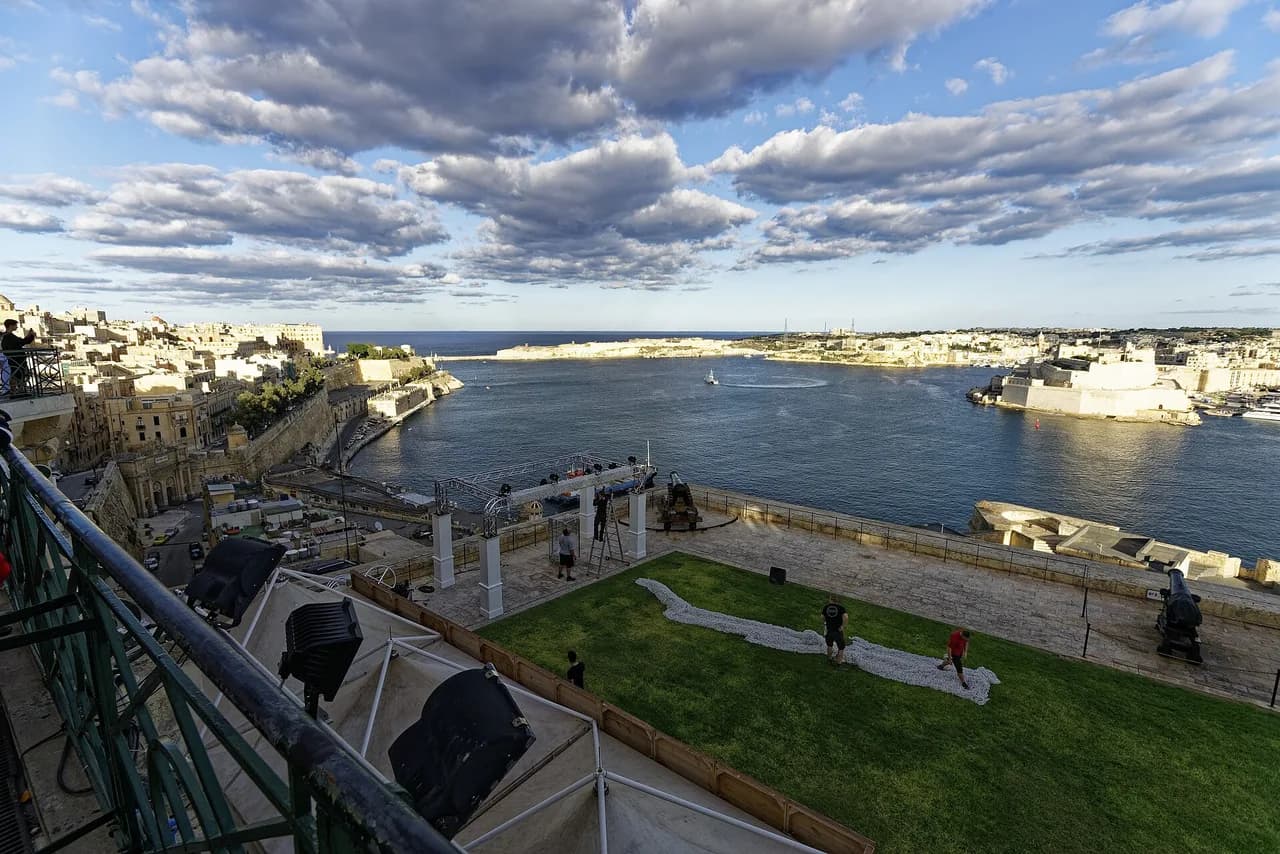
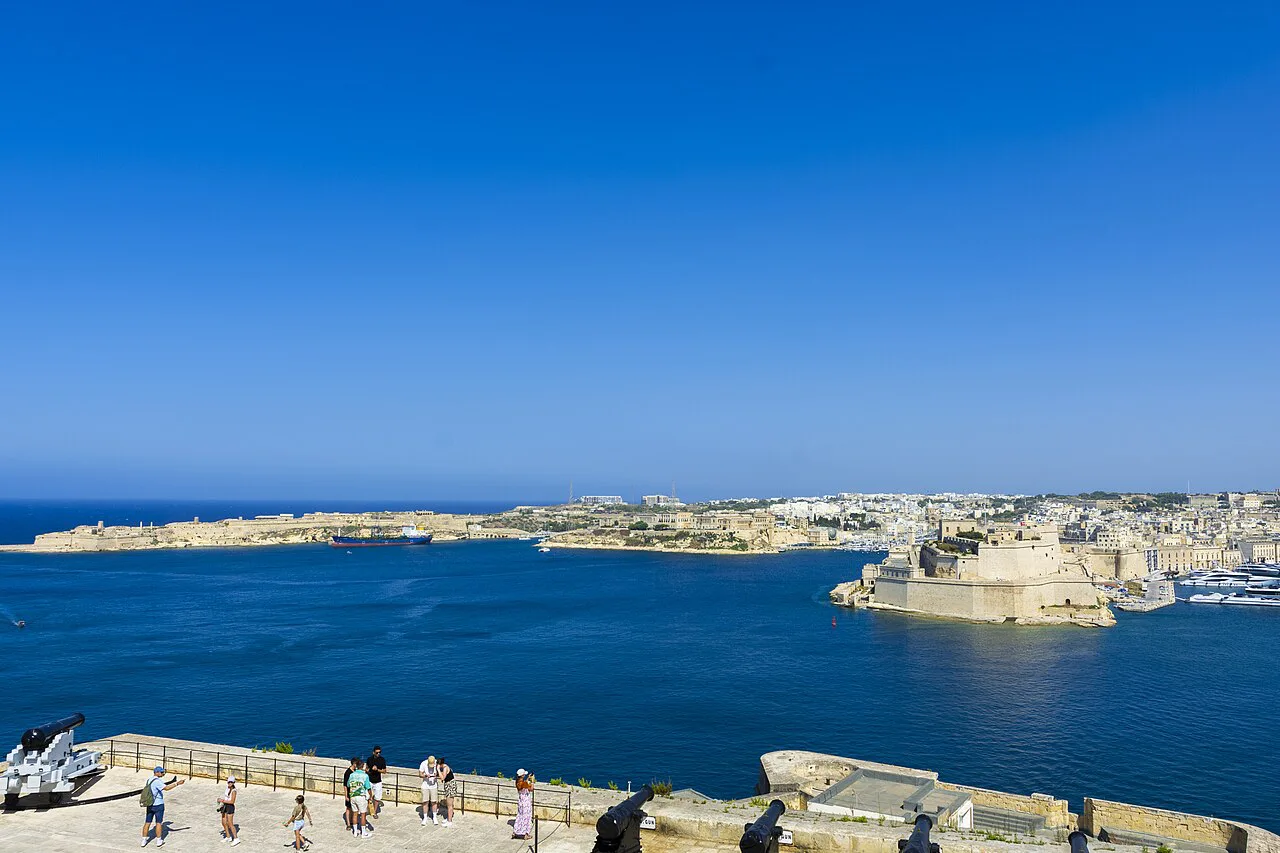
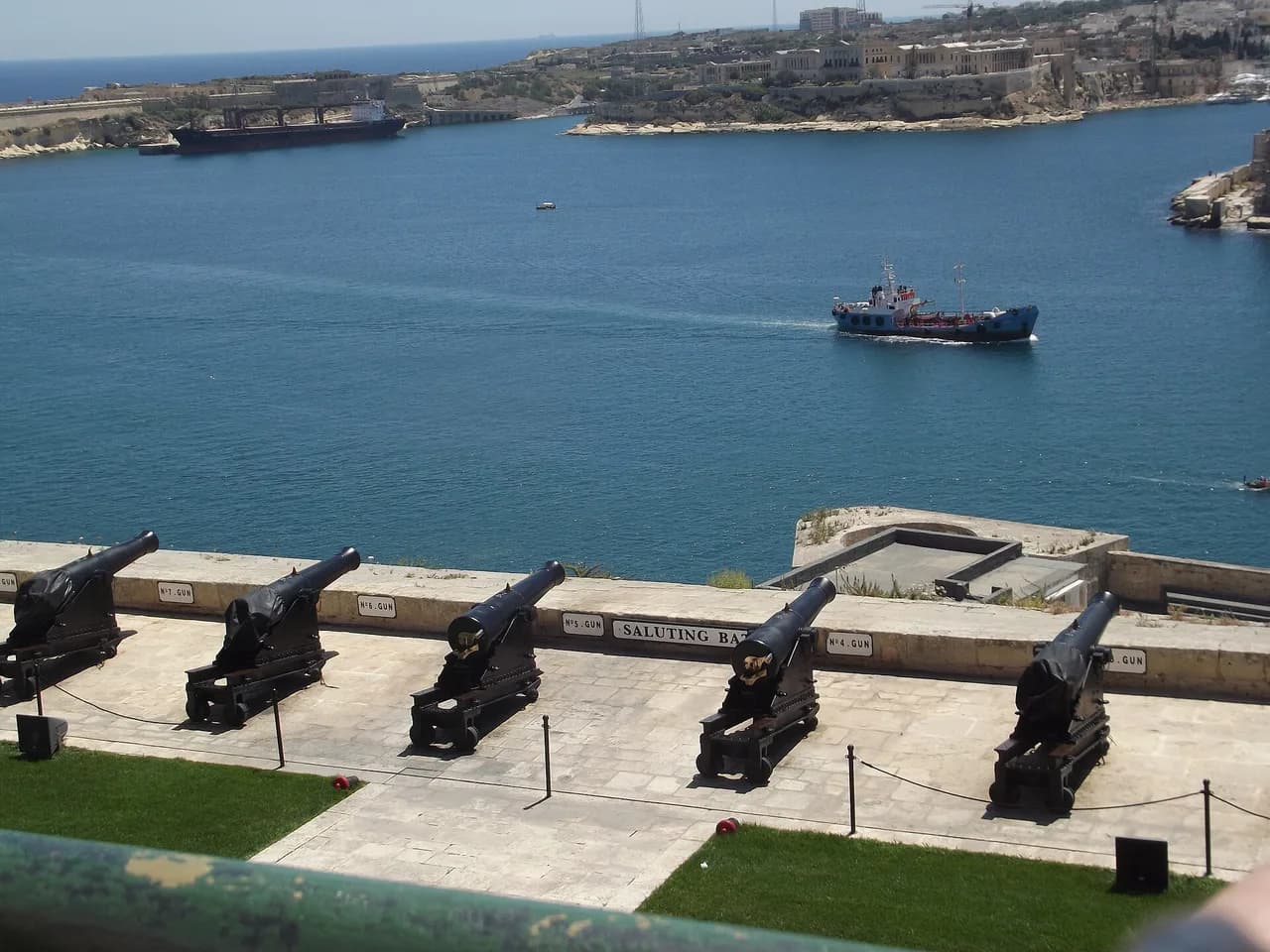
The Upper and Lower Barrakka Gardens look out over Grand Harbour and the Three Cities, and they are the best free vantage point in the city. The Saluting Battery below the Upper Gardens has cannons overlooking the harbor, with a firing that the port guide describes as taking place Monday to Saturday at noon and again in the afternoon.
Time your visit around the firing only if the ship's schedule allows a comfortable margin, and treat the posted notice at the battery as the final word for that day. The gardens themselves need no ticket, which makes them a good anchor for a short call.
Fort St Elmo and the National War Museum
Fort St Elmo stands on the seaward tip of the peninsula, the star fort that divided Marsamxett Harbour from Grand Harbour during the Great Siege of 1565. It is the far end of the walk from the City Gate, so it fits best at the start of a loop if you want the museum inside without rushing.
The fort anchors the National War Museum, which covers Malta's wartime role, including the George Cross awarded to the island. Check the museum's own ticket page for opening days before you build the day around it.
Harbor views and the Three Cities across Grand Harbour
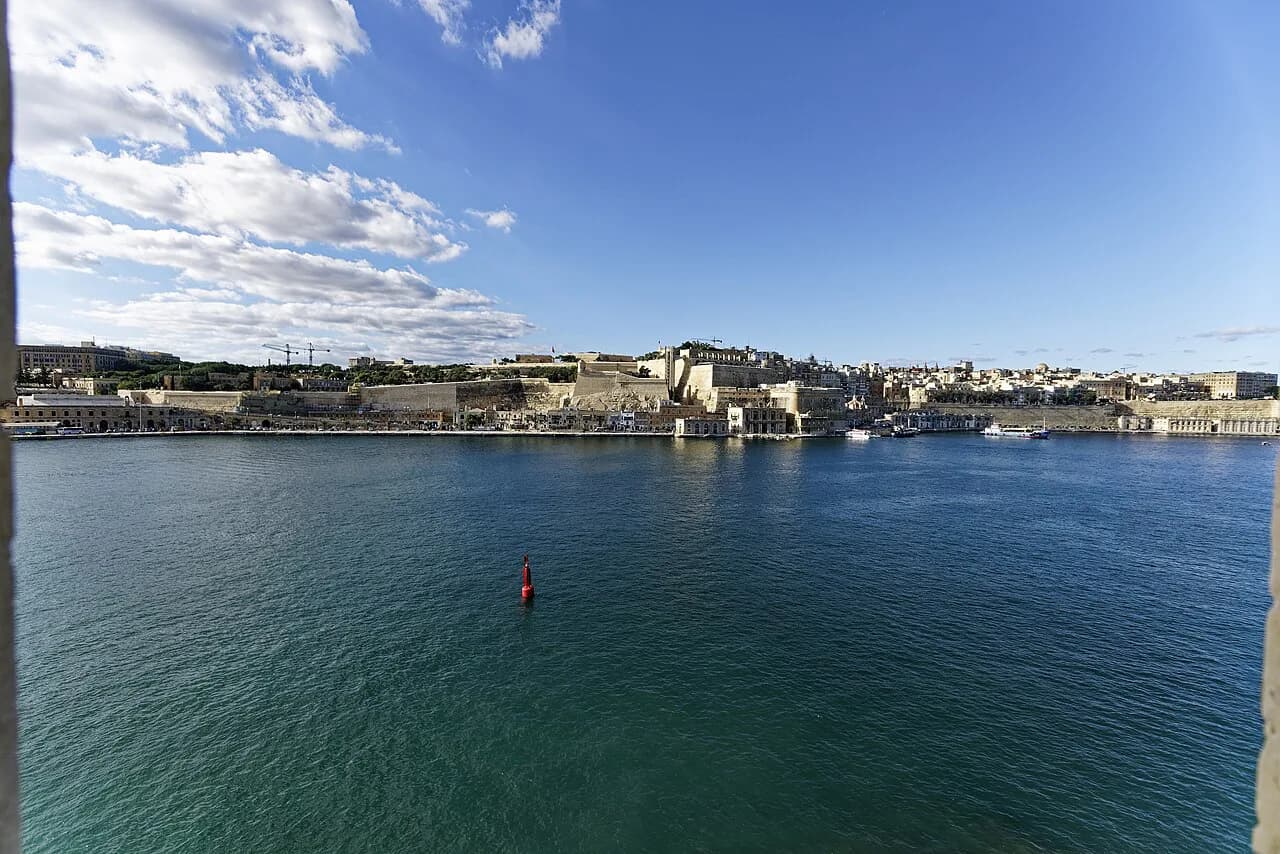
The Three Cities on the far side of Grand Harbour, including Vittoriosa and Senglea, are visible from the Barrakka terraces and reachable by water taxi or ferry across the harbor. The crossing is short, which makes them realistic for a medium-length call when you want a quieter counterpoint to Valletta's crowds.
The trade-off is that every crossing costs time in both directions, and the return leg to the ship still starts from the Valletta side. If you go, keep the crossing early and leave a full buffer for the walk from the waterfront to your berth.
Mdina and Mosta for passengers with a long call
Mdina, the fortified former capital known as the Silent City, has a history spanning roughly four thousand years and is the obvious half-day extension for a long call. Mosta adds the Rotunda, a basilica with one of the world's largest unsupported domes and a replica of the wartime bomb that pierced it without detonating.
Both lie inland from Valletta, and the drive is the constraint: a ship tour handles the coach and the timing, while independent travelers need a taxi, a private driver or a booked excursion with a clear return time. Whichever you choose, the ship will not wait for a late independent return.
Ship tours versus going independently
For Valletta itself, going independently is the better value: the terminal is close, the city is walkable, and a ship tour adds little beyond a guide. Save the organized option for Mdina, Mosta or the Three Cities, where transport and timing are the risk and a coach keeps the group on schedule.
Local operators can be cheaper than the ship's tour and often run smaller groups, but you carry the return risk yourself. If you book locally, choose an operator that guarantees a return well before all-aboard and confirm the meeting point at the terminal rather than in town.
How long you need: 6-, 8- and 10-hour calls
A six-hour call covers the City Gate, St John's Co-Cathedral, the Grandmaster's Palace and the Barrakka Gardens with time for the waterfront on the way back. Skip Fort St Elmo and the Three Cities, and keep lunch short.
Eight hours adds Fort St Elmo and the National War Museum, or a harbor crossing to the Three Cities if you prefer a slower pace. Ten hours is the realistic minimum for Mdina and Mosta on top of a Valletta walk, or for a full day in the Three Cities with a proper harbor crossing each way.
Return-to-ship buffer and all-aboard time
Plan to be back at the gangway well before all-aboard rather than at the city gate. The walk from the City Gate to the terminal takes fifteen to twenty minutes plus the descent, so add that to whatever buffer your cruise line recommends.
Keep the final hour flexible: a delayed lift, a slow lunch or a crowded waterfront can eat it. The terminal's own quays are the reference point for your return, and the ship's daily programme names the berth.
Eating and drinking near the terminal and in town
The Valletta Waterfront arcade is the easiest place to eat with a ship in sight, which makes it a sensible choice for the last meal before all-aboard. In town, the streets around Republic Street and the side lanes off the main grid offer smaller places closer to the sights.
For a short call, eat near the terminal and spend the time in town on sights; for a long call, book a table in town and walk back down afterward. Either way, pay as you go rather than relying on card terminals in small places.
Plan Your Visit
Valletta rewards a simple plan: dock at the Valletta Waterfront, walk up to the City Gate, and loop through the cathedral, palace and gardens before heading back downhill. The city's compact scale makes it one of the easiest Mediterranean ports to do independently, much like a Cádiz port day where the ship berths close to a walkable old town.
Use the Malta Shore Excursions from Valletta comparison for Mdina and the Three Cities, and treat the return walk from the waterfront as fixed time in your day. Check the port authority notice at the terminal if the berth or gangway changes.
Explore more Valletta cruise port guides
Frequently Asked Questions
Where do cruise ships dock in Valletta?
Ships berth at the Valletta Waterfront Cruise Terminal inside Grand Harbour, using any of the port's quays. The terminal has three passenger facilities, with the main one in the Magazino Hall on the waterfront.
How far is the Valletta cruise terminal from the city center?
The terminal is about 1.5 km from the center of Valletta, a walk of roughly fifteen to twenty minutes up to the City Gate. Once through the gate, the sights are close together and no further transport is needed.
Can you walk from the Valletta cruise port into town?
Yes. Follow the waterfront and the road uphill around the bastion wall to the City Gate. Taxis and the port shuttle cover the same route if you prefer to ride up and walk back down.
What can you see in Valletta in a few hours ashore?
Prioritize St John's Co-Cathedral, the Grandmaster's Palace and the Upper Barrakka Gardens, with the waterfront on the way back. Fort St Elmo and the Three Cities fit better into a longer call.
Is Mdina worth visiting on a Valletta port day?
It is worth it on a long call, ideally around ten hours, because the inland drive takes time in both directions. Mosta and its Rotunda combine naturally with Mdina on the same trip.
How much time should you allow to get back to the ship in Valletta?
Allow fifteen to twenty minutes for the walk from the City Gate to the terminal, plus the descent at the end, and add that to your cruise line's recommended buffer. Plan to reach the gangway well before all-aboard.
Sources
Port-day notes for your next cruise
Optional updates to our port guides.
You might also like

Continue reading
More guides you'll find useful