Venice Cruise Port: Where Ships Dock and Getting into Venice
Venice cruise ships use Marittima, Marghera, Fusina or nearby mainland ports. Plan your transfer, timings and realistic hours ashore with this guide.
On this page
A Venice port day can mean stepping off beside the Giudecca Canal, crossing the lagoon from a mainland industrial quay, or boarding a coach from a port an hour or two inland. The city is the same; the transfer is not. Knowing which of these you face is the single most useful thing you can establish before planning anything.
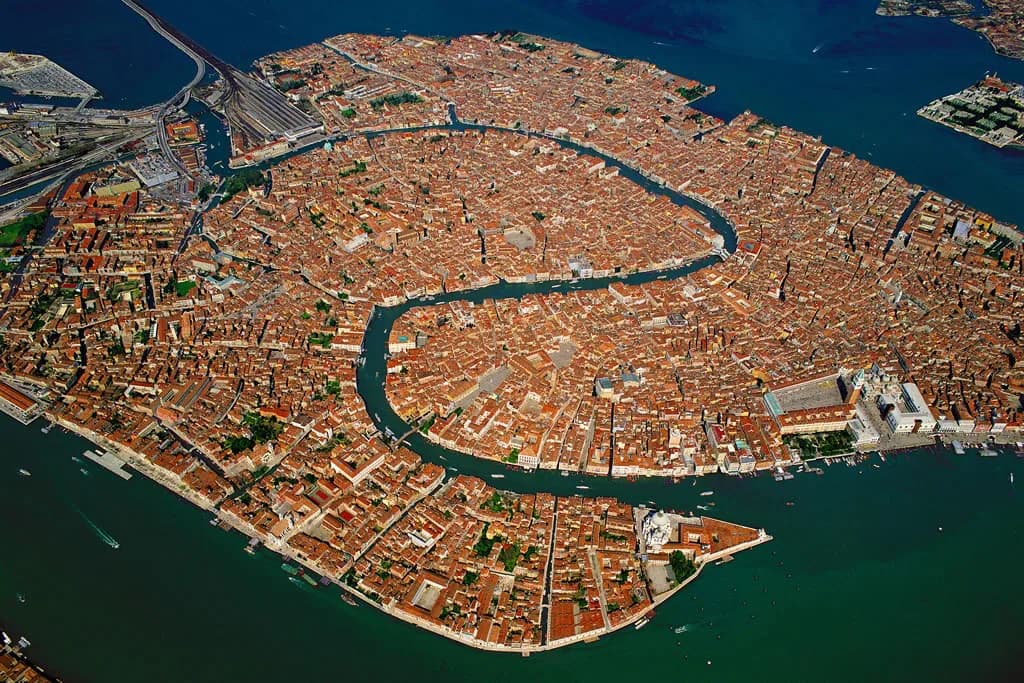
The historic waterfront is compact enough to explore on foot once you reach it, with St Mark's Square, the Doge's Palace and the Rialto Bridge within walking range of each other. The complication is getting from berth to water, and from water to pavement, inside a fixed number of hours.
Why Venice cruise port has more than one location
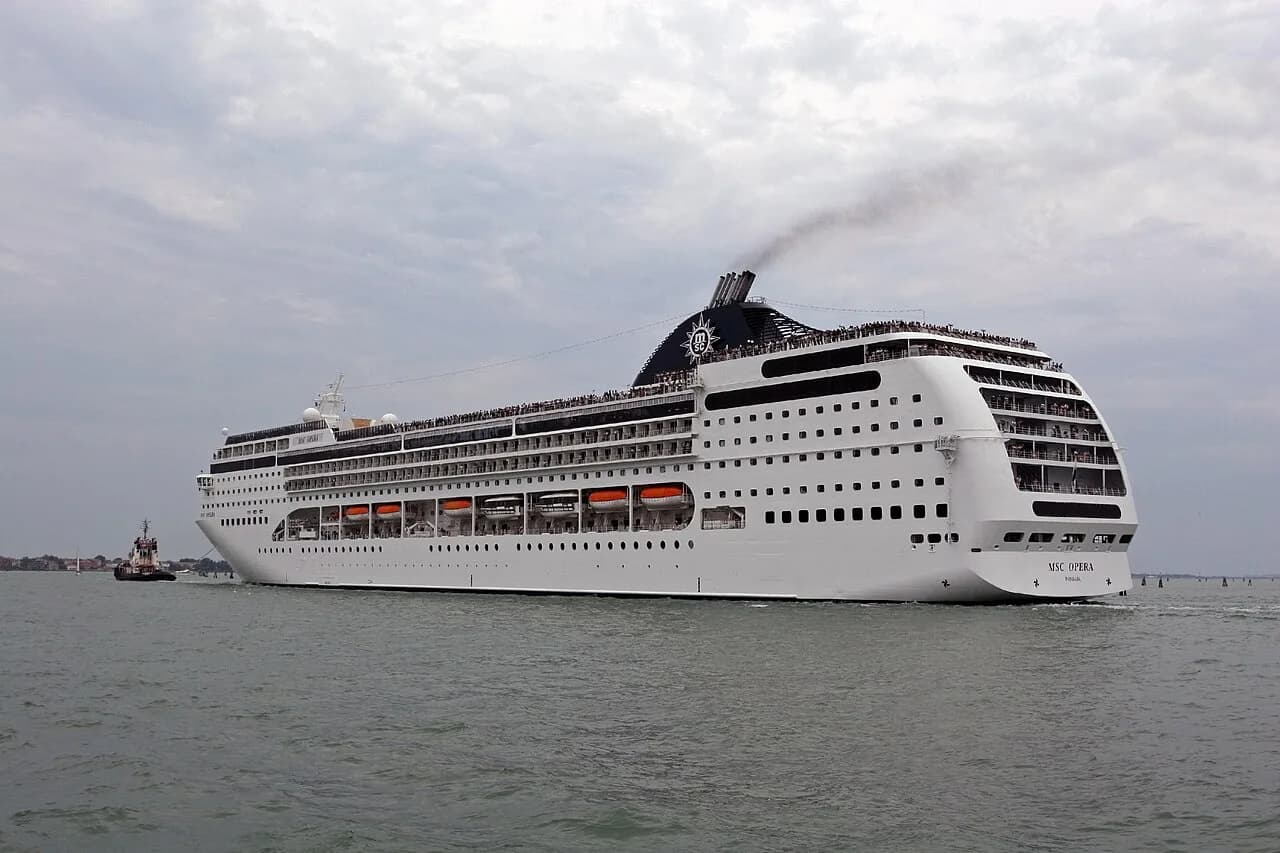
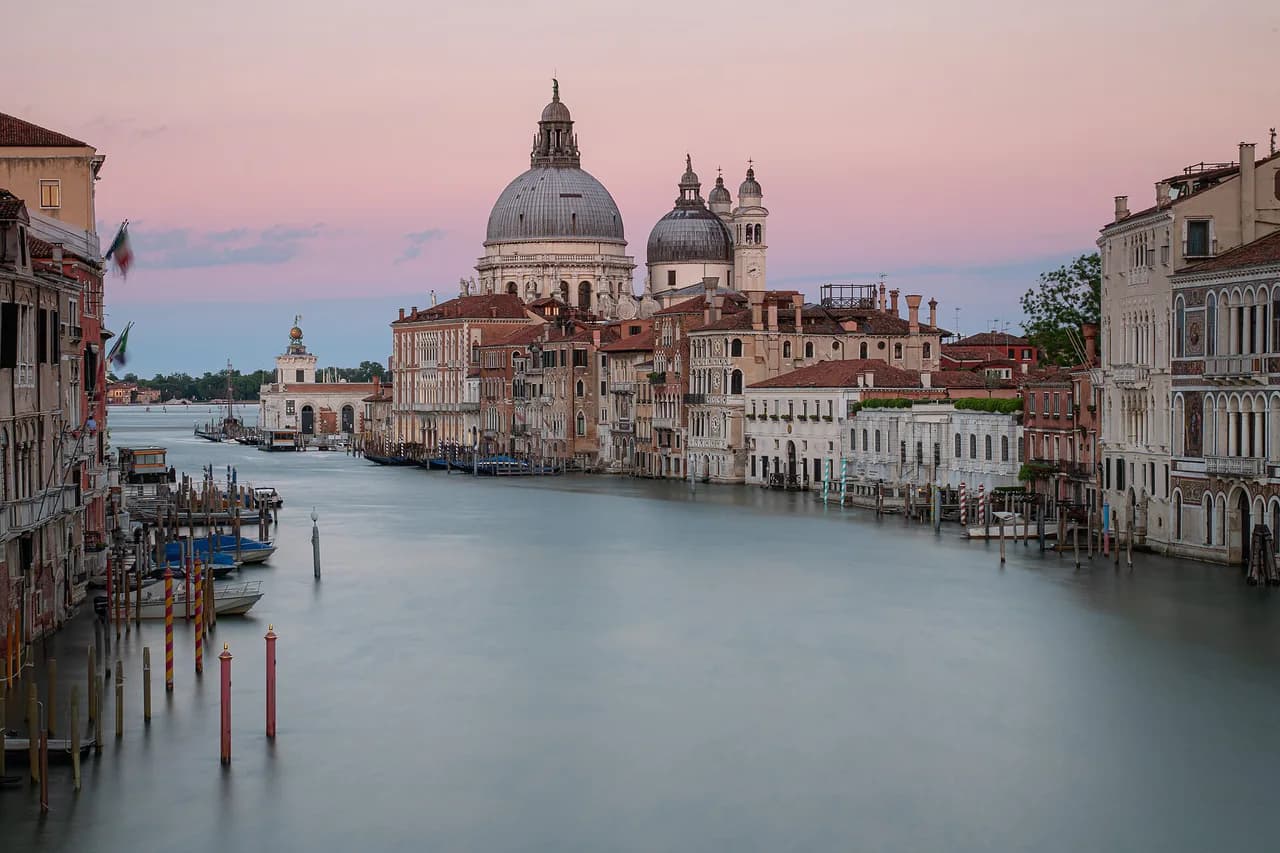
Italy banned large cruise ships from entering the Venice Lagoon via the Giudecca Canal, and the prohibition covers vessels of 25,000 GT and above. Smaller ships and riverboats can still use the city's downtown port, while large liners were shifted to mainland alternatives such as Porto Marghera.
A further plan reported by the port authority would allow vessels up to 60,000 GT and 250 meters in length to return to Stazione Marittima using the Vittorio Emanuele III Channel, with larger ships continuing to use Marghera. That is a future arrangement rather than current practice, so your cruise line's own documentation for your sailing is the reliable source for where you will actually dock.
In practice this means two passengers on the same itinerary can have completely different Venice days: one walking off at Marittima, the other riding a coach from a mainland quay. Neither is worse in itself, but the transfer eats different amounts of your time ashore, so budget accordingly.
Where ships dock: Marittima, San Basilio, Santa Marta, Marghera and Fusina
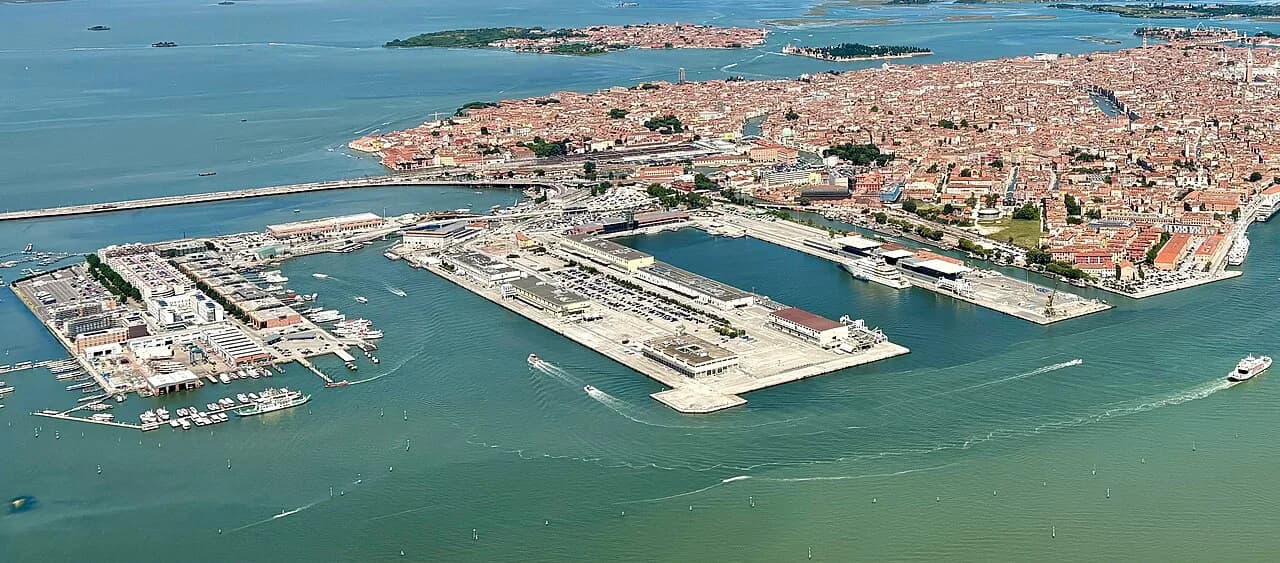
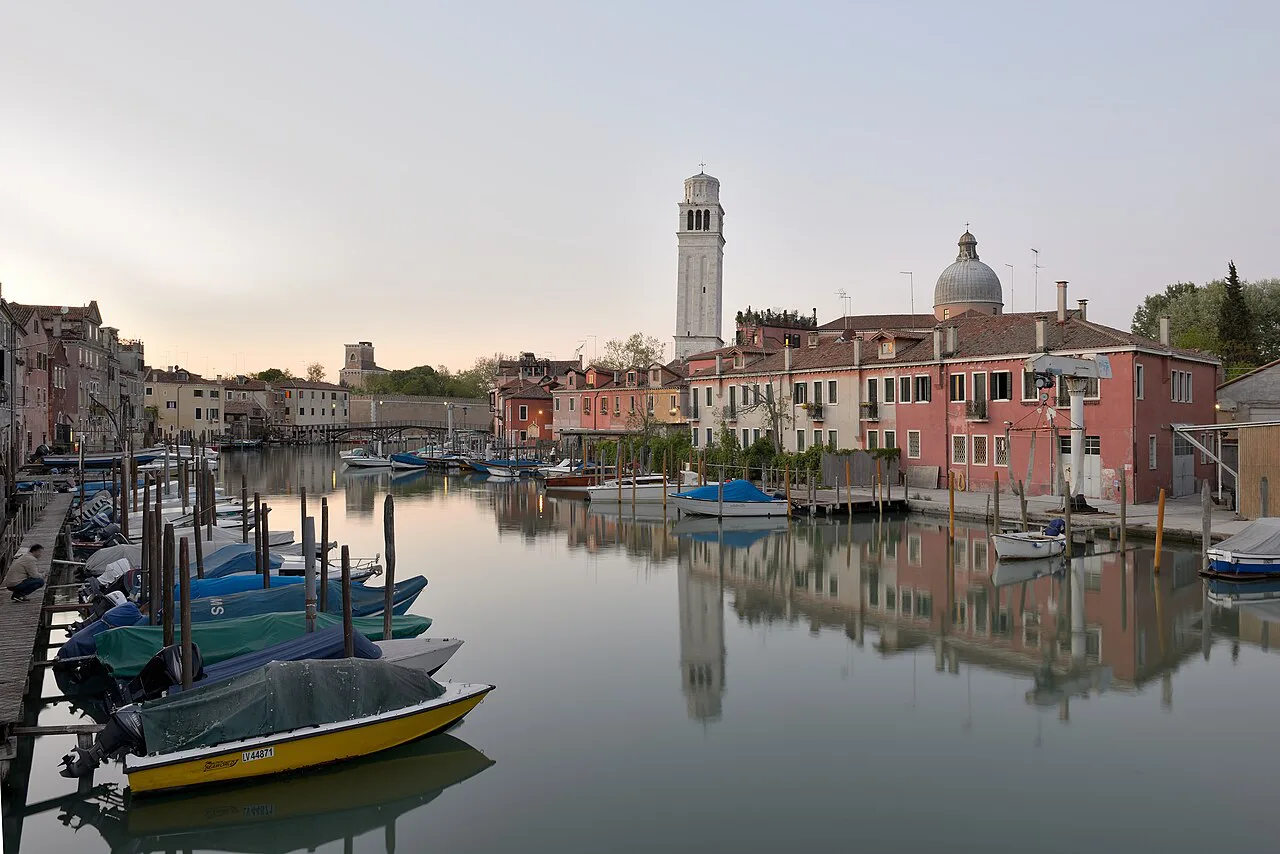
The historic cruise complex at Marittima has three passenger terminals and sits on the Giudecca Canal, with additional quays at Piave, Tagliamento and Isonzo. Smaller vessels are handled at San Basilio, with berths 29 to 31, and at Santa Marta, with berths 24 to 28, both on the same canal.
Venezia Terminal Passeggeri describes the terminal area as 290,000 square meters with ten multifunctional terminals and six dedicated quays across Marittima, Santa Marta and San Basilio, plus over 2,000 parking spaces and an area for luggage drop-off. It also puts the historic center about 500 meters away and the airport about 13 kilometers away.
On the mainland, Porto Marghera was developed as the city's commercial and industrial port and gained a provisional cruise berth at Liguria Quay. Fusina lies roughly 9 kilometers southeast of Marghera along Via Moranzani and functions as a mainland cruise terminal, with passengers reaching Venice by shuttle, boat or organized excursion.
For berth-level detail on the waterfront quays, the venice cruise terminal layout is worth reading before you plan your walking route, since Marittima, San Basilio and Santa Marta sit in different positions along the canal.
How far the berth is from Venice
Historically, Marittima was the closest thing to a city-center berth: passengers could walk out of the terminal and be in the historic center in a short stroll. With large ships now routed to the mainland, that short walk applies mainly to smaller vessels and to whatever the port's future arrangement allows.
Marghera and Fusina are industrial mainland locations, so the distance to St Mark's Square is measured in a lagoon crossing, not a walk. Treat the journey as two stages: port to Venice, then Venice itself. A coach or shuttle may take you to a waterfront access point, or a boat may run directly across the lagoon; the cruise line confirms which applies to your sailing.
The practical consequence is that you should never subtract the city's walking distances from your total hours ashore without also subtracting the transfer. A ship docked at Fusina or Marghera is not a ten-minute walk from the Doge's Palace, however close it looks on a map.
Getting from Marghera and Fusina into the historic city
From the mainland terminals, the transfer options are a shuttle bus or coach, a boat across the lagoon, or a ship-organized excursion that bundles the crossing with sightseeing. The Fusina terminal is explicitly set up for passengers to transfer by shuttle, boat or excursion.
Which option your cruise line runs, where it picks up, how often it departs and what it costs are published in your sailing's shore-excursion and transfer information rather than in port data, so read that before you decide. Pre-booked coach transfers are the norm for turnaround passengers arriving at mainland berths.
If you are arranging your own crossing, remember the harbor is on the lagoon side and the historic city sits across water. Plan the whole loop, out and back, and keep the return leg simple: a same-route return on a service you already know beats improvising a new route at the end of the day.
Water buses, water taxis and walking in Venice
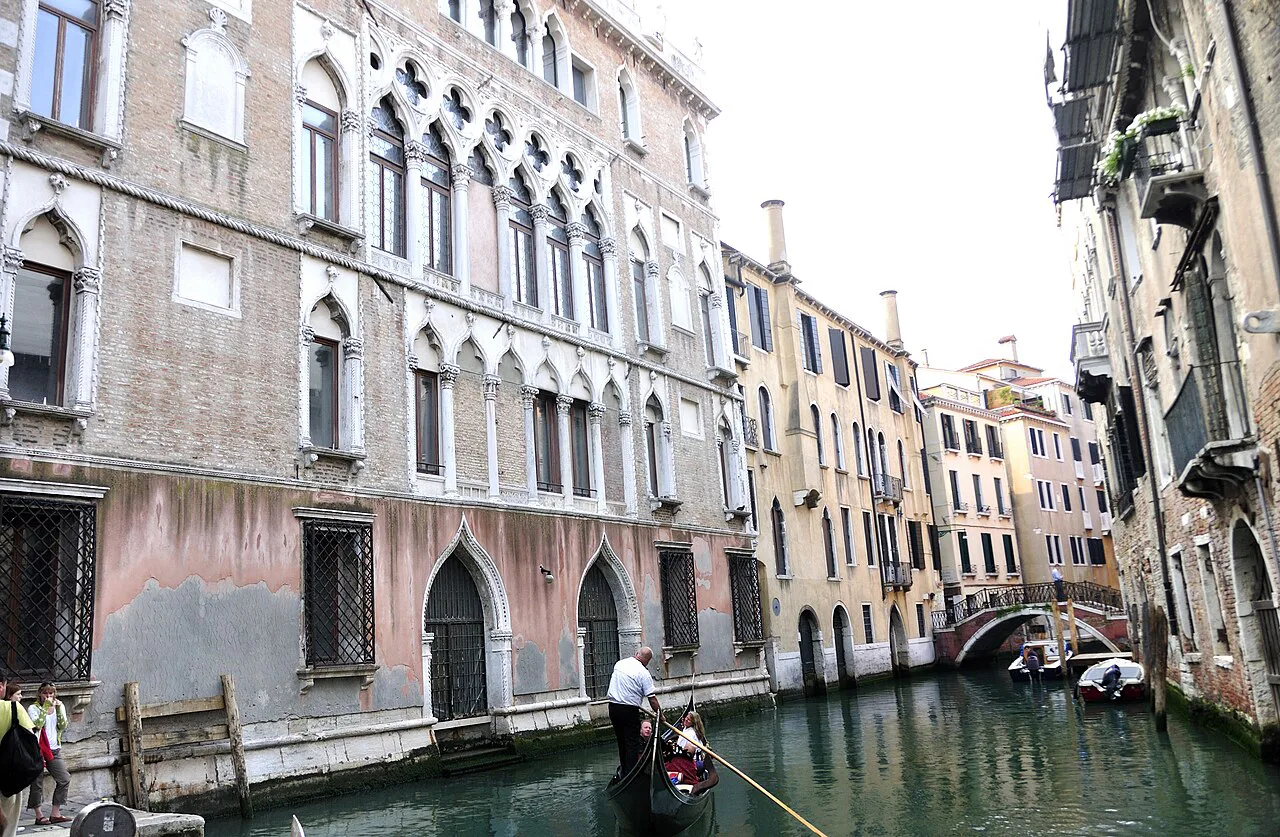
Once you are in the city, vaporetti are the public water-bus network, and the lagoon islands are served from Fondamente Nove, the departure point for boats to Murano and Burano. A vaporetto ride from there reaches both islands, so the pair can be combined in a single lagoon outing.
Walking is the cheapest and often fastest way between St Mark's Square, the Doge's Palace and the Rialto Bridge, all within a compact area of the historic center. Water taxis are the private, door-to-water option, quicker than the public network but priced accordingly, so ask the water-taxi rank at the landing stage for the fare before boarding.
The trade-off is predictability. Vaporetti stop frequently and can be crowded, while water taxis run directly but cost more. With four hours in the city, walking plus one water crossing is usually enough; with a full day, add Murano or Burano.
Cruise line shuttles versus public transport
A cruise-line shuttle or transfer is the simplest choice from a mainland berth: it removes the need to plan the crossing, and the coach times are aligned with the ship's departure. Its weakness is rigid departure times; miss the last coach and you are dependent on public transport, and the ship does not wait for independent travelers.
Public transport gives you flexibility, and the walking center of Venice lets you set your own pace. Its weakness is the return journey: from a mainland berth, coming back by public transport means a second connection with no margin, so choose this only if you have hours to spare.
For cruise-line passengers whose itinerary is booked as the ship's own shore excursion, the cruise line manages the return; for anyone going ashore independently, that protection does not apply. Choose according to how much time you have left after the transfer, not how much you want to see.
If your ship calls at Ravenna or Trieste instead of Venice
Many sailings marketed as cruises from Venice actually depart from Ravenna, Marghera or Trieste, and Royal Caribbean describes Ravenna as about 2.5 hours from Venice by train and taxi, with Trieste roughly two hours away by train. Marghera is closer to Venice but used less frequently for larger vessels. If your itinerary instead calls farther south, the bari cruise port sits within walking distance of its old town, which makes for a very different port day.
If your turn-around port is Ravenna or Trieste, book your pre-cruise Venice stay knowing you still have a land transfer on embarkation day. Trains connect both to Venice, and road transfers by taxi or coach are the alternative, with luggage making the trip more comfortable by coach.
This also applies to port days: a ship calling at Ravenna or Trieste has its own city to explore on foot, and Venice is a separate day ashore rather than a step off the gangway. Check your itinerary's port name rather than the cruise title.
What fits a 6-hour call
Six hours sounds generous until you subtract the transfer, both ways, and the recommended return buffer. From a mainland berth, that leaves a compact route: St Mark's Square, the Doge's Palace exterior and the Rialto Bridge on foot, with one water crossing if time allows.
From a waterfront berth such as Marittima or San Basilio, six hours is enough for the same route with more breathing room, and possibly a single vaporetto ride. Skip Murano and Burano unless your ship docks close to Fondamente Nove.
Plan the return to the ship first and build the day backward. A 30- to 45-minute buffer before all-aboard is sensible on a transfer-based day, and more if your return involves a coach connection.
What fits an 8- to 10-hour call
With eight to ten hours, a mainland berth becomes workable for the full city circuit plus one island. Use the morning for St Mark's and the Doge's Palace, cross to Murano or Burano around midday, and return to the berth with time in hand.
From the historic waterfront, a ten-hour call is enough for St Mark's, the Rialto area and a lagoon outing to Murano or Burano, with lunch worked in. Walking remains the backbone; the water bus is the optional extra.
Use the extra hours for depth, not for range: adding Verona, the Dolomites or Slovenia on a port call is a road-trip day, not a port day, and leaves no margin for the return coach or train if a connection slips.
Embarkation day: arriving by plane, train or car
Marco Polo Airport is about 13 kilometers from the terminal complex, and the port company describes the terminal as centrally placed between main road, rail and air connections with parking on site. From the airport, you reach the terminal by road transfer, and the official venice airport to cruise port options are best confirmed with your cruise line when you book.
Arriving by train, you come into Venice's rail network, not directly to the mainland cruise quays, so the final leg is a road or water transfer depending on which terminal your ship uses. Confirm the terminal name on your cruise documents before booking anything, because Marittima, Marghera and Fusina require different final legs.
If you plan to drive and leave a car, the terminal operator reports over 2,000 parking spaces within the port area. Official on-site parking and off-site alternatives differ in price and transfer, so for venice cruise port parking compare location before you commit.
Staying overnight before embarkation is common for Venice departures, especially from mainland berths. The hotels near venice cruise port range from lagoon-side properties to mainland options near the road and rail links, and your choice should follow your terminal, not the postcard view.
Luggage, drop-off and terminal facilities
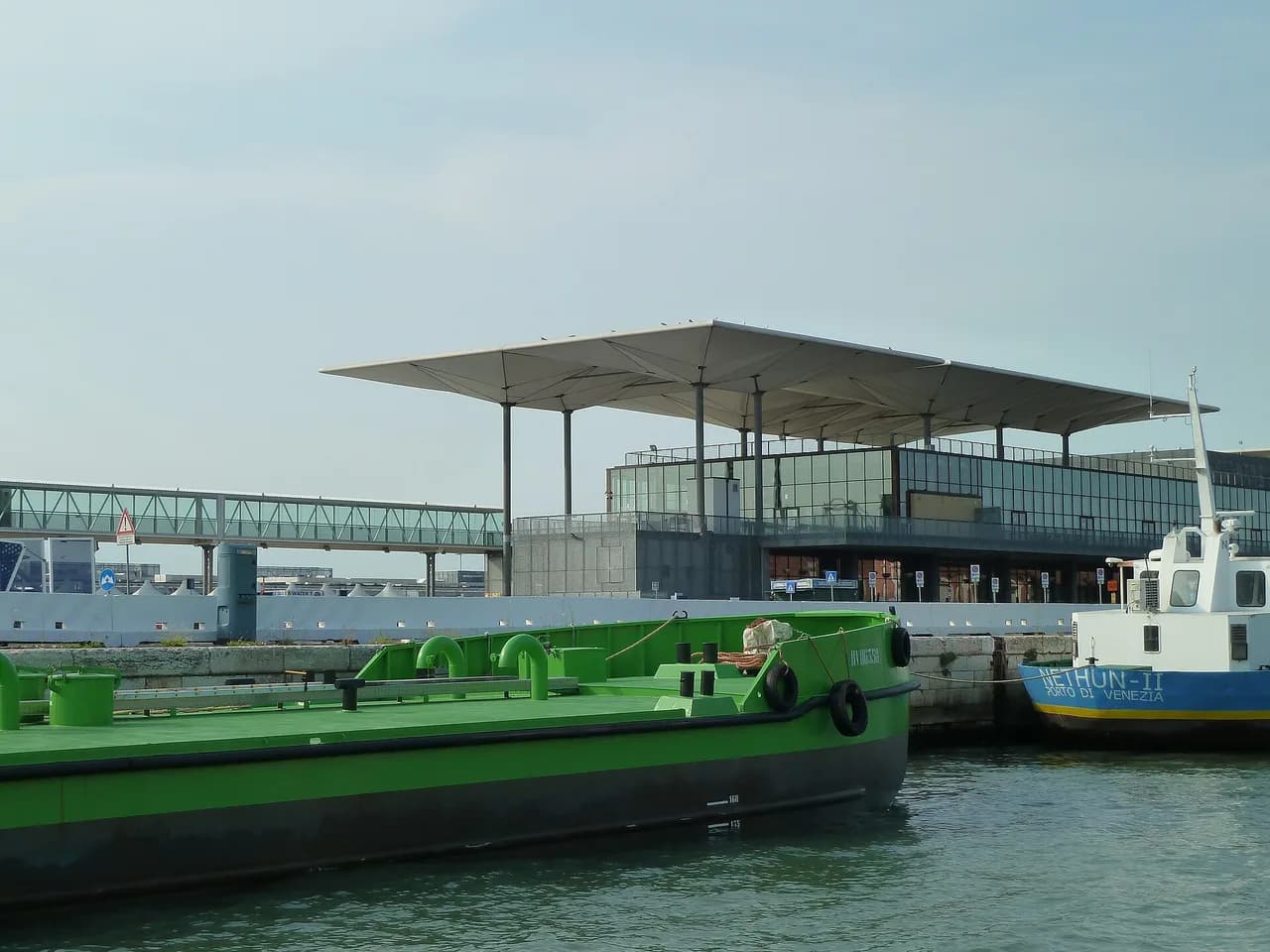
The terminal complex has an area set aside for luggage drop-off, wide spaces for coaches and taxis, water taxis and refreshment areas, and it handles river cruise ships and seasonal catamarans and hydrofoils as well as ocean liners. That makes it a working turnaround port rather than a bare quay.
At mainland berths, luggage handling is arranged through your cruise line's transfer or terminal process rather than the city's public transport. Keep bags together until you reach the drop-off point, and pack a day bag separately so you are not opening suitcases on a coach.
If you are arriving independently, check with your cruise line which terminal and which drop-off point your sailing uses. The name on your booking, not the word Venice, is the detail that decides where the taxi or coach should take you.
Return-time buffer and the risk of going independent
The return journey is where independent travel most often goes wrong in Venice, because it involves water and often a second transfer. Build the buffer into the plan before you leave the ship, and keep enough time for a missed vaporetto and a rebooking.
No operator can guarantee the ship will wait. The protection you get from a cruise-line shore excursion is organizational, not magical: the ship's departure time does not bend for independent arrivals. Plan to be back early, and accept that you may lose some sightseeing time as the cost of insurance.
Use the ship's departure time, not the published all-aboard time, to plan around. If the last coach or boat back looks tight, take the earlier one; in Venice the scenery is not worth a missed sailing.
Common mistakes passengers make
The biggest mistake is assuming Venice cruise port means a berth beside St Mark's Square. Large ships are routed to mainland terminals, so the transfer is part of the day and needs planning like any other leg.
The second is treating the cruise title as the port name. A sailing marketed from Venice may start in Ravenna or Trieste, adding a land transfer to embarkation day.
The third is underestimating the return leg. Leave the ship with a plan for getting back, not just a plan for getting there, and keep a printed copy of the terminal name and your ship's berth details with you.
Plan Your Visit
Venice rewards a plan built around your actual berth: the waterfront means walking and a short vaporetto ride, while Marghera or Fusina means a coach or boat transfer counted into every hour. Set your return target first, then fill the day around it, and check the terminal and transfer details on your cruise line's own documents before you sail.
Explore more Venice cruise port guides
Frequently Asked Questions
Can you walk into Venice from a cruise ship?
From the historic waterfront quays at Marittima, San Basilio and Santa Marta, the city center is a short walk. From mainland berths such as Marghera or Fusina, the historic city is across the lagoon and you need a coach, boat or organized excursion to reach it.
Where in Venice do cruise ships dock?
Smaller vessels use the downtown quays at Marittima, San Basilio and Santa Marta on the Giudecca Canal. Large liners have been routed to Porto Marghera and Fusina on the mainland since the lagoon ban. Your cruise documents name the terminal for your sailing.
Is Marghera walking distance from Venice?
No. Marghera is a mainland industrial port, so reaching the historic city means a transfer, either a coach or a boat if your cruise line offers one. Plan the crossing in both directions.
How do I get from Fusina into Venice?
Fusina is set up for passengers to reach Venice by shuttle, boat or organized excursion. Your cruise line publishes which of these it runs for your sailing, along with the meeting point and departure times.
Are Venice cruises actually departing from Ravenna or Trieste?
Some are. Several sailings marketed as cruises from Venice depart from Ravenna or Trieste, which are reached from Venice by train or road transfer of roughly a couple of hours. Check the port name on your itinerary, not the cruise title.
How much time do I need ashore on a Venice port call?
Allow at least six hours for a compact city walk, and eight to ten hours if you want a lagoon island as well. From a mainland berth, subtract the transfer in both directions before deciding what fits.
What happens if I miss my ship in Venice?
The ship does not wait for independent travelers. Build a return buffer of at least 30 to 45 minutes, or use ship-organized excursions if you want the return timing managed for you.
Sources
Port-day notes for your next cruise
Optional updates to our port guides.
You might also like
Continue reading
More guides you'll find useful